English
 عربى
 中文繁体
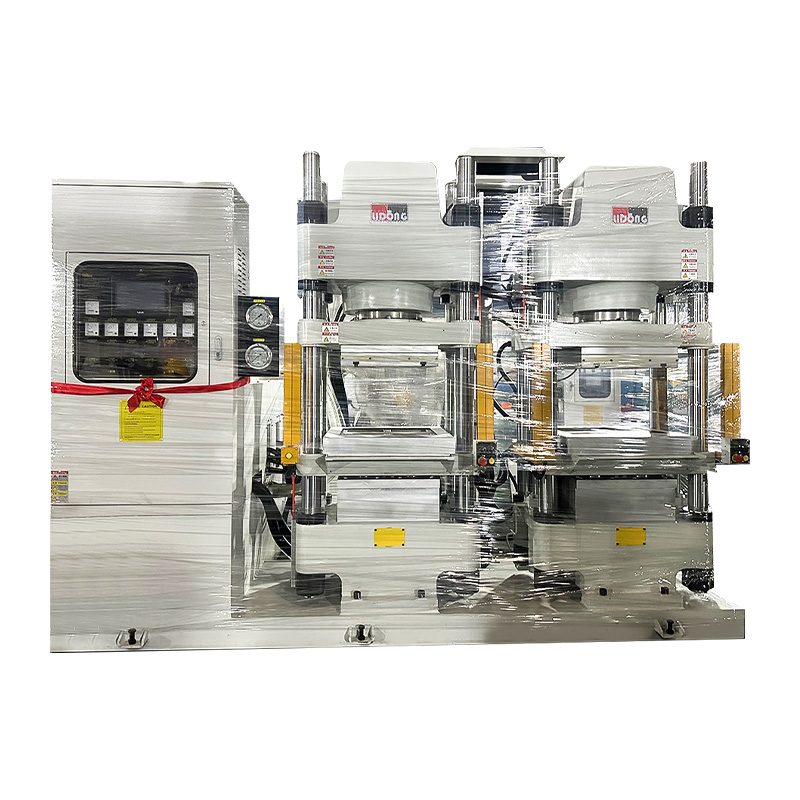
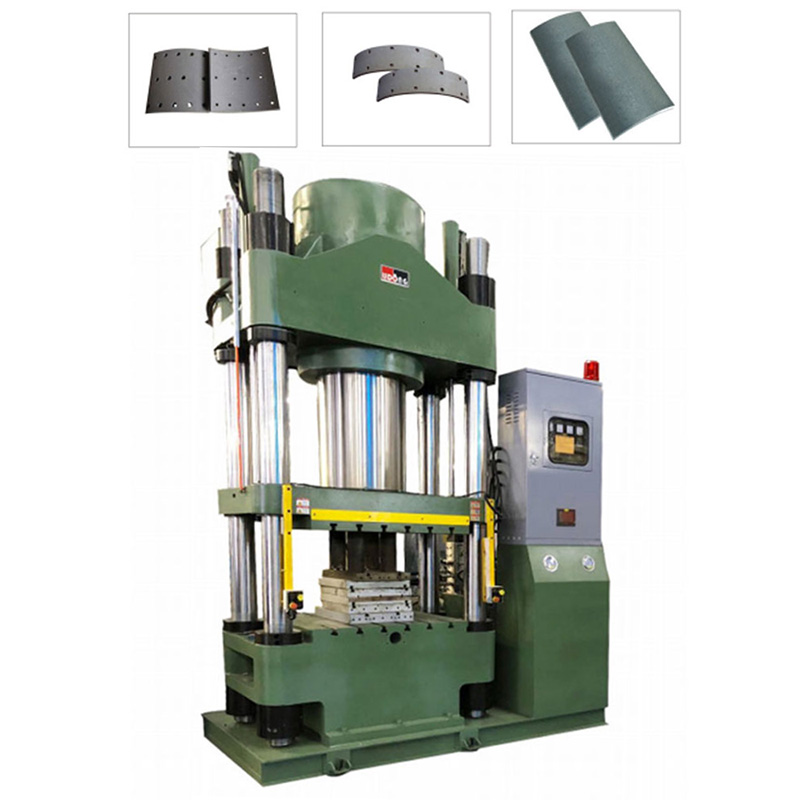
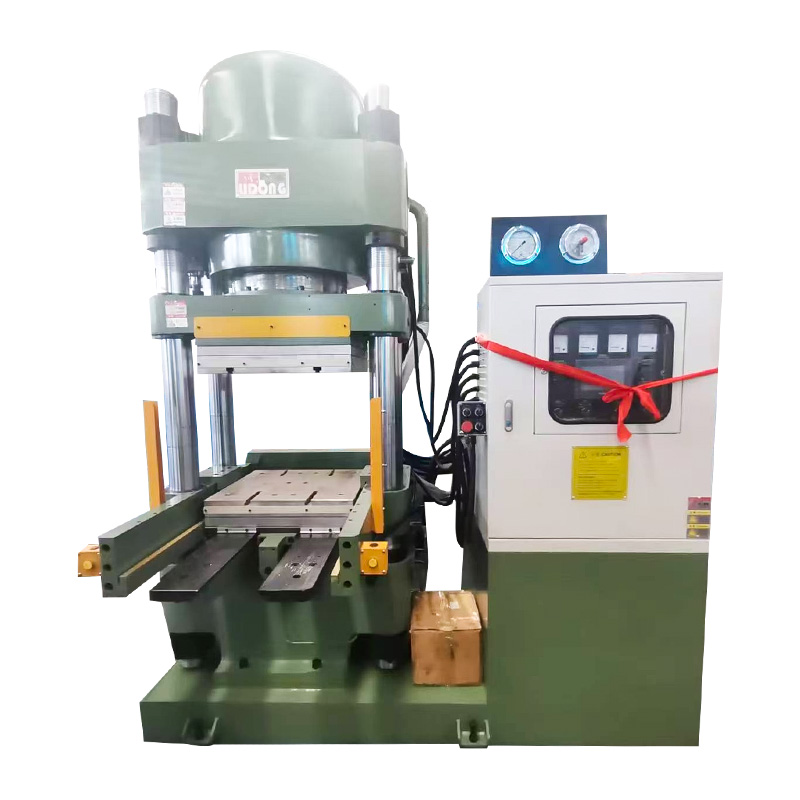
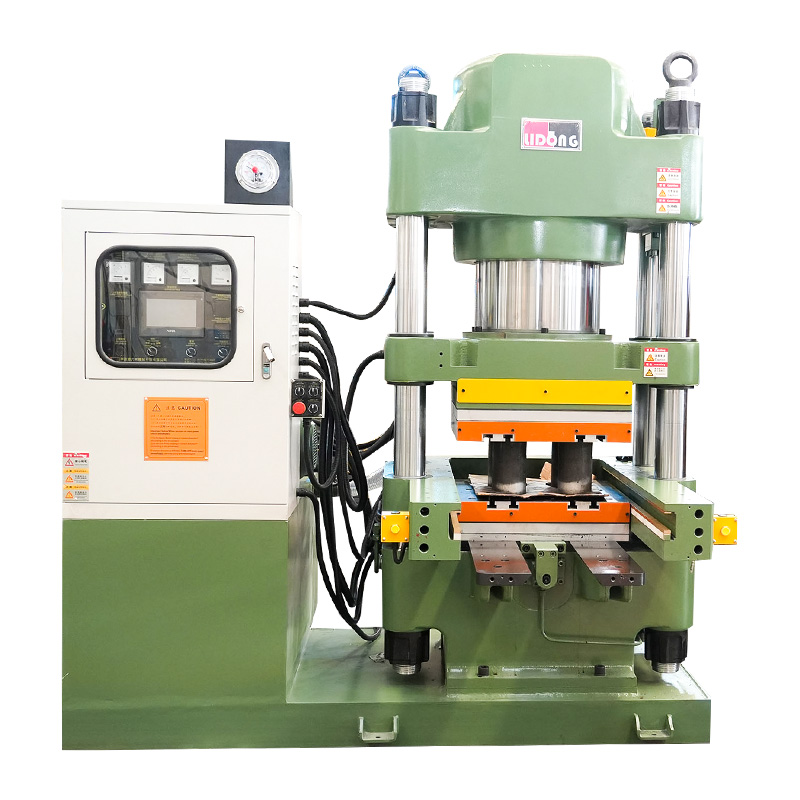
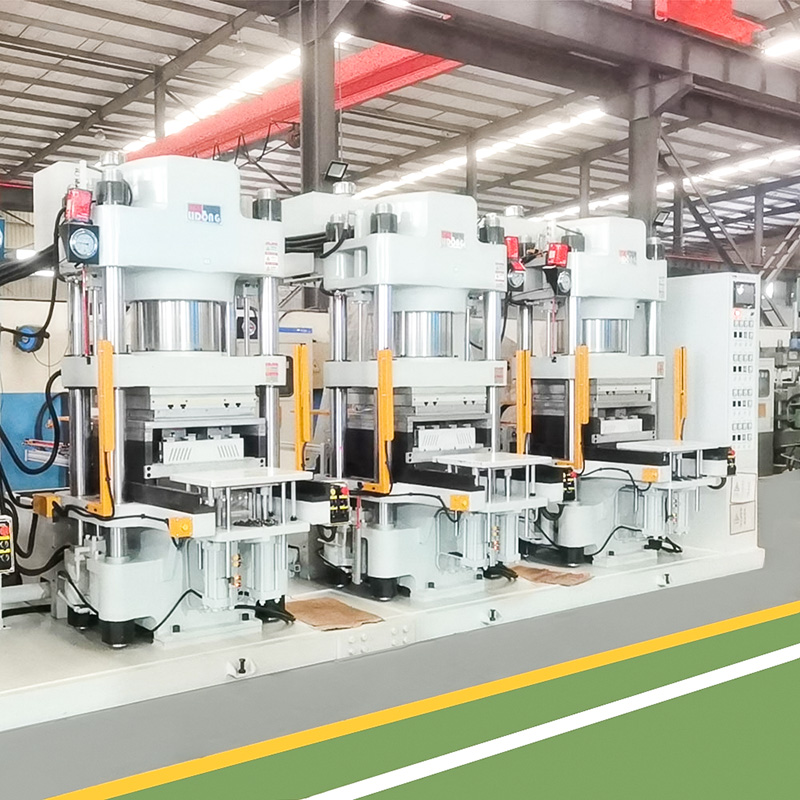
Technical Parameters
The table lists typical configurable values for hot presses used in two-wheeler pad production. Final specifications depend on your pad sizes, mold layout and formulation, and are confirmed in the technical agreement.
| Parameter | Typical Range | Relevance to Two-Wheeler Pads |
|---|---|---|
| Clamping force | About 60 - 250 tons | Many small pads per mold, moderate total force |
| Specific pressure on the pad | Often about 20 - 50 MPa, set by formulation | Controls density and strength |
| Platen size | About 300 x 300 mm to 800 x 800 mm | Fits multi-cavity molds with many small pads |
| Platen temperature | Up to about 200 degrees C | Resin cure, usually around 150 to 180 degrees C |
| Temperature uniformity | About plus or minus 2 to 3 degrees C | Same cure in every cavity of a crowded mold |
| Degassing steps | Programmable, short steps | Releases gas without lengthening the cycle |
| Pressure holding | Programmable with automatic make-up | Steady pressure over the hold |
| Daylights | 1 - 4 layers | More layers raise output for short cycles |
| Mold handling | Slide-out table, cart or loading frame | Quick changes between pad models |
| Control | PLC with touchscreen, large recipe library | Fast switching between models |
How to read the table: for two-wheeler pads, the useful numbers are platen size, temperature uniformity and the number of layers. A small pad of about 15 square centimeters at 40 MPa needs roughly 6 tons, so a mold with 24 pads suggests a press of around 150 tons. The press is therefore much smaller than a truck pad press, but the mold is crowded and sensitive to uneven pressure and uneven heat.
Multi-layer presses can raise output, because loading time is often the longest part of the work for small pads. Please send your pad drawings, the range of sizes, cavity numbers, formulation and output target, and we will recommend a clamp size, platen size and layer number.
Practical advice. Do not buy a larger press than your molds need. A well-sized press heats faster, uses less power and holds temperature better across a small mold.
Special Focus: Small Pads, Many Cavities and Thin Plates
Two-wheeler pad makers face a different set of problems from car and truck pad makers. The table shows the main ones.
| Challenge | Why It Happens | What Helps |
|---|---|---|
| Uneven density across cavities | Crowded mold, platen not flat or parallel | Stiff frame, parallel closing, correct mold size for the platen |
| Thickness variation | Back plate not seated, flash under the plate | Flat platens, accurate stroke stop, good plate positioning |
| Weak bond | Poor plate preparation or uneven heat | Clean, coated plates, even temperature |
| Blisters or cracks | Gas or moisture in the mix | Programmable degassing, dry material |
| Long setup times | Many models, many mold changes | Slide-out tables, recipe library, clear naming |
| High cost per pad | Low selling price | Short cycles, low scrap, efficient heating |
Points that decide results:
- Plate handling. Thin plates can warp, and loading hundreds of them per shift is slow. Plate positioning magnets, loading frames and clean, flat plates all help.
- Mold design. Venting and parting lines in a crowded mold decide whether gas escapes. A good mold is as important as the press.
- Formulation range. Motorcycle pads cover organic, semi-metallic and ceramic types, and performance and racing pads often use sintered metal, which is a different process. Our copper sintered friction press page covers that route.
- Cycle balance. For small pads, cure time and loading time are both significant. A multi-layer press or a second mold on a cart lets one mold cure while another is loaded.
- Finishing. Post-cure, grinding, chamfering, slotting and shim fitting are separate steps that affect noise and wear.
Formulation and testing belong to your technical team, and the press provides repeatable molding conditions. Typical checks on small pads include shear strength, hardness and thickness, and we can discuss how settings relate to these results.
Honest advice. If your range is very wide, from tiny scooter pads to large heavy bike pads, consider whether one press can cover all sizes or whether two machines would serve you better.
Automation and Control System
With many models and high volumes, the control system should make changeovers quick, keep each cycle identical and keep operators working at a steady pace.
- Large recipe library: temperature, pressure steps, degassing count, hold time and stroke limits are stored by pad model, so a change is a matter of selecting the name.
- Multi-step pressure control: initial compaction, degassing and final hold are set separately.
- Fast pressure response: short cycles need quick closing and opening, with soft approach to protect thin plates and small molds.
- Zoned temperature control: separate sensors and outputs keep the platens even and limit overshoot.
- Cycle counters and shift totals: supervisors can see output per mold and per shift.
- Alarms and records: faults are shown clearly, and cycle data such as temperature, pressure and time can be stored and exported if you permit it.
Handling and automation: for small pads, loading is the main labor cost. Slide-out tables, mold carts and loading frames make filling faster. For higher volume, an automatic feeding system for friction mix and a plate loading aid can be added step by step. Please tell us early if you plan this, since it affects the press layout.
Operator view. The touchscreen shows the active recipe, platen temperatures, pressure curve and cycle time remaining. Passwords protect settings. An English manual and training material are provided, and remote support is available when your technician sets up a new mold.
Naming tip. Name each recipe after the pad model code and mold number, and keep a printed sheet of proven settings near the press so that new staff start from tested values.
Structure and Materials
A small pad press still works under high pressure and heat for long shifts, and its platens must stay flat because many tiny cavities are spread across them.
| Component | Design and Material | Purpose |
|---|---|---|
| Press frame | Welded steel structure, stress relieved | Rigid base, low deflection |
| Platens | Alloy steel, ground flat, zoned heating | Even heat and flat contact for crowded molds |
| Heating | Electric rods or thermal oil channels, PID control | Fast warm-up and stable temperature |
| Insulation | Boards and shields on platens and guides | Lower heat loss, protection for seals |
| Guide system | Hardened, wear-resistant, adjustable | Keeps platens parallel |
| Main cylinder | Quality seals, stroke control | Smooth, uniform force and accurate thickness |
| Mold carrier | Slide-out table or cart for light and medium molds | Quick mold change |
| Hydraulic station | Separate unit, filtered and cooled | Stable pressure and clean oil |
Why flatness matters: with 20 or more tiny cavities on one mold, a platen that is slightly uneven changes the pressure on each pad. We grind the platens flat, use stiff frames and check parallelism at the factory.
Size and heat: a platen that is much larger than the mold wastes heat and may be uneven at the edges. We help you choose a platen that fits your typical molds, and zoned heating keeps the covered area at the set temperature.
Maintenance. Clean platens regularly with non-scratching tools, since resin and dust slow heat transfer and create cold spots. Keep guides lubricated, check cylinder seals, and change hydraulic oil and filters according to the manual.
Before shipment, each press is run under load, and temperature uniformity, pressure holding and safety functions are checked.
Safety and Energy Efficiency
Two-wheeler pad lines run many short cycles, so operators load and unload molds hundreds of times per shift. Safety design and good routines protect them from heat and from repeated strain.
- Emergency stop at the operator position and at the loading side
- Light curtain or guard doors connected to the PLC, so the press cannot close while a hand is in the opening
- Hydraulic overpressure protection with a relief valve and pressure monitoring
- Independent over-temperature protection on each heating zone
- Insulated surfaces and warning labels on hot parts
- Loading aids that keep hands away from hot mold surfaces
Handling advice: wear heat-resistant gloves and sleeves, use hooks or tools to handle hot plates and pads, and rotate staff between tasks to reduce strain. Heating the resin releases vapors, and friction mix is dusty, so provide local exhaust above the press and dust collection at the feeding area. Follow your local rules for respiratory protection and the safety data sheets of your materials.
Energy efficiency: a small, well-sized press heats quickly and uses less power than an oversized one. Good insulation and PID control keep heating costs down, a variable-speed hydraulic system uses power mainly while the press moves, and a stand-by temperature function saves energy between mold changes. A multi-layer press shares heat between layers and produces more pads per kilowatt-hour.
Tell us your working hours and local power price, and we will compare options in the quotation.
Training and records. Keep a log of safety checks and oil changes. A monthly test of the emergency stop, light curtain and over-temperature cut-off takes little time and keeps the press dependable. We provide an English checklist that you can adapt to your own procedures.