English
 عربى
 中文繁体
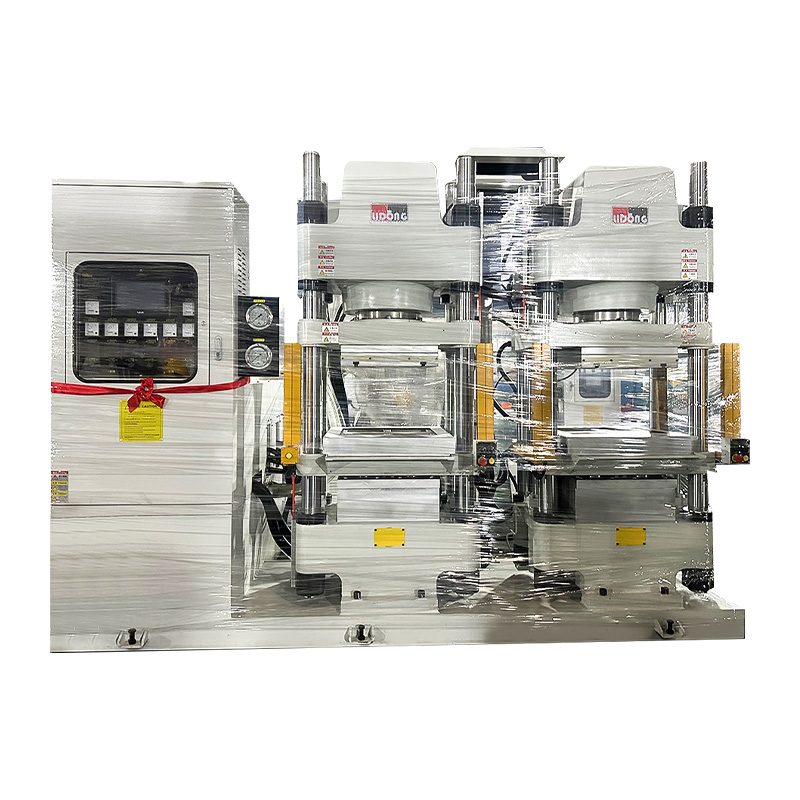
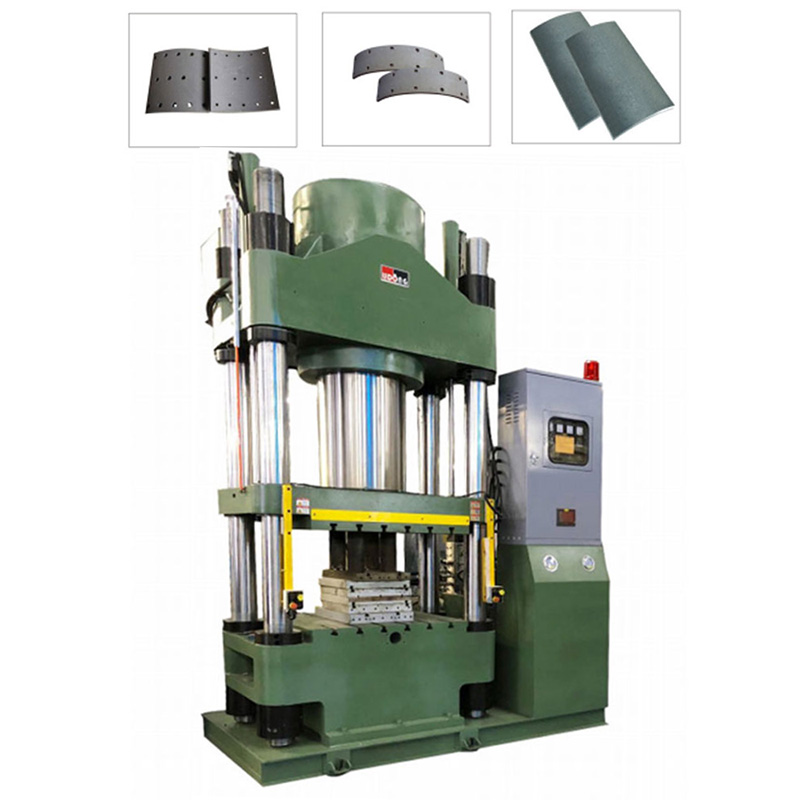
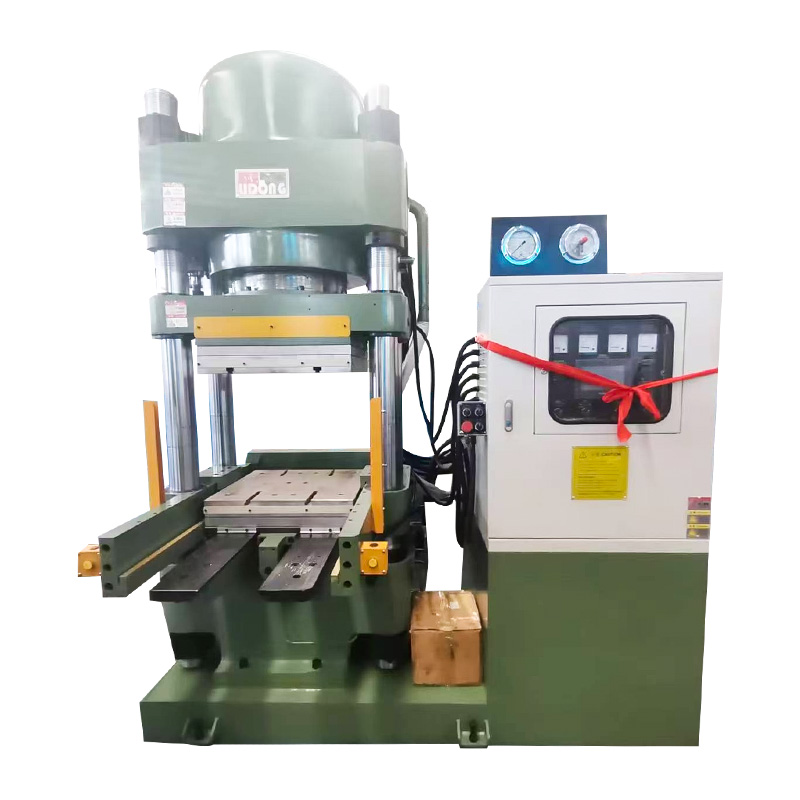
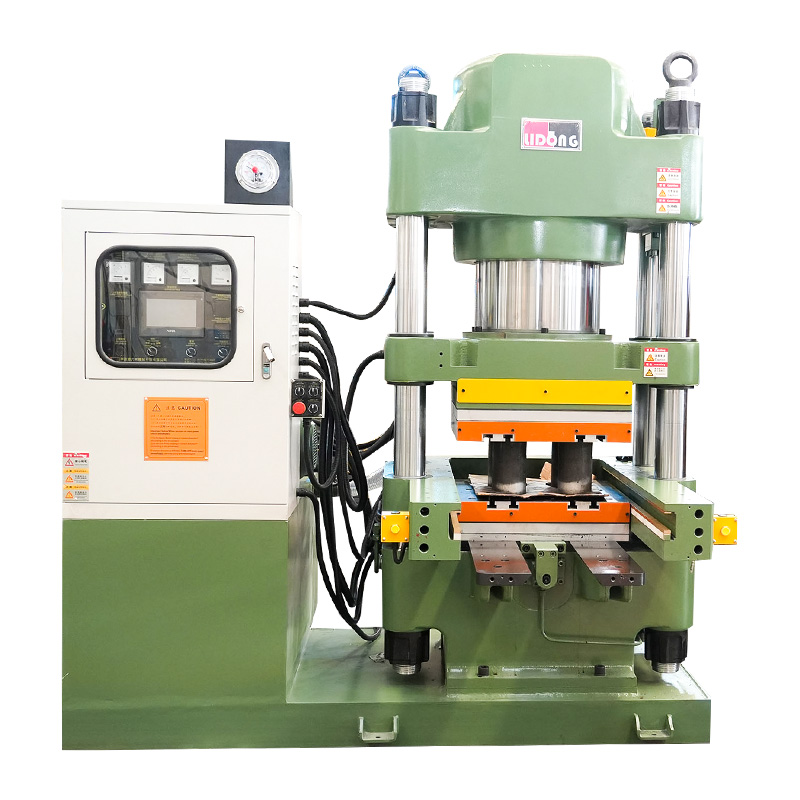
Technical Parameters
The table lists typical energy-related features of a brake pad press. Final specifications depend on your platen size, cycle and local conditions, and are confirmed in the technical agreement.
| Feature | Typical Configuration | Where It Saves Energy |
|---|---|---|
| Platen insulation | Insulation boards on top, bottom and sides, with shields on guides | Lower heat loss to the frame and air |
| Zoned heating | Independent PID zones, with edge compensation | Heat only where it is needed, no overshoot |
| Stand-by temperature | Programmable lower setpoint during breaks and mold changes | Lower idle heating |
| Warm-up control | Ramp and soak program | Avoids overshoot and wasted peak power |
| Hydraulic drive | Servo pump or variable-speed drive | Pump runs mainly while the press moves |
| Holding pressure | Closed-loop make-up at low motor speed | Little energy in the long dwell stage |
| Right-sized power | Heating and pump power matched to platen size and cycle | No oversizing, lower losses |
| Energy metering (option) | Meters on heating and drive circuits | Shows kilowatt-hours per shift and per pad |
| Oil cooling | Efficient cooler with thermostat control | Cooling only when needed |
| Control | PLC with recipes and energy-saving routines | Repeatable, efficient operation |
How to read the table: most savings come from insulation, zoned control, stand-by routines and a variable-speed hydraulic drive. These measures work together. Better insulation lowers the heating load, and accurate control avoids waste above the setpoint.
Savings depend on your duty cycle. A press that runs continuously gains most from insulation and hydraulic efficiency, while one that stands idle during breaks gains most from a stand-by routine. Please tell us your platen size, working hours, cycle time and local power price, and we will compare configurations in the quotation.
Practical advice. Ask any supplier for measured energy data, such as kilowatt-hours per hour at working temperature with a mold in place, rather than only the installed power. Installed power tells you the maximum, not what the press really uses.
Special Focus: Where the Energy Goes and What Actually Saves It
The table links each energy measure to where it works and what to watch for.
| Measure | Where It Saves | Trade-Off or Limit |
|---|---|---|
| Better platen insulation | Reduces continuous heat loss | Small extra cost, needs correct installation and shielding |
| Zoned PID control | Avoids overshoot and local overheating | Needs good sensors and tuning |
| Stand-by temperature | Cuts heating during breaks and mold changes | Recovery time must be short enough to avoid waiting |
| Servo or variable-speed pump | Cuts pump energy, especially in long holds | Higher purchase cost, needs clean oil and good drive cooling |
| Right-sizing the press | Lower heated mass and motor size | Must still fit your largest mold |
| More pads per cycle | Spreads heat over more pads | Needs good uniformity and loading |
| Preforming and shorter degassing | Shorter cycles, less heating per pad | Extra equipment and handling |
| Lower scrap | Saves raw material and the energy already used | Depends on process control, not only the press |
A simple illustration: if a press draws an average of about 20 kW for heating and runs 16 hours per day, it uses roughly 320 kWh per day for heating. If better insulation and control reduce the heating load by 15 percent, the saving is about 48 kWh per day. At a power price of 0.10 per kWh, that is a few dollars per day per press, which adds up over a year and across several presses. These figures are only an illustration, and real values depend on your press and power price.
Points that decide results:
- Duty cycle. The more hours the press runs hot, the more insulation matters. The more idle time, the more stand-by routines matter.
- Pad per kilowatt-hour. Energy per pad is the useful measure. A bigger multi-cavity mold on a well-loaded platen usually uses less energy per pad.
- Operating habits. Switching off heaters at the weekend, keeping covers closed and avoiding half-empty platens are free savings.
- Maintenance. Dirty platens, worn insulation and leaking seals all waste energy.
Our precision temperature control brake pad press page describes how accurate control also saves heat, and our PLC controlled brake pad press page covers the control functions that make routines repeatable.
Honest advice. Do not buy on a promised percentage. Ask for measured data, and use your own meter to compare the new press with your present one under the same conditions.
Automation and Control System
An energy-saving press depends on control logic that saves energy automatically, so that it does not rely on operators remembering to do it.
- Stand-by program: platens drop to a set stand-by temperature after a defined idle time and return to the setpoint on a start command or a schedule.
- Ramp and soak warm-up: the control brings platens to temperature at a controlled rate without overshoot, then soaks until uniform.
- Independent PID zones: each zone has its own sensor and output, and unused zones can be reduced when small molds cover only part of the platen.
- Hydraulic drive control: a servo or variable-speed drive runs fast for movement and slow or stopped during holds, with pressure make-up as needed.
- Scheduled start and stop: heaters can start before the shift so that the press is ready on time and switch off at the end.
- Energy display and records: with meters fitted, kilowatt-hours per shift and per cycle can be shown and exported if you permit it.
Handling and automation: keeping the press busy saves energy per pad. Slide-out tables, loading frames and a second mold on a cart reduce the time the press waits, and automatic feeding can be added in stages.
Operator view. The touchscreen shows the active recipe, platen temperatures, cycle time and, if fitted, the energy used in the current shift. An English manual and training material are provided, and remote support is available.
Routine tip. Write a simple start-up and shut-down routine for each shift, covering the stand-by setting, warm-up time and covers, and display it near the press.
Structure and Materials
Energy-saving design shows up in the details of the platen, the insulation and the hydraulic system.
| Component | Design and Material | Purpose |
|---|---|---|
| Platens | Alloy steel, ground flat, zoned heating, no unnecessary extra mass | Even heat and efficient heat-up |
| Insulation | Boards under, beside and above platens, shields near guides | Lower heat loss, lower surface temperature |
| Heaters | Rods or oil channels sized to the load, higher power at edges | Even temperature without oversizing |
| Press frame | Heavy welded steel structure, thermally separated from the platens | Less heat flowing into the frame |
| Hydraulic drive | Servo pump or variable-speed motor with efficient pump | Lower energy in movement and holds |
| Oil cooling | Right-sized cooler with temperature control | Cooling only when needed |
| Cylinders and valves | Low-leakage seals and efficient valves | Less pressure loss and heat in the oil |
| Cabinet and drives | Ventilated or cooled, efficient components | Lower electrical losses |
Thermal separation: heat that flows into the frame, guides and cylinders is wasted and also harms seals and accuracy. We separate platens from the frame with insulating spacers where the design allows and add shields near guides and cylinders.
Oil temperature: a servo or variable-speed system generates less heat in the oil, which reduces cooling needs. We use filters and coolers sized to the actual load, and we recommend oil sampling at regular intervals.
Surface condition: a clean platen conducts heat to the mold better, so less energy is needed to reach temperature. Keep platens clean, and replace insulation that has become compressed or damaged.
Maintenance. Clean platens regularly with non-scratching tools, check insulation and shields at intervals, check cylinder seals for leaks, keep cabinet filters clean and change hydraulic oil and filters according to the manual.
Before shipment, each press is run under load, and temperature uniformity, heat-up behavior, pressure holding and safety functions are checked.
Safety and Energy Efficiency
Energy-saving measures should never weaken safety. In many cases, they improve it, because better insulation also means cooler outer surfaces.
- Insulated surfaces and warning labels on hot parts, with lower surface temperatures from better insulation
- Independent over-temperature protection on each heating zone, separate from the stand-by logic
- Safe restart from stand-by, with a clear display so nobody touches hot molds assuming the press is cold
- Emergency stop at the operator position and at the loading side
- Light curtain or guard doors connected to the PLC
- Hydraulic overpressure protection with a relief valve and pressure monitoring
Handling advice: platens in stand-by are still hot. Treat them as hot at all times, wear heat-resistant gloves and sleeves, and keep walkways clear. Heating the resin releases vapors, and friction mix is dusty, so provide local exhaust above the press, dust collection at feeding and grinding areas and suitable respiratory protection according to local rules.
Energy efficiency in operation: the biggest savings come from routines. Use stand-by during breaks, avoid starting heaters long before they are needed, load the platen as fully as the process allows, keep covers and insulation in place and fix leaks promptly. Keeping a record of energy per pad, even a simple one, helps you see when something changes.
Efficiency of the whole line: the press is only one consumer. Post-cure ovens, compressed air, dust extraction and cooling water often use as much energy. We can discuss the line with you and point out where the largest savings lie.
Tell us your working hours and local power price, and we will compare options in the quotation.
Training and records. Keep a log of safety checks, insulation checks and oil changes. A monthly test of the emergency stop, light curtain and over-temperature cut-off keeps the press dependable.