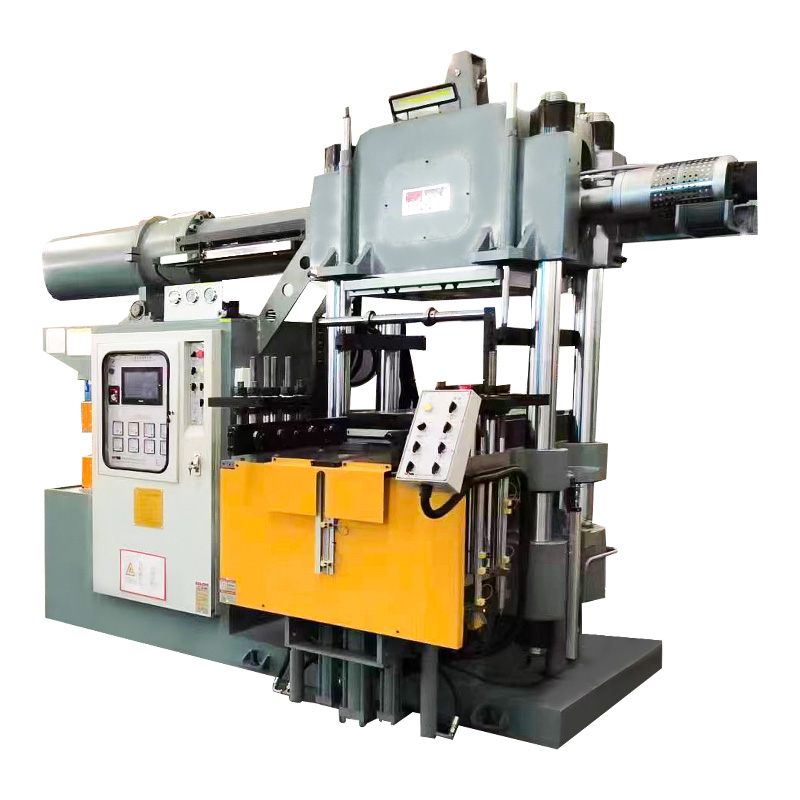
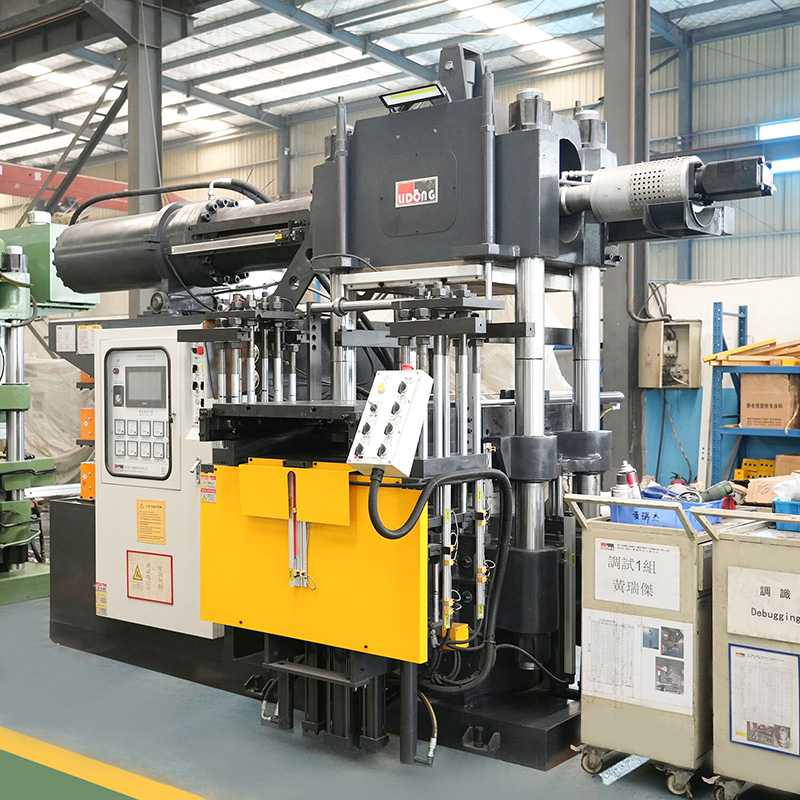
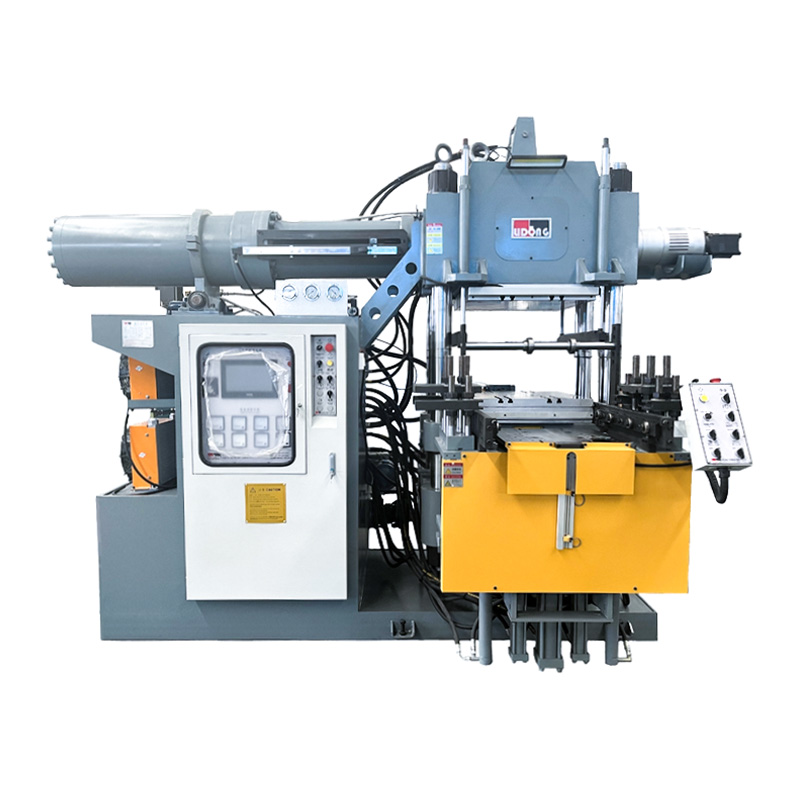
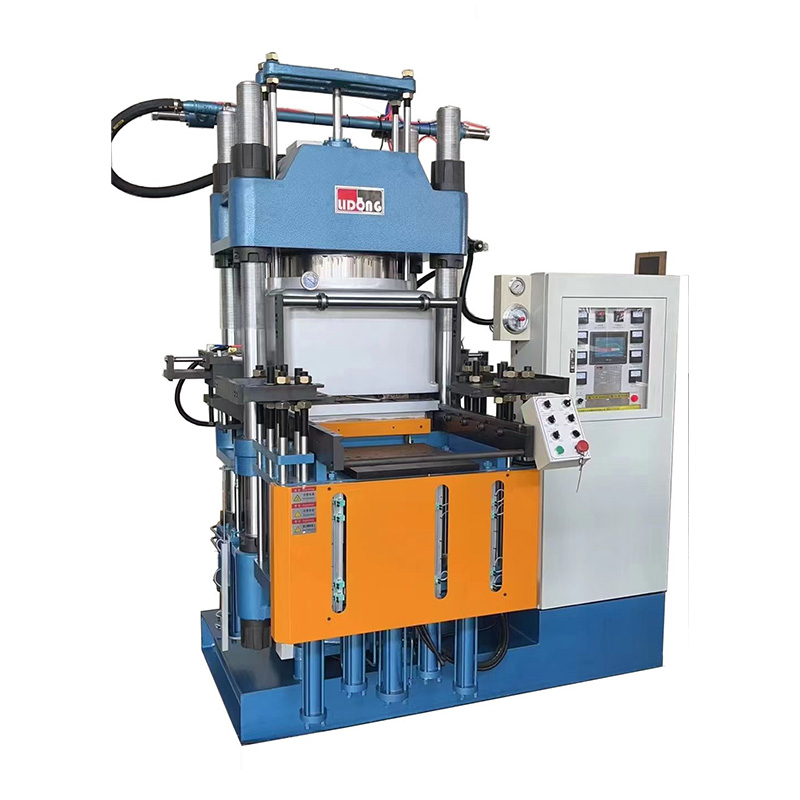
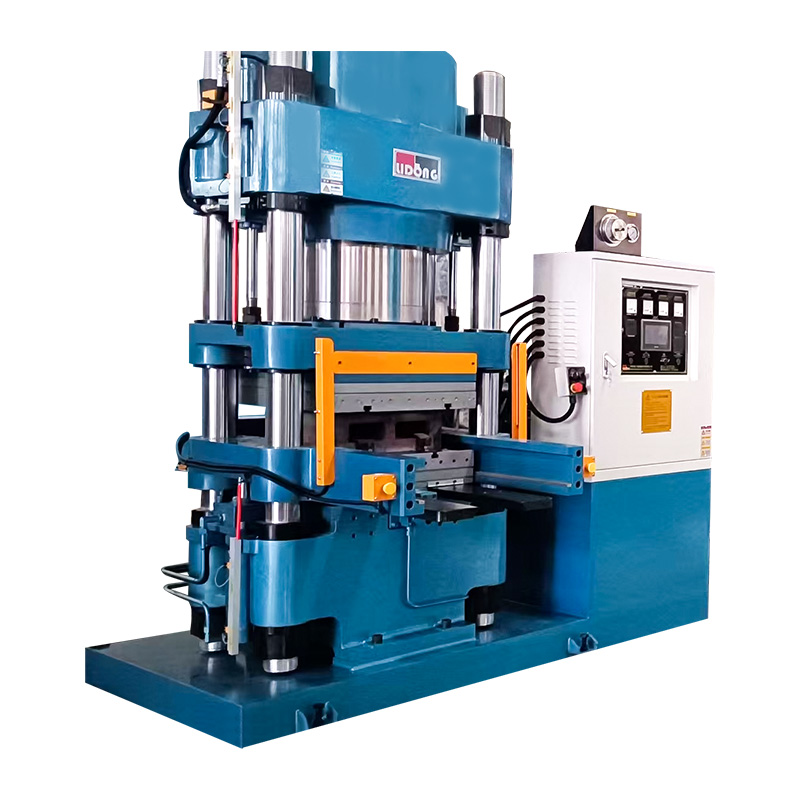
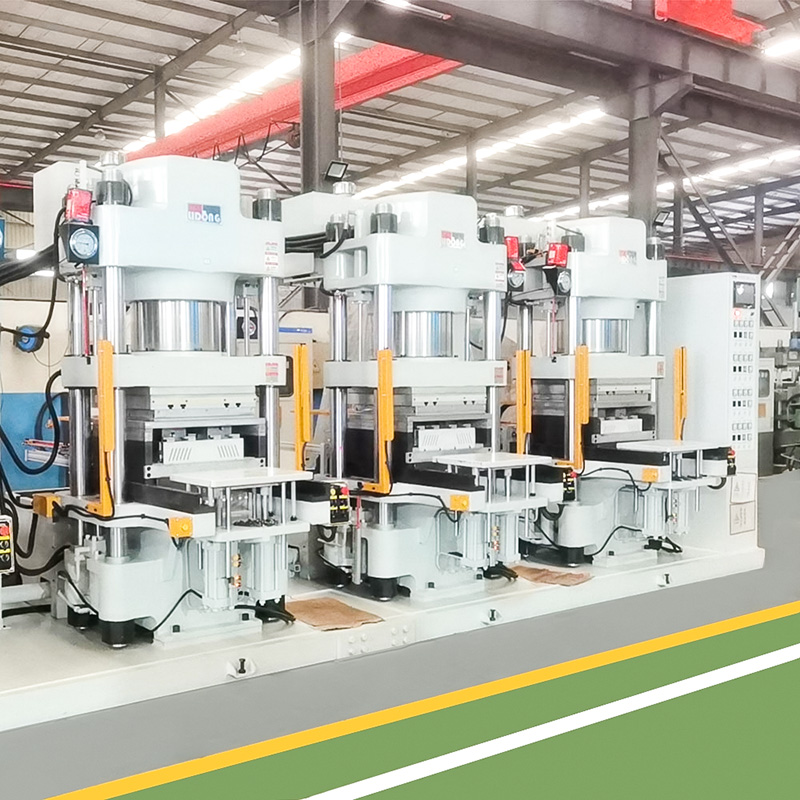
Liquid Silicone Injection Machine Working Principle and Process Flow
The
Liquid Silicone Injection Machine begins with a carefully controlled material preparation stage, because the quality of the final molded product starts long before the injection step. Liquid silicone rubber is usually supplied as two separated components, a base material and a curing agent, and each component must remain clean, stable, and free from contamination before it enters the mixing and metering system. In the engineering solutions developed by Ningbo Delidong Machinery Technology Co., Ltd., the feeding section is designed to support stable material delivery, steady pressure, and clean transfer conditions so the entire molding process can begin from a reliable foundation. The material storage area normally uses sealed containers or drums to protect the silicone from dust, moisture, and unnecessary exposure to ambient conditions. Since liquid silicone has a specific viscosity range that affects pumping behavior, temperature conditioning is often applied to keep the material within a suitable working state. If the material becomes too thick, flow resistance rises and the downstream metering system must work harder. If the material becomes too warm, handling stability may decrease. For that reason, the material storage and feeding stage is not simply a holding step, but a controlled preparation stage that shapes the stability of the entire process.
In a well-designed machine platform from Ningbo Delidong Machinery Technology Co., Ltd., the feeding unit is engineered to support continuous, smooth, and clean material transfer. This can include pressurizing devices, suction structures, filters, and sealed pipelines that reduce the chance of air entering the system. Air inclusion may create bubbles in the mixed silicone, and bubbles may later appear as voids or weak points in the molded part. The storage and feeding stage therefore must be arranged to support both cleanliness and flow consistency. Material conditioning is also tied to production consistency across long operating periods. A stable feeding environment reduces variation in viscosity, and stable viscosity supports stable metering. That connection is one reason the material preparation stage deserves close attention in professional LSR processing. In industrial use, operators often monitor drum pressure, feed temperature, material purity, and replenishment timing so production can continue without interruption. Ningbo Delidong Machinery Technology Co., Ltd. focuses on this front-end stability because accurate feeding creates the starting conditions for accurate proportioning, accurate mixing, and accurate injection. When the preparation stage is well controlled, the rest of the process becomes easier to maintain, and product quality becomes more repeatable from cycle to cycle.
| Parameter Name |
Unit |
Typical Range / Value |
Description |
| Mixing Ratio Accuracy |
% |
±1% – ±3% |
Precision of base material and curing agent proportioning |
| Cycle Time |
seconds |
10 – 120 |
Total time required to complete one molding cycle |
| Mixing System Type |
— |
Static / Dynamic Mixer |
Type of mixing mechanism used for homogenizing materials |
| Control System |
— |
PLC + HMI |
Automation and monitoring system for machine operation |
| Power Consumption |
kW |
5 – 50 |
Total energy consumption depending on machine size and configuration |
After the material reaches the working supply stage, the next major step in a Liquid Silicone Injection Machine is precision metering. This stage determines the exact quantity of each silicone component that moves into the system and directly influences cure consistency, product hardness, and dimensional stability. The machine must deliver a fixed ratio of base material and curing agent with high repeatability, because even a small deviation can alter the chemical reaction inside the mold. In the equipment developed by Ningbo Delidong Machinery Technology Co., Ltd., this function is supported by a carefully engineered proportioning system that aims to keep output steady under continuous production conditions. Metering may rely on servo-driven pumps, hydraulic components, or other precise dosing structures, depending on the machine configuration and process requirement. The purpose of the system is to measure both volume and flow with a level of accuracy that matches the demands of silicone molding, where tiny ratio changes may lead to visible and functional defects.
Ratio control in LSR processing is not simply a numerical target. It is a dynamic operating condition that must remain stable as material temperature, container level, flow resistance, and cycle rhythm change throughout the day. For that reason, Ningbo Delidong Machinery Technology Co., Ltd. integrates advanced control logic into the metering stage so adjustments can be made as operating conditions shift. Pressure sensors, flow feedback devices, and control algorithms may work together to maintain balance between the two streams. This helps the machine maintain a constant composition from the first shot to the last shot in a production batch. Stable metering also reduces waste, because excess material caused by overfeeding or imbalance can be avoided before it enters the mold. In a practical production line, operators often rely on the metering system to manage repeatability across different part sizes and different mold structures. The accuracy of this stage supports downstream quality, shorter correction time, and smoother production scheduling. The design philosophy used by Ningbo Delidong Machinery Technology Co., Ltd. emphasizes steady pump action, low fluctuation, and durable long-term performance, so the machine can maintain the required ratio under extended industrial operation. A strong metering stage creates the foundation for a uniform mixture, and a uniform mixture creates the foundation for predictable curing and accurate finished parts.
Once the two silicone components are metered, the material enters the mixing stage, where the separate streams are combined into a uniform reactive mixture. This stage is a central part of Liquid Silicone Injection Machine operation because homogeneous mixing determines how evenly the curing reaction will proceed once the material reaches the mold. A poor mix can create areas that cure unevenly, produce streaks, or leave unreacted zones inside the finished part. The systems designed by Ningbo Delidong Machinery Technology Co., Ltd. are built to support uniform material blending through stable flow geometry and efficient internal mixing structures. In many LSR systems, static mixers are used because they split and recombine the material repeatedly as it passes through the mixing chamber, producing a more uniform blend without requiring complex moving parts. In other machine designs, dynamic mixing mechanisms may be introduced to improve material exchange and support a higher level of homogenization.
The mixing stage must also address the problem of trapped air. Air inclusion may enter during feeding, pumping, or transfer, and any trapped air that remains in the mixture can reduce surface quality or create internal flaws in the molded part. For that reason, vacuum support or venting design is often part of the mixing process. Ningbo Delidong Machinery Technology Co., Ltd. develops equipment with attention to this type of process control, because clean and bubble-free mixing supports both appearance and function. The mixing path, mixer geometry, chamber volume, and flow speed all shape the final result. If the residence time is too short, the two components may not blend evenly. If the residence time is too long, unwanted pre-reaction may begin. The engineering task is to balance these factors so the material remains fully processable and fully mixed when it leaves the unit.
A properly designed mixing stage also supports production consistency across multiple shifts. The same machine can handle repeated cycles with minimal variation when the mixer maintains steady resistance, steady flow, and steady pressure behavior. This is especially valuable in applications requiring tight dimensional tolerance, surface cleanliness, and dependable vulcanization. Ningbo Delidong Machinery Technology Co., Ltd. uses advanced design thinking and manufacturing discipline to help achieve this balance. The result is a blending stage that supports stable chemical reaction behavior, improved material use efficiency, and a cleaner molding result. In professional LSR production, the mixing stage is not a simple combining step; it is the stage where process accuracy becomes material consistency.
After mixing, the material moves into the injection unit, where the machine must deliver the prepared silicone into the mold cavity in a controlled and repeatable manner. This stage transforms the metered and mixed material into a finished part shape, so pressure response, injection speed, and flow control all become highly significant to the final result. The equipment created by Ningbo Delidong Machinery Technology Co., Ltd. is designed to maintain a stable injection response, allowing the material to enter the cavity with balanced pressure and controlled velocity. A reliable injection unit usually contains a drive mechanism, a cylinder or screw system, a pressure control arrangement, and channels that guide the material toward the mold. The entire unit must respond smoothly to command signals so the cavity fills evenly and without sudden pressure spikes.
Mold filling behavior depends on part geometry, gate location, runner design, material viscosity, and injection timing. If the pressure rises too quickly, flash may appear along the parting line. If pressure is too low, the cavity may not fill completely, resulting in short shots or incomplete surface details. Ningbo Delidong Machinery Technology Co., Ltd. applies precision engineering to help control this balance, with the goal of supporting clean cavity filling and repeatable results across production cycles. In many applications, the injection stage must also support multi-point filling or balanced runner systems, especially when the mold contains several cavities or complex internal features. The machine must sustain the correct delivery profile during the entire filling event, not only at the start. That means the injection mechanism must preserve flow stability while the cavity pressure rises, the material front advances, and the mold begins to fill in full.
Operational stability in this stage also supports productivity. A machine that injects with smooth pressure delivery can shorten cycle correction time and reduce the amount of rejected product. The injection response must align with the mold’s thermal state, because the liquid silicone begins curing soon after entering the heated cavity. That creates a narrow process window in which accurate delivery is especially valuable. Ningbo Delidong Machinery Technology Co., Ltd. addresses this requirement by building systems with strong control performance, durable components, and engineering attention to long-term consistency. The injection stage therefore serves as the bridge between prepared material and formed product. A well-managed injection unit gives the machine the ability to fill the cavity evenly, preserve detail, and support stable part geometry from shot to shot.
Once the liquid silicone enters the mold cavity, the curing reaction begins under the influence of mold heat. This stage defines how the part transforms from a reactive liquid into a finished elastomeric product with a fixed shape, stable surface, and specified mechanical properties. Temperature regulation inside the mold is a central part of this transformation. In the systems developed by Ningbo Delidong Machinery Technology Co., Ltd., mold heating and thermal control are designed to support even heat distribution, stable curing conditions, and predictable reaction timing. The mold must reach and maintain a temperature range suitable for the specific silicone formulation. If the temperature is too low, the material may cure slowly or incompletely. If the temperature is too high, the reaction may proceed too quickly and reduce control over surface finish or dimensional stability.
The curing process depends on heat transfer from the mold surface into the silicone mass. This means that wall thickness, cavity depth, runner arrangement, and part geometry all influence the speed and uniformity of vulcanization. A machine platform from Ningbo Delidong Machinery Technology Co., Ltd. is engineered to support stable thermal behavior so the curing process can proceed evenly throughout the cavity. Temperature sensors, heating channels, and control modules may work together to maintain consistency. This is particularly helpful for parts with thick sections, thin ribs, or complicated internal shapes, because uneven heat distribution may otherwise create internal stress or surface variation. The mold heating stage also affects cycle time. Proper thermal balance allows the silicone to cure completely without unnecessary delay, which helps maintain production rhythm and output efficiency.
Curing does not occur in isolation. It interacts with injection speed, mixing uniformity, and cavity filling quality. A stable mold temperature supports a stable reaction rate, and a stable reaction rate supports predictable demolding conditions. Ningbo Delidong Machinery Technology Co., Ltd. emphasizes this thermal stability because it helps maintain part consistency over long production runs. In practical use, operators often track mold surface temperature, heating zone behavior, and cure duration to keep the process aligned with product requirements. The curing stage is therefore not simply a waiting period after injection; it is an actively managed transformation stage where the machine, mold, and material work together to build the final shape and performance of the part. Good thermal control gives the product a cleaner finish, more consistent dimensions, and stronger process repeatability.

 English
 عربى
عربى
 中文繁体
中文繁体