English
 عربى
 中文繁体

Content
Post-curing is the key process that follows hot press molding in brake pad production. Its purpose is to fully cross-link the resin inside the friction material, stabilize the friction coefficient, improve bonding strength, and prevent the finished product from suffering performance degradation, delamination, or deformation later on. Many factories focus only on adjusting the curing oven parameters while overlooking this: most defects that appear in post-curing originate in the earlier hot press molding stage. The quality of the blanks coming out of the hot press directly determines the upper limit of the post-curing yield.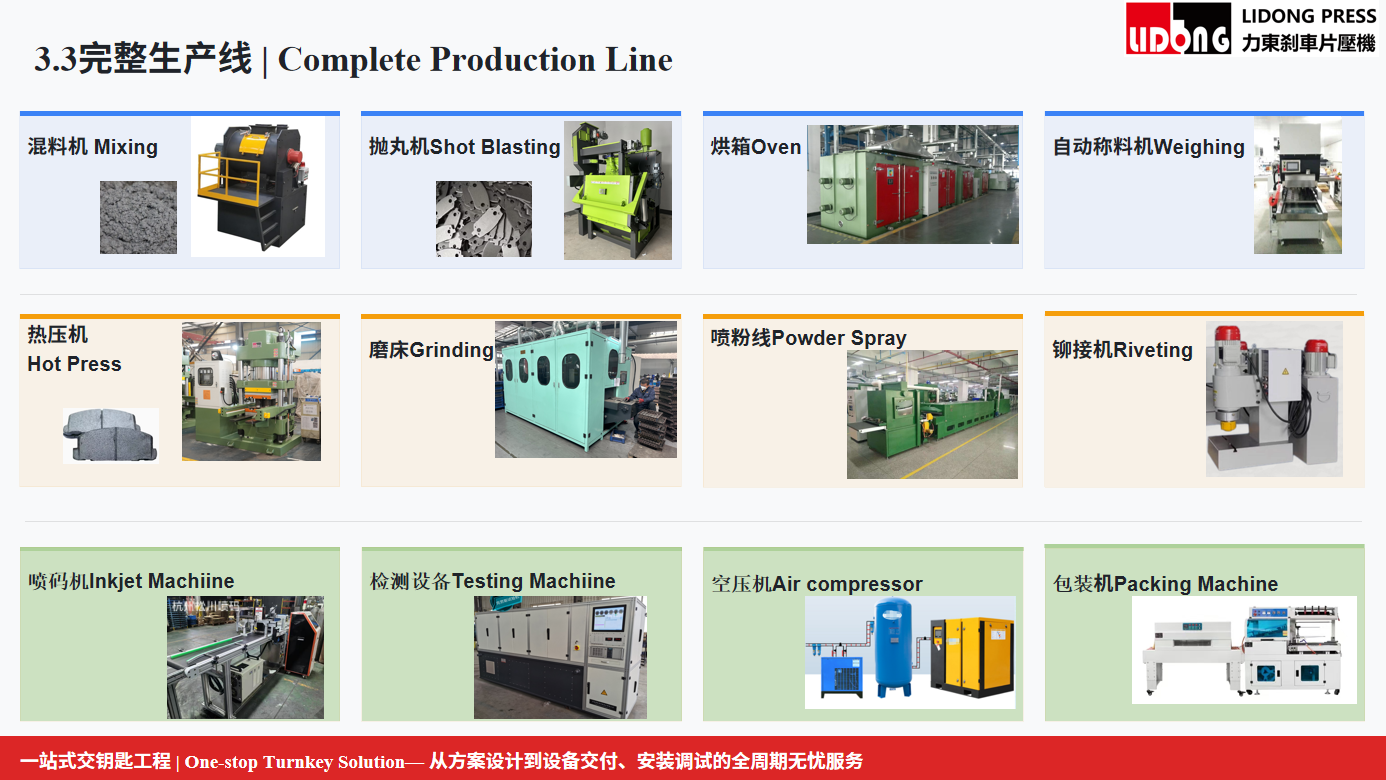

I. The Core Functions of Post-Curing
- Complete the deep curing of the resin and stabilize the internal structure of the friction material;
- Eliminate the residual internal stress left over from the hot press molding stage;
- Further improve the bonding strength between the friction layer and the steel backing plate;
- Stabilize the friction coefficient and reduce performance fluctuation in dynamometer testing.
If the dwell pressure is insufficient, venting is inadequate, or blank density is uneven during hot pressing, then even a perfectly standard curing oven profile will still tend to cause blistering, warping, and delamination during the post-curing heat-up.
II. Frequent Post-Curing Defects, Traced Back to Hot Press Molding Causes
-
Warping and deformation during post-curing
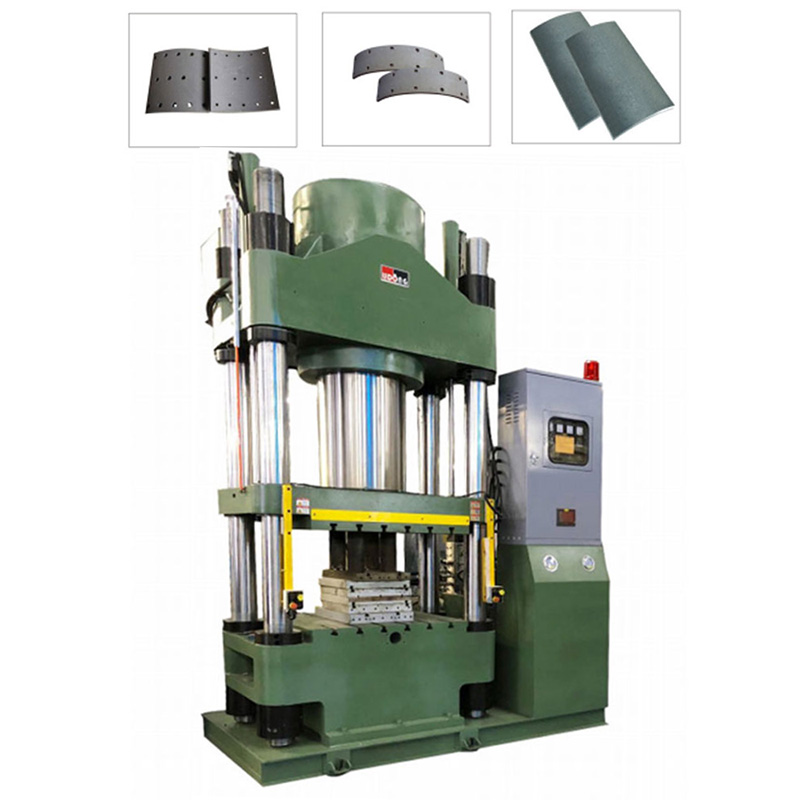
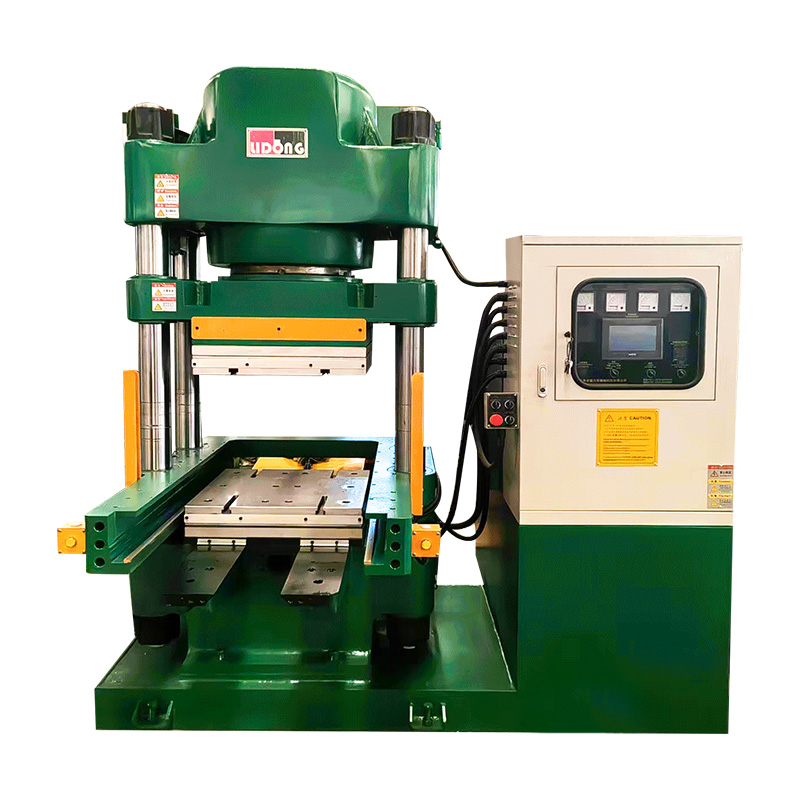
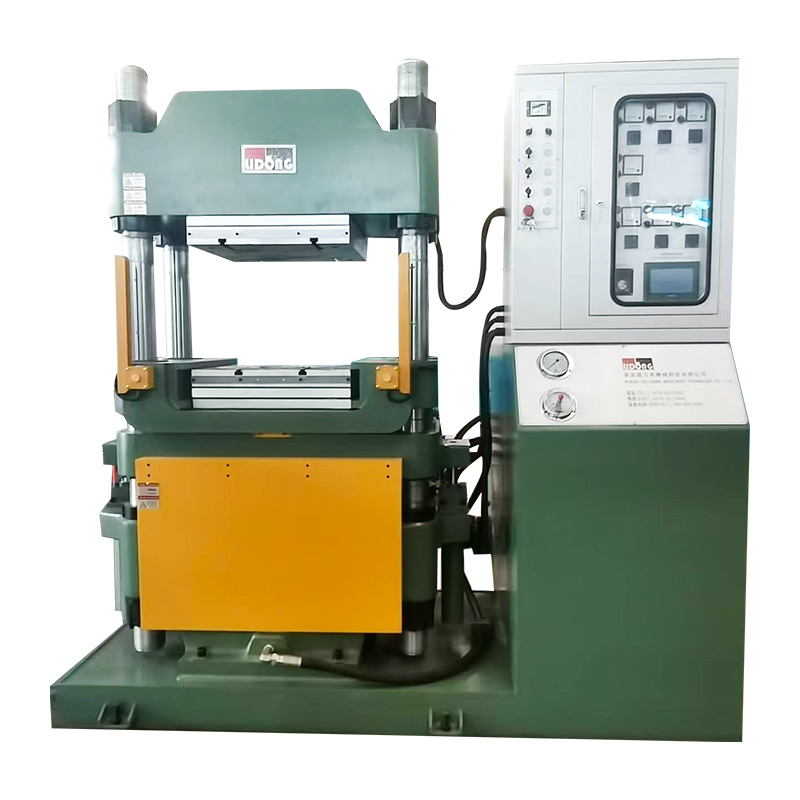
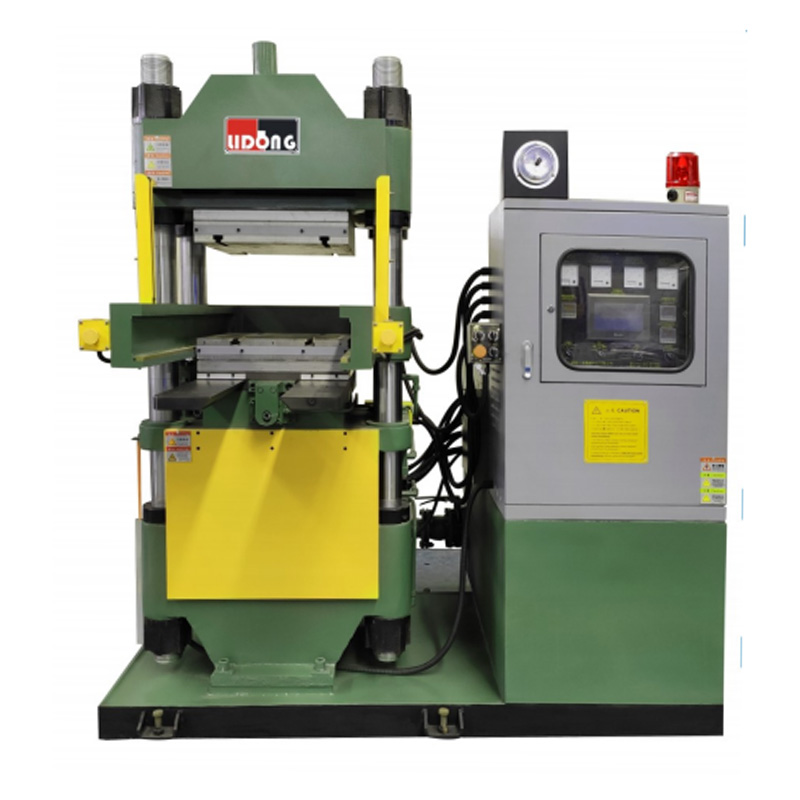
Blank density is inconsistent across different areas, and internal stress is unevenly distributed. This mostly comes from deviations in press platen parallelism, uneven pressure across multiple cavities, or large mold temperature differences.The Deli Dong brake pad press uses a closed-loop hydraulic control system and a heating-plate uniform-temperature design to ensure uniform blank density in every mold and every cavity, reducing internal stress at the source and lowering the risk of deformation during post-curing.
-
Internal blistering and bulging during post-curing
Volatiles are not fully discharged during hot pressing, so hidden pores are trapped inside the blank. When the blank heats up in the curing oven, the gas expands and forms bulges.Our press supports custom multi-stage venting ("breathing") curves. Pressure can be released and vented multiple times according to different formulations, fully discharging the volatile components in the mixed material and laying a stable foundation for the post-curing process.
-
Steel backing debonding and delamination during post-curing
If the hot press molding pressure is insufficient or the dwell time is too short, the early-stage resin cure is inadequate and the bonding foundation is weak, so peeling occurs once heat is applied during post-curing.The equipment can precisely lock the molding pressure and dwell time parameters, and process recipes can be saved with one click, avoiding insufficient pressure caused by manual, arbitrary parameter adjustments.
-
Large batch-to-batch performance differences
The weight and compactness of the blank in each mold fluctuate widely. After entering the curing oven, the resin cures at inconsistent rates, and ultimately the friction performance of brake pads within the same batch is scattered.Paired with an automatic weighing and material-spreading module and stable pressure output, blank consistency is ensured, and the performance of the post-cured finished products is more stable.

III. Approach to Coordinated Commissioning of Hot Pressing and Post-Curing
- First confirm the basic process at the hot press: raw material moisture content, venting program, molding temperature, and dwell time must all be verified;
- The cooling rhythm of blanks after hot press demolding must not change abruptly. The press is equipped with an adjustable synchronized ejection mechanism to avoid creating new stress at the moment of demolding;
- Match the hot pressing process to the material type: NAO, semi-metallic, and copper-free eco-friendly materials each have different curing windows, and multiple sets of processes can be stored separately in the press;
- The heating rate of the curing oven must match the condition of the blank. When the blank quality itself is stable, the difficulty of tuning the curing profile drops significantly.
IV. Equipment Selection Reference: Balancing Hot Pressing with the Needs of Downstream Curing
Many ordinary presses can only achieve "pressing and forming" and cannot control the internal stress and density of the blank, which plants hidden risks for post-curing.
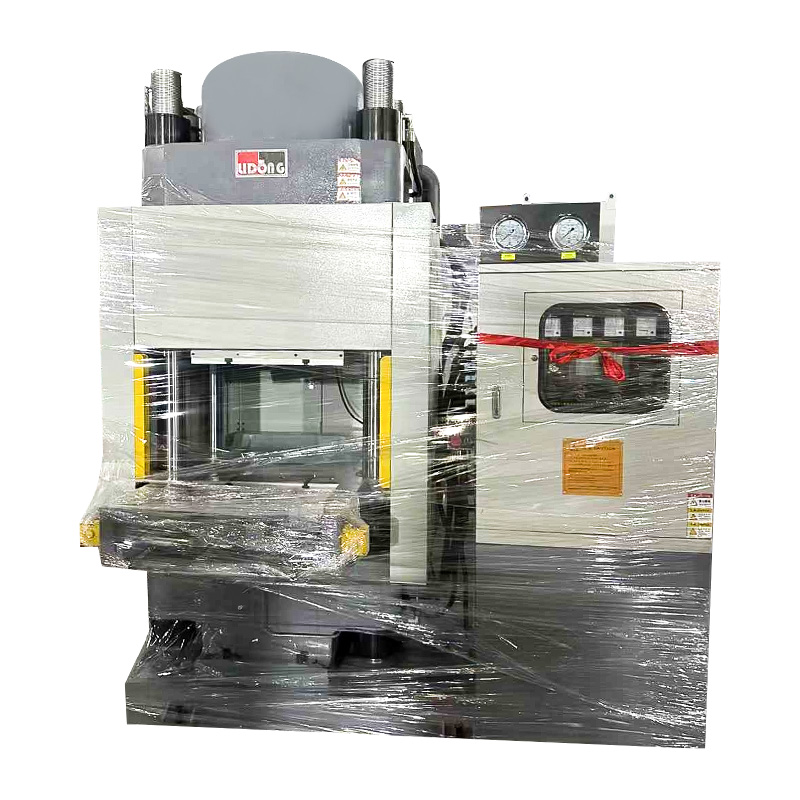
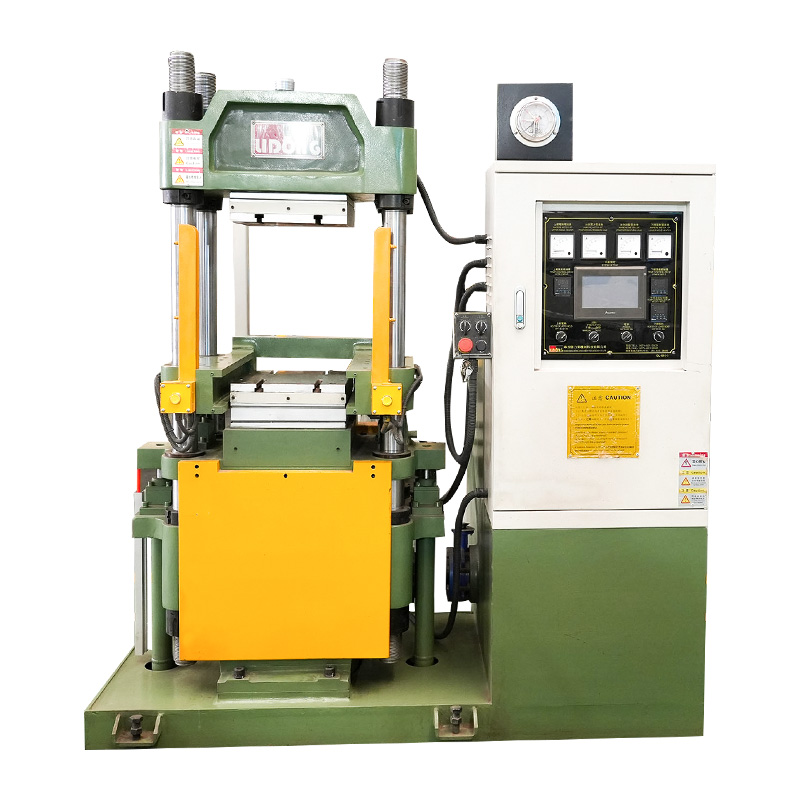
The Delidong brake pad hot press does more than complete press molding;
High-precision closed-loop pressure control with balanced pressure across multiple cavities;
Freely editable multi-stage venting curves, suitable for various resin systems;
Zoned constant-temperature heating plates for uniform cavity temperature;
Process recipe library management for quick switching between materials and products;
It can be connected to automated feeding and pre-forming to stabilize blank consistency, making it suitable for high-standard post-curing export orders.
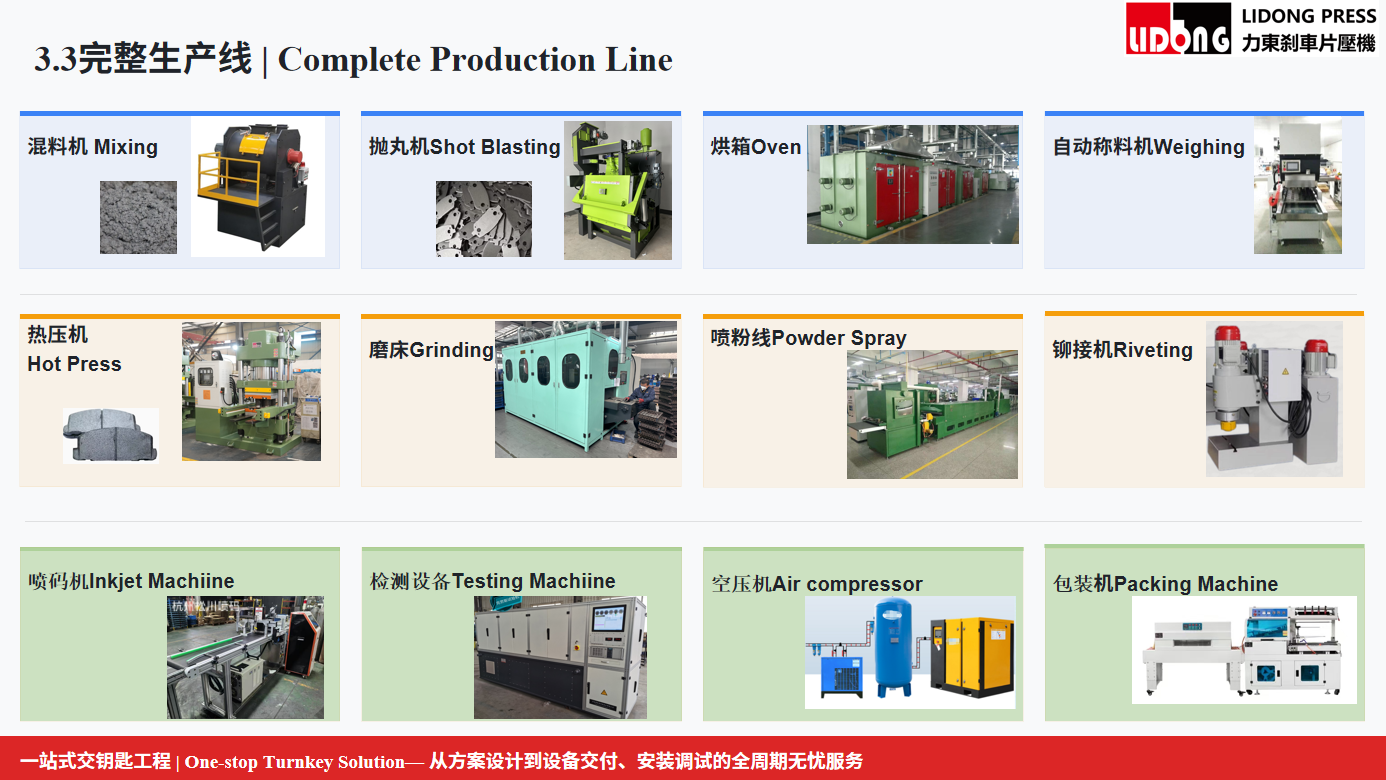
Summary
Post-curing is not a process that can be done well by the curing oven alone; it is closely tied to the upstream hot press molding. Stable blank quality is the prerequisite for post-curing yield. By choosing a brake pad press with programmable processes and precise pressure and temperature control, risks are kept within the molding stage, giving the whole production line a higher yield and making it better suited to mass production of export brake pads.