How to Choose the Right High-Speed Rail Brake Pad Press Machine for Production?
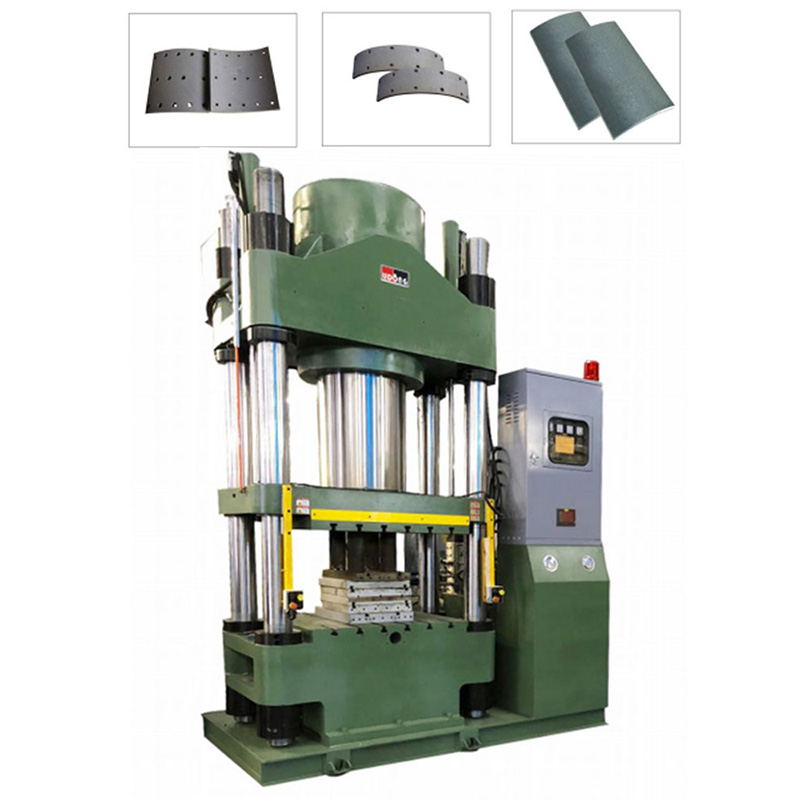
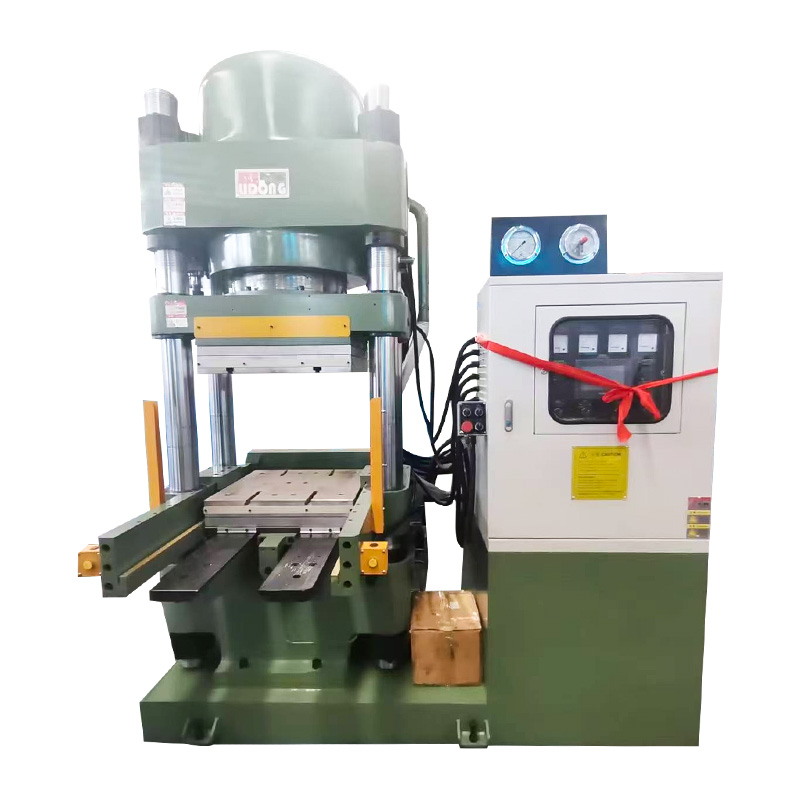
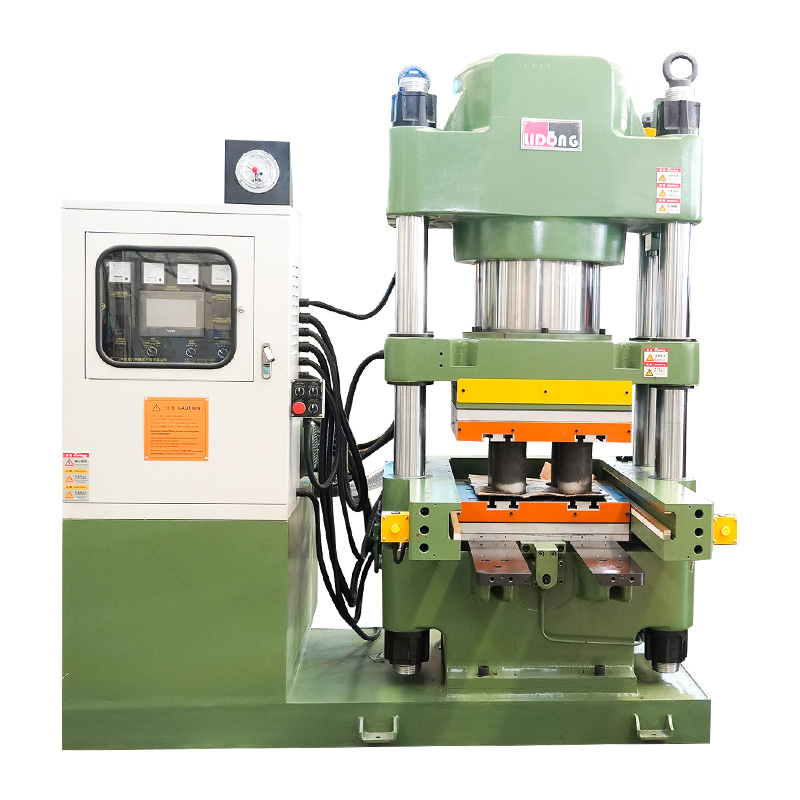
The selection of the right high-speed rail brake pad press machine is a decision that carries consequences far beyond the production floor. High-speed rail brake pads are safety-critical components they are the primary mechanism by which trains traveling at speeds exceeding 300 kilometers per hour are brought to a controlled stop and the machine that manufactures them must be capable of meeting the most demanding precision, consistency, and reliability standards in the railway component manufacturing industry. A well-chosen high-speed rail brake pad press machine is not merely a production tool; it is the foundation of a manufacturer's ability to meet the stringent certification and quality requirements that high-speed rail operators worldwide impose on every brake component entering their supply chain.
Understanding what distinguishes a suitable high-speed rail brake pad press machine from an inadequate one requires familiarity with both the technical requirements of the pressing process and the specific demands of high-speed rail brake pad specifications. Unlike conventional brake pads for automotive or light rail applications, high-speed rail brake pads must perform reliably across a much wider range of operating conditions from light service braking at moderate speed to emergency stops from maximum speed and must do so with a consistency of friction coefficient, wear rate, and compressive strength that leaves no room for the production variability that would be acceptable in lower-criticality applications.
Hydraulic System Specification: Pressure Range and Control Precision
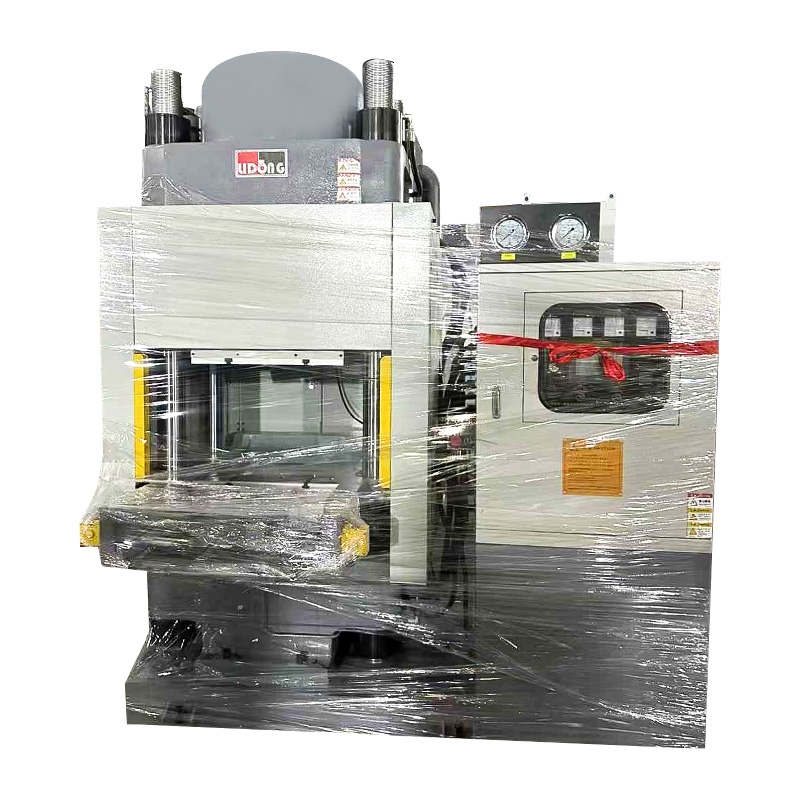
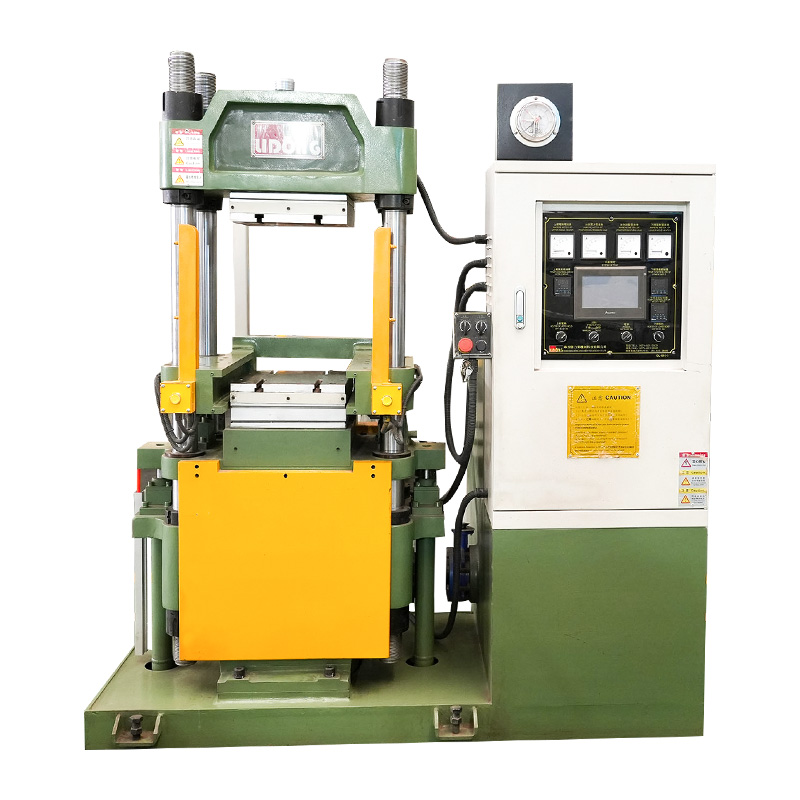
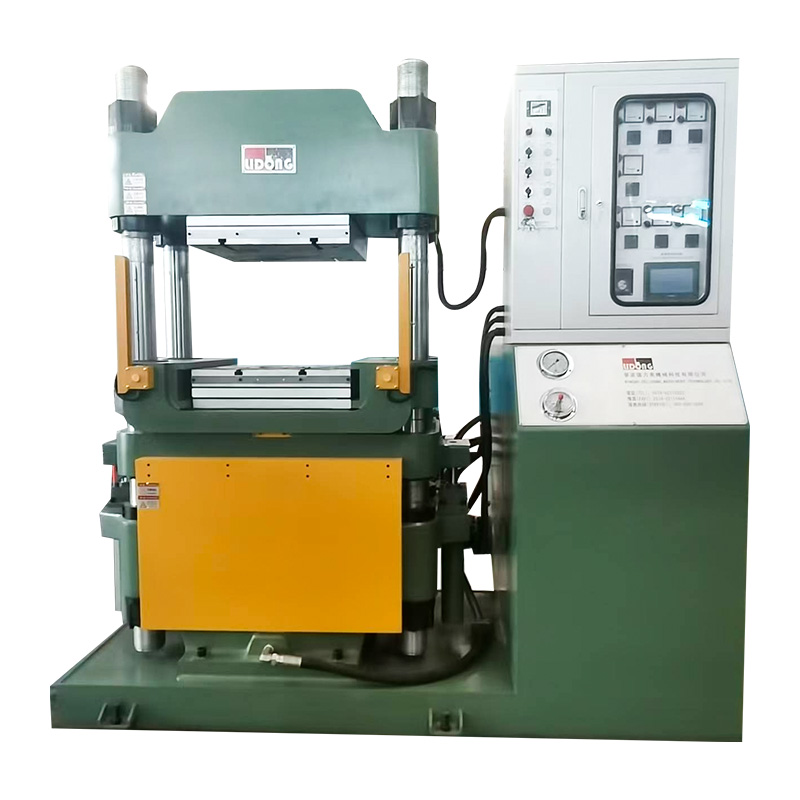
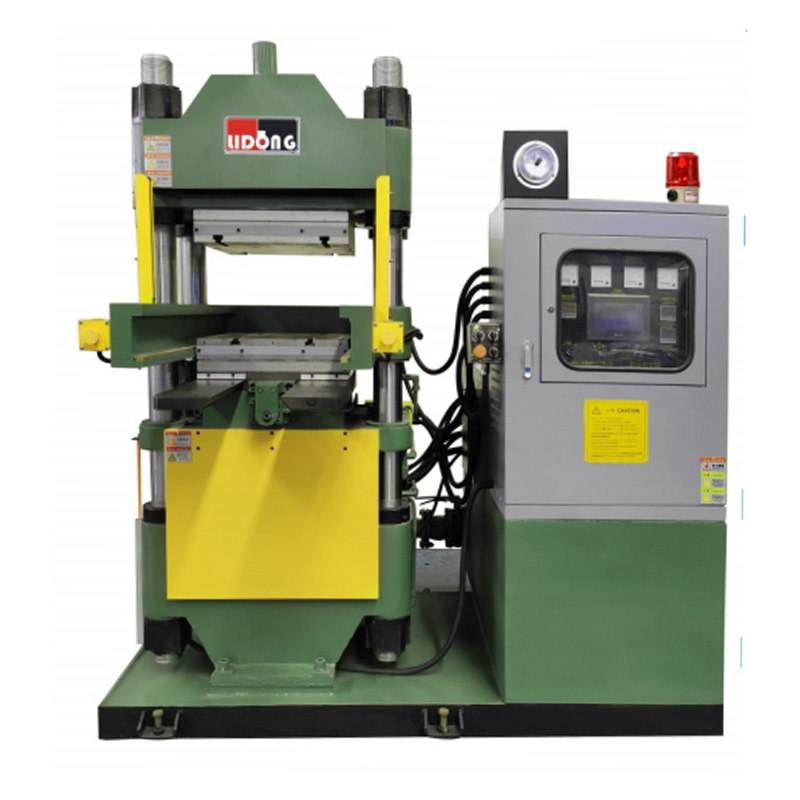
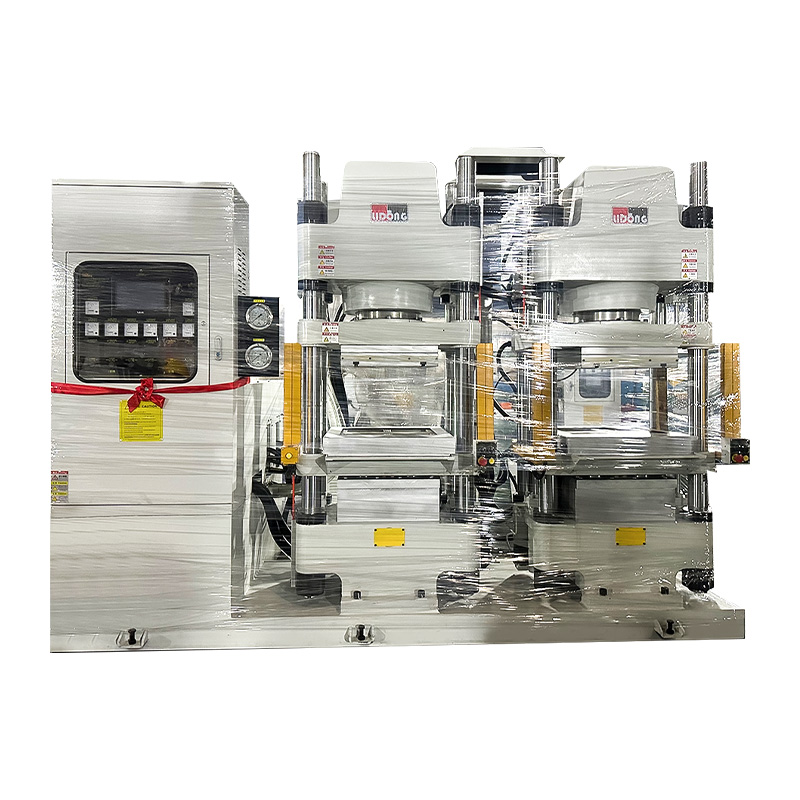
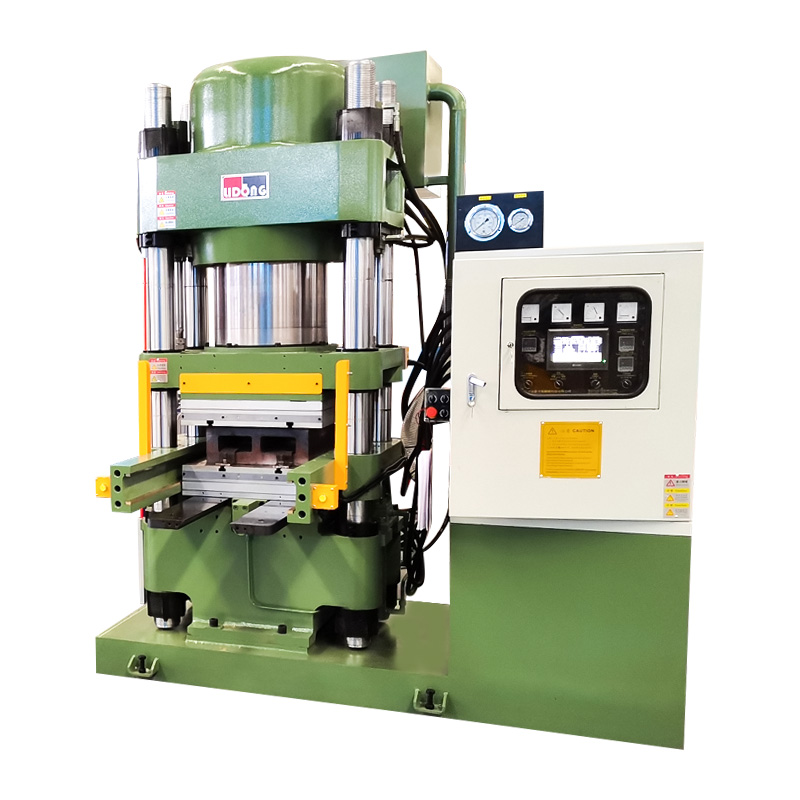
The hydraulic system is the performance heart of any high-speed rail brake pad press machine, and its specification is the first evaluation criterion for any serious buyer. The maximum pressing force must be adequate for the largest mold configurations used in production, with sufficient margin to maintain pressure consistency as mold wear and compound variability introduce minor resistance variations across production runs. For high-speed rail brake pad production, pressing forces in the range of 1,000 to 4,000 kilonewtons are typical, depending on mold size and the number of cavities pressed simultaneously.
Pressure control precision is equally important. The hydraulic system must be capable of building pressure at a controlled rate avoiding the pressure spikes that cause compound flash and dimensional inconsistency and maintaining set-point pressure with minimal deviation throughout the dwell phase. High-quality high-speed rail brake pad press machines use closed-loop hydraulic control systems with servo valves or proportional valves that respond to feedback from pressure sensors in real time, maintaining pressure stability to within one to two percent of set point. This level of control precision is essential for producing brake pads with the uniform density and dimensional accuracy that high-speed rail specifications demand.
Temperature Control System: Uniformity Across the Platen
High-speed rail brake pad production uses hot-press molding, in which the friction material compound is pressed at elevated temperature typically in the range of 150 to 200 degrees Celsius to initiate the thermosetting resin cure that gives the finished pad its mechanical strength and wear resistance. The quality of the temperature control system in a high-speed rail brake pad press machine is therefore as critical as the quality of the hydraulic system, because temperature non-uniformity across the platen surface creates differential curing that results in density and hardness gradients within the finished brake pad.
Quality high-speed rail brake pad press machines use electrically heated platens with multiple independently controlled heating zones distributed across the platen surface, combined with high-accuracy thermocouples at multiple measurement points and PID control loops that actively manage temperature uniformity. The target is a temperature uniformity specification of plus or minus three to five degrees Celsius across the full platen area under operating conditions a performance level that requires careful heater element design, precise thermal insulation of the platen assembly, and a control system capable of compensating for the heat losses that occur at platen edges and at mold contact surfaces.
Frame Rigidity and Guide System Precision
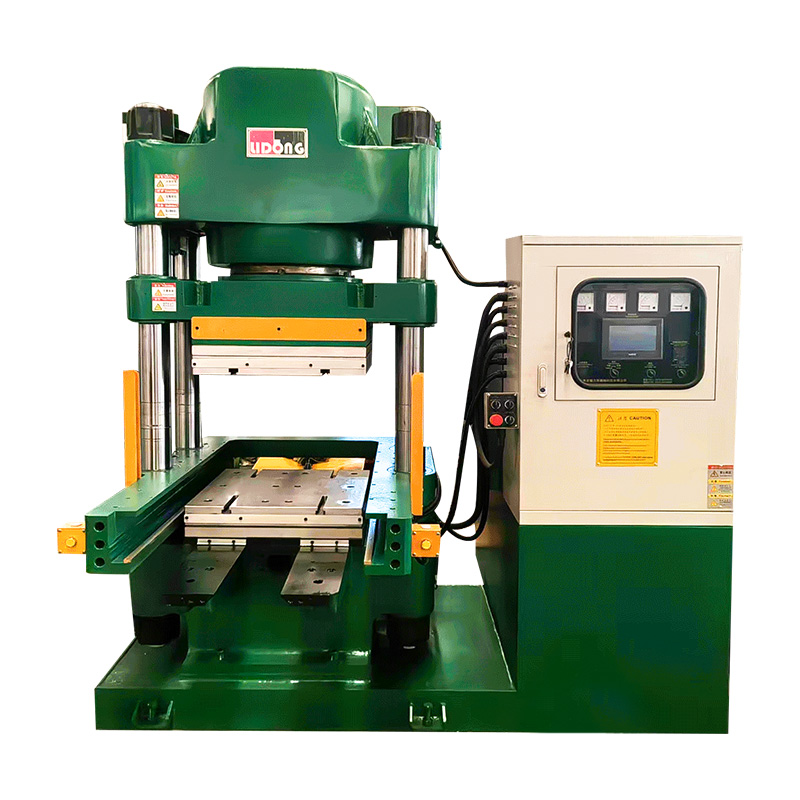
The structural frame of a high-speed rail brake pad press machine must transmit the full rated hydraulic force to the mold with negligible deflection, maintaining parallel platen alignment throughout millions of press cycles. Frame deflection under load is a direct source of pressure non-uniformity if the press platens tilt even fractionally under load, the pressure distribution across the mold face becomes non-uniform, with one side or corner of the mold receiving higher pressure than the other. In high-speed rail brake pad production, where density uniformity specifications are particularly tight, even small amounts of platen tilt are unacceptable.
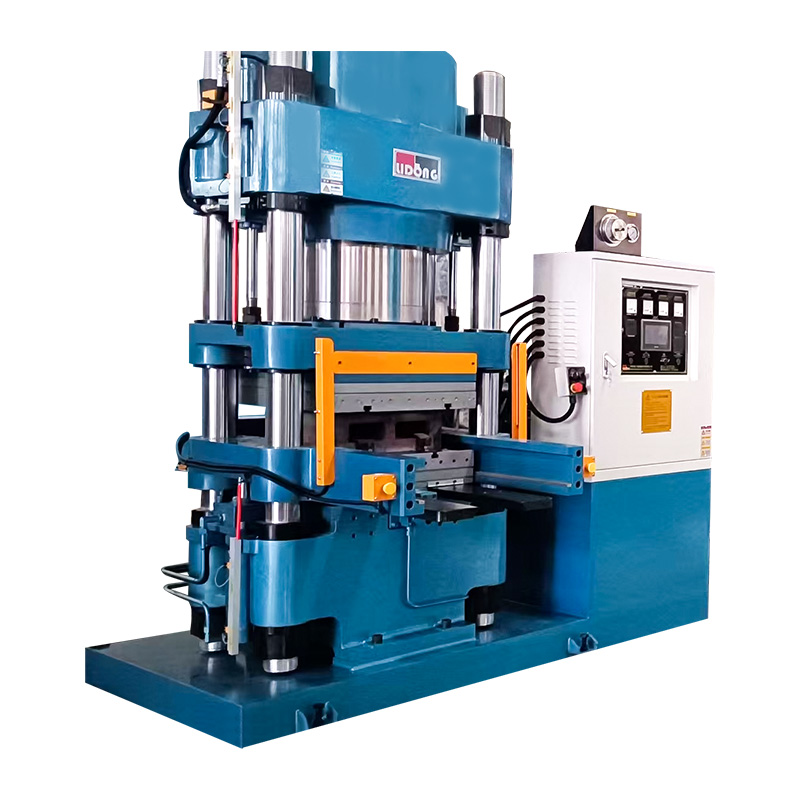
The guide column system four precision-machined columns at the corners of the press, with bronze or composite guide bushings in the moving platen is the mechanical mechanism that maintains platen parallelism through the press stroke. Column diameter, surface hardness specification, and the lubrication system that maintains the guide interface all determine how well platen parallelism is maintained as the machine accumulates operating cycles. A well-specified high-speed rail brake pad press machine will maintain its original platen parallelism specification for many millions of cycles with scheduled maintenance, rather than degrading progressively as guide wear accumulates.
Control System and Process Data Management
The control system of a modern high-speed rail brake pad press machine is a sophisticated programmable automation platform that manages every aspect of the pressing cycle, monitors process parameters against specified limits, generates alarms when deviations occur, and logs complete process records for every part produced. PLC-based control platforms with intuitive touchscreen interfaces allow operators to call up product-specific pressing programs, monitor real-time process data during the pressing cycle, and review historical production data for quality analysis purposes.
Ningbo Delidong Machinery Technology Co., Ltd., recognized among China High-Speed Rail Brake Pad Press Machine Manufacturers for its advanced engineering capability, integrates sophisticated control and data management systems into its press machines supporting the process traceability and quality documentation requirements that high-speed rail component supply chains demand. The company's recognition as a National High-Tech Enterprise reflects the depth of control system and automation technology embedded in its product range.
How Does a High-Speed Rail Brake Pad Press Machine Ensure Uniform Density?
Uniform density is the single most important quality attribute of a high-speed rail brake pad, because it is the physical property from which all other performance characteristics friction coefficient stability, wear rate consistency, compressive strength, and thermal stability ultimately derive. A brake pad with density variation across its thickness or across its face will exhibit variation in all of these performance properties, making its behavior in service difficult to predict and potentially unsafe under the extreme conditions of emergency braking from high speed. The engineering challenge for a high-speed rail brake pad press machine is to translate the hydraulic force of the press into a genuinely uniform compressive stress field throughout the material compound in the mold a challenge that involves careful management of pressure, temperature, material flow, and mold design simultaneously.
The Mechanics of Density Variation in Compression Molding
Density variation in compression-molded brake pads arises from two fundamental sources: non-uniform pressure distribution at the mold face, and non-uniform temperature distribution across the mold that causes the material compound to reach its flow and curing temperature at different times in different areas. Both sources of density variation can be addressed through press machine design, but they require different engineering solutions that must be implemented simultaneously to achieve the uniform density that high-speed rail specifications require.
Pressure non-uniformity at the mold face is caused by platen deflection under load, guide column misalignment, and the inherent pressure gradient that develops in material compounds as they flow within the mold cavity during the pressing phase. As the press closes and the compound begins to flow, areas of the mold that are filled first develop higher local pressure than areas that fill later a phenomenon driven by the viscous flow resistance of the compound and the geometry of the mold cavity. Managing this flow-driven pressure gradient requires a combination of optimized mold design and controlled pressing speed that allows the compound to distribute fully before pressure is built to its final value.
Servo Hydraulic Control and Pressure Profile Optimization
Advanced high-speed rail brake pad press machines use servo hydraulic systems in which a servo motor drives a variable-displacement hydraulic pump rather than conventional fixed-displacement pump systems. Servo hydraulic systems offer significantly better pressure control precision and response speed than conventional systems, because the pump output can be varied continuously and rapidly in response to feedback from pressure sensors at the mold face. This capability allows the pressing speed and pressure build-up rate to be controlled with a precision that ensures the compound flows uniformly to fill the mold cavity before significant curing begins, minimizing the flow-driven pressure gradients that cause density variation.
The pressing program in a servo-controlled high-speed rail brake pad press machine typically includes a slow-close phase at the beginning of the pressing cycle where the platen approaches the mold at a controlled low speed to allow the compound to begin distributing under light pressure followed by a controlled pressure build-up phase and then a high-pressure dwell phase where the compound cures under maximum pressure. This optimized pressure profile, executed with servo precision, is one of the most effective tools for achieving uniform density in complex mold geometries.
Density Uniformity Factors: Comparison Table
The following table summarizes the main factors affecting density uniformity in high-speed rail brake pad press machine production, with notes on the engineering mechanisms involved and the design features that address each factor.
| Density Variation Factor |
Root Cause |
Impact on Brake Pad Quality |
Engineering Solution in Press Machine |
| Platen deflection under load |
Insufficient frame and platen rigidity |
Edge-to-center density gradient; dimensional variation |
Heavy-gauge welded frame; thick precision-machined platens |
| Guide column misalignment |
Column wear; inadequate lubrication |
Platen tilt; one-sided density gradient |
Precision column grinding; automatic lubrication system |
| Pressure build-up rate too fast |
Fixed-displacement pump; no rate control |
Compound flow incomplete before cure; void formation |
Servo hydraulic system; programmable pressure profiles |
| Temperature non-uniformity |
Single-zone heating; poor platen insulation |
Differential cure rate; hardness variation across face |
Multi-zone PID heating; edge-compensated heater design |
| Compound charge weight variation |
Manual loading; inconsistent charge preparation |
Thickness variation; under/over-density zones |
Automated weigh-dispensing; pre-weighed charge system |
| Mold wear over production life |
Abrasion from compound and repeated cycling |
Progressive dimensional drift; density change |
Mold wear monitoring; scheduled mold refurbishment intervals |
How Does a Brake Pad Press Machine Produce High-Strength and Wear-Resistant Pads?
The production of high-strength, wear-resistant brake pads for high-speed rail applications is not simply a matter of pressing the right material under sufficient force it is the result of a precisely controlled manufacturing process in which every parameter of the pressing cycle contributes to the development of the microstructural and mechanical properties that define brake pad performance. Understanding how a high-speed rail brake pad press machine contributes to achieving the required strength and wear resistance helps manufacturers appreciate why process control precision is so directly connected to product performance outcomes.
The Relationship Between Pressing Parameters and Material Properties
The mechanical properties of a thermoset-bonded friction material the class of material used in most high-speed rail brake pads are developed during the hot-pressing process as the thermosetting resin binder undergoes crosslinking under the combined effect of heat and pressure. The degree of cure achieved during pressing determines the hardness, compressive strength, and thermal stability of the finished pad, while the density achieved during pressing determines its wear resistance and friction coefficient stability under sustained braking loads.
Under-curing which results from insufficient pressing temperature, too short a dwell time, or inadequate pressure produces a brake pad with lower than specified strength and hardness that is more susceptible to surface glazing and fatigue cracking under repeated high-energy braking cycles. Over-curing from excessive temperature or extended dwell can cause resin degradation and porosity that reduces both strength and wear resistance. The optimal pressing window the combination of temperature, pressure, and time that produces fully cured pads at maximum density without degradation is narrow, and holding the process within this window consistently requires the precision temperature and pressure control that quality high-speed rail brake pad press machines provide.
Optimized Molding Process for Friction Material Compound
The molding process for high-speed rail brake pad friction compound involves more than simple compression. As the press closes and pressure builds, the compound undergoes a complex sequence of physical changes: loose powder particles compact and begin to flow, trapped air is expelled through mold vents, the thermosetting resin softens and begins to wet the reinforcing fiber and filler particles, and finally the resin crosslinks as curing temperature is reached. Each of these stages requires specific process conditions controlled pressing speed during compaction, adequate venting geometry, sufficient fluidity at the flow stage, and sustained pressure and temperature through the curing stage that must be engineered into both the mold design and the press cycle program.
A high-speed rail brake pad press machine with a fully programmable pressing profile allows the process engineer to define distinct conditions for each stage of this sequence: a slow-close phase for initial compaction, a controlled pressure ramp for the flow phase, maximum pressure application for curing, and a controlled decompression rate to prevent delamination or spring-back in the cured part. This level of process control capability is what separates a high-speed rail brake pad press machine engineered for the application from a generic press machine that happens to be physically capable of generating the required force.
Post-Press Heat Treatment and Its Role in Final Properties
In some high-speed rail brake pad production processes, the primary pressing operation is followed by a post-press heat treatment also called post-cure or tempering in which the pressed pads are held at elevated temperature in an oven for a defined period to complete the crosslinking reaction and relieve internal stresses introduced during pressing. This post-cure step extends the effective curing time beyond what is practical within the press cycle itself, allowing a higher degree of cure to be achieved than hot-pressing alone can provide within economically viable cycle times.
The high-speed rail brake pad press machine's role in enabling effective post-cure begins during the pressing operation itself: a pad that enters the post-cure oven with uniform density, complete surface consolidation, and sufficient pre-cure from the hot-pressing step will develop more uniform and complete final properties from the post-cure treatment than a pad with density variation or inadequate pre-cure from a poorly controlled pressing operation. Process quality in the press is therefore the prerequisite for process quality in the subsequent heat treatment stage.
Quality Verification and Traceability in High-Strength Pad Production
Ensuring that every high-speed rail brake pad produced meets the strength and wear resistance requirements of its specification requires not just process control during production but systematic quality verification at multiple points incoming material inspection, in-process dimensional and weight checks, and finished-part mechanical testing combined with a traceability system that links every tested pad to the specific process parameters under which it was manufactured.
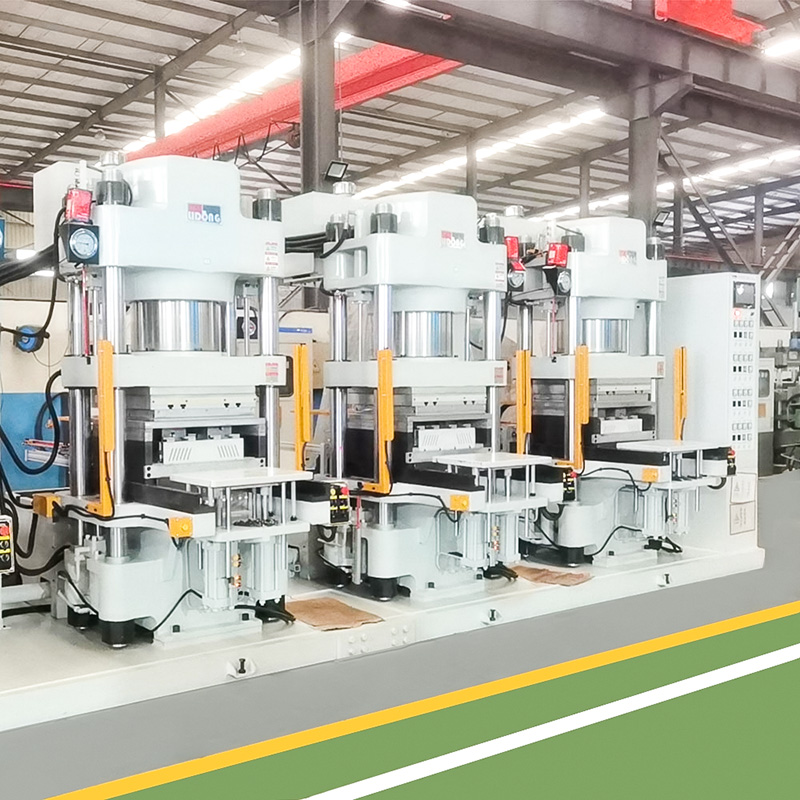
As a professional High-Speed Rail Brake Pad Press Machine Factory supplying both domestic and international railway component manufacturers, Ningbo Delidong Machinery Technology Co., Ltd. designs its press machines with integrated data logging and traceability support as standard features not optional additions reflecting the company's understanding that process data management is an integral part of the quality system for safety-critical railway component production. Delidong's long-term partnerships with major brake component manufacturers and its strong industry reputation, backed by its Council Membership of the China Friction Material Association, reflect the track record of its equipment in real high-speed rail production environments. For manufacturers seeking a high-speed rail brake pad press machine that delivers both the technical performance required to produce pads meeting the most demanding railway safety standards and the production efficiency needed to remain competitive in global markets, Delidong Machinery's combination of engineering capability, manufacturing quality, and comprehensive after-sales support represents a compelling and proven solution.

 English
 عربى
عربى
 中文繁体
中文繁体