English
 عربى
 中文繁体
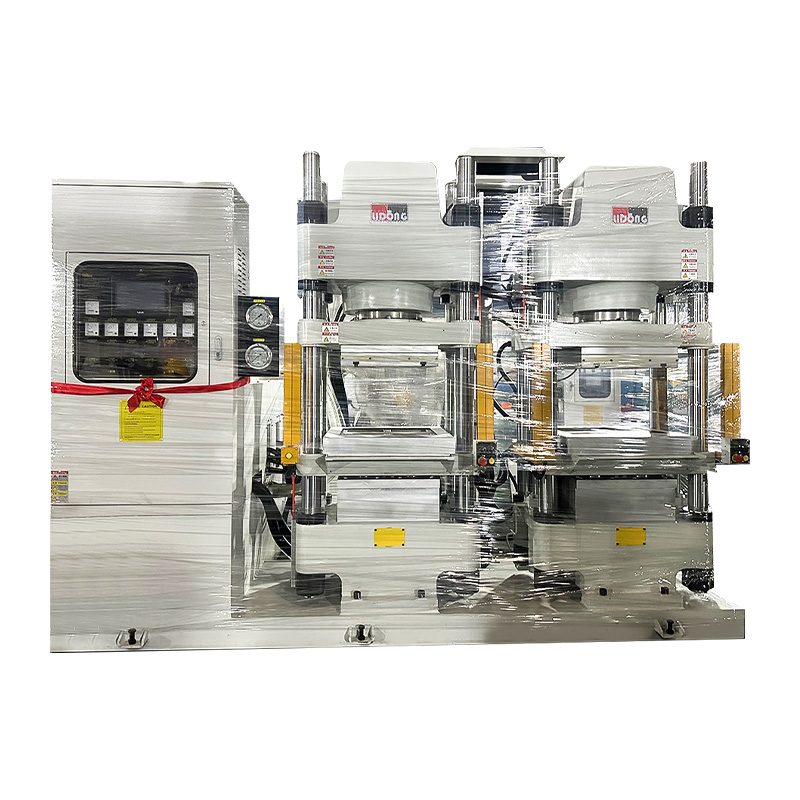
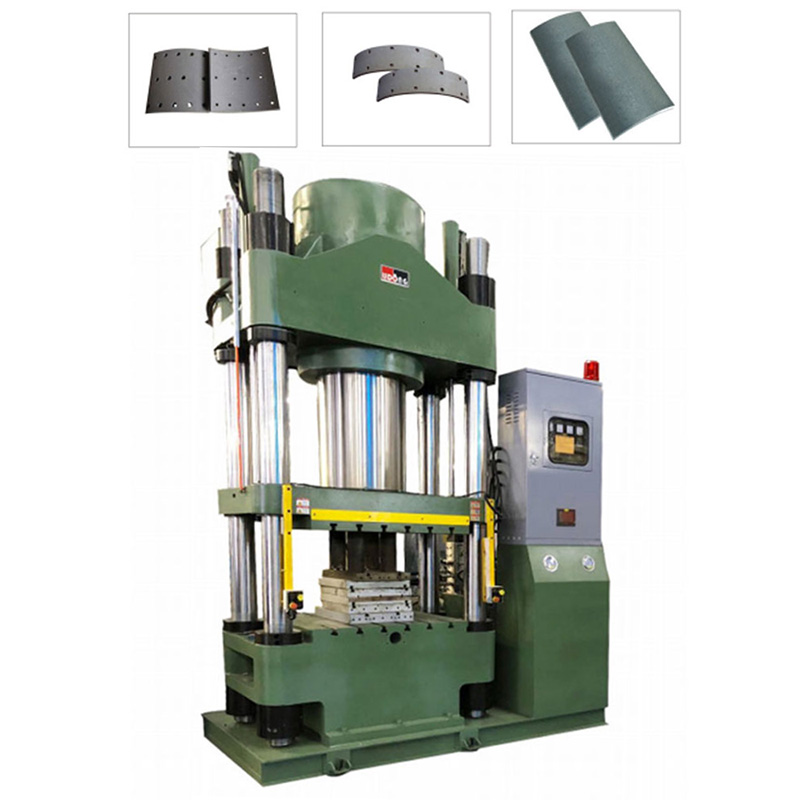
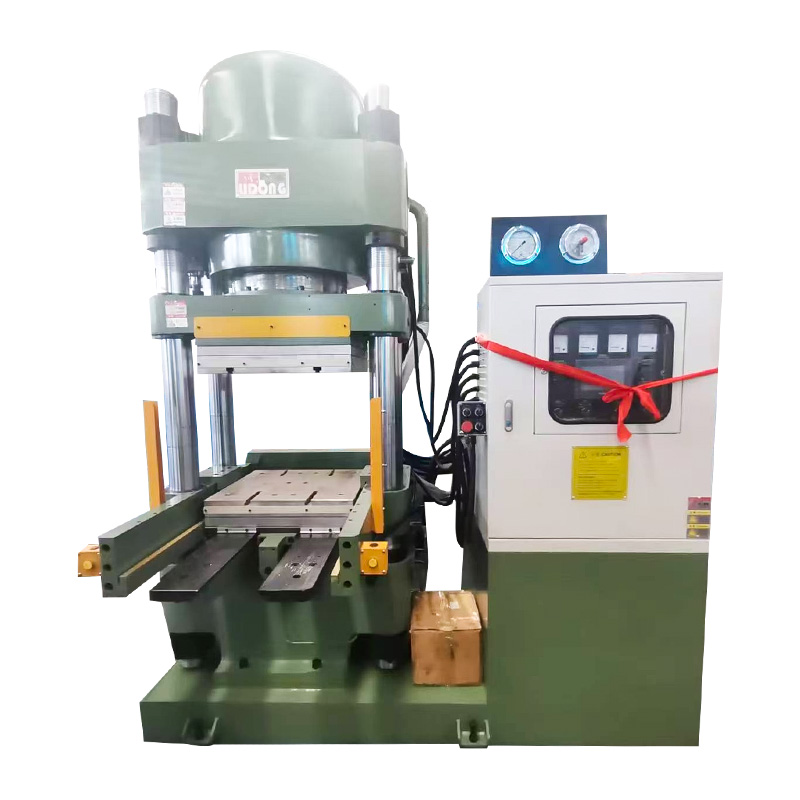
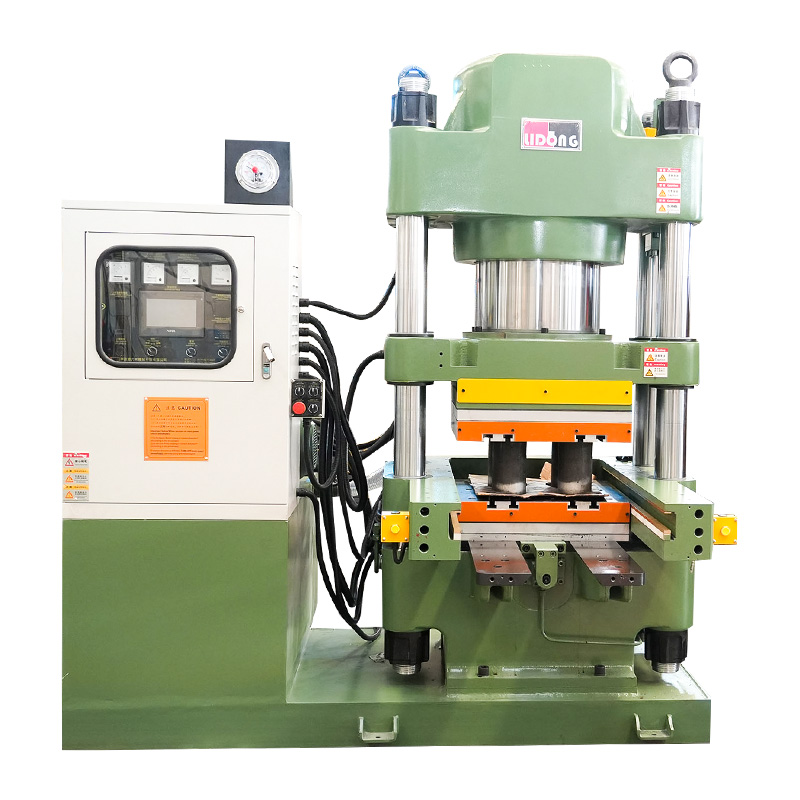
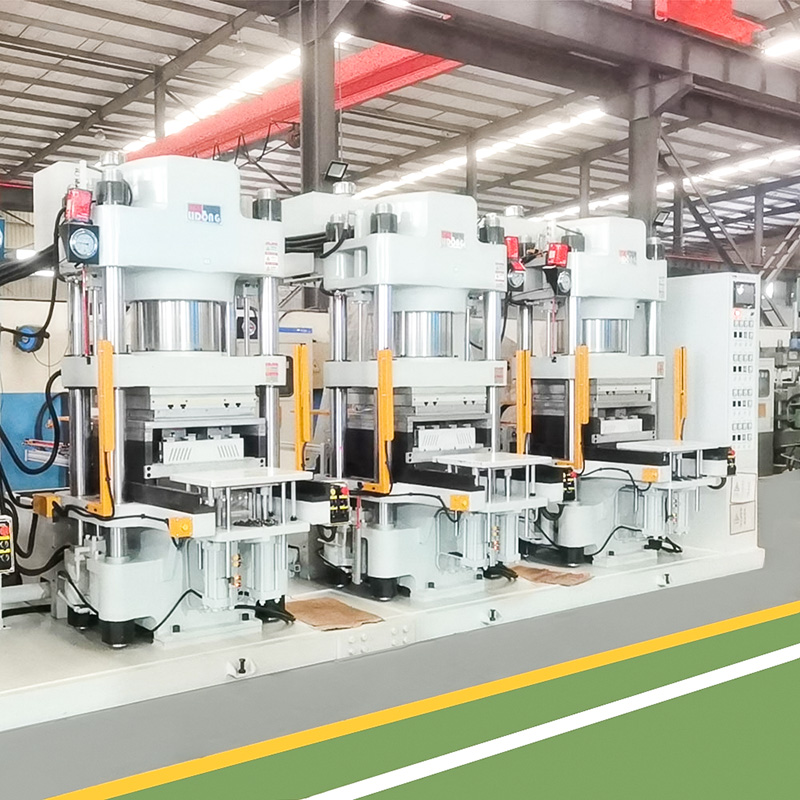
Technical Parameters
The table lists typical configurable values related to temperature control on a brake pad press. Final specifications depend on your platen size, mold layout and cycle, and are confirmed in the technical agreement.
| Parameter | Typical Range | Relevance to Temperature Control |
|---|---|---|
| Platen temperature range | Up to about 200 degrees C, higher on request | Covers phenolic and other resin cure temperatures |
| Temperature uniformity | About plus or minus 2 degrees C across the platen under load | Same cure over the whole mold |
| Control accuracy at the sensor | Often about plus or minus 1 degree C | Stable hold without drift |
| Heating zones | Several independent PID zones per platen | Edge compensation and fine adjustment |
| Heating method | Electric rods, thermal oil or other, by size and process | Response, uniformity and maintenance |
| Sensors | Thermocouples or resistance sensors, placed near the mold | Reliable feedback |
| Warm-up time | Depends on platen mass and power | Production start and recovery after mold change |
| Overtemperature protection | Independent limit on each zone | Safety and protection of seals |
| Data recording | Temperature of each zone for every cycle | Proof of control and diagnosis |
| Control | PLC with touchscreen, recipe lock and data storage | Repeatable setpoints |
How to read the table: the first two rows answer the question that matters most: how even is the platen under load? Control accuracy at the sensor only describes the temperature where the sensor sits. A platen can hold a very exact temperature at the sensor and still have cooler corners, and this is why uniformity measured across the surface is the more important figure.
When comparing presses, ask for a temperature map: readings from several points across the platen, measured with the press at set temperature and, ideally, with a mold or a load plate in place. Please send your platen size, mold layout and cycle, and we will discuss heating zones and sensor positions.
Practical advice. Check the uniformity at the temperature you actually use, not only at a standard test setting. Uniformity can change with temperature, because heat loss grows as the platen gets hotter.
Special Focus: Heating Methods, Sensors and Measuring Uniformity
The table compares the common heating methods for hot pressing, from a control point of view.
| Heating Method | Strengths | Points to Consider |
|---|---|---|
| Electric heating rods in zones | Simple, fast response, easy to control and replace | Uniformity depends on rod layout, power density and edge compensation |
| Thermal oil channels | Very even heat across the platen, good for large platens | More complex system, slower response, oil maintenance and safety |
| Steam or other media | Used in some older or special installations | Needs a steam supply, limited temperature control |
Points that decide results:
- Sensor placement. Sensors near the heater show heater temperature, and sensors near the mold show process temperature. A good design puts sensors where they reflect the real conditions and uses more than one per platen.
- Edge compensation. Platen edges lose more heat than the center. Extra heating power and insulation at the edges are standard practice for good uniformity.
- Insulation. Insulation boards reduce heat loss and give more even temperature as well as lower energy cost.
- PID tuning. Poor tuning gives overshoot or slow recovery. Tuning should be checked at the working temperature, with a mold in place.
- Mold and platen contact. A mold with a warped base or rubber residue on the platen insulates itself from the platen and heats unevenly.
How to measure uniformity: use calibrated thermocouples or a surface probe at a grid of points across the platen and the mold, hold the press at set temperature until stable, and record the highest and lowest readings. Repeat at the temperature you use and with the load in place. A simple map shows weak spots immediately, and it makes an excellent baseline for later checks.
Our uniform density brake pad press page and anti-delamination brake pad press page describe how temperature uniformity connects with other quality topics. Resin cure behavior and formulation belong to your technical team.
Honest advice. Measured uniformity matters more than the heating method. A well-designed electric system can beat a poorly built oil system, and the reverse is also true, so judge by map data.
Automation and Control System
Precise temperature depends on the controller as much as the heaters. The control system should manage each zone separately and keep a record.
- Independent PID zones: each heating zone has its own sensor, output and tuning, which allows edge compensation and fine correction.
- Auto-tuning and manual adjustment: controllers can be tuned at the working temperature, with limits to prevent overshoot.
- Ramp and soak programs: warm-up can follow a set rate and soak time, which gives even heat before the first cycle.
- Dwell timer with temperature condition: the cure time starts only when the platens reach the set temperature.
- Deviation alarms: a zone that moves outside its band raises an alarm and can stop the cycle.
- Data recording: temperature of every zone, together with pressure and time, is recorded for each cycle and can be exported if you permit it.
Stand-by and recovery: during mold changes, platens can drop to a stand-by temperature and return quickly to the setpoint. The control manages this without overshoot, which saves energy and time.
Calibration: sensors should be checked against a reference thermometer at planned intervals. The control can store calibration offsets, and a calibration record helps with audits.
Operator view. The touchscreen shows the active recipe, the temperature of each zone, the deviation from setpoint and cycle time remaining. An English manual and training material are provided, and remote support is available when your technician tunes the controllers.
Operator note. Show the pressing stage, the live pressure value and the cure time remaining on the screen, so the operator can see where the cycle stands. A short on-screen checklist at the start of each batch, covering recipe, mold number and material batch, makes records much more complete.
Structure and Materials
Temperature control is a mechanical and thermal design task as well as an electrical one. The platen and its surroundings must be built to carry heat evenly.
| Component | Design and Material | Purpose |
|---|---|---|
| Platens | Thick alloy steel, ground flat, with channels or bores for heaters | Even heat spread and flat contact |
| Heaters | Cartridge rods or oil channels in zones, with higher power density at edges | Edge compensation and fast recovery |
| Sensors | Thermocouples or resistance sensors in bores near the working surface | Representative feedback |
| Insulation | Boards under and beside the platens, shields on guides | Lower heat loss and more even temperature |
| Press frame | Heavy welded steel structure, stress relieved | Stable mounting, low thermal distortion |
| Guide system | Hardened, heat-protected | Keeps platens parallel despite thermal growth |
| Cooling of seals and guides | Heat shields and oil cooling | Protects seals and electronics |
| Control cabinet | Separated from hot areas, with ventilation | Reliable controllers and relays |
Thermal expansion: platens grow when heated, and uneven heating bends them slightly. We design platen thickness, supports and guides so that normal heating does not distort the working surface, and we check flatness at working temperature during the factory test where possible.
Heater and sensor serviceability: heaters and sensors age. We design access so that rods and thermocouples can be replaced without taking the platen apart, and we supply spare sets.
Maintenance. Clean platens regularly with non-scratching tools, since resin and dust slow heat transfer and create cold spots. Check heater resistance and sensor readings at intervals, keep terminals tight and clean, and change hydraulic oil and filters according to the manual. Recheck the temperature map after months of service.
Before shipment, each press is run under load, and temperature uniformity, controller response, parallelism and safety functions are checked.
Safety and Energy Efficiency
High and tightly controlled temperatures require protection against overheating, burns and electrical faults.
- Independent over-temperature protection on each heating zone, separate from the main controller
- Heater short-circuit and ground-fault protection in the electrical cabinet
- Sensor failure detection that cuts heater power if a sensor opens or reads implausibly
- Insulated surfaces and warning labels on hot parts
- Emergency stop at the operator position and at the loading side
- Light curtain or guard doors connected to the PLC
Handling advice: platens and molds can stay hot long after production stops. Use heat-resistant gloves and sleeves, tools to handle hot plates and keep walkways clear. For thermal oil systems, check for leaks, use oil rated for the temperature and keep a fire extinguisher nearby. Heating the resin releases vapors, so provide local exhaust above the press, and follow the safety data sheets of your materials.
Energy efficiency: precise control saves energy. Good insulation and well-tuned PID control avoid overshoot and wasted heat, zoned heating avoids heating unused platen areas when smaller molds are used, and a stand-by temperature function saves power during mold changes and breaks. A press sized close to your mold needs less heating power than an oversized one. Stable temperature also means fewer rejected pads, which saves raw material and the energy already spent on it.
Tell us your working hours and local power price, and we will compare heating options in the quotation.
Training and records. Keep a log of safety checks, sensor calibration and heater checks. A monthly test of the over-temperature cut-offs, emergency stop and light curtain takes little time and keeps the press dependable.