What Is a Cold Press Forming Machine for Brake Pads and How Does It Work?
In the manufacturing process for friction brake pads, cold press forming occupies a critical intermediate position between raw material preparation and final hot-press curing. A cold press forming machine is specialized equipment designed to compact loose friction material compound into a coherent, dimensionally stable preform under controlled hydraulic pressure at or near ambient temperature without the elevated heat that drives the thermosetting resin cure in the final hot-press stage. Understanding what a cold press forming machine does, and why this intermediate step is so valuable in high-quality brake pad production, is the starting point for appreciating its role in the overall manufacturing process.
The friction material compound used in brake pad manufacturing is a complex mixture of reinforcing fibers, friction modifiers, lubricants, abrasives, and thermosetting resin binders typically in powder or granular form after blending. In this loose state, the compound has poor dimensional stability and highly variable local density, making it unsuitable for direct loading into a hot-press mold without pre-consolidation. Directly charging loose compound into a hot-press mold can result in uneven filling, air entrapment, and pressure gradients during the hot-pressing cycle that produce density variation in the cured pad. The cold press forming machine addresses this problem by pre-consolidating the compound into a stable preform before it enters the hot-press, creating the conditions for uniform density and defect-free curing in the final stage.
The Cold Press Forming Cycle: Step by Step
The operating cycle of a cold press forming machine begins with the controlled loading of a precisely weighed charge of friction material compound into the mold cavity. Charge weight accuracy at this stage is critical variations in charge weight translate directly into thickness and density variations in the finished preform, which are then carried through the hot-press curing stage into the finished brake pad. Quality cold press forming machines use automated weighing and dispensing systems that deliver compound charges within tight weight tolerances, eliminating the variability that manual loading introduces.
Once the mold is charged, the cold press forming machine closes the press platen onto the mold at a controlled speed, applying hydraulic pressure progressively to the compound surface. During the initial phase of pressing, the loose compound particles rearrange and pack together as inter-particle voids are eliminated. Air trapped within the compound must be allowed to escape through the mold venting system during this phase too rapid a press closure traps air within the compact, creating porosity defects that survive the hot-press curing stage and appear as weak points in the finished brake pad.
As pressing continues and the inter-particle voids are closed, the pressure required to achieve further densification increases rapidly. The cold press forming machine applies a defined maximum pressure typically in the range of 50 to 200 megapascals depending on compound formulation and pad specification and holds this pressure for a controlled dwell period that allows the compound particles to consolidate fully. At the end of the dwell period, the press is released at a controlled decompression rate and the formed preform is ejected from the mold, ready for transfer to the hot-press curing stage. The entire cold press forming cycle typically completes in 15 to 60 seconds per cavity, making it a high-throughput operation that can be matched to the capacity of multiple downstream hot-press units.
Key Components of a Cold Press Forming Machine
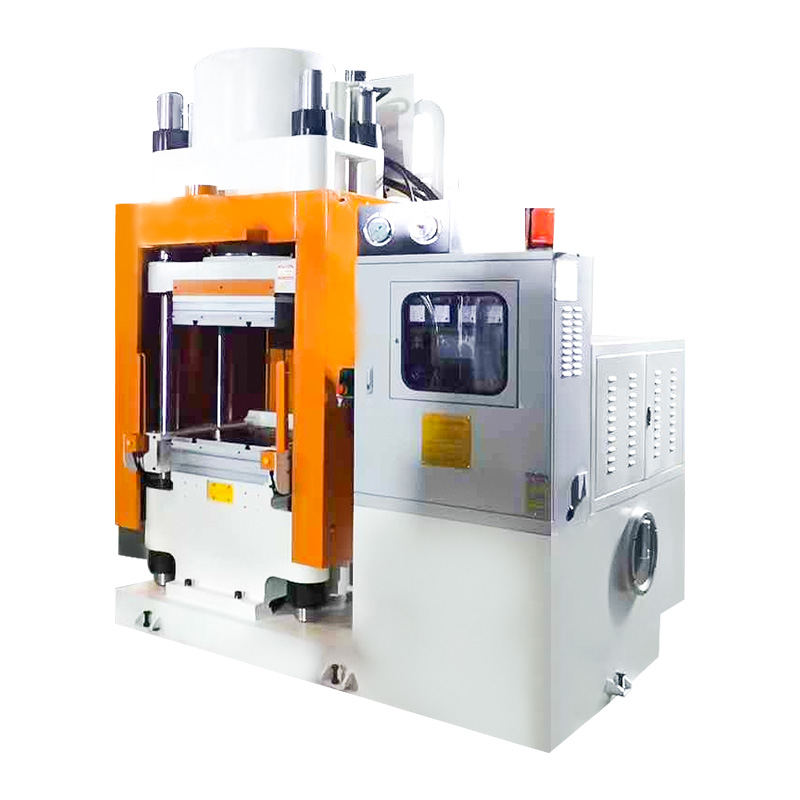
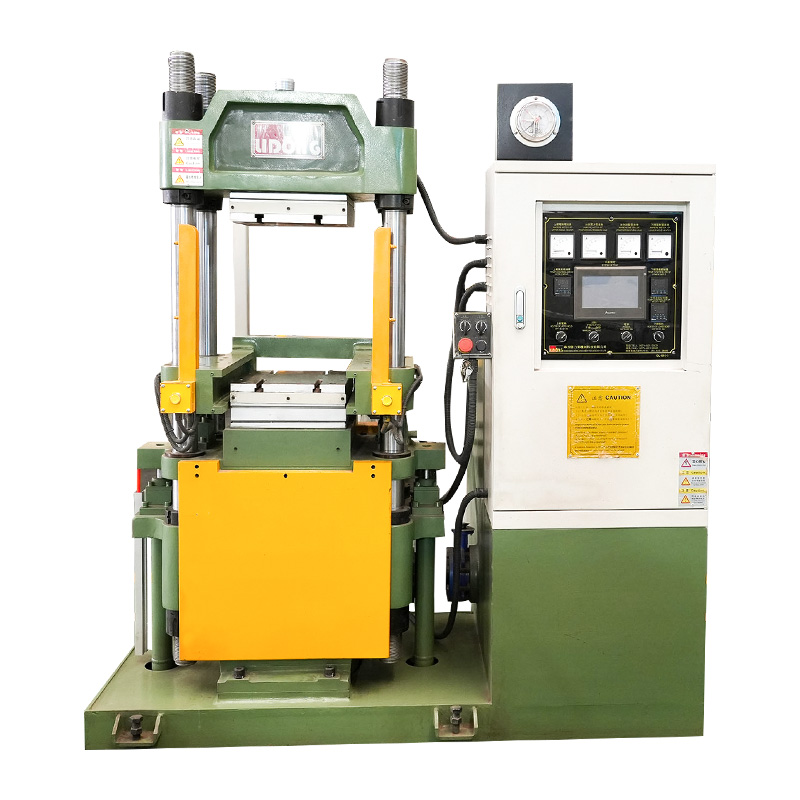
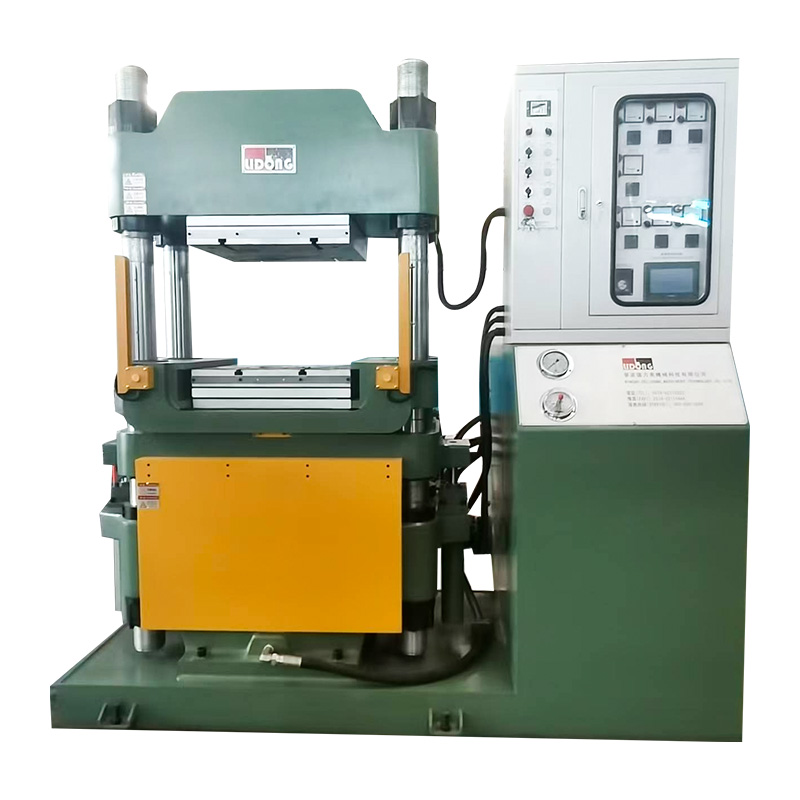
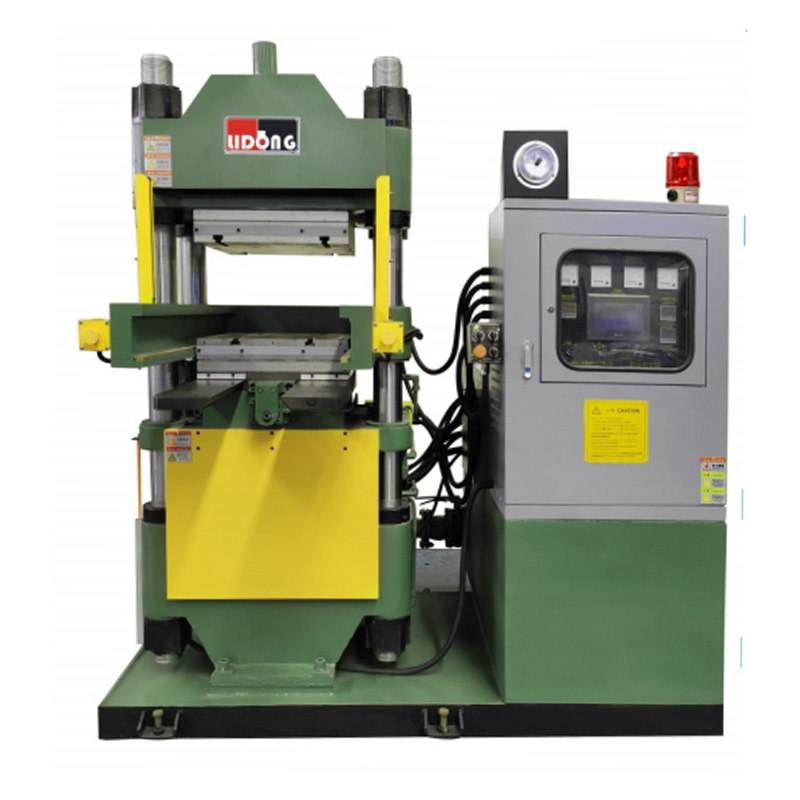
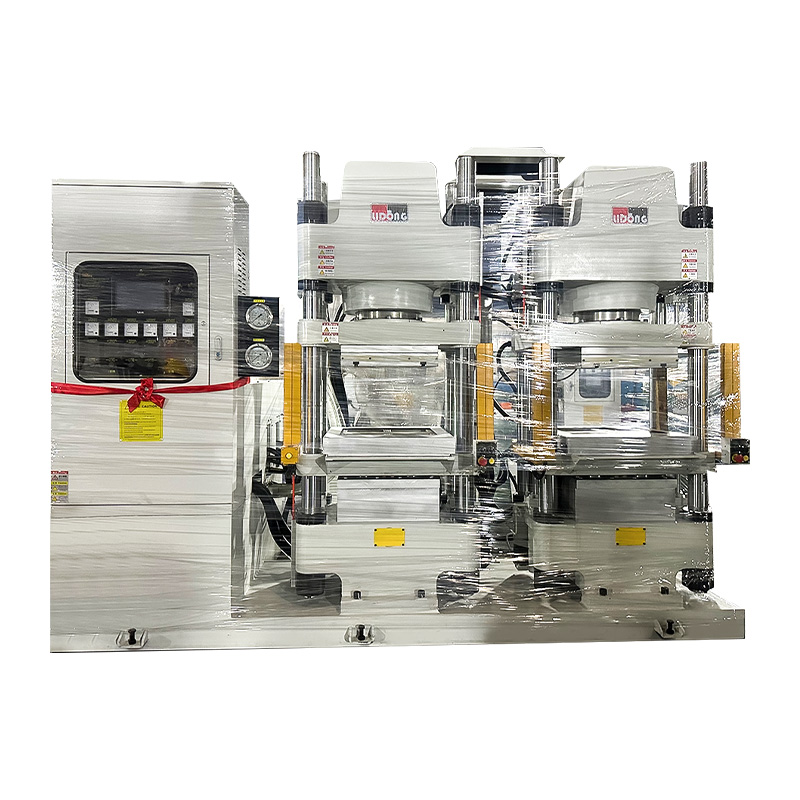
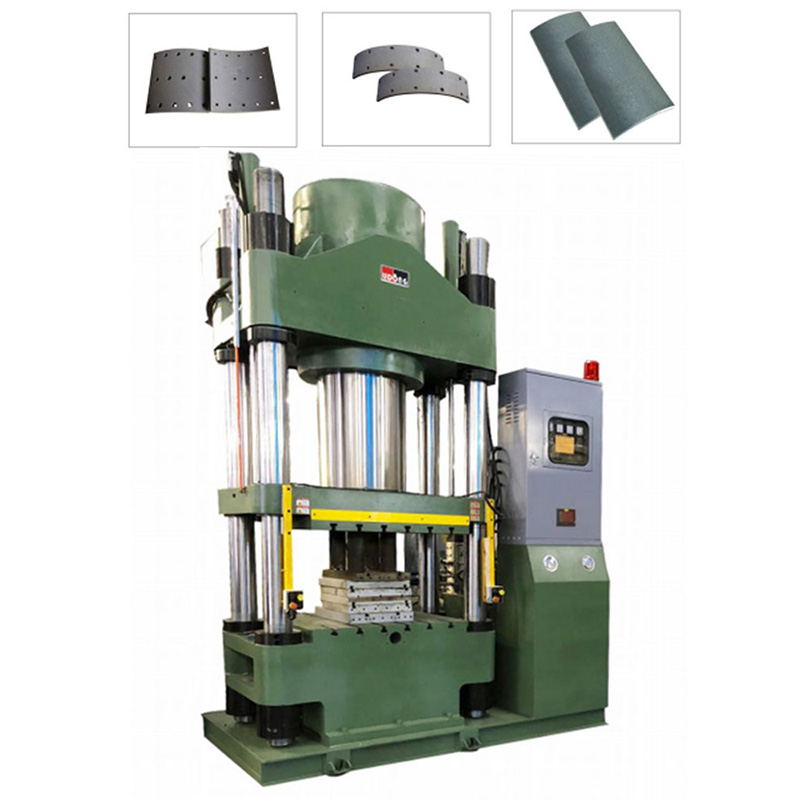
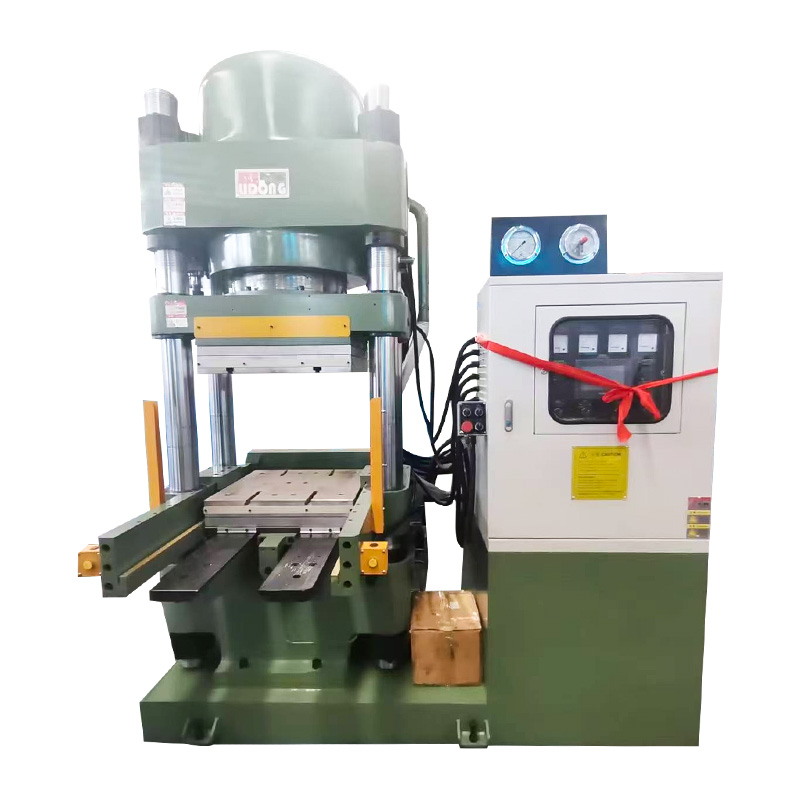
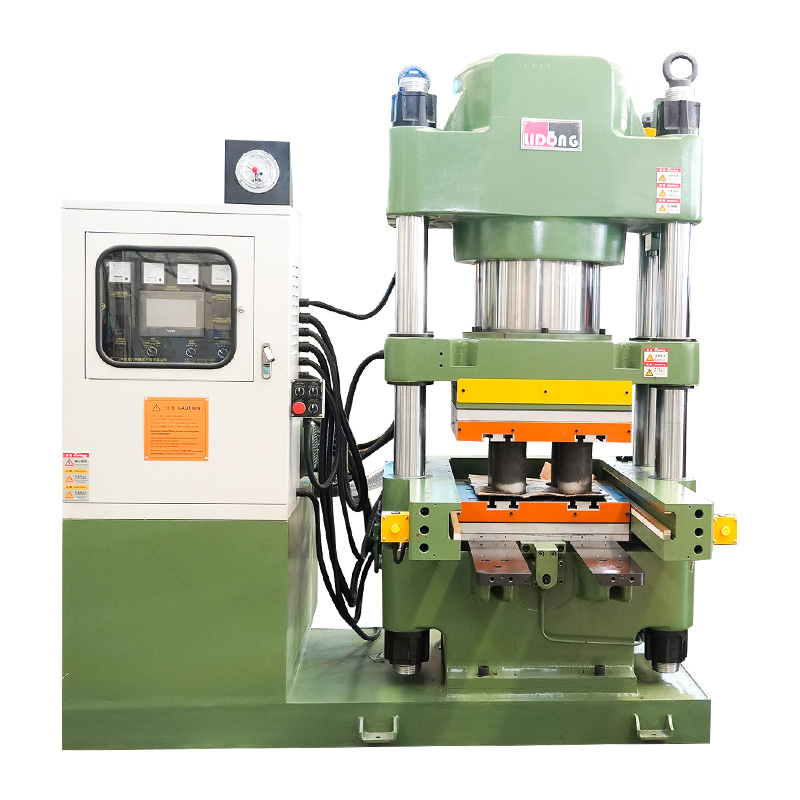
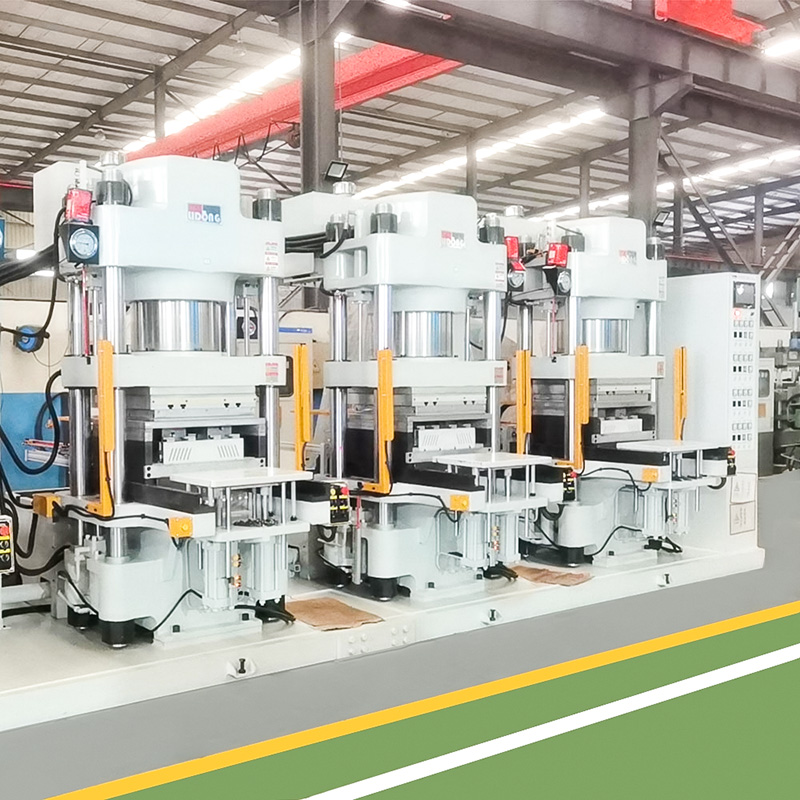
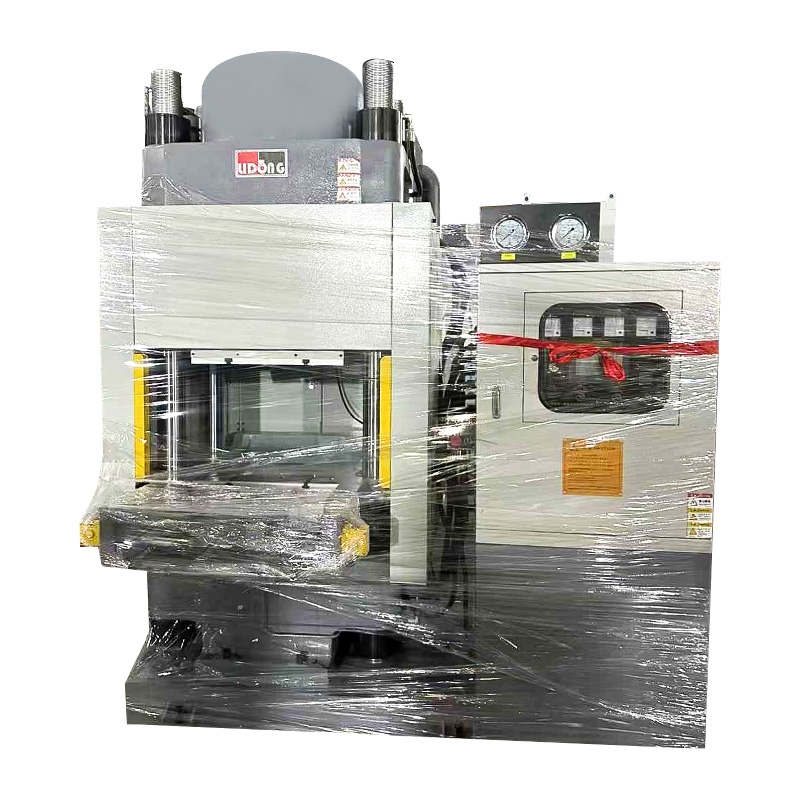
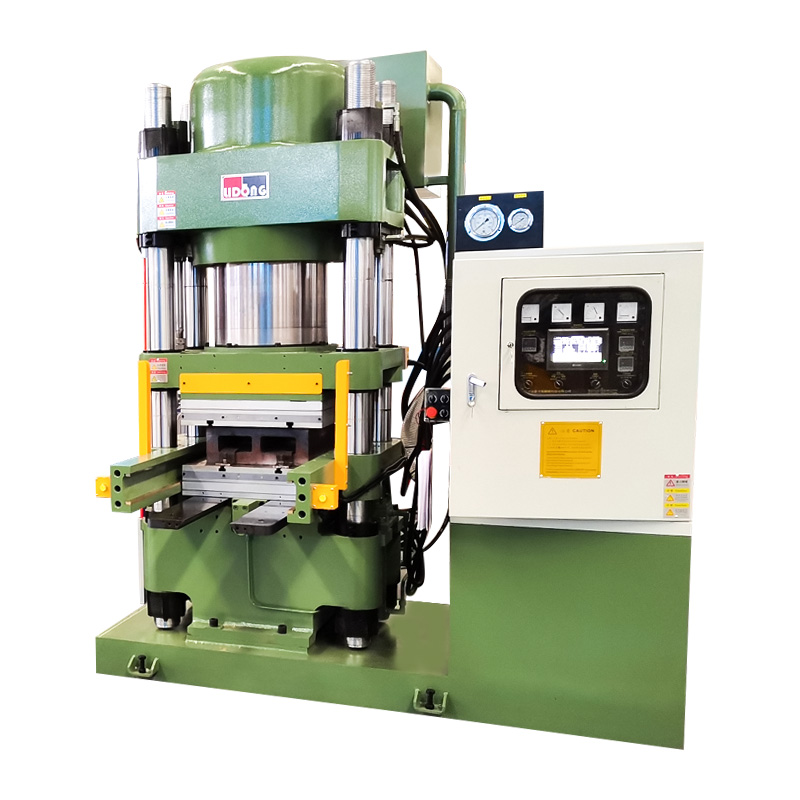
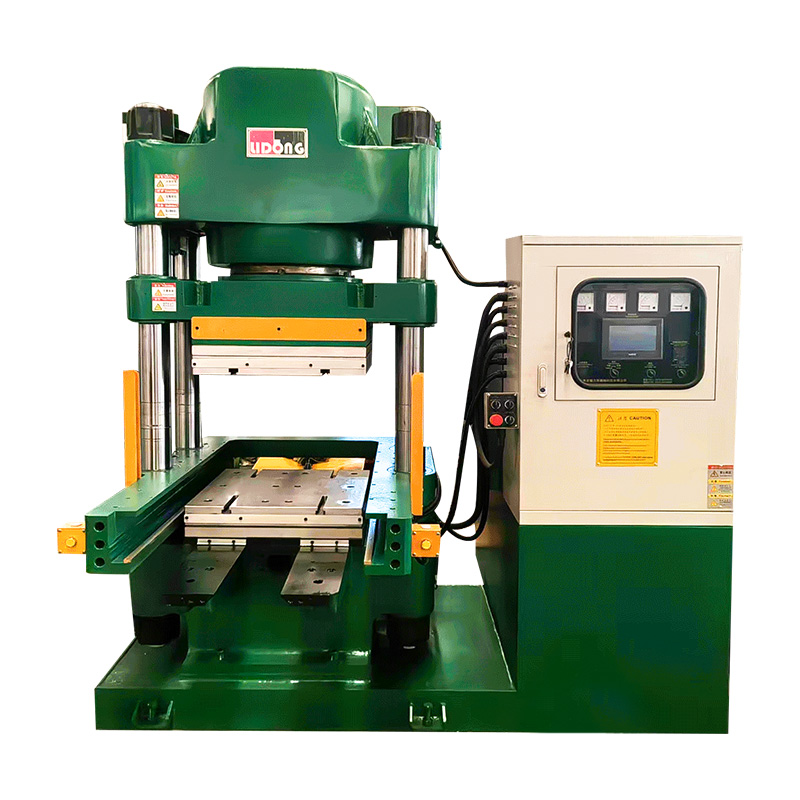
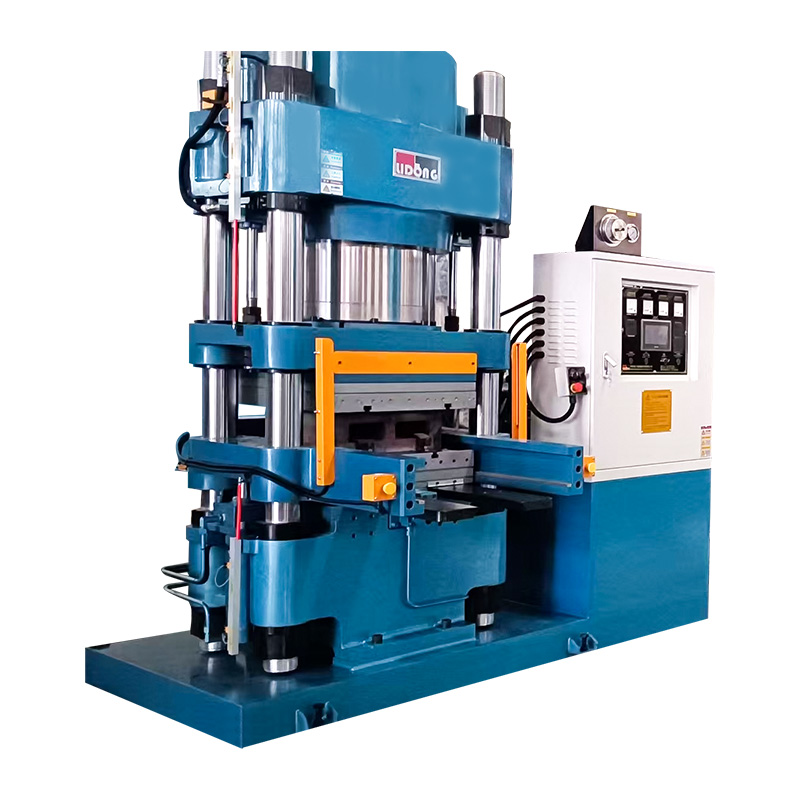
The main functional components of a cold press forming machine include the hydraulic power unit, the press frame and platen assembly, the mold and ejection system, the control system, and the compound loading and dispensing interface. The hydraulic power unit generates the controlled pressure that drives the pressing operation, and its specification maximum pressure rating, flow rate, control valve type, and cooling system determines the machine's capability to execute precise pressure profiles across a range of mold sizes and compound types.
The press frame must provide the structural rigidity necessary to transmit the full rated hydraulic force to the mold without deflection, maintaining platen parallelism throughout the pressing stroke. Guide column design and precision, as in all press machine applications, is central to achieving the platen alignment consistency that uniform preform density requires. The mold ejection system which pushes the formed preform out of the mold cavity at the end of the press cycle without damaging its surface or edges must be designed for the specific preform geometry and material properties being processed, as preforms at this stage of the process are mechanically fragile and easily damaged by excessive ejection force or misaligned ejection pins.
Cold Pressing vs. Direct Hot Pressing: When Cold Forming Adds Value
Not all brake pad production processes include a dedicated cold press forming step some manufacturers press directly from loose compound into the hot-press mold in a single-stage operation. Understanding when cold press forming adds sufficient value to justify the additional process step and equipment investment is an important consideration for production engineers designing or optimizing a brake pad manufacturing line. Cold press forming delivers the greatest value in applications where the friction material compound has poor flow characteristics that prevent uniform mold filling under direct hot-press loading, where the brake pad geometry is complex with significant thickness variation or deep recesses that create differential filling, where production volumes are high enough that the throughput advantage of pre-formed charges loading faster into hot-press molds outweighs the additional process step, or where the highest possible uniformity of density and microstructure is required by a demanding specification. For high-quality automotive, commercial vehicle, and railway brake pad production, all of these conditions typically apply, which explains the widespread adoption of cold press forming machines in the industry's leading manufacturing operations.
How Does a Cold Press Forming Machine Ensure Uniform Material Distribution?
Uniform material distribution the even arrangement of all compound constituents throughout the formed preform volume, with consistent local density and composition at every point is the primary quality outcome that a cold press forming machine must deliver. Achieving genuine uniformity requires careful management of the entire process from compound preparation through mold loading, pressing, and ejection, with the machine's design features working together to create conditions that favor uniform distribution at every stage.
Mold Design and Its Contribution to Distribution Uniformity
The mold used in a cold press forming machine is not a passive container its design actively influences how the compound distributes during pressing. The mold cavity geometry must be designed so that the compound fills all areas uniformly as the press closes, without creating preferential flow paths that concentrate compound in certain areas while leaving others relatively sparse. For brake pad geometries with chamfers, slots, or attachment features, the mold design must account for the way compound flows around these features under pressing load and ensure that pressure is transmitted uniformly to all surfaces.
Mold venting is equally important for distribution uniformity. As the press closes and inter-particle voids are collapsed, air must be able to escape rapidly and uniformly through the mold venting system. Inadequate venting causes back-pressure that resists compound consolidation in poorly vented areas, creating local density deficiencies. Quality cold press forming machine molds include carefully designed vent channels or sintered vent inserts that allow air to escape freely during pressing without allowing compound to extrude out of the mold cavity.
Controlled Pressing Speed and Its Effect on Compound Flow
The speed at which the cold press forming machine applies pressure to the compound has a direct and significant effect on how uniformly the compound distributes within the mold. If the press closes too rapidly, the compound does not have time to flow to fill remote areas of the mold cavity before consolidation begins, resulting in density gradients between well-filled central areas and sparsely filled peripheral areas. Rapid pressing also traps air within the compact before it can escape through the venting system, creating porosity that persists through the hot-press curing stage.
A cold press forming machine with programmable pressing speed control allows the press engineer to define a multi-phase pressing profile: a slow initial approach phase that allows the compound to begin distributing under light pressure, a controlled intermediate phase that continues distribution while initiating consolidation, and a final high-pressure phase that achieves the target preform density. This profile-based approach to pressing speed management is one of the most effective tools for achieving uniform distribution across a wide range of compound formulations and mold geometries.
Uniform Distribution Performance Factors: Comparison Table
The following table summarizes the key factors affecting material distribution uniformity in cold press forming machine operations, identifying the mechanism of each effect and the design or process features that address it.
| Distribution Factor |
Mechanism of Effect |
Impact on Preform Quality |
Addressing Feature in Cold Press Forming Machine |
| Charge weight consistency |
Weight variation causes thickness and density variation |
Preform thickness non-uniformity; density gradient |
Automated weigh-dispensing system; closed-loop weight control |
| Pressing speed profile |
Rapid closure prevents compound flow and traps air |
Density gradients; porosity defects |
Programmable multi-phase pressing speed control |
| Mold venting adequacy |
Inadequate venting creates back-pressure in poorly vented areas |
Local density deficiencies; surface defects |
Engineered vent channels; sintered vent inserts in mold design |
| Platen parallelism |
Platen tilt creates differential pressure across mold face |
One-sided density gradient in preform |
Precision guide columns; automatic lubrication; parallelism monitoring |
| Pressure hold duration |
Insufficient dwell time prevents full consolidation |
Under-density zones; spring-back after ejection |
Programmable dwell time; closed-loop pressure maintenance during dwell |
| Ejection system design |
Uneven ejection force damages preform surface or edges |
Surface cracking; edge chipping; density disruption near surface |
Multi-point balanced ejection system; controlled ejection speed |
The Role of Compound Preparation in Supporting Distribution Uniformity
Uniform material distribution in the cold press forming machine output begins upstream in the compound preparation stage. A friction material compound that has been uniformly blended, with all constituents evenly distributed throughout the batch, provides the starting condition that allows the cold press forming machine to deliver uniform preform quality. Compound with segregation where heavier particles have settled away from lighter ones during storage or handling will produce preforms with compositional variation that affects friction and wear properties regardless of how well the pressing operation is executed. The cold press forming machine therefore operates most effectively as part of a complete process system in which compound preparation and handling practices are designed to maintain blend uniformity right up to the point of mold loading.
How Does Low-Temperature Pressing Improve Brake Pad Strength?
The question of why pressing at low temperature as opposed to directly hot-pressing the compound in a single high-temperature step produces stronger and more reliable brake pads is one that goes to the heart of the materials science of thermosetting friction composites. The answer involves the way thermosetting resin systems respond to the combined application of heat and pressure, and the specific advantages that separating these two process inputs applying pressure first at low temperature, then applying heat during a subsequent dedicated curing stage provides for achieving the highest possible density and structural integrity in the finished pad.
The Thermosetting Resin Behavior at Low vs. High Temperature
Thermosetting resins the binder systems used in virtually all high-performance brake pad compounds undergo a characteristic viscosity-temperature behavior that is central to understanding why low-temperature pressing is advantageous. At room temperature, most thermosetting resins are solid or semi-solid, with high viscosity that prevents significant flow. As temperature increases, the resin passes through a softening phase where viscosity drops and the resin becomes fluid enough to wet the surfaces of reinforcing fibers and filler particles and to flow under pressure. At higher temperatures, the crosslinking reaction begins and the resin transforms irreversibly from a viscous liquid to a rigid thermoset solid.
In a single-stage direct hot-press process, the compound is loaded into a heated mold where it is simultaneously pressed and cured. The problem with this approach is that the resin begins to cure before the compound has had the opportunity to fully consolidate and achieve maximum density under pressure. Once curing has begun, the increasing resin viscosity resists the flow needed for complete densification, and any voids or low-density zones present when curing starts become locked into the structure of the finished pad. The cold press forming machine avoids this problem by consolidating the compound to maximum density before any curing occurs, ensuring that the hot-press curing stage begins with a fully dense, void-free preform rather than a loose, partially consolidated charge.
Defect Reduction Through Pre-Consolidation
The defects most commonly observed in brake pads produced without a cold press forming step porosity, delamination, surface voids, and internal cracks are all related to incomplete consolidation during the pressing phase. By applying controlled pressure to the compound at low temperature in a cold press forming machine before any curing begins, these defects are addressed at their source. Porosity is eliminated because the full dwell time of the cold pressing cycle is available for air expulsion and void closure without the competing effect of resin curing that would freeze voids in place. Delamination tendency is reduced because the preform enters the hot-press as a coherently bonded compact rather than a loose charge that must be consolidated and bonded simultaneously.
The strength improvements achieved through cold press forming preconsolidation are measurable and significant. Brake pads produced via cold press forming followed by hot-press curing consistently show higher compressive strength, higher shear strength at the friction material-to-backing plate bond line, and improved resistance to thermal fatigue cracking compared to equivalent pads produced by direct hot pressing. These property improvements directly translate into longer service life, more consistent braking performance across the pad's service life, and lower risk of premature failure in demanding applications.
Optimized Curing in the Subsequent Hot-Press Stage
When a fully consolidated cold-pressed preform is loaded into the hot-press mold, the curing process begins from a much more favorable starting condition than is possible with a loose compound charge. The resin has already been brought into intimate contact with all of the reinforcing fibers and filler particles during the cold pressing consolidation, so that when heat is applied, the resin can begin crosslinking immediately without first needing to wet previously dry surfaces. This means that the hot-press cycle can be shorter and can use a more precisely controlled temperature profile optimized for curing rather than for simultaneous consolidation and curing, which in turn produces a more uniformly cured pad with more consistent mechanical properties.
Ningbo Delidong Machinery Technology Co., Ltd., a professional Cold Press Forming Machine Manufacturers with extensive experience in friction material production equipment, designs its cold press forming machines specifically to optimize the preconsolidation conditions that enable this superior hot-press curing outcome. The company's engineering expertise, backed by multiple invention patents and its status as a National High-Tech Enterprise, is reflected in the precision pressure control, programmable pressing profiles, and automated compound loading systems incorporated into its cold press forming machine product range.
Long-Term Strength and Wear Resistance: The Cold Press Advantage
The strength improvements delivered by cold press forming extend beyond the initial mechanical properties of the finished pad they also influence how the pad's properties evolve over its service life. A pad with higher initial density and more complete, uniform resin cure is more resistant to the compressive fatigue that accumulates in brake pads through repeated high-energy braking cycles. The denser, void-free microstructure resists the crack initiation and propagation mechanisms that cause progressive strength loss in service, maintaining the pad's structural integrity for a longer proportion of its total service life.
Wear resistance benefits similarly from the improved microstructure achieved through cold press forming. Higher density means that the friction surface presents more material per unit area to the braking interface, reducing the wear rate per braking cycle. More uniform distribution of hard abrasive particles throughout the pad cross-section ensures that the friction surface maintains consistent surface topography as it wears, rather than developing the localized hard and soft zones that cause uneven wear patterns and friction coefficient instability. For applications where consistent, predictable brake pad wear life is a key performance requirement as it is across the full range of automotive, commercial vehicle, and railway applications the cold press forming machine's contribution to wear resistance is a direct and practically significant benefit.
As a professional Cold Press Forming Machine Factory with a strong track record of supplying brake component manufacturers both domestically and internationally, Ningbo Delidong Machinery Technology Co., Ltd. combines engineering capability with responsive after-sales service support including installation, training, and spare parts availability to ensure that customers sustain the full performance benefits of their cold press forming equipment throughout its operational life. The company's membership of the China Friction Material Association and its long-established industry partnerships reflect the practical validation of its cold press forming machines in real production environments, making it a reliable partner for manufacturers seeking to elevate their brake pad quality through process-engineered cold press preconsolidation.

 English
 عربى
عربى
 中文繁体
中文繁体