 English
 عربى
عربى
 中文繁体
中文繁体

Content
- 1 1. Precision Multi-Stage Pressure Control and Hydraulic Accuracy
- 2 2. Advanced Thermal Management and Temperature Uniformity
- 3 3. Multi-Cavity Tooling Compatibility and Structural Rigidity
- 4 4. Industry 4.0 Integration and Data Traceability
- 5 FAQ: Common Questions About Brake Pad Press Machines
- 6 References and Further Reading
1. Precision Multi-Stage Pressure Control and Hydraulic Accuracy
In the realm of high-performance brake pad manufacturing, pressure is not a static requirement but a dynamic variable. A machine that merely applies raw force is insufficient for modern friction materials. High-performance brake pad press machines must utilize Advanced Hydraulic Proportional Systems to manage what is known as the "Pressure Curve."
The Importance of the Pressure Curve
Friction materials consist of various resins, metallic fibers, and lubricants. During the initial stage of pressing, the material is loose and contains a significant amount of air. A high-performance machine utilizes a low-pressure "pre-press" stage to stabilize the material before the main high-pressure cycle begins. If the pressure is applied too rapidly, the resin will not flow uniformly, leading to "density gradients" where some parts of the brake pad are harder than others.
Real-time Feedback Loops
High-end machines are equipped with high-resolution pressure transducers and linear encoders. These sensors provide feedback to the PLC (Programmable Logic Controller) thousands of times per second. If the system detects a deviation in resistance, it automatically adjusts the proportional valve to compensate. This level of precision ensures that the compaction density remains consistent within a ±0.5% tolerance across different product batches.
Advanced Venting (Degassing) Strategies
One of the most critical sub-features of pressure control is the Venting Cycle. As the mold heats the friction compound, chemical reactions release gases. Without precise "breathing" cycles—where the press slightly relaxes pressure to let gas escape without fully opening the mold—the final product will suffer from internal voids. A high-performance press allows the operator to program up to 10 distinct venting stages, ensuring a flawless internal structure.
2. Advanced Thermal Management and Temperature Uniformity
Brake pad production is essentially a chemical curing process. The "Hot Pressing" method requires the machine to act as a precision oven and a hydraulic press simultaneously. Temperature management is critical because steel platens naturally lose heat at the edges, creating "Cold Spots" that can lead to incomplete curing.
Multi-Zone Heating Systems
Standard machines often use a single heating circuit, which leads to uneven curing. High-performance models feature Independent Multi-Zone Heating. By dividing the upper and lower platens into multiple heating zones—each with its own thermocouple and PID (Proportional-Integral-Derivative) controller—the machine can compensate for heat loss at the perimeter. This ensures that the temperature is maintained within ±2°C across the entire mold area.
Thermal Insulation and Structural Integrity
Heat is the enemy of hydraulic seals and machine frames. A premium press machine incorporates high-density thermal insulation boards (often glass-fiber or ceramic-based) between the heated platen and the hydraulic ram. This prevents "Thermal Creep," where heat travels up into the machine structure, causing metal expansion that could misalign the precision guides.
3. Multi-Cavity Tooling Compatibility and Structural Rigidity
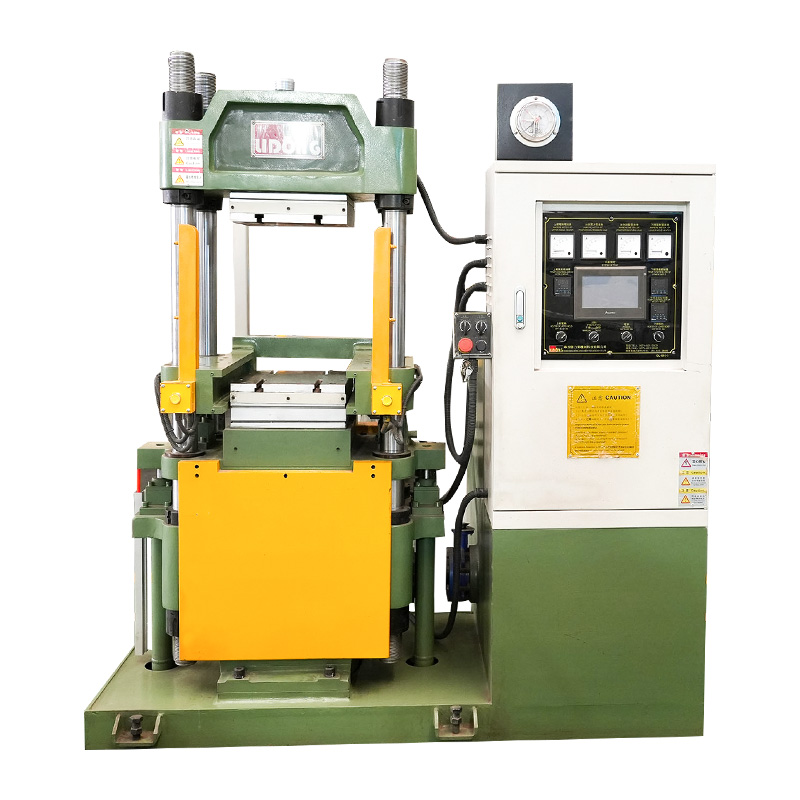
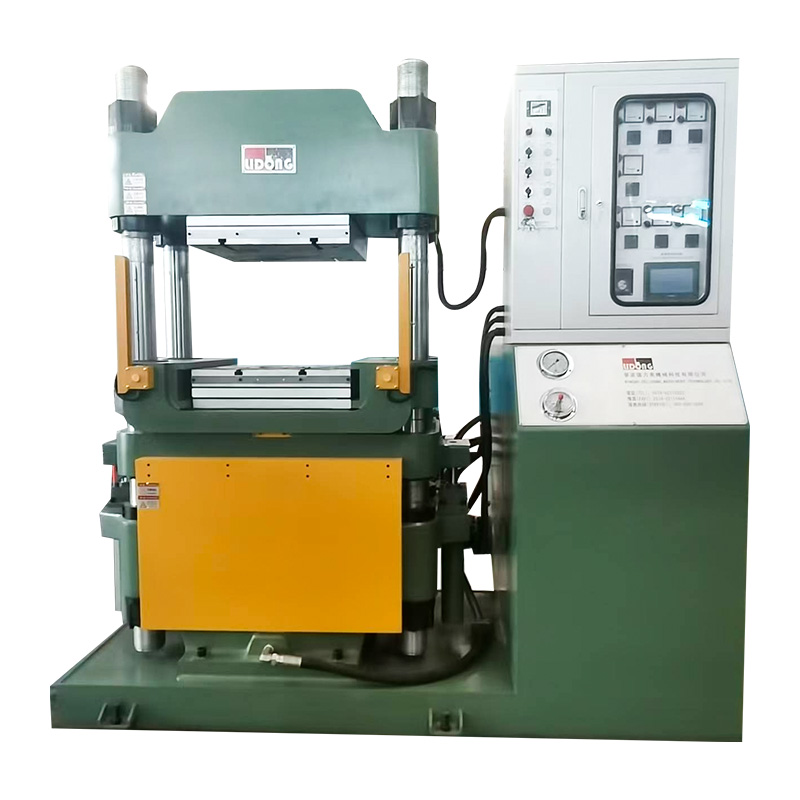
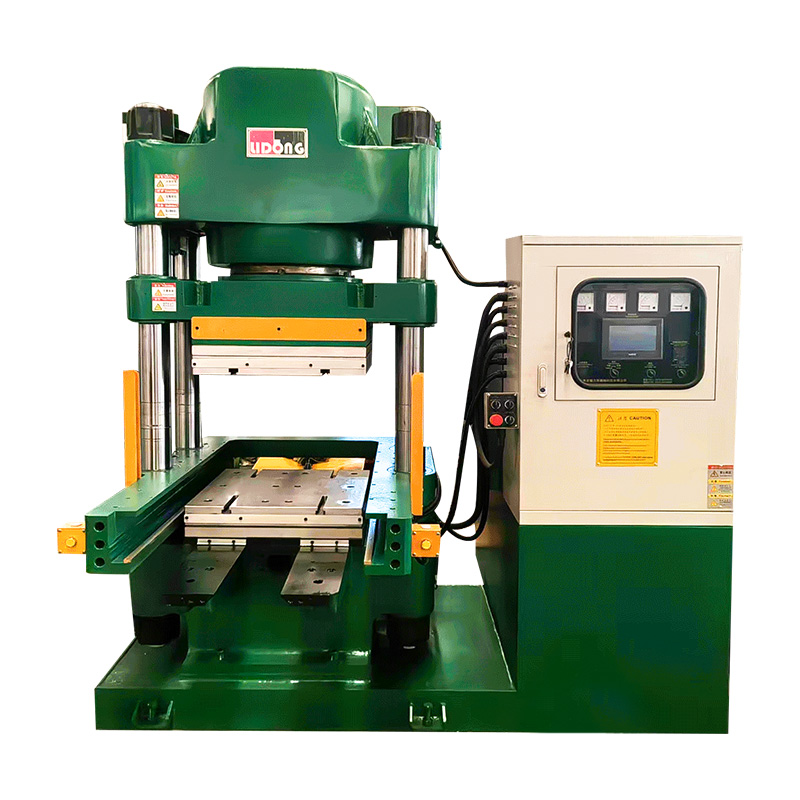
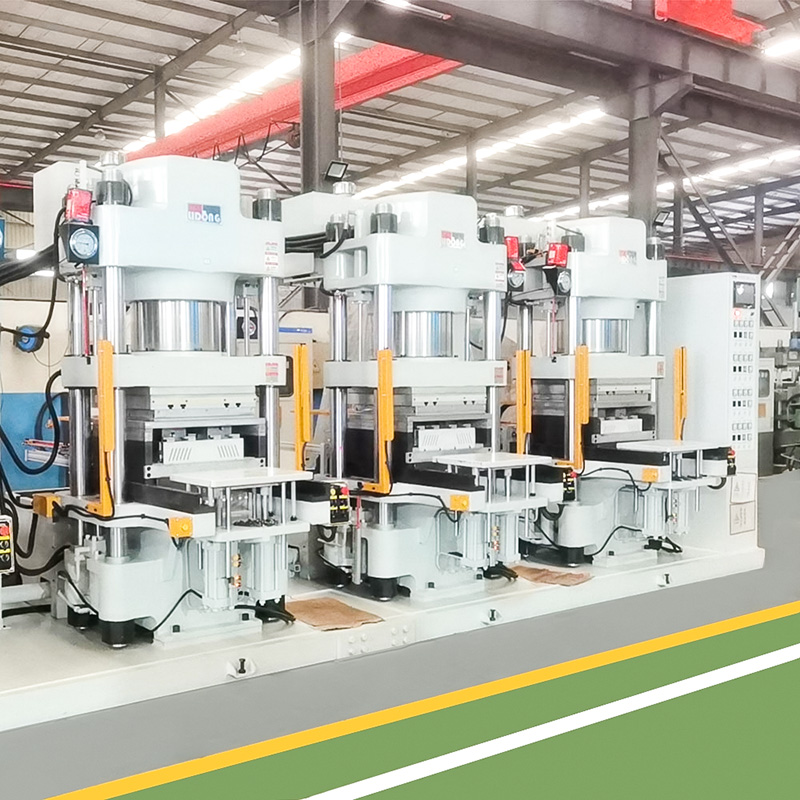
To achieve a low cost-per-part, manufacturers must use multi-cavity molds. However, pressing 8 or 12 brake pads at once creates massive "Off-Center Loading" risks. A high-performance press machine is defined by its structural rigidity and its ability to maintain parallelism under extreme stress.
H-Frame vs. Four-Column Construction
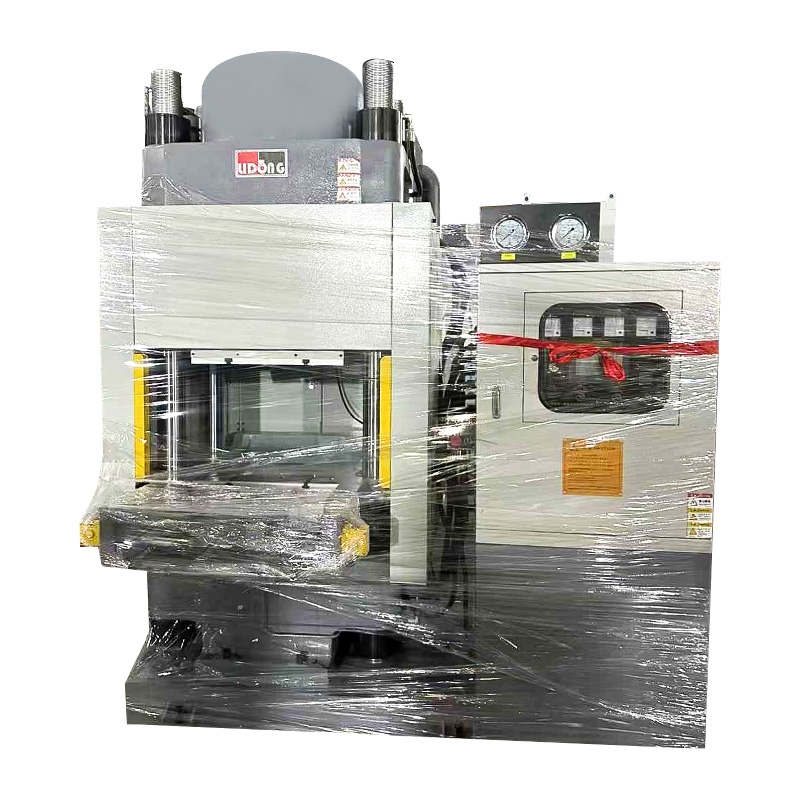
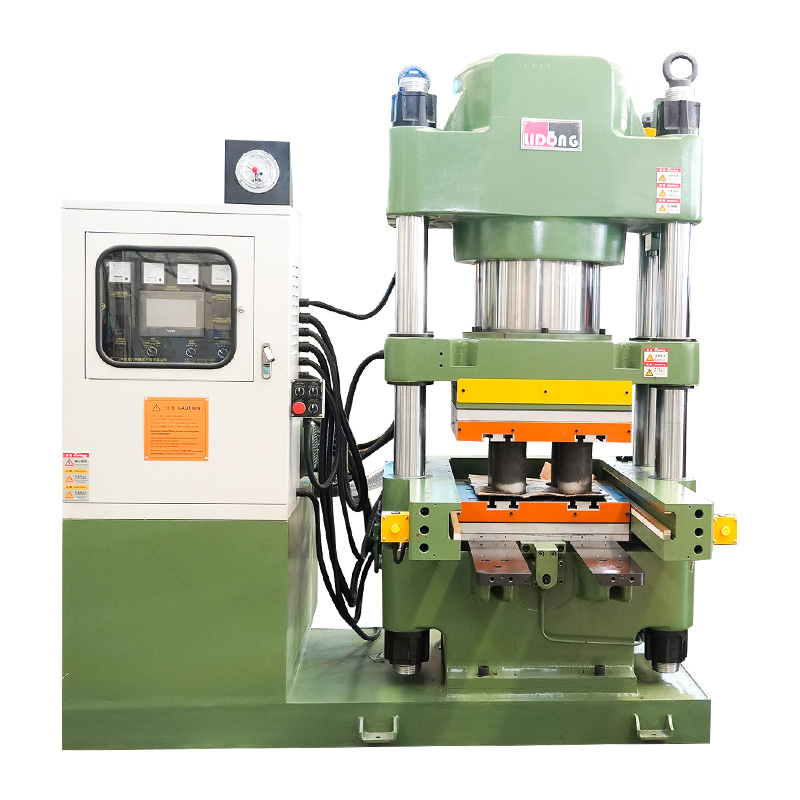
While four-column presses offer great accessibility, high-performance lines often prefer the Heavy-Duty H-Frame (Closed-Gate) design. The H-frame is significantly more resistant to "deflection"—the slight bending of the metal frame under load. If a frame deflects even by 0.1mm, the pressure distribution across a multi-cavity mold becomes uneven, resulting in pads that are thicker on one side than the other.
Quick Die Change (QDC) Integration
In a modern B2B environment, production runs are becoming shorter and more varied. A high-performance machine must support QDC features to minimize downtime. This includes hydraulic clamping systems that secure the mold in seconds and T-slot platens for universal mounting of different tool sets.
4. Industry 4.0 Integration and Data Traceability
In today’s automotive supply chain, traceability is a legal requirement. Every cycle generates a "Digital Birth Certificate" for the batch. High-performance machines utilize IoT (Internet of Things) sensors to monitor the health of the machine and the quality of the production.
| Feature | Traditional Hydraulic Press | High-Performance Servo Press |
|---|---|---|
| Energy Consumption | High (100% constant) | Low (30-50% savings) |
| Oil Temperature | Rises quickly | Stays low (stable viscosity) |
| Noise Level | 85-90 dB | < 75 dB |
| Pressure Precision | Moderate (±2-3 bar) | Extreme (±0.1 bar) |
FAQ: Common Questions About Brake Pad Press Machines
What is the typical tonnage required for passenger car brake pads?
For most passenger vehicles, a tonnage of 150 to 300 tons is standard. Large truck pads may require 400 to 600 tons.
How often should the heating platens be calibrated?
We recommend a thermal mapping and calibration every 6 months to ensure temperature uniformity across all cavities.
Can one machine produce both ceramic and semi-metallic pads?
Yes, high-performance machines allow you to save different "recipes" in the PLC to accommodate various material formulas.
References and Further Reading
- Friction Material Manufacturing: A Comprehensive Guide to Hot Pressing and Curing.
- Hydraulic Systems in Modern Industrial Manufacturing: Efficiency and Precision through Servo-Control.
- Automotive Quality Standards: ISO/TS 16949 Requirements for Brake Component Production.
- Industrial IoT and Industry 4.0: Transforming the Factory Floor with Real-Time Data Traceability.