 English
 عربى
عربى
 中文繁体
中文繁体

Content
What Is a Rubber Vulcanizing Machine?
A rubber vulcanizing machine applies controlled heat and pressure — typically 140–180°C and 5–20 MPa — to raw or semi-finished rubber compounds, triggering a cross-linking reaction that converts soft, plastic rubber into a durable, elastic material with significantly improved strength, heat resistance, and durability. This process, known as vulcanization, forms sulfur cross-links between rubber polymer chains, transforming the material's molecular structure permanently. Vulcanizing machines are essential in producing tires, industrial rubber sheets, seals, hoses, conveyor belts, and molded rubber components, and the specific machine type, cycle time, and parameters used directly determine the final product's mechanical properties and service life.
In short: selecting the right vulcanizing machine type and precisely controlling temperature, pressure, and cure time are the three factors that determine whether a rubber product meets its intended performance specifications.
The Vulcanization Process Explained
Vulcanization is a chemical curing process, and understanding its stages helps explain why machine parameters must be tightly controlled.
Compound Preparation
Raw rubber is mixed with sulfur (typically 1–4 parts per hundred rubber), accelerators, and fillers to form a compound ready for shaping and curing. The compound is then formed into sheets, extruded profiles, or placed into molds depending on the final product.
Heating and Pressure Application
The vulcanizing machine applies heat through steam, electric heating platens, or hot air, combined with mechanical or hydraulic pressure to eliminate air pockets and ensure the compound fully fills the mold cavity or maintains its shape during curing.
Cross-Linking Reaction
At curing temperatures of 150–170°C, sulfur cross-links typically form within 3 to 20 minutes depending on compound thickness and formulation, converting the rubber from a plastic, moldable state into a thermoset elastic material that will not soften again when reheated.
Cooling and Demolding
After the cure cycle completes, the product is cooled — either within the mold or after removal — to stabilize dimensions before final trimming and quality inspection.
Common Types of Rubber Vulcanizing Machines
Different machine types are suited to different product forms, production volumes, and rubber compound characteristics.
Flat Plate Vulcanizing Press
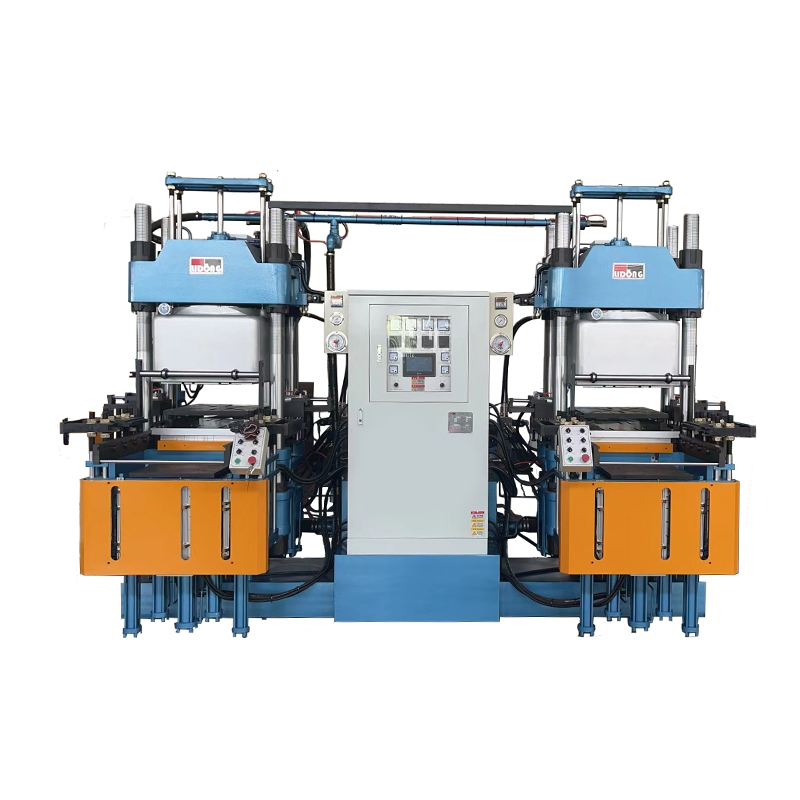
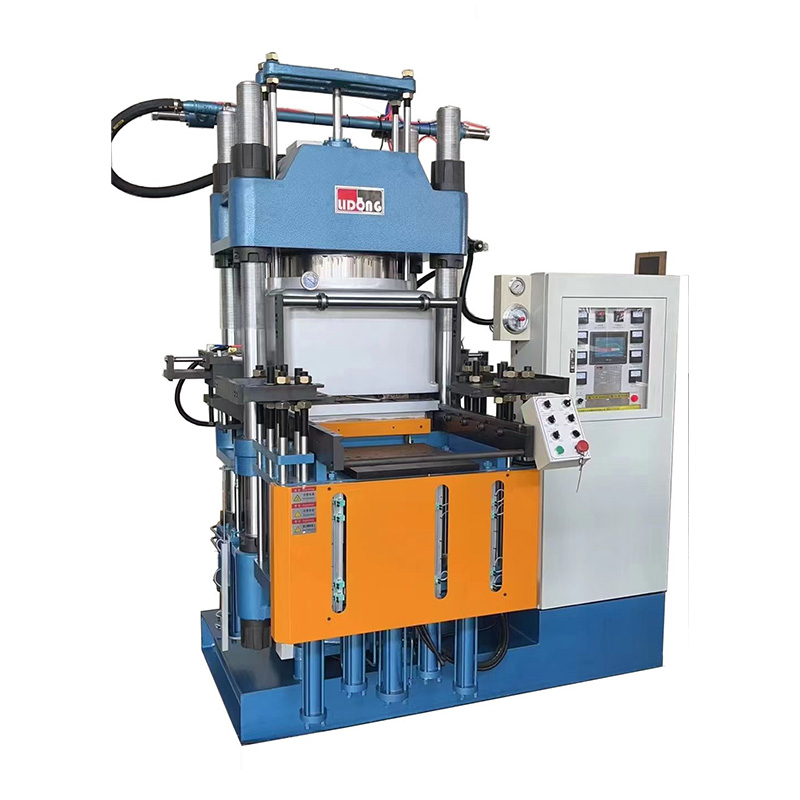
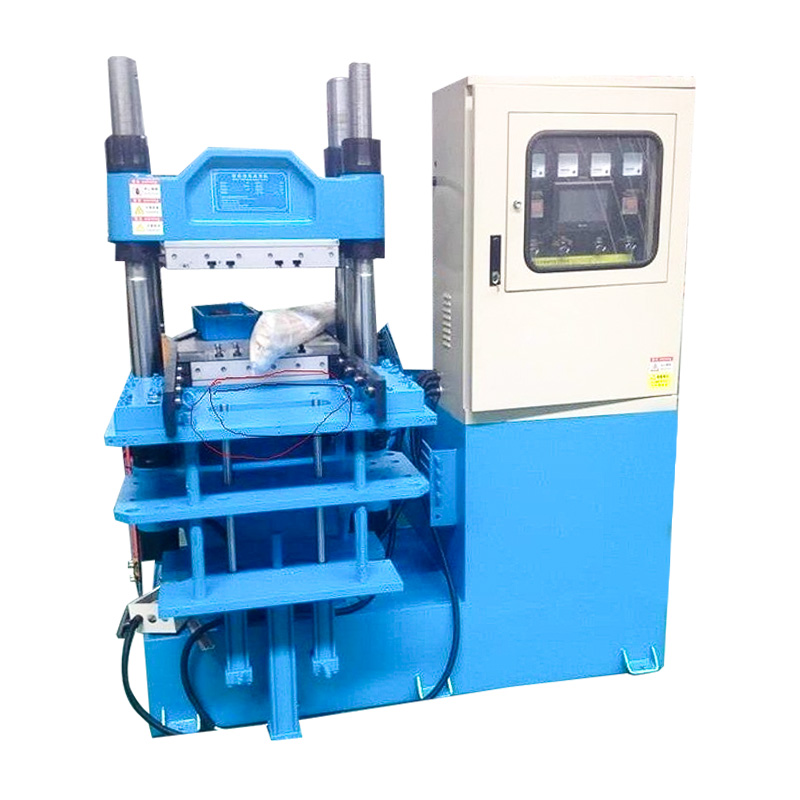
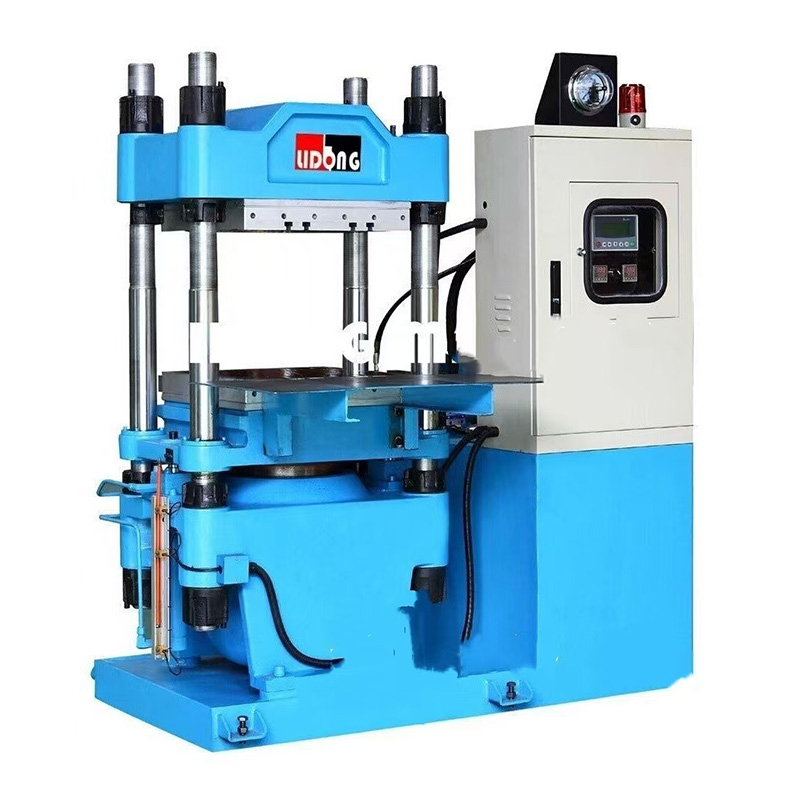
Uses heated platens to cure flat rubber sheets, gaskets, or molded parts under hydraulic pressure. This is the most common machine type for general-purpose rubber sheet and mat production.
Rotary Drum Vulcanizer
Continuously cures rubber sheeting, conveyor belting, or roofing membranes as they pass around a heated rotating drum under pressure, enabling continuous production rather than batch processing.
Injection Vulcanizing Machine
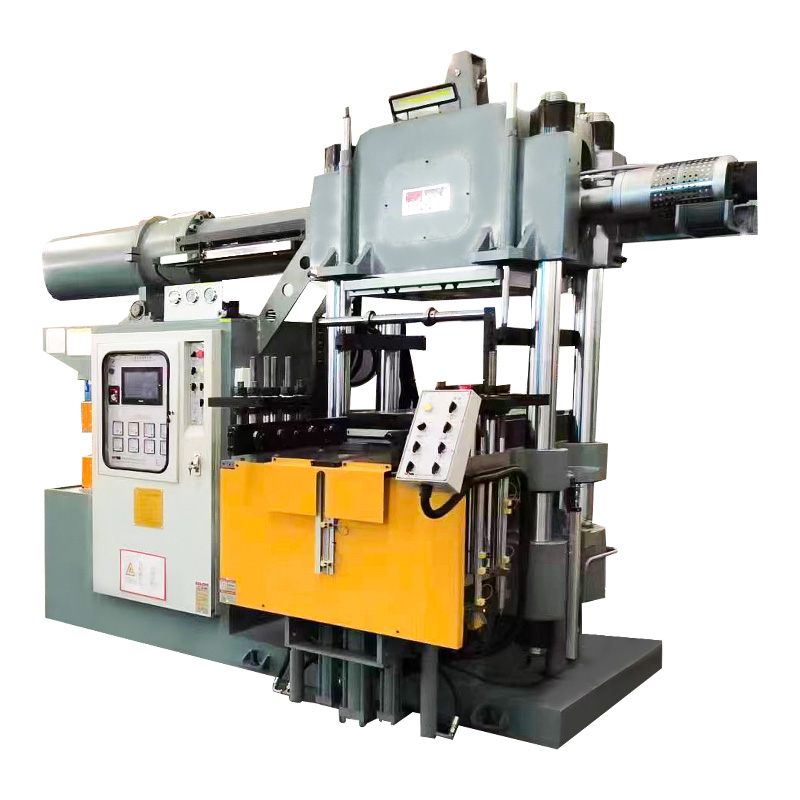
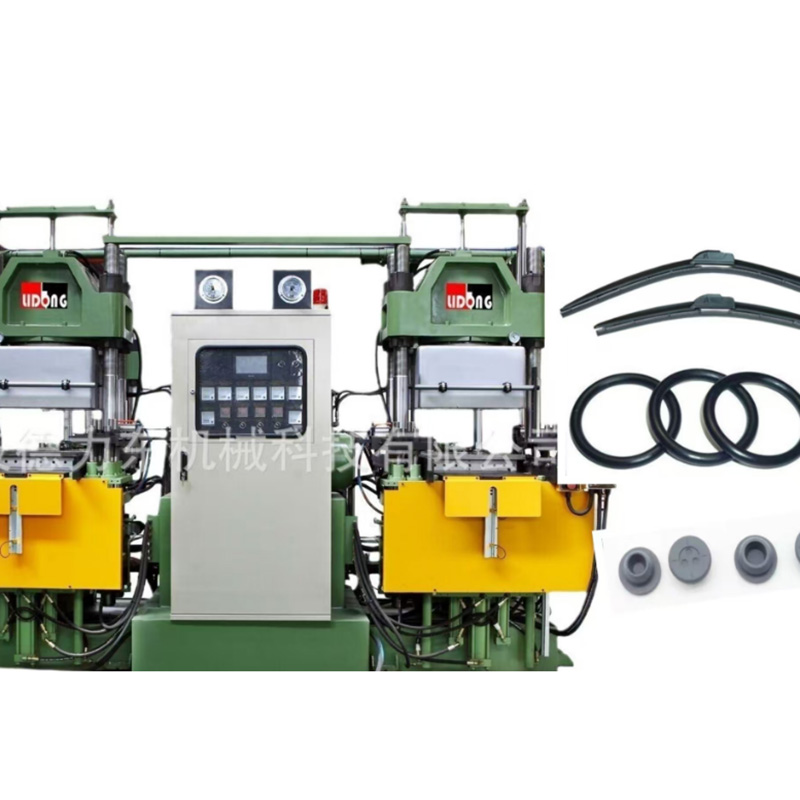
Injects pre-heated rubber compound directly into a closed mold under high pressure, offering faster cycle times and higher precision — commonly used for producing seals, grommets, and small precision components at high volume.
Autoclave Vulcanizer
Uses pressurized steam in a sealed chamber to cure hoses, cables, and irregularly shaped products that don't fit well into flat press molds, allowing uniform heat distribution around complex geometries.
| Machine Type | Typical Product | Production Mode |
|---|---|---|
| Flat Plate Press | Rubber sheets, gaskets, mats | Batch |
| Rotary Drum Vulcanizer | Conveyor belts, roofing membrane | Continuous |
| Injection Vulcanizer | Seals, grommets, small parts | Batch, high-speed |
| Autoclave Vulcanizer | Hoses, cables, complex shapes | Batch |
Critical Process Parameters
Three parameters govern vulcanization quality, and even small deviations can significantly affect product performance.
Curing Temperature
Most general-purpose rubber compounds cure between 140°C and 180°C, though specialty compounds like silicone rubber may require temperatures up to 200°C. Temperature must remain uniform across the mold surface, typically within ±2°C, to avoid under-cured or over-cured zones within a single part.
Curing Time
Cure time typically ranges from 3 to 20 minutes, determined largely by part thickness — thicker sections require proportionally longer cure times to ensure heat penetrates fully to the core, since under-cured cores remain a common cause of premature product failure.
Applied Pressure
Pressure ranges from 5 to 20 MPa depending on machine type and product complexity, ensuring the compound fully fills mold details and preventing porosity or voids caused by trapped air or off-gassing during the curing reaction.
Key Applications Across Industries
Rubber vulcanizing machines support production across a wide range of industrial sectors.
- Tire manufacturing — curing presses shape and vulcanize tire treads and sidewalls under precise heat and pressure cycles
- Automotive components — seals, gaskets, bushings, and vibration dampers requiring dimensional precision
- Conveyor belt production — continuous rotary vulcanization for long, uniform belt lengths
- Footwear — vulcanized rubber soles offering flexibility and abrasion resistance
- Industrial hoses and cables — autoclave curing for products with complex or elongated geometries
Quality Control and Common Defects
Monitoring cure quality is essential to avoid costly rework or field failures. Common defects and their typical causes include:
- Under-curing — insufficient time or temperature, resulting in soft, weak, or tacky rubber
- Over-curing (reversion) — excessive time or temperature causing reduced tensile strength and increased brittleness
- Porosity — trapped air or gas from insufficient pressure or venting during the cure cycle
- Mold flow lines — incomplete compound flow before cross-linking begins, often due to compound viscosity or injection speed issues
Rheometer testing is commonly used to determine optimal cure time (T90 — the time to reach 90% of maximum cure state) for a given compound, allowing manufacturers to set machine parameters based on actual material behavior rather than generic estimates.
Rubber vulcanizing machines transform raw rubber compounds into durable, functional products through a precisely controlled combination of heat, pressure, and time. Selecting the appropriate machine type — whether flat plate press, rotary drum, injection, or autoclave — depends on product geometry and production volume, while consistent quality depends on tightly managing curing temperature, time, and pressure within compound-specific tolerances. Manufacturers who understand these process fundamentals are better positioned to reduce defect rates and produce rubber components that meet demanding performance requirements across automotive, industrial, and consumer applications.