 English
 عربى
عربى
 中文繁体
中文繁体

Content
- 1 How Each Machine Generates Pressing Force
- 2 Side-by-Side Comparison of Core Specifications
- 3 Precision and Product Quality
- 4 Production Speed and Throughput Capacity
- 5 Tooling Protection and Die Longevity
- 6 Maintenance Requirements and Operating Costs
- 7 Energy Consumption and Operating Efficiency
- 8 Which Machine Is Right for Your Brake Pad Operation?
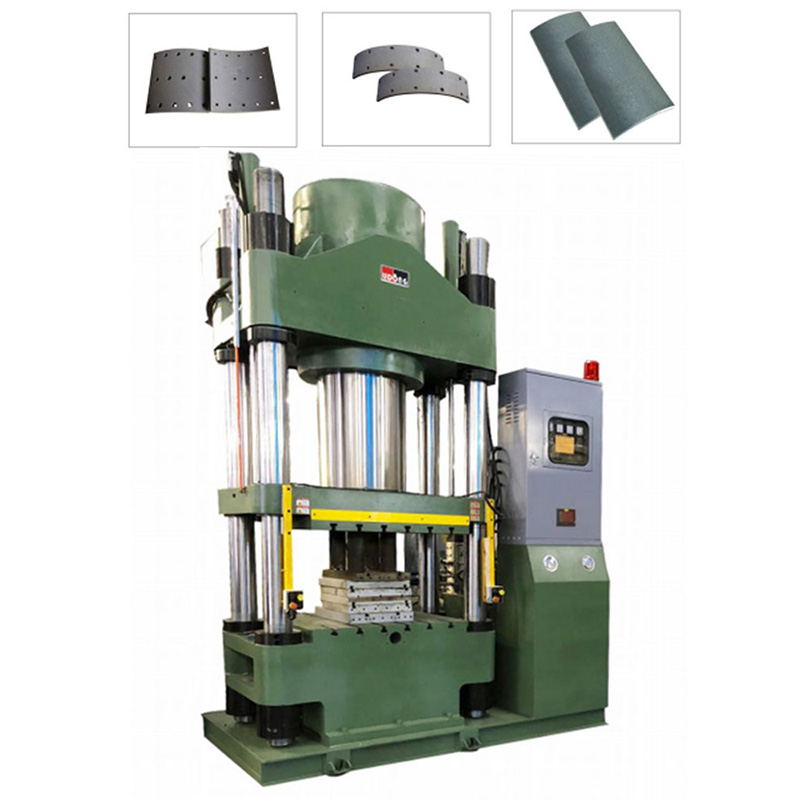
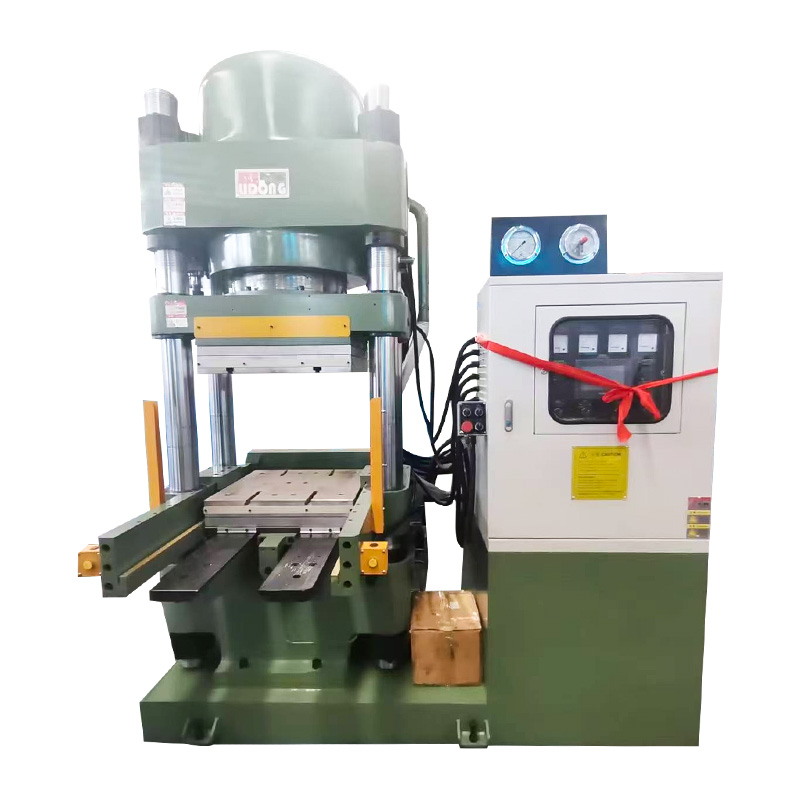
The key difference between hydraulic and mechanical brake pad press machines is how they generate and deliver pressing force. Hydraulic machines use fluid pressure to deliver smooth, controllable force ideal for high-precision brake pad forming, while mechanical machines use flywheel-driven crankshaft mechanisms to deliver fast, high-speed strokes suited for high-volume stamping. Choosing the wrong type for your production requirements leads to dimensional inconsistency, premature tooling wear, and unnecessary operating costs.
How Each Machine Generates Pressing Force
Understanding the working principle of each machine type is essential before comparing performance specs. The force generation mechanism determines everything from stroke control to maintenance requirements.
Hydraulic Press Machines
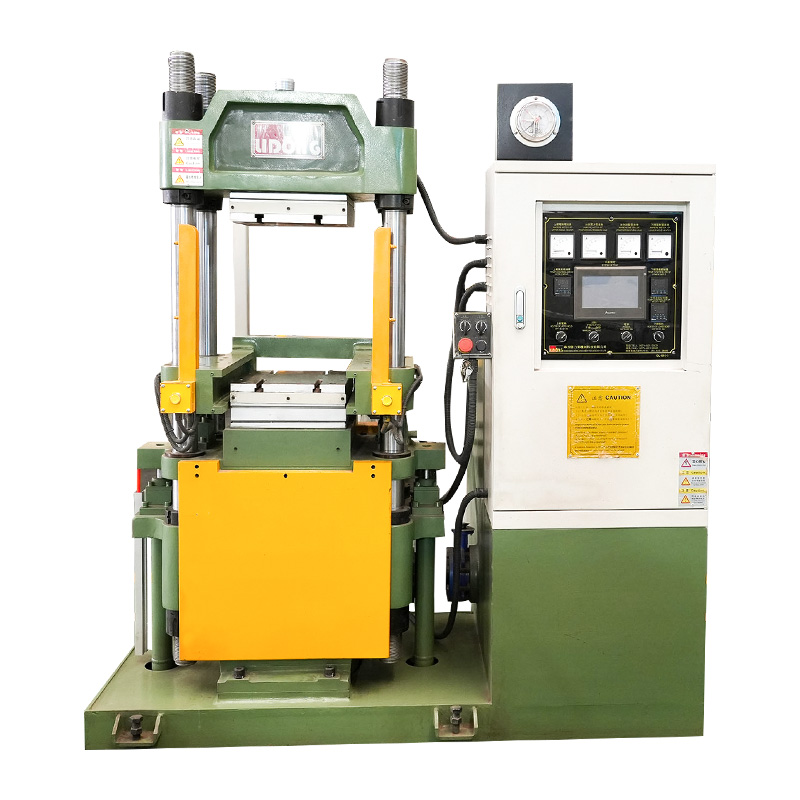
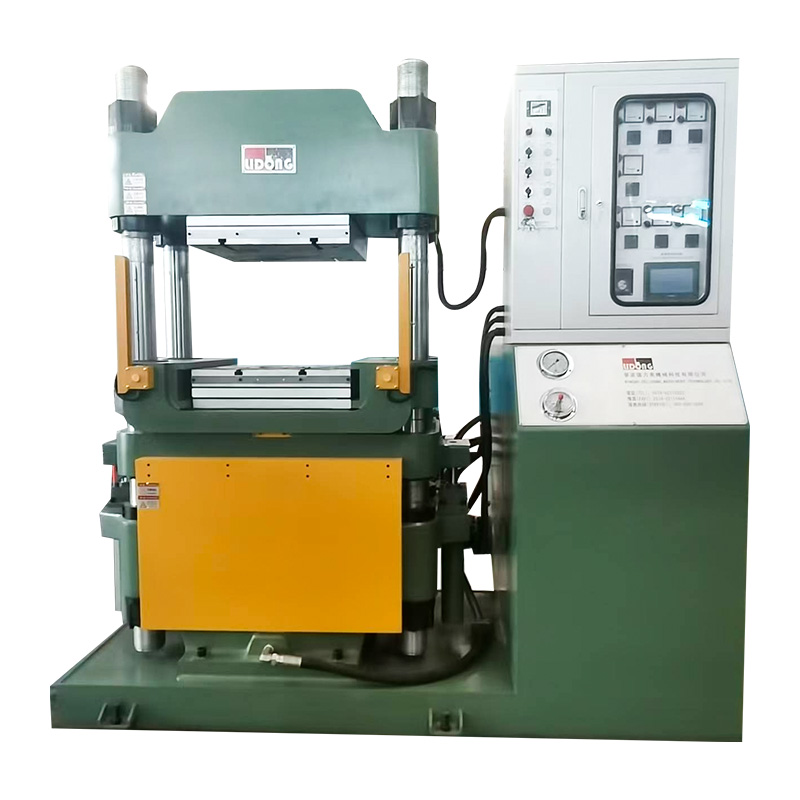
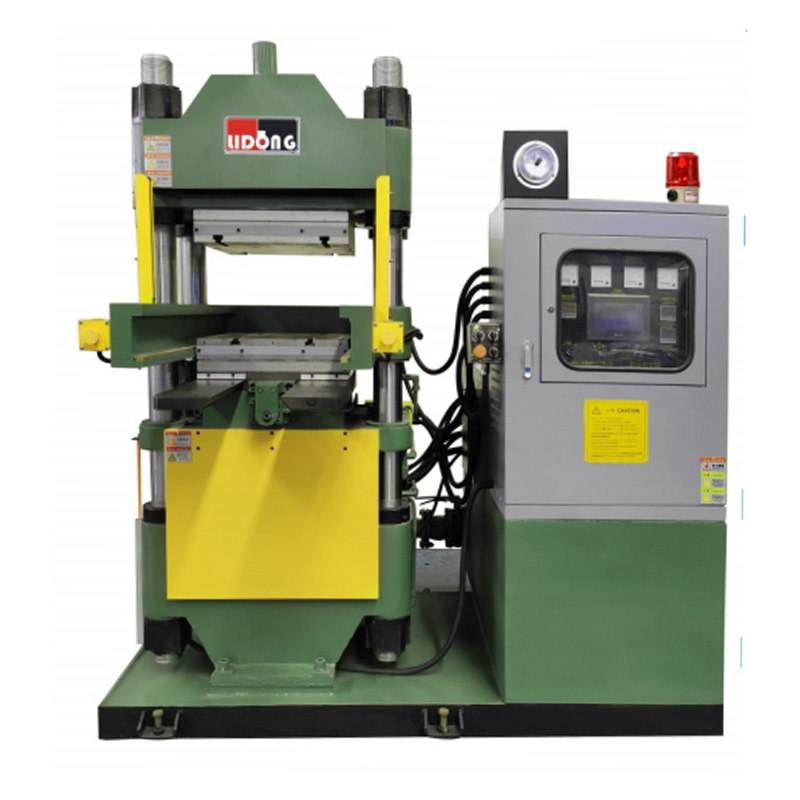
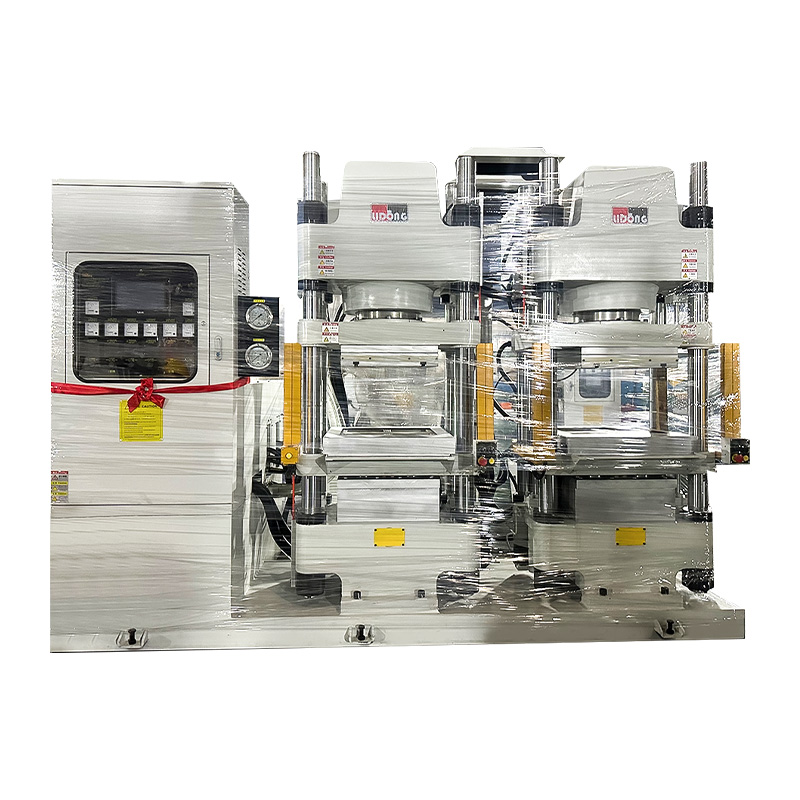
Hydraulic brake pad press machines use a pump to pressurize hydraulic fluid, which drives one or more cylinders to apply force to the mold. The pressure can be precisely regulated at any point in the stroke, and force is maintained consistently throughout the full pressing depth. Most industrial hydraulic brake pad presses operate in the range of 100 to 2,000 tons of pressing force, with servo-hydraulic models offering pressure accuracy within ±0.5%.
Mechanical Press Machines
Mechanical brake pad press machines store energy in a rotating flywheel driven by an electric motor. When the clutch engages, that stored kinetic energy drives a crankshaft or eccentric gear that moves the ram downward in a fixed stroke arc. The force output is highest at the bottom of the stroke and varies throughout the cycle — it cannot be adjusted mid-stroke. Typical mechanical presses for brake pad applications range from 60 to 400 tons.
Side-by-Side Comparison of Core Specifications
The table below summarizes the most critical operational differences between the two machine types across factors that directly impact brake pad production quality and efficiency.
| Specification | Hydraulic Press | Mechanical Press |
|---|---|---|
| Force range | 100–2,000+ tons | 60–400 tons |
| Force consistency | Full stroke, constant | Variable (peak at bottom) |
| Stroke speed | 10–100 mm/s (adjustable) | Up to 400 strokes/min (fixed) |
| Stroke length | Fully adjustable | Fixed by crankshaft design |
| Pressing precision | ±0.1–0.5 mm | ±0.3–1.0 mm |
| Production speed | Moderate | High |
| Tooling protection | Excellent (overload relief) | Moderate (shear bolt protection) |
| Energy efficiency | Moderate (servo models: high) | High (flywheel stores energy) |
| Machine price range | $15,000–$300,000+ | $8,000–$120,000 |
Precision and Product Quality
Brake pad dimensional consistency directly affects braking performance and safety certification. The two machine types differ significantly in how precisely they control the forming process.
Hydraulic Press Advantage in Precision
Because hydraulic machines maintain constant pressure throughout the full stroke, they ensure uniform material compression across the entire brake pad surface. This is especially critical when pressing layered friction material composites, where uneven pressure causes delamination or density variation. High-end servo-hydraulic models achieve thickness tolerances of ±0.1 mm, which meets the requirements of OEM brake pad specifications for passenger vehicles and commercial trucks.
Mechanical Press Limitations in Precision
Mechanical presses deliver maximum force only at the very bottom of the stroke — known as the bottom dead center (BDC). At any other point in the stroke arc, force output is lower and variable. For brake pad steel backing plate stamping (a punching operation), this is perfectly adequate. However, for forming and compressing friction material, the inconsistent force profile can result in thickness variation of up to 1 mm across a batch, which may fall outside acceptable quality tolerances for safety-critical applications.
Production Speed and Throughput Capacity
For high-volume brake pad manufacturers, throughput is as important as precision. The two machine types serve very different production scale requirements.
- Mechanical presses can complete up to 200–400 strokes per minute in high-speed stamping configurations, making them far superior for repetitive, single-operation tasks like punching slots or holes in brake pad backing plates
- Hydraulic presses typically operate at 4–20 strokes per minute for brake pad forming operations, as the slower controlled approach and dwell time at full pressure are necessary for proper material compression and cure initiation
- A typical hydraulic brake pad press produces 300–800 finished brake pads per 8-hour shift, while a mechanical stamping press performing backing plate operations can produce 5,000–15,000 parts per shift
This means most brake pad production lines use both machine types in sequence: mechanical presses for metal stamping operations and hydraulic presses for friction material forming.
Tooling Protection and Die Longevity
Molds and dies for brake pad production are expensive — a single hot-press mold set for a specific brake pad geometry typically costs $3,000–$15,000. Protecting that investment depends heavily on the press machine's overload handling.
Hydraulic Overload Protection
Hydraulic systems include a pressure relief valve that automatically limits the maximum force if the mold encounters an obstruction or material misplacement. The machine simply stops pressing rather than forcing through, which prevents catastrophic die damage. This makes hydraulic presses significantly more forgiving during setup, material changeover, and operator errors.
Mechanical Overload Risks
Mechanical presses rely on shear bolts or mechanical clutch systems as overload protection. If a double-feed or foreign object is encountered, the shear bolt breaks to absorb the load — but this still results in a sudden force spike that can crack dies. Replacing a shear bolt takes 15–45 minutes of downtime per incident, and repeated overloads over time cause cumulative fatigue damage to tooling.
Maintenance Requirements and Operating Costs
Both machine types require regular preventive maintenance, but the nature and cost of that maintenance differ substantially over a 10-year operating lifespan.
| Maintenance Item | Hydraulic Press | Mechanical Press |
|---|---|---|
| Routine service interval | Every 500–1,000 hrs | Every 200–500 hrs |
| Key consumables | Hydraulic fluid, seals, filters | Clutch linings, gears, shear bolts |
| Fluid/oil change | Every 2,000 hrs (~$300–$800) | Gear oil only; less frequent |
| Risk of fluid leaks | Yes (seal degradation) | Minimal |
| Average annual maintenance cost | $2,000–$8,000 | $1,000–$4,000 |
| Noise level | 65–80 dB | 85–105 dB |
Mechanical presses have lower maintenance costs but higher noise levels — often requiring hearing protection and acoustic enclosures that add $2,000–$10,000 to installation costs in regulated facilities.
Energy Consumption and Operating Efficiency
Energy costs are a significant long-term operating expense in press machine operations, particularly for facilities running two or three production shifts per day.
- Traditional hydraulic presses run the hydraulic pump motor continuously, consuming energy even during the dwell and return phases — typical energy consumption is 15–45 kW per hour depending on tonnage
- Servo-hydraulic presses only activate the pump on demand, reducing energy consumption by 30–60% compared to conventional hydraulic models — a meaningful saving at scale
- Mechanical presses store energy in the flywheel and release it during the stroke, making them inherently efficient for high-speed repetitive operations — energy consumption is typically 10–30 kW per hour for equivalent tonnage
For a facility operating 6,000 hours per year, switching from a conventional hydraulic press to a servo-hydraulic model can save $8,000–$25,000 annually in electricity costs at average industrial power rates.
Which Machine Is Right for Your Brake Pad Operation?
The best choice depends on the specific stage of brake pad production you are equipping, your required output volume, and quality standards.
Choose a Hydraulic Brake Pad Press If:
- Your primary process is friction material forming, hot pressing, or cold pressing of brake pad composites
- You require OEM-grade dimensional tolerances (±0.1–0.3 mm thickness consistency)
- You produce multiple brake pad geometries and need flexible stroke and pressure adjustability
- Tooling protection and minimizing die replacement costs are a priority
Choose a Mechanical Brake Pad Press If:
- Your operation focuses on steel backing plate stamping, punching, or blanking — high-speed, single-operation tasks
- You need maximum throughput and run the same part geometry at high volume with minimal changeovers
- Your budget for capital equipment is limited and lower initial cost is a priority
- You already have hydraulic presses handling friction material forming and need a complementary stamping solution
For most mid-to-large brake pad manufacturers, the optimal setup is not either/or but both: mechanical presses handling metal component stamping at high speed, and hydraulic presses managing the precision forming stages where product quality is determined.