 English
 عربى
عربى
 中文繁体
中文繁体

Content
- 1 What All Three Machine Types Have in Common
- 2 Hydraulic Vulcanizing Press: How It Works and Best Use Cases
- 3 Plate Vulcanizing Machine: How It Works and Best Use Cases
- 4 Rotary Vulcanizing Machine (Rotocure): How It Works and Best Use Cases
- 5 Side-by-Side Comparison
- 6 Which One Fits Your Production?
- 7 Key Factors to Check Before You Buy
The right rubber vulcanizing machine depends entirely on what you're producing. Choose a hydraulic vulcanizing press for molded parts such as O-rings, seals, gaskets, and rubber-to-metal bonded components. Choose a plate (flat-platen) press for rubber sheets, mats, and multi-layer flat products made in batches. Choose a rotary vulcanizer (rotocure) for continuous rubber sheeting, conveyor belting, or flooring produced at high volume on a running line.
All three machines cure rubber the same fundamental way — through heat and pressure that trigger cross-linking in the rubber compound — but they differ in how that pressure is applied and whether production runs in batches or continuously. The sections below break down how each type works, where it performs best, and how to match one to your actual production volume and product shape.
What All Three Machine Types Have in Common
Vulcanization is a chemical process: heat activates a curing agent (typically sulfur or a peroxide system) that cross-links rubber polymer chains, turning a soft, sticky compound into a strong, elastic finished product. Regardless of machine type, this reaction generally needs:
- Temperature in the range of 140°C to 200°C
- Applied pressure to keep the rubber compacted and free of voids during curing
- Sufficient dwell time for the cross-linking reaction to complete through the full thickness
What changes between hydraulic, plate, and rotary machines is the mechanism that delivers that heat and pressure — and that mechanism is what determines which product shapes and volumes each machine is actually good for.
Hydraulic Vulcanizing Press: How It Works and Best Use Cases
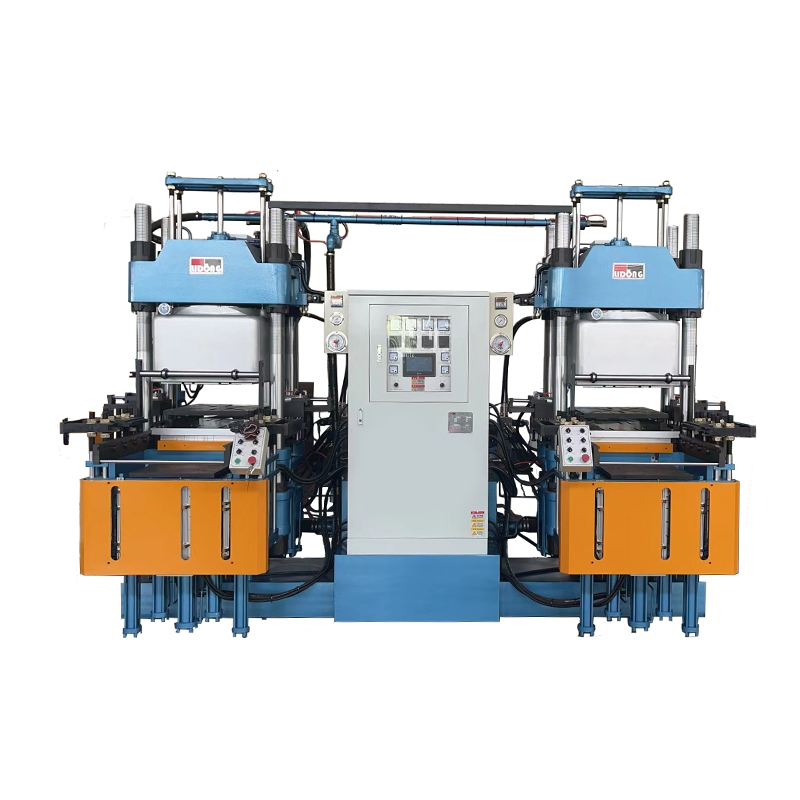
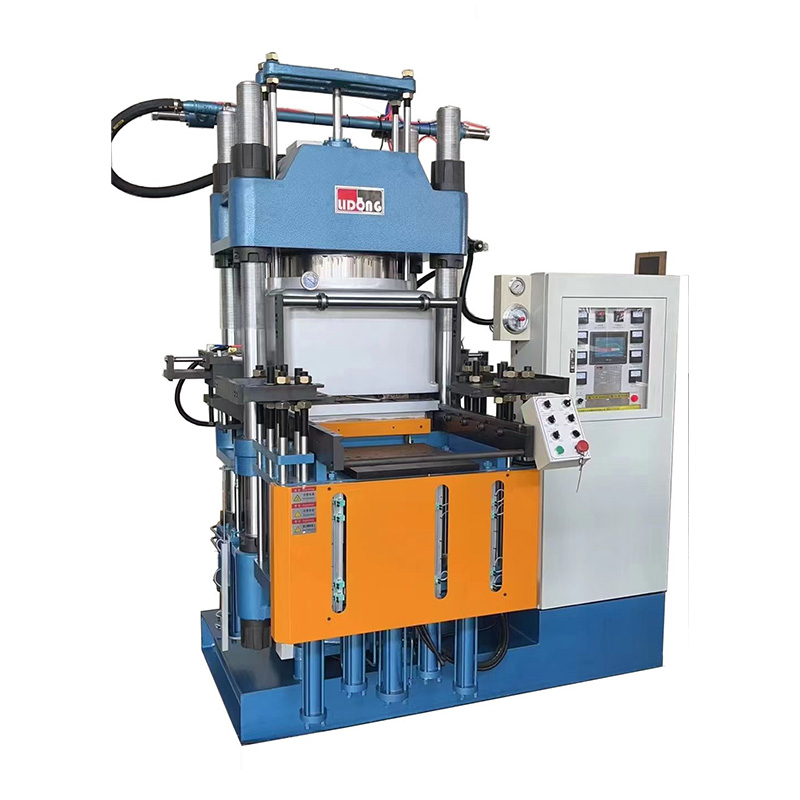
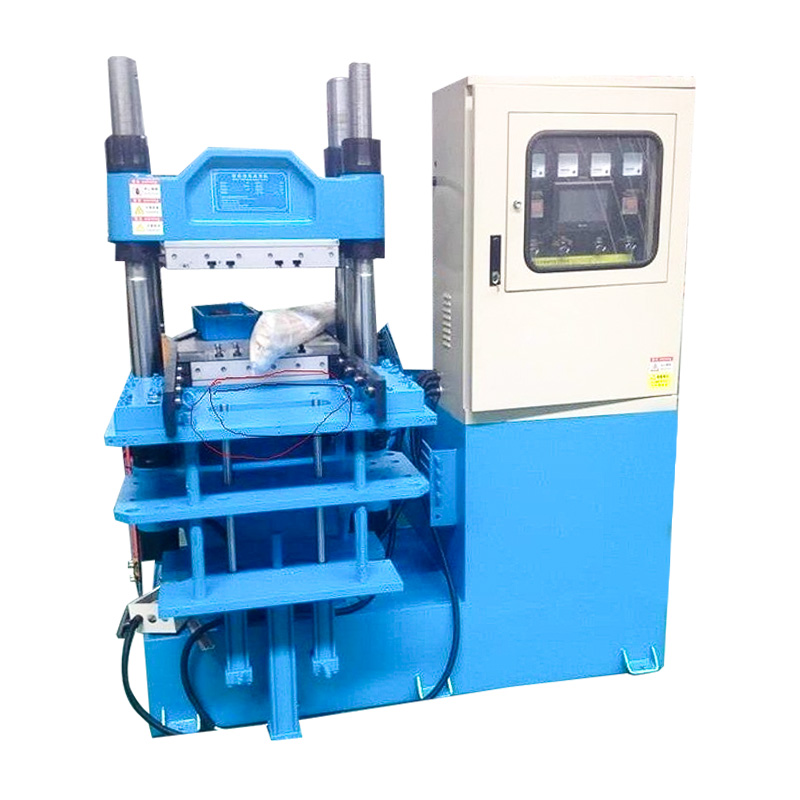
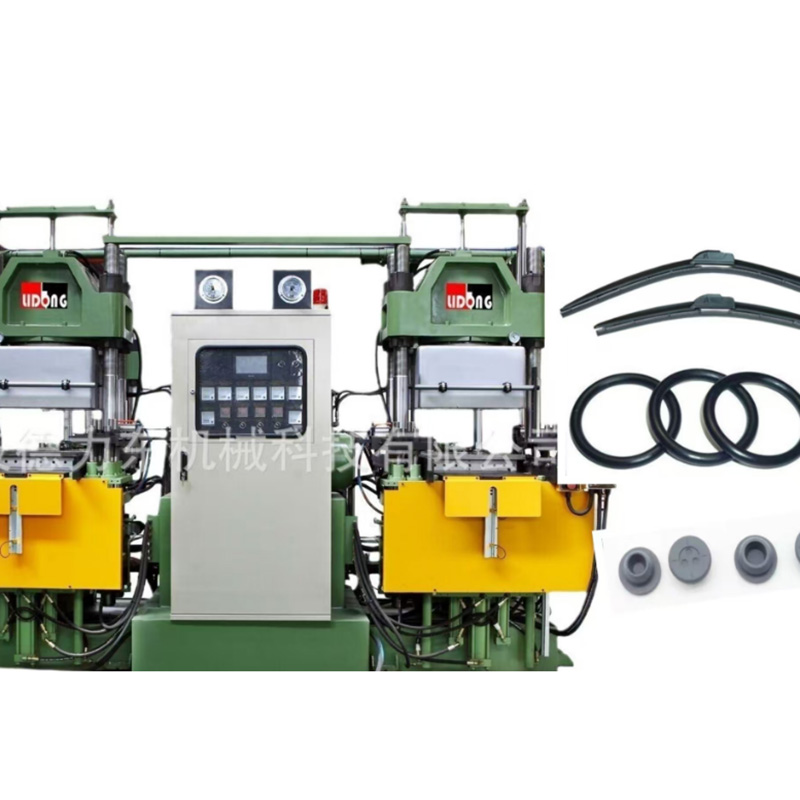
A hydraulic vulcanizing press uses a hydraulic ram to close a heated mold around rubber compound, forming and curing the part in one cycle. This is the standard machine for molded rubber goods rather than flat sheet material.
Typical Operating Parameters
Hydraulic presses generate 50 to 500 tons of clamping force depending on mold size and number of cavities, with heated platens running 150°C–200°C. A single molding cycle typically takes 3 to 20 minutes, depending on part thickness and compound type.
Where It Excels
- O-rings, seals, gaskets, and grommets
- Rubber-to-metal bonded parts such as engine mounts and bushings
- Footwear soles and other precisely shaped molded components
Because each mold is custom-made, hydraulic presses are well suited to product lines with multiple SKUs and frequent mold changes, but they are inherently a batch process — output is limited by mold cavity count, not line speed.
Plate Vulcanizing Machine: How It Works and Best Use Cases
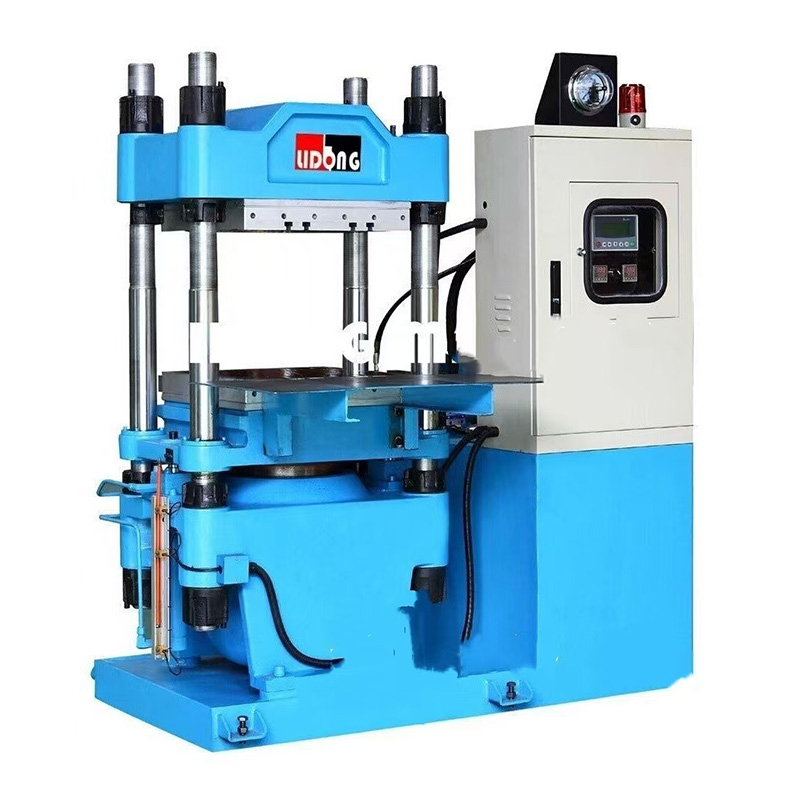
A plate vulcanizing machine (also called a flat-platen or multi-daylight press) uses several stacked flat heated plates that close simultaneously, curing multiple layers of rubber sheet or rubber-fabric composite at once. Unlike a molding press, the plates are flat rather than shaped into a cavity.
Typical Operating Parameters
Multi-daylight plate presses commonly run 4 to 20 daylights (stacked plate openings) at 140°C–170°C, with cycle times of 10 to 40 minutes depending on sheet thickness — thicker rubber sheets need longer dwell time for heat to penetrate evenly to the core.
Where It Excels
- Rubber mats and flooring tiles
- Multi-layer rubber-fabric or rubber-metal laminated sheets
- Thicker rubber sheeting where surface finish and flatness matter
Plate presses give better thickness control and a smoother surface finish than continuous methods, which makes them the preferred choice when the end product needs tight flatness tolerances rather than maximum throughput.
Rotary Vulcanizing Machine (Rotocure): How It Works and Best Use Cases
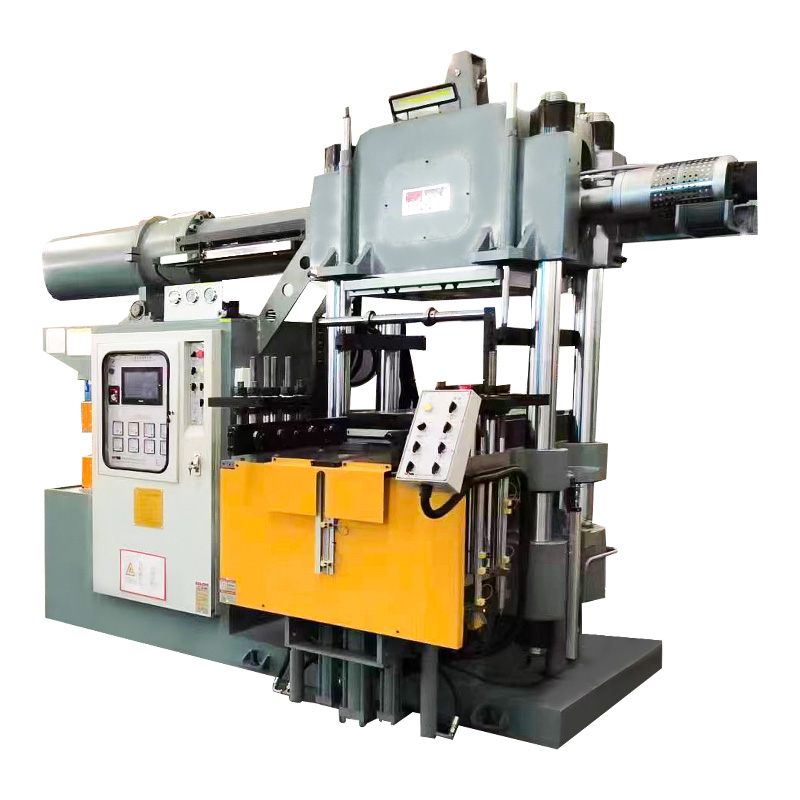
A rotary vulcanizer, commonly called a rotocure, cures rubber continuously rather than in batches. Unvulcanized rubber sheet is fed between a large heated rotating drum and a pressurized steel belt, curing as it travels through — similar in concept to a continuous laminator.
Typical Operating Parameters
Rotocures run at line speeds of roughly 1 to 10 meters per minute, with drum temperatures of 150°C–200°C, and can process working widths from 1 to 3 meters depending on the machine. Because curing happens continuously, there is no batch-to-batch downtime for loading and unloading.
Where It Excels
- Conveyor belting produced in long continuous rolls
- Rubber flooring and sheeting sold by the roll
- Cellular (sponge) rubber products requiring continuous expansion and curing
A rotocure line costs significantly more upfront than a plate press of comparable width, but it removes the cycle-time bottleneck entirely — output scales with line speed and operating hours rather than batch count, which matters most at high production volumes.
Side-by-Side Comparison
| Factor | Hydraulic Press | Plate Press | Rotary (Rotocure) |
|---|---|---|---|
| Process type | Batch (molded) | Batch (flat sheet) | Continuous |
| Best product shape | 3D molded parts | Flat sheets / mats | Long rolls / belting |
| Typical cycle/speed | 3–20 min/batch | 10–40 min/batch | 1–10 m/min, continuous |
| Relative upfront cost | Moderate | Moderate to high | High |
| Best fit for volume | Low to medium, multi-SKU | Medium | High-volume single product |
Which One Fits Your Production?
The fastest way to decide is to start from your product shape and order pattern, not from machine price alone.
- If you're producing molded parts with complex geometry (seals, mounts, soles) and run multiple part numbers — choose a hydraulic press
- If you're producing flat sheets, mats, or laminated products where surface flatness and thickness tolerance matter most — choose a plate press
- If you're producing one or two standardized roll products (belting, flooring) at high, steady volume — choose a rotary vulcanizer
- If your order volume is still uncertain or low — start with a hydraulic or plate press, since both require lower capital investment than a rotocure line
Key Factors to Check Before You Buy
Beyond machine type, a few specification checks help avoid costly mismatches between equipment and product:
- Confirm maximum mold/platen size or working width matches your largest product, not just your current average
- Check temperature uniformity across the platen or drum — variation greater than ±3°C can cause uneven curing
- Ask whether the PLC supports independent recipes for pressure, temperature, and dwell time per product
- For rotocures, confirm belt tension control and drum speed accuracy, since both directly affect cure consistency along the roll
In summary, hydraulic, plate, and rotary vulcanizing machines all cure rubber through the same heat-and-pressure principle, but they're built for fundamentally different product shapes and production scales. Matching the machine to your actual product geometry and order volume — rather than choosing based on price alone — is what determines whether the investment pays off.