English
 عربى
 中文繁体

Content
- 1 What a Hydraulic Coining Press Actually Does
- 2 How a Coining Cycle Runs, Step by Step
- 3 Coining, Stamping and Embossing: Three Jobs, Three Force Curves
- 4 Tonnage and Pressure: The Numbers That Decide the Job
- 5 Ram Speed, Dwell and Decompression: The Settings Nobody Argues About Until a Part Fails
- 6 Die Setup: Where Most Coining Problems Are Born
- 7 Materials: What Flows, What Fights Back
- 8 Where Hydraulic Coining Presses Earn Their Keep
- 9 Hydraulic or Electric Drive? Two Honest Views
- 10 Specifying a Coining Press: A Ten-Point Checklist
- 11 Keeping a Coining Press Accurate
- 12 The View From a Press Builder
- 13 Frequently Asked Questions
Search for a hydraulic coining press and there is almost always a very specific job behind it. Someone needs to reproduce fine die relief on metal, a coin, a medal, a badge, an electrical contact, a sintered component, and they need the impression to look the same on the first part and on the ten-thousandth.
We build hydraulic presses for a living at Ningbo Delidong Machinery Technology, so we spend most of our time on the questions that sit underneath that job: how evenly the load spreads across the platen, how precisely the pressure repeats, how slowly the ram should squeeze, and how long the press should hold before it lets go. Those four things decide whether a coining job comes out crisp or comes out soft.
What follows is not a sales pitch. Treat it as a checklist you can carry to any machine builder, including us.
What a Hydraulic Coining Press Actually Does
A hydraulic coining press is a hydraulic press configured for coining, which is a closed-die cold forming operation. A prepared blank is squeezed between a die and a punch until the metal flows plastically into the finest detail of the die face. What comes out is a part with raised relief, sharp edges and a surface that follows the die almost point for point.
The important word is "held". A mechanical strike press delivers its energy in a very short impulse, which is excellent for high-volume circulation coinage and hard on dies. A hydraulic press builds force from oil pressure instead, so it reaches full tonnage at practically any point in the stroke and can then stay there for as long as the material needs. That dwell is what lets metal creep into the last few microns of relief, and it is the main reason large medals, proof coins, die hobbing and precision embossed parts are still made on hydraulic machines.
What separates a coining press from a general-purpose press
- Frame stiffness. A four-column frame is the usual choice, because the load has to stay evenly distributed over the whole die face.
- Parallelism. Flatness of bolster and platen under full load matters far more than a large table.
- Pressure control. Repeatable tonnage within about one percent, not simply "high tonnage".
- A slow, controlled squeeze. Ram speed at contact is measured in millimetres per second, not metres per second.
- A die area built for die sets. Hardened holders, minimal movement and no visible flex under load.
Get those five right and the process is remarkably stable. Get them wrong and no amount of extra tonnage will rescue the part.
How a Coining Cycle Runs, Step by Step
From outside the guard a coining cycle looks like the ram going down and coming back up. Inside, it is a sequence of decisions, and rushing any one of them shows up on the finished part.
Blank preparation
The blank or planchet is annealed, cleaned, degreased and checked for weight, diameter and thickness. Work-hardened blanks will not fill deep relief, no matter what the press does. If blank weight drifts, finished thickness drifts with it.
Die loading and alignment
The die set goes into its holder and parallelism is checked with dial indicators. A misalignment of a few hundredths of a millimetre shows up as lopsided relief and uneven die wear long before it shows up as a scrapped part.
Shut height and stroke setting
Bottom position is set on a soft setting blank, closed slowly, then inspected. The punch should never bottom out metal to metal; the impression depth, not a hard stop, defines the finished part.
Approach
The ram descends quickly for most of the stroke and then switches to a slow approach just before contact. That soft touch keeps the die edge from shock loading, which is one of the quiet killers of coining tooling.
Squeeze
Full tonnage is applied gradually. Metal begins to flow under the highest points of the die and then spreads outward until the detail fills, working from the centre of the impression toward the rim.
Dwell
Pressure is held, commonly one to five seconds and sometimes longer on large medals. This is where the last of the detail fills and where elastic recovery is allowed to work against the die rather than against the finished part.
Decompression and ejection
Pressure is released gradually, the ram retracts and the part is ejected. A slow release protects the die, prevents sticking and avoids tearing the relief that was just formed.
Coining, Stamping and Embossing: Three Jobs, Three Force Curves
People use these words interchangeably, and then wonder why a press bought for one job struggles with another. The difference is not the tonnage number on the nameplate. It is the shape of the force curve and what happens at the bottom of the stroke.
| Factor | Hydraulic coining press | Mechanical strike press | Hydraulic embossing press |
|---|---|---|---|
| Force delivery | Slow squeeze, pressure held at the bottom | Sharp impulse from crank or knuckle joint | Slow squeeze, often against a soft backing |
| Tonnage through the stroke | Full tonnage at almost any point | Peak force only near the bottom | Full tonnage, adjustable in steps |
| Cycle speed | Seconds per part | Several parts per second possible | Seconds per part |
| Dwell capability | 1 to 5 seconds or more | Essentially none | 1 to 10 seconds |
| Effect on dies | Gentle, gradual loading | High shock loading, faster die wear | Gentle, low shock |
| Best suited to | Large coins, medals, proof pieces, die hobbing, contacts, sintered part sizing | High-volume circulation coinage | Badges, decorative panels, textured sheet |
| Output character | Low to medium volume, high detail | High volume, moderate detail | Low volume, decorative detail |
Tonnage and Pressure: The Numbers That Decide the Job
Tonnage is arithmetic, not intuition. A useful first-pass estimate is this: required force equals unit pressure multiplied by the projected area of the impression. Unit pressure depends on the metal, the depth of relief and how much the blank has already been worked.
Indicative unit pressures for first-pass estimates only. Deep relief, thin blanks, hardened material and tight radii all push the figure upward.
Two habits save real money here. The first is margin: add 20 to 30 percent above the calculated figure, because a press running at its ceiling has no room left for a harder batch of blanks or a slightly deeper die. The second is respect for the tooling. Pressure that the die was never designed for does not announce itself politely, it either wears the die out early or cracks it outright, and a coining die is rarely cheap to replace.
It also helps to remember that the number on the nameplate describes the press, not the job. A stiff 300-tonne press with good parallelism will often out-coin a tired 500-tonne machine, because the force actually reaches the die face instead of bending the frame first.
Ram Speed, Dwell and Decompression: The Settings Nobody Argues About Until a Part Fails
Three settings do most of the invisible work in a coining cycle. They are also the three most often left at default.
Approach and contact
A fast descent followed by a slow approach is not a gimmick. It shortens the cycle without letting the punch hit the blank at speed. Shock at contact deforms the die edge slightly, and a die edge that deforms slightly repeats that error on every part that follows.
Squeeze speed
Typically 1 to 20 mm/s. Harder metals, deeper relief and larger diameters all argue for the slower end. Faster squeezing can trap the metal before it has time to flow into the small radii.
Dwell
One to five seconds is common, longer for very large medals. Dwell lets the material creep into the last few microns of detail and lets elastic recovery happen while the part is still under load.
Decompression
Releasing pressure gradually prevents the part from snapping away from the die face and protects the die from a sudden reverse load. It is especially important on thin, wide parts.
Repeatability
A press that produces 180 tonnes on Monday and 200 tonnes on Friday is not a coining press. Stored recipes with pressure, position, speed and dwell give the operator a repeatable starting point every shift.
Die Setup: Where Most Coining Problems Are Born
When a coining job will not run clean, the press is usually the last suspect and the die setup is usually the first. Six checks cover most of it.
Parallelism
Check the die set against the bolster with indicators, then correct with shims. Uneven height means uneven relief and a die that wears on one side.
Shut height
Set on a soft setting blank and inspect the impression. Never set shut height by letting the punch and die touch.
Clamping
The die holder must hold the die set rigidly. Any movement in the holder turns into flash, burrs and inconsistent relief depth.
Lubrication
A light, consistent lubricant film helps metal flow and helps release. Too much and the die cannot grip the surface; too little and the part galls.
Collar and blank control
Where a collar is used it controls the edge of the blank and prevents the rim from spreading. Blank diameter tolerance matters as much as die quality.
Die condition
A polished die prints clean. A single burr or chip in the die face is reproduced faithfully on every single part until someone looks at the die instead of the press.
Materials: What Flows, What Fights Back
Every metal coins differently, and the differences are practical rather than academic. They decide your tonnage, your dwell, how often you anneal, and how carefully you polish the die.
Gold and silver
Soft, flow beautifully, and coin well at moderate tonnage. The challenge is surface quality and galling, which is why proof work depends on a highly polished die and disciplined lubrication rather than brute force.
Copper, brass and bronze
Work-harden quickly. They may need an annealing step between operations, and unit pressures are noticeably higher than for precious metals of the same size.
Aluminium and its alloys
Easy to coin and forgiving on tonnage, which makes them popular for tokens, medals and promotional pieces. Sharp detail is achievable without pushing the press hard.
Nickel and cupronickel
Stiffer than copper and harder on dies. Relief depth should be planned conservatively and die maintenance intervals shortened.
Steel, stainless and titanium
Heavy unit pressures and slow squeeze speeds. Where parts are large or the alloy is stubborn, warm or hot coining with heated platens becomes the sensible route.
Sintered and powder metal preforms
Coining is used to size and densify sintered parts to final tolerance, improving surface finish and dimensional consistency in a single stroke.
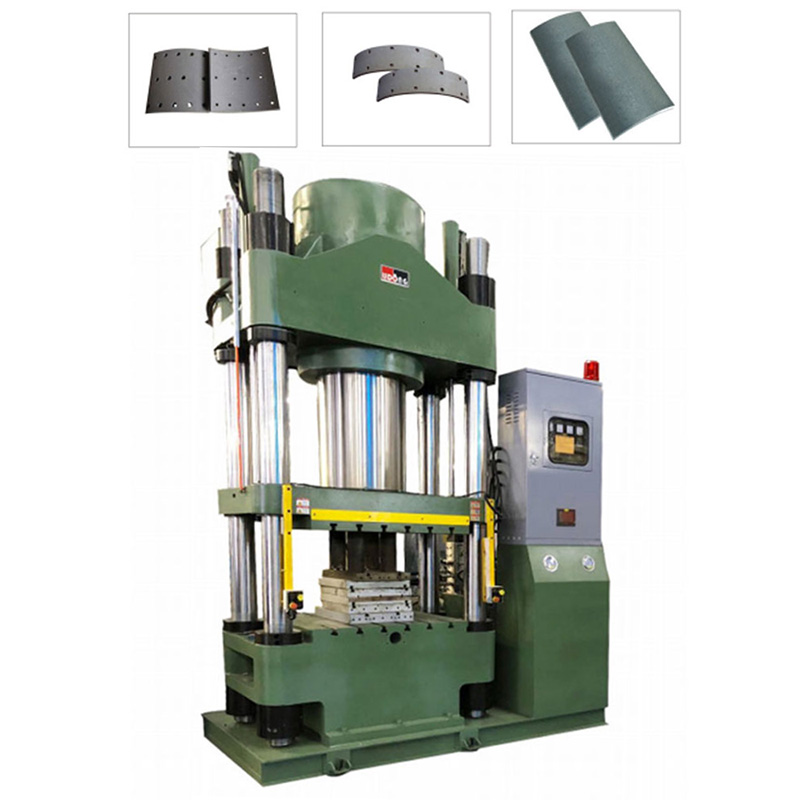
Cold forming without heat is the backbone of all of this, and it is a technology we work with every day in a different corner of the shop. The same cold-forming logic runs through equipment we build for other industries, for example our cold press forming machines, which press friction material preforms into shape at room temperature:
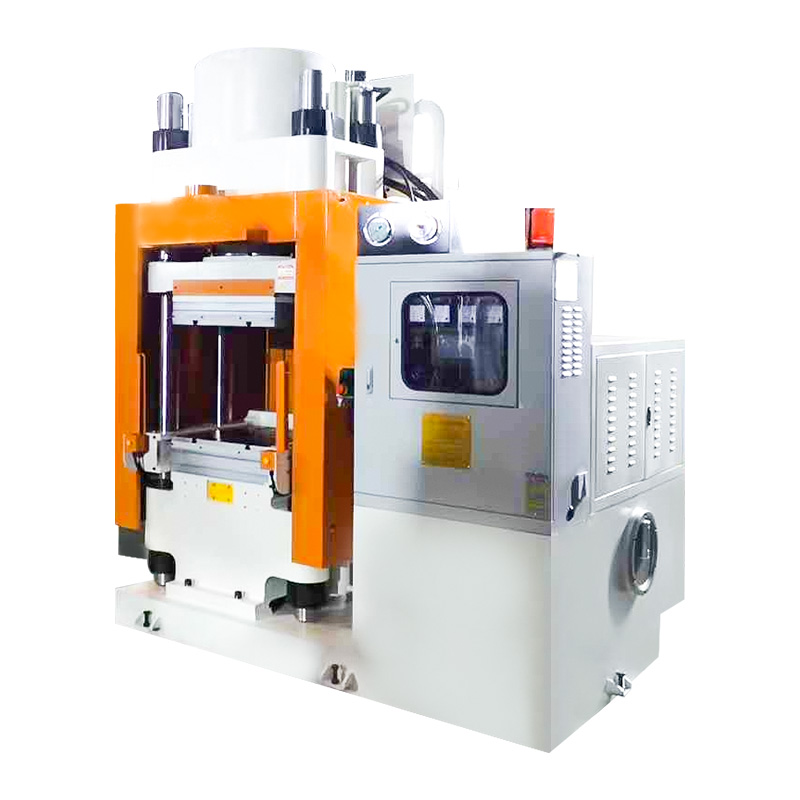 Cold Press Forming Machine for Brake Pad PreformsHydraulic cold press pre-consolidates loose friction material near ambient temperature before hot-press curing, aiding uniform density and controlled pressure.View Product →
Different material, same engineering questions about parallelism, pressure repeatability and how gently the load arrives.
Where Hydraulic Coining Presses Earn Their Keep
Hydraulic coining is not competing with every minting line in the world. It wins in a specific set of jobs, and it wins them clearly.
Large commemorative coins and proofs
Where the relief is deep and the diameter is generous, the slow squeeze and dwell do what a sharp strike cannot: fill detail right out to the rim without cracking the die.
Medals, awards and presentation pieces
Portraits and fine lettering are exactly the kind of detail that a hydraulic press reproduces most faithfully, part after part, without retouching.
Die hobbing
A hardened hub is pressed slowly into a die blank at very high tonnage with a long dwell, sinking the impression into the steel. This is one of the oldest and most demanding hydraulic coining applications.
Electrical contacts and precision embossed parts
Contact rivets, strips and small embossed components benefit from repeatable tonnage and a controlled bottom position, which is easier to hold on a hydraulic press than on a mechanical one.
Sizing of sintered parts
Powder metal components are coined to final thickness and finish, closing tolerance windows that sintering alone cannot reach.
Jewellery, hollowware, badges and watch parts
Small, detailed and often low volume, these jobs reward a press that can store a recipe and repeat it exactly next month when the order comes back.
Hydraulic or Electric Drive? Two Honest Views
This is the argument that comes up in every procurement meeting, and both sides have real points.
The case for hydraulic
Full tonnage at any point in the stroke, genuine dwell under pressure, natural overload protection and a force curve that is kind to coining dies. Tonnage is adjustable from the control panel without changing any hardware, and the cost per tonne of force is still hard to beat at high capacities. For deep relief, large diameters and die hobbing, it remains the practical answer.
The case against it
Slower cycles, hydraulic oil to maintain, more heat to manage and more energy used per part than a well-tuned servo-electric drive. The counter-argument is that modern variable pumps, servo-hydraulic units and accumulator systems close much of that gap, and on a coining job the limiting factor is usually part quality rather than cycle time. If your volumes are measured in strikes per second, a mechanical press is the right tool and no one should pretend otherwise.
The honest answer is that the drive choice should follow the part, not the brochure. It is the same trade-off we walk through with customers on our sister press platforms, and we wrote it up in a practical comparison of hydraulic and electric press drives for anyone weighing the two.
For a deeper look at how the two drive systems behave on a real production floor, see this breakdown of hydraulic and electric press drives, which covers the same force-curve questions from a different application.
Specifying a Coining Press: A Ten-Point Checklist
Bring these ten answers to any supplier and the conversation gets shorter and much more useful.
- The part itself. Diameter, thickness, material, relief depth and the tolerance that actually matters.
- Projected area of the impression. Not the blank area, the area under load.
- Unit pressure and total tonnage. Calculate it, then add 20 to 30 percent margin.
- Frame type and stiffness. Four-column for most coining work, with a stated deflection limit under full load.
- Table size, daylight and stroke. Sized around the die set and the handling you plan to add later.
- Ram speed control. Confirm that approach, squeeze and return speeds are separately adjustable.
- Dwell capability. The press must hold full pressure, not simply reach it.
- Pressure repeatability and recipes. Ask how the tonnage is measured and how consistently it repeats shift to shift.
- Ejection and automation. Ejection force, part removal and whether you want automatic die transfer or loading.
- Safety, service and spares. Guards and interlocks to the standards you must meet, plus a realistic answer on spare parts and support.
A supplier who cannot answer points three and eight with numbers is telling you something useful.
Keeping a Coining Press Accurate
Accuracy in coining is mostly maintenance, done quietly and on schedule.
Routine checks
- Oil level, oil colour and filter indicators
- Oil temperature held in a stable working band, roughly 30 to 55 °C
- Cleanliness of the oil, to the ISO code the builder specifies
- Visible leaks around cylinder, valves and fittings
- Unusual noise or vibration from the pump group
- Bolster and platen cleanliness before every die change
- Function test of guards, interlocks and two-hand control
When the part goes wrong
- Detail not filling: check tonnage, dwell, blank hardness and lubrication before blaming the die
- Flash or burrs: shut height, parallelism and collar condition
- Tonnage drifting between shifts: oil temperature, valve wear, pressure sensor calibration
- Parts sticking: release agent, decompression setting, die polish
- Relief uneven side to side: recheck parallelism and shimming
- Gradual loss of sharpness: die wear, not press wear, in most cases
Most of these symptoms look like press faults and turn out to be process or tooling faults. We see the same pattern on other press types too, and collected the common ones in this guide to cold press forming machine issues and how to prevent them.
The View From a Press Builder
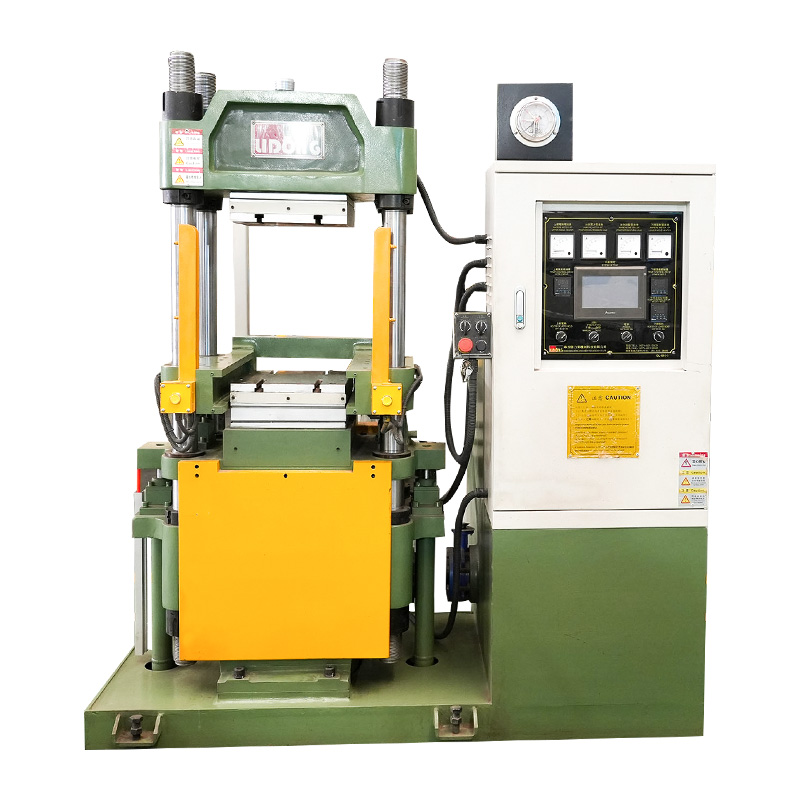
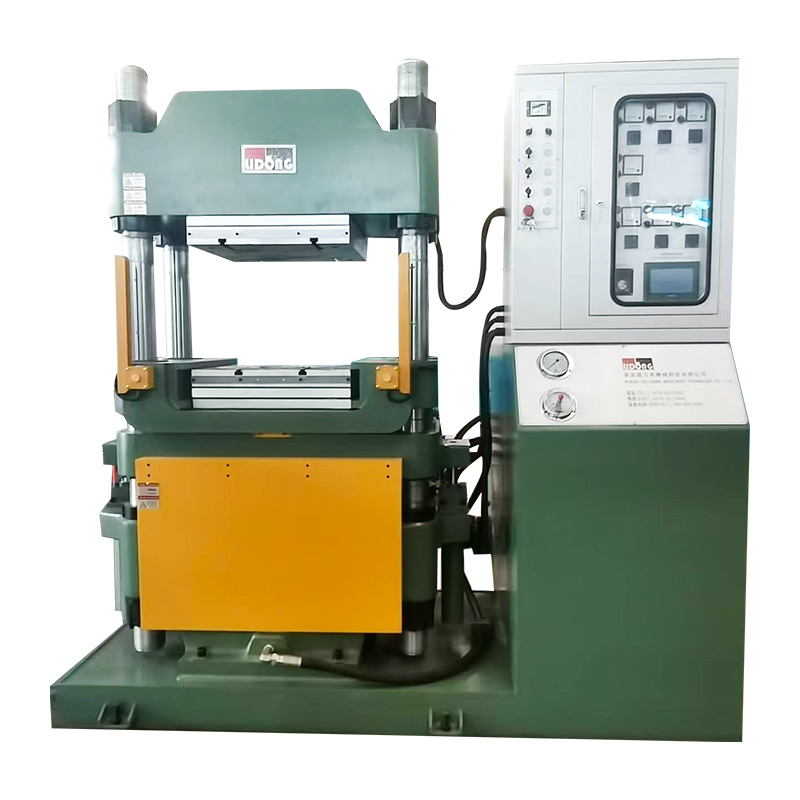
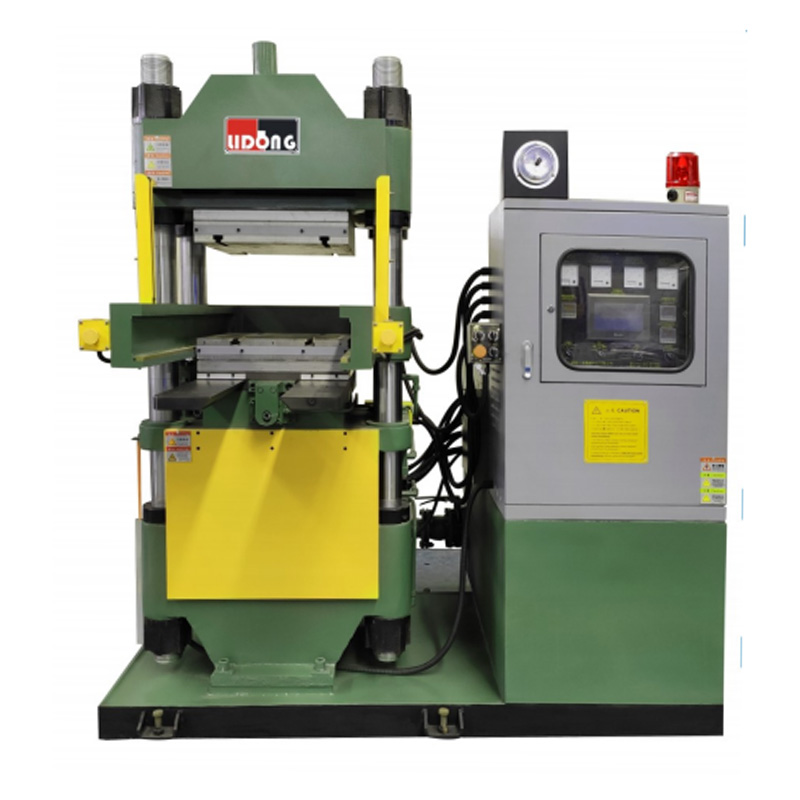
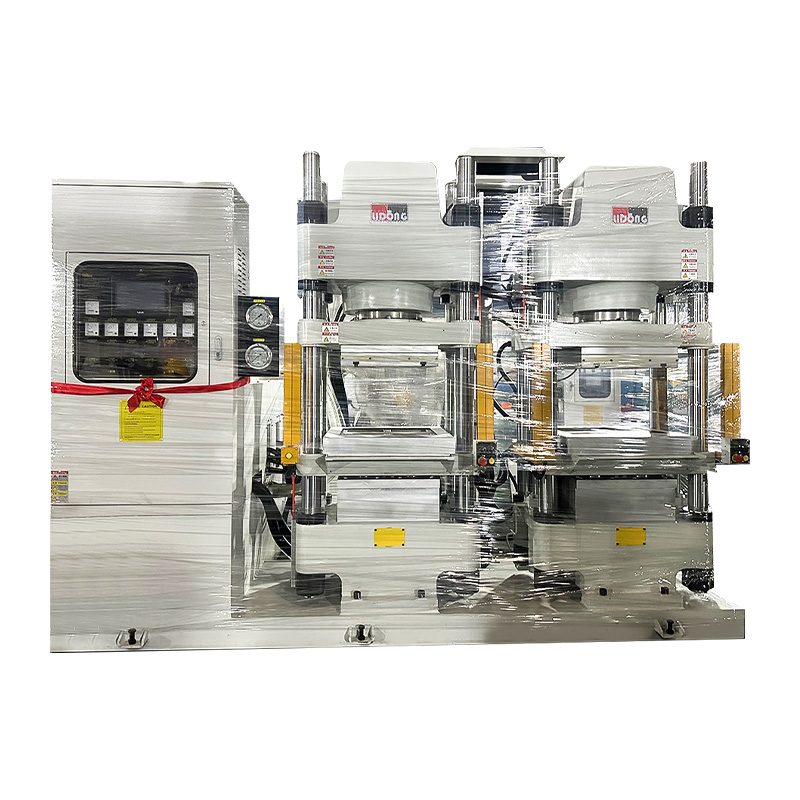
We are not a mint equipment specialist. We build four-column hydraulic presses with programmable pressure, temperature and time, used for rubber vulcanizing, silicone injection and friction material forming. That work has taught us a few things that apply directly to coining.
Everything starts with how evenly load spreads over the platen. A press that deflects under load does not deliver the tonnage the gauge suggests, and no control algorithm fixes a frame that flexes. Second is repeatability: an operator should be able to store a recipe and get the same result next month. Third is control of the whole cycle, not just the peak, which means separately adjustable approach, squeeze, dwell and release.
The two platforms below illustrate how that thinking is applied in practice. The first was designed specifically around even pressure distribution across the full die face:
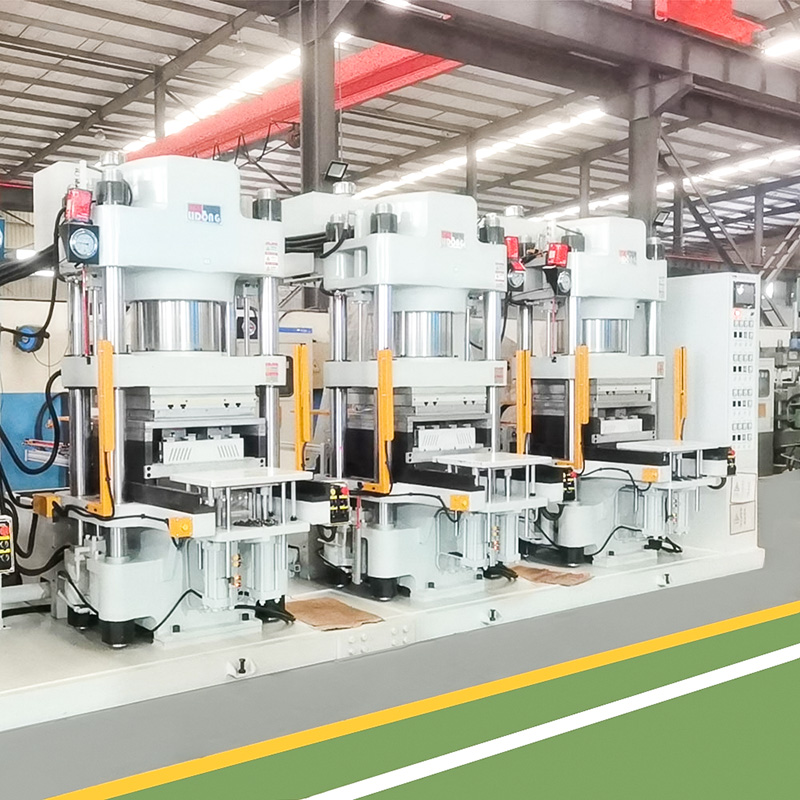 Equal Pressure Brake Pad Press MachineCustom press with optimized pressure ratio and floating oil cylinder for consistent cavity pressure in high-volume brake pad production.View Product →
The second is a heated-platen press where pressure, temperature and time are all held within a stored recipe, which is the same discipline a coining cycle needs when warm forming is involved:
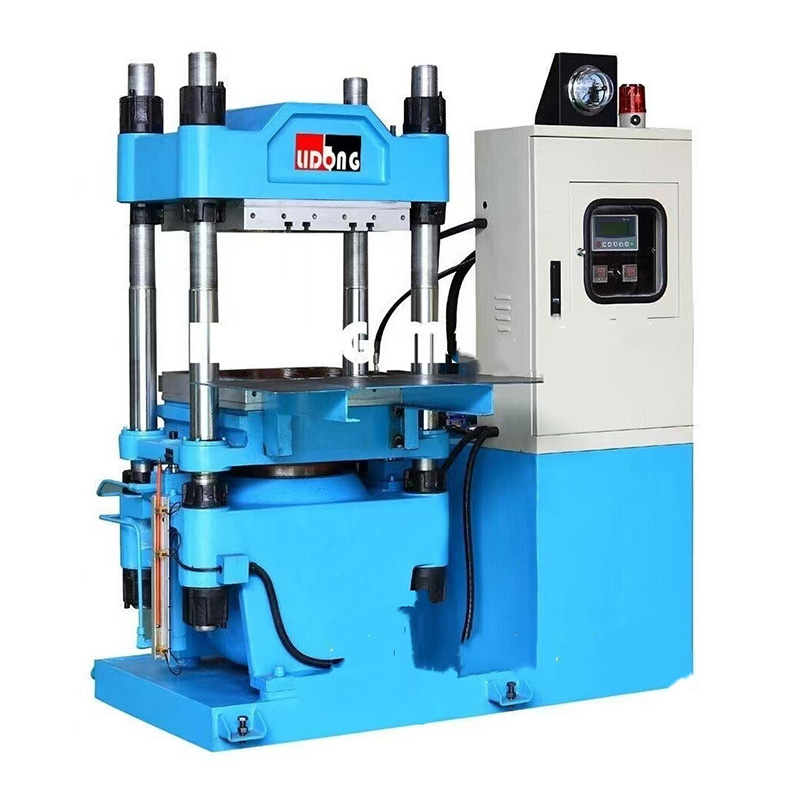 Custom Plate Vulcanizing Press for Rubber ProductsAutomated heated-platen vulcanizing press for rubber items, with adjustable pressure and controlled 100–250°C temperature to support efficient production.View Product →
If you are specifying a coining press, those are the questions worth asking any builder, including us.
Frequently Asked Questions
What is the difference between coining and striking?
Both are closed-die cold forming operations, so the metallurgy is similar. The difference is the force curve. Striking uses a sharp mechanical impulse, which is fast and hard on dies. Coining on a hydraulic press uses a slow squeeze followed by a dwell under pressure, which fills fine relief more gently and more consistently.
How much tonnage does a hydraulic coining press need?
Estimate unit pressure multiplied by the projected area of the impression, then add 20 to 30 percent margin. A small silver medal may need only 100 to 200 tonnes, a large bronze commemorative can need 800 tonnes or more, and die hobbing can run into the thousands of tonnes.
Can a hydraulic coining press produce circulation coins at high speed?
It can produce them, but not at mint speeds. High-volume circulation coinage is usually struck on mechanical presses running several strikes per second. Hydraulic presses suit commemoratives, proofs, medals, die hobbing and precision embossed parts, where detail and repeatability matter more than cycle time.
Why is dwell time so important in coining?
Metal continues to creep into fine detail while pressure is held. Without dwell, the outer detail of the impression can come out soft, especially on large parts. Dwell also allows elastic recovery to happen while the part is still under load, so the die controls the final dimensions.
Can a hydraulic press be used for die hobbing?
Yes, and it is one of the classic applications. A hardened hub is pressed slowly into a die blank at very high tonnage with a long dwell, so the impression sinks into the steel gradually rather than being hammered into it.
Is a four-column frame really necessary?
For most coining work it is the safer choice, because four columns distribute load evenly and keep the platens parallel under pressure. C-frame presses can work for small, low-tonnage jobs, but parallelism becomes harder to hold as tonnage rises.
How often should the hydraulic oil be changed?
Follow oil analysis rather than a fixed calendar. Most shops change oil annually or per the builder's schedule, replace filters more often, and keep the oil temperature in a stable band of roughly 30 to 55 °C. Clean, stable oil is one of the cheapest ways to protect pressure repeatability.