 English
 عربى
عربى
 中文繁体
中文繁体

Content
"Custom hydraulic press solutions" is one of those phrases that means something slightly different in every factory that uses it. For one plant it means a platen large enough to take a mold that has grown twice since the original quote. For another it means a press that holds vacuum, because the part has to be free of trapped air. For a third it means the press has to talk to a robot, a conveyor and the plant's own production system without a human in the middle.
We build hydraulic forming equipment for two very different industries, rubber and friction materials, and that has given us a fairly practical view of the subject. Custom work almost never starts with a drawing. It starts with a part, a material and a production target, and the machine gets designed backwards from there.
What "Custom" Actually Covers
In practice, customization in a hydraulic press project usually lands in one or more of four places:
- Forming geometry: tonnage, platen size, daylight, stroke and number of openings, sized to the mold and the part rather than to a catalogue page.
- Process control: heating zones, temperature uniformity across the platen, vacuum or degassing, pressure ramp and cure time.
- Mold handling: how the mold is loaded, pulled, transferred and cooled, which matters once a press runs more than a few cycles an hour.
- Automation: feeding, unloading, trimming, inspection and data collection, either as a standalone cell or integrated into an existing line.
Most successful custom machines are not exotic. They are a standard platform with two or three of these areas deliberately re-engineered, and everything else left alone so that spare parts and service stay simple.
Two Product Families, One Hydraulic Platform
Because our range splits into rubber processing and friction material processing, we often describe it as one hydraulic platform with two different toolkits bolted onto it.
Rubber vulcanizing and injection equipment
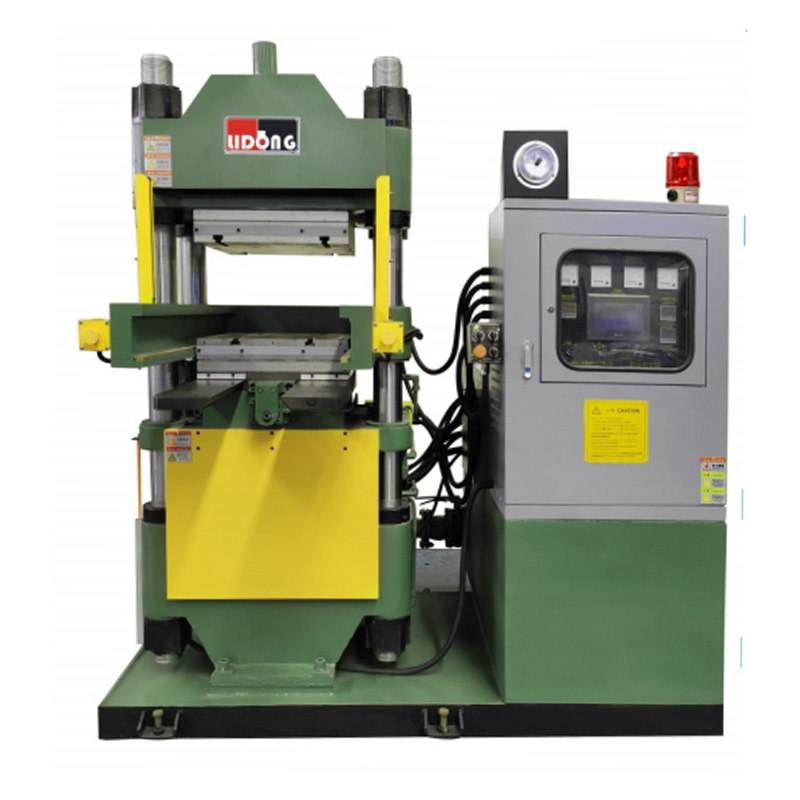
On the rubber side, the range runs from plate vulcanizing presses through rubber vacuum vulcanizing machines to horizontal injection molding machines. Beyond the general-purpose models, we build machines around specific products: arrester insulators, cold shrink cable sheaths, valve bodies, medical rubber stoppers, capsules and wiper strips. Each has its own quirks, whether that is a long cure, a compound that scorches easily, or a mold that must be evacuated before the material flows.
If your part sits between those categories, the sizing conversation usually starts with capacity, pressure and platen layout, which is covered in more depth in our guide to rubber vulcanizing machine specifications.
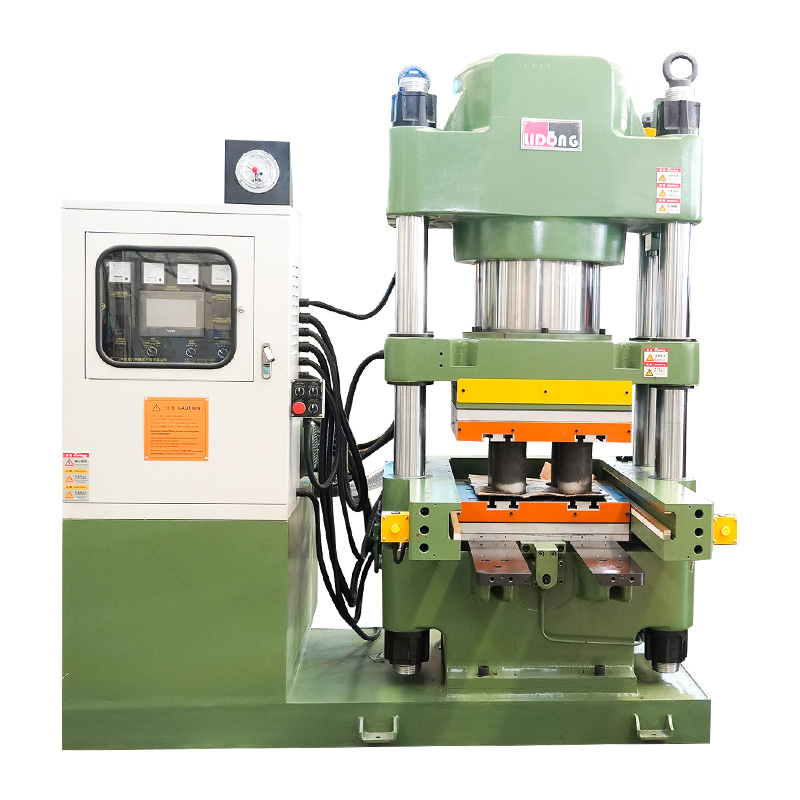
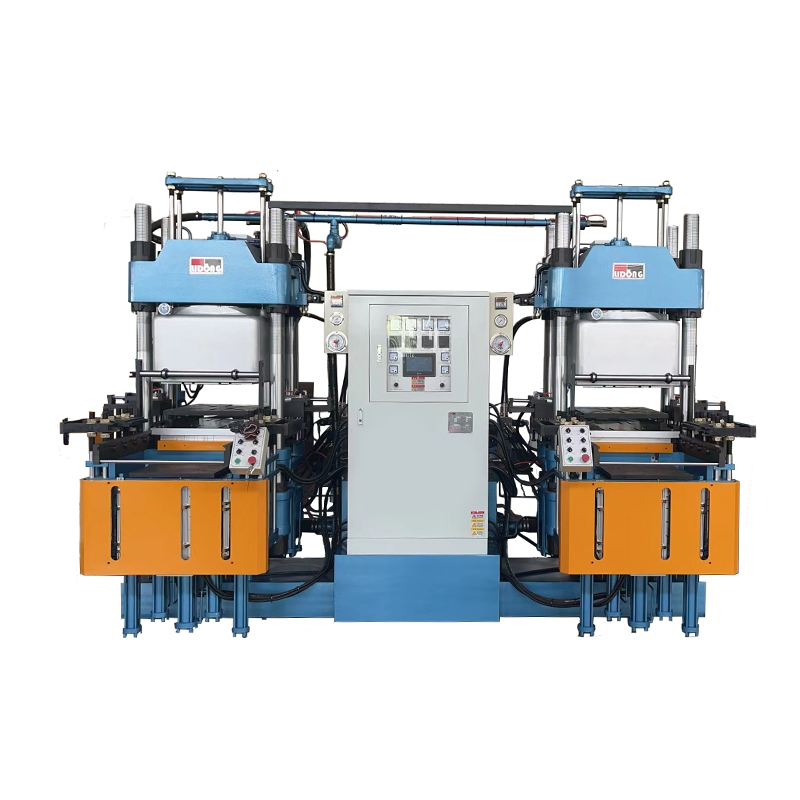 Rubber Vacuum Vulcanizing MachineRubber vacuum vulcanizing machine is a kind of equipment specially used for vulcanizing rubber products. It can improve product quality, control vulcanization process,...View Product →
Brake pad and friction material presses
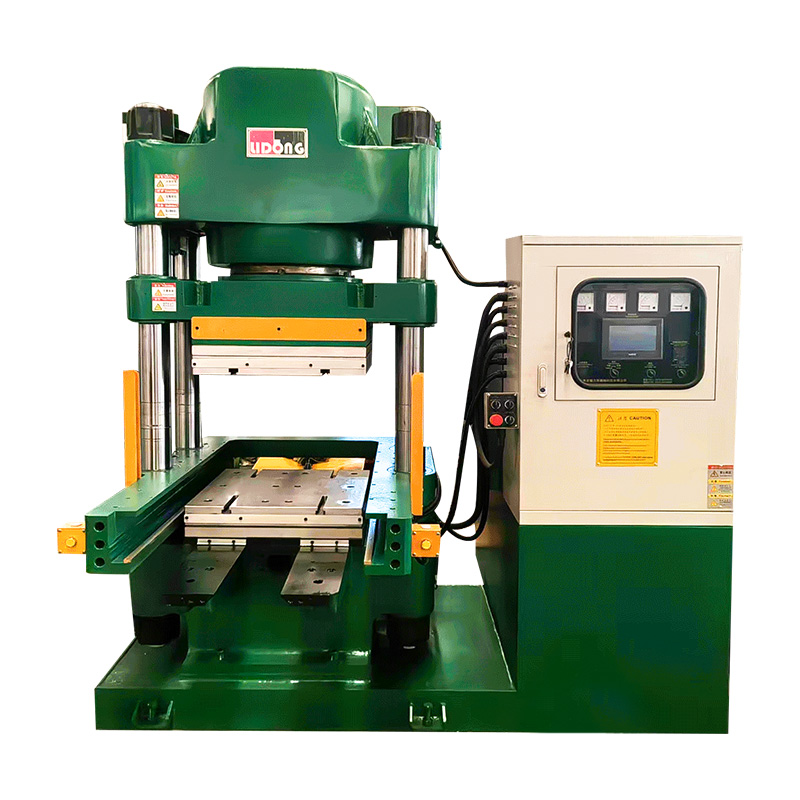
The friction side is organized around the application: car disc brake pads, drum brake pads, brake shoes, bus and motorcycle pads, bicycle pads, engineering machinery pads, copper-based formulations, high-speed rail pads and train brake shoes. Alongside those sit the process machines, cold press forming and pre-pressing, that run before or after the main press in a brake pad line.
Friction material is a powder problem more than a rubber problem. Air entrapment, density variation across the pad and tooling wear decide whether a press is good enough, and they are also what push a project toward a custom specification.
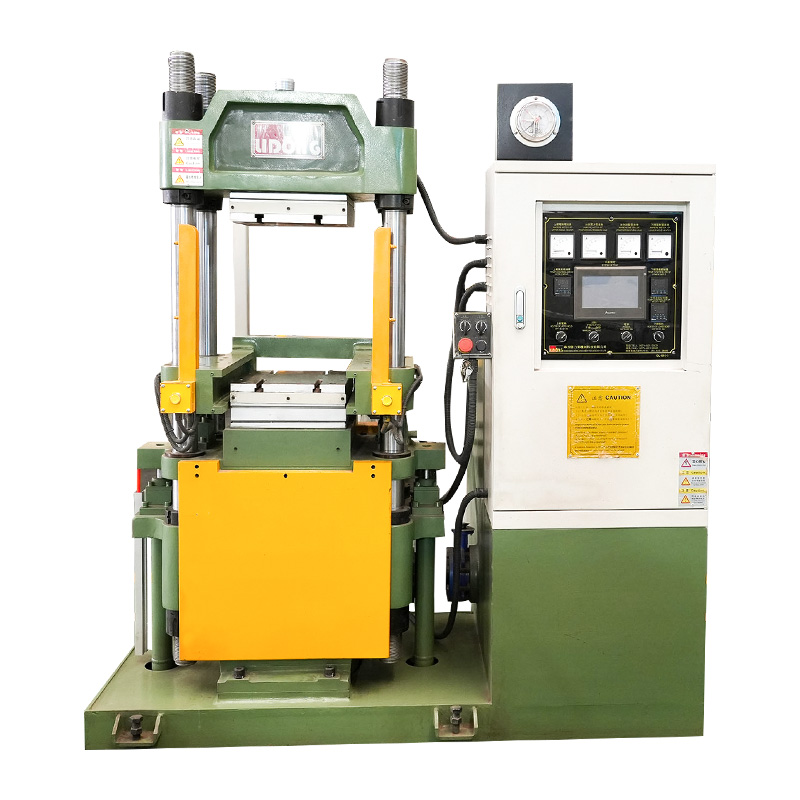 Car Disc Brake Pad Press Machine for Friction Material ProductionHydraulic hot press molding machine for automotive brake pads, offering PLC control, customizable 300T–500T pressure, and stable, high-efficiency production for friction material projects.View Product →
The Parameters That Decide the Design
When we sit down with a customer's process engineer, the same handful of questions comes up in almost every project. The table below is the short version of that conversation.
| Decision point | What we look at | Typical custom outcome |
|---|---|---|
| Tonnage and platen | Projected area, material density, required pressure per square centimeter | Larger frame and platen, higher clamping force |
| Heating | Cure curve, part thickness, cycle target | Multiple zones, independent platen control |
| Vacuum and degassing | Air entrapment risk, surface finish, void tolerance | Vacuum chamber, staged closing sequence |
| Mold handling | Mold weight, changeover frequency, labor availability | Automatic mold transfer, quick-change clamps |
| Automation | Output target, upstream and downstream equipment | Robotic loading, line integration, data logging |
| Material form | Rubber compound, powder mix, sheet or preform | Different feeding and pre-forming arrangement |
None of these can be settled from a catalogue. A press that is oversized on tonnage but undersized on heating will still scrap parts, and a press with excellent heating but a slow mold change will not reach the output number that justified the investment.
When Automation Belongs in the Scope
Automation is the part of a custom hydraulic press project that is most often either over-specified or ignored completely. Our rule of thumb is simple: automate the step that is physically hard, dangerous or inconsistent, and leave the rest manual until volume justifies it.
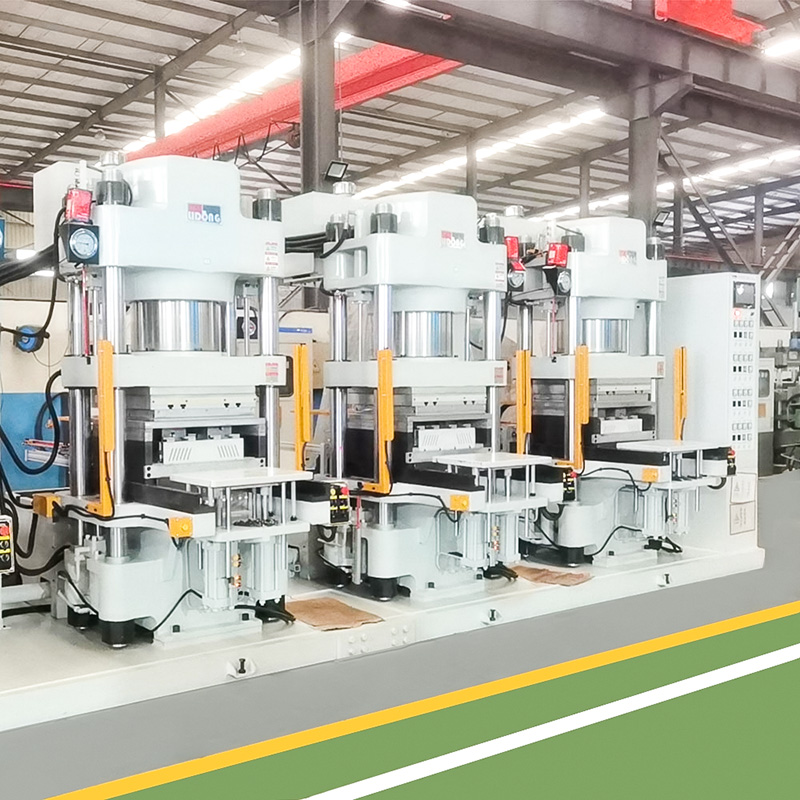
Two examples come up constantly. In rubber production, automatic mold transfer makes sense when one press runs many different parts and changeover eats the shift. In friction material production, robotic handling makes sense when pad weight and placement must be identical from the first part to the ten-thousandth. Where volume is high enough, the automation and the press are designed together, because retrofitting a loader onto a press that was never laid out for one is expensive and rarely elegant.
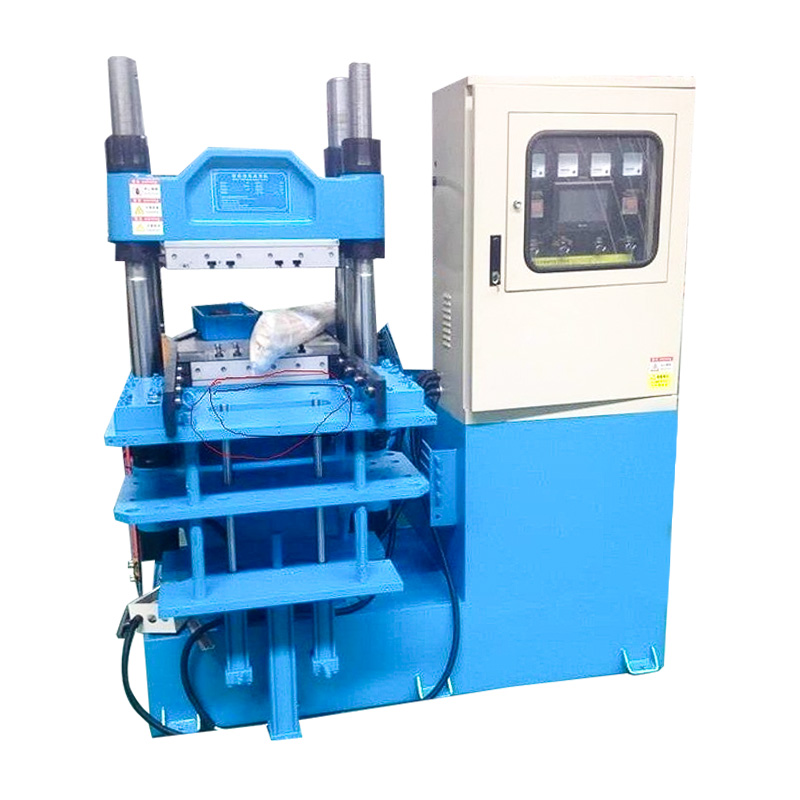 Automatic Mold Transfer Vulcanizing Press for Rubber PartsRubber vulcanizing press with automatic mold in/out and multi-layer mold capability, suited to rubber parts where changeover and consistent handling matter.View Product →
How a Custom Project Moves Forward
- Part and process review. We look at the drawing, the material and the target cycle, and ask what the current process does badly.
- Specification draft. Tonnage, platen, heating, vacuum, mold handling and automation are written as numbers, not adjectives.
- Trial and validation. Where the material is unfamiliar, samples are pressed to confirm cure or density before the frame is cut.
- Build and factory testing. The machine is assembled, heated and run under load before shipping, with the customer's mold where possible.
- Installation and training. Operators learn the parameters, the safety interlocks and the maintenance routine on their own equipment.
Steps one and two are where a project is won or lost. A specification that is clear about what the machine must produce is far more useful than one that simply lists features.
Questions Worth Asking Before You Commit
- What is the real pressure per square centimeter at the part, not just the press tonnage?
- How uniform is platen temperature across the full working area, and how is it measured?
- Is vacuum needed for every mold, or only the difficult ones?
- Who supplies the mold, and who is responsible if mold and press do not agree?
- What does a mold change cost in time, and who performs it?
- What spare parts and support will still be available three years from now?
These questions are not adversarial. They are the same ones our own engineers raise during a review, and a supplier who answers them without hesitation has usually built the machine before.
Working With a Builder Rather Than a Catalogue
Custom hydraulic press solutions are ultimately a conversation between the people who make the part and the people who make the machine. The more specific that conversation is, the less of the budget goes into features nobody uses.
We build vulcanizing and injection equipment and friction material presses, and we take on non-standard projects when a standard machine genuinely will not do the job. If you would like to see the platforms these customizations are based on, start with our machine range, or send us a part drawing and a target cycle time and we will tell you honestly whether it needs a custom press or simply a better setup on a standard one.