English
 عربى
 中文繁体

Content
- 1 What Is a Powder Metallurgy Press Machine?
- 2 How a Powder Metallurgy Press Machine Works: Step by Step
- 3 Core Types of Powder Compacting Presses
- 4 Key Components and Tooling of a Powder Metallurgy Press
- 5 Powder Metallurgy Press Machine vs. Brake Pad Press: The Friction Material Connection
- 6 Specifications That Matter When Selecting a Press
- 7 Applications of Powder Metallurgy Press Machines
- 8 How to Choose the Right Powder Metallurgy Press Machine
- 9 Maintenance, Safety, and Uptime Best Practices
- 10 Typical Performance Factors in Powder Compacting
- 11 Frequently Asked Questions About Powder Metallurgy Press Machines
- 11.1 What is the difference between a powder metallurgy press and a hydraulic press?
- 11.2 How much tonnage do I need for a powder metallurgy press machine?
- 11.3 Can a powder metallurgy press produce brake pads?
- 11.4 What is a green compact?
- 11.5 How do I improve density uniformity in powder compaction?
- 11.6 Is automation necessary for a powder metallurgy press?
- 11.7 What maintenance does a powder metallurgy press machine need?
- 11.8 How does powder metallurgy compare with machining or casting?
A powder metallurgy press machine is the quiet workhorse behind countless precision components. From copper-based brake pads to structural bushings, gears, and sintered bearings, these presses turn loose metal powder into a shaped, handleable compact that later becomes a strong finished part. If you work in friction materials, automotive supply, or industrial manufacturing, understanding how a powder metallurgy press machine operates is not just technical trivia. It directly affects your tooling costs, cycle times, scrap rate, and the consistency of every part you ship.
This guide walks through the working principle, press types, tooling, specifications, and practical selection criteria for powder compacting equipment. It also connects the technology to real production environments, including friction material manufacturing where powder pressing and brake pad production share a common foundation. Whether you are evaluating a new press, replacing an aging machine, or simply trying to reduce variability on an existing line, the details below will help you ask better questions and make more confident decisions.
What Is a Powder Metallurgy Press Machine?
A powder metallurgy press machine is a forming press designed to compact metal powders, ceramic powders, or mixed powder blends inside a precision die. The press applies controlled pressure, usually through a hydraulic or mechanical ram, to reduce the powder volume and create a “green compact” with enough strength for handling. That compact is then sintered in a furnace, where particles bond metallurgically and the part gains its final mechanical properties.
Unlike machining, casting, or forging, powder compaction is a near-net-shape process. It minimizes material waste and can produce complex geometries with repeatable dimensions. The press itself does not melt or weld the powder. Its job is to deliver uniform density, accurate fill, and reliable ejection. Those three outcomes determine whether the downstream sintering process can deliver the strength, hardness, and tolerance your application requires.
Where Powder Compacting Fits in Manufacturing
Powder metallurgy presses are used in several distinct production chains:
- Structural components: gears, sprockets, connecting rods, and bearing caps.
- Friction materials: brake pads, clutch facings, and sintered metallic friction discs.
- Self-lubricating bearings and bushings for motors, pumps, and appliances.
- Hard metals and cutting inserts based on tungsten carbide.
- Magnetic and soft magnetic composites for electrical equipment.
- Medical and dental components where precise porosity and biocompatibility matter.
In each case, the press is the first critical step. If the green compact has density gradients, cracks, or inconsistent weight, no amount of sintering optimization will fully correct it. That is why press selection and process control deserve careful attention.
How a Powder Metallurgy Press Machine Works: Step by Step
The compaction cycle is short, often measured in seconds, but every movement must be synchronized. A typical powder metallurgy press machine follows a sequence that looks simple on paper yet requires precise control in practice.
Powder Dosing and Die Filling
A feed shoe or powder dosing system moves across the die cavity and fills it with a measured volume of powder. Consistent fill density is essential. If the powder settles unevenly, the compact will have weight variation and density differences from top to bottom.
Powder Leveling and Withdrawal
The feed shoe retracts, and the powder bed is leveled. Some presses use a controlled die fill or powder suction to improve flow into narrow sections. At this stage, the upper and lower punches are positioned to define the fill depth.
Compaction Under Pressure
The upper punch descends while the lower punch may also move to create double-action pressing. Pressure is applied until the target density is reached. Modern presses monitor force, position, or both, and can adjust the stroke in real time to compensate for fill variation.
Pressure Holding and Relaxation
A brief dwell at maximum pressure allows particles to rearrange and interlock. Controlled release prevents internal cracks caused by elastic springback. The press may also apply a short decompression ramp to protect the compact.
Ejection and Part Removal
The lower punch pushes the green compact out of the die. Ejection speed and force must be balanced to avoid edge chipping or lamination. A take-out robot or manual operator then removes the part and places it into a sintering tray.
Cycle Repeat and Process Feedback
The press returns to the start position, and the cycle repeats. Data from each stroke can be logged for traceability. In high-volume production, statistical process control helps detect drift before defects appear.
Core Types of Powder Compacting Presses
Not all powder metallurgy press machines use the same drive system. The choice between hydraulic, mechanical, and servo-hydraulic designs affects speed, tonnage control, energy use, and the type of parts you can produce economically.
| Press Type | Drive System | Typical Tonnage Range | Best For | Control Characteristics |
|---|---|---|---|---|
| Hydraulic | Hydraulic cylinders and valves | 50–1,000+ tons | Large, complex, or high-density parts | Flexible pressure and stroke control; smooth force curve |
| Mechanical | Flywheel, crank, or toggle mechanism | 10–400 tons | High-speed, simple-to-moderate parts | Fixed stroke profile; very repeatable at high rates |
| Servo-Hydraulic | Servo motor driving hydraulic pump | 30–800 tons | Precision parts with variable profiles | Programmable stroke, speed, and pressure; energy efficient |
| Servo-Mechanical | Servo motor with screw or toggle | 20–600 tons | Medium to high volume with tight tolerances | High accuracy, low idle energy, fast response |
Hydraulic presses remain popular for friction materials and large structural parts because they can generate high tonnage and maintain pressure over a longer dwell. Mechanical presses are often chosen for small, simple parts where speed is the primary economic driver. Servo-driven designs are increasingly common because they combine programmable motion with lower energy consumption and less hydraulic fluid maintenance.
Key Components and Tooling of a Powder Metallurgy Press
A press is more than a frame and a cylinder. The surrounding subsystems determine whether the machine can hold tolerance over millions of cycles. The following components deserve close inspection during specification and maintenance planning.
Press Frame and Guidance
The frame resists deflection under load. Poor frame stiffness leads to off-center density and premature tool wear. Precision guideways keep the upper and lower punches aligned within microns.
Die Set and Punches
The die defines the part’s outer profile, while punches form internal and external features. Tooling material, coating, and clearance are selected based on powder abrasiveness and production volume.
Powder Feed System
Feed shoes, hoppers, and dosing plates deliver powder to the die. Uniform flow without segregation is critical, especially when mixing powders of different particle sizes or densities.
Ejection System
The lower punch or a separate ejector pushes the compact out. Controlled ejection force prevents cracks and extends die life. Some systems use a spring-loaded or hydraulic ejection plate.
Hydraulic Power Unit
Pumps, valves, accumulators, and oil conditioning keep pressure stable. Filtration and temperature control are essential because contaminated or overheated oil causes erratic press behavior.
Control and Monitoring
PLC or industrial PC controls position, force, speed, and dwell. Force-displacement curves can be stored for each part number and compared stroke by stroke for quality assurance.
Powder Metallurgy Press Machine vs. Brake Pad Press: The Friction Material Connection
Friction materials are one of the most important application areas for powder compaction technology. A brake pad is essentially a powder metallurgy part when it uses metallic or ceramic powders, and even many non-metallic formulations rely on the same pressing principles: measured fill, controlled pressure, and reliable ejection. This is where the equipment overlap becomes practical rather than theoretical.
In a brake pad factory, the press performs a role very similar to a powder metallurgy press machine. It compacts a mixture of friction modifiers, binders, and reinforcing fibers or metal particles into a green pad. The pad may later be cured, sintered, or heat-treated depending on the formulation. The press must deliver uniform density across the pad surface, because density variation causes uneven wear, noise, and inconsistent friction coefficients.
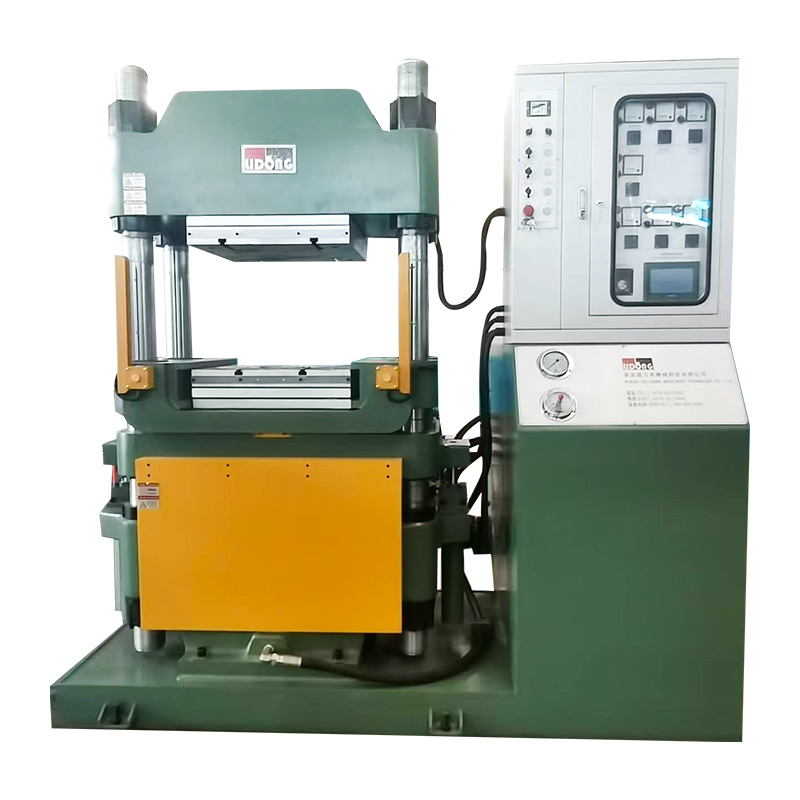
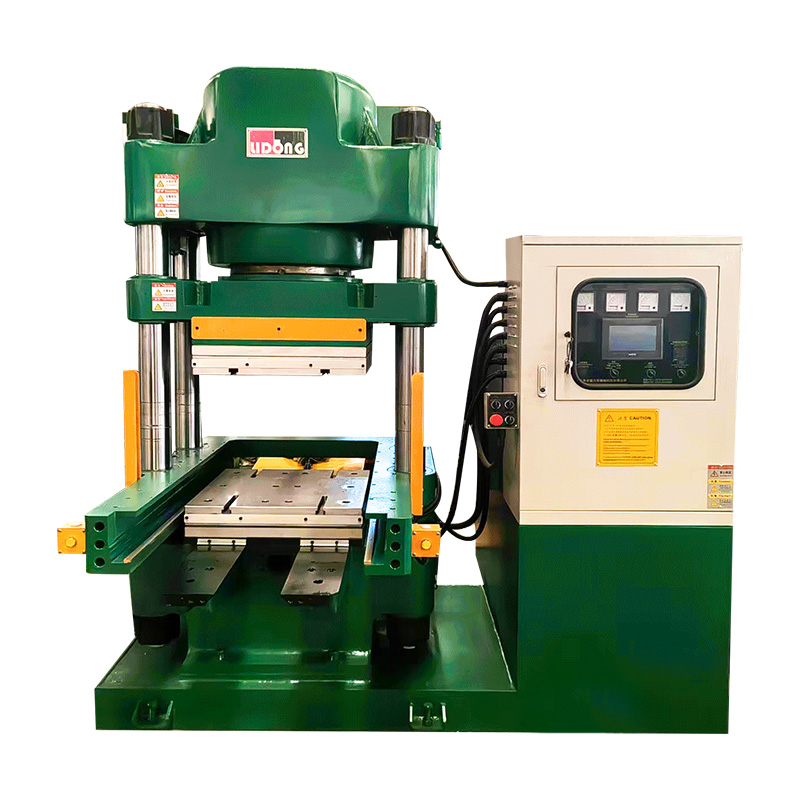 Copper Base Brake Pad Press MachineA custom hot-press molding system with servo-hydraulic control and PID heating, suited to copper-based friction compounds requiring stable density.View Product →
Copper-based brake pads are a clear example of powder metallurgy in action. Copper powder, iron powder, graphite, and ceramic additives are blended, compacted, and sintered to create a friction material that can handle high temperatures. A dedicated copper base brake pad press is designed with the tonnage, tooling, and temperature control needed for these dense metallic mixes. The same logic applies to cold press forming and pre-pressing stages, where the goal is to create a stable preform before final densification.
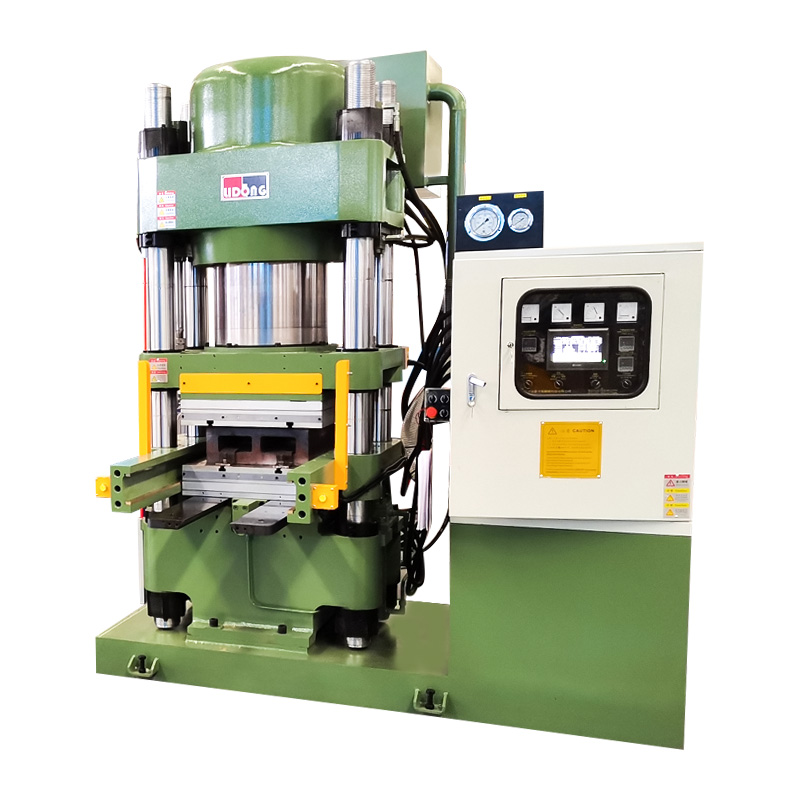
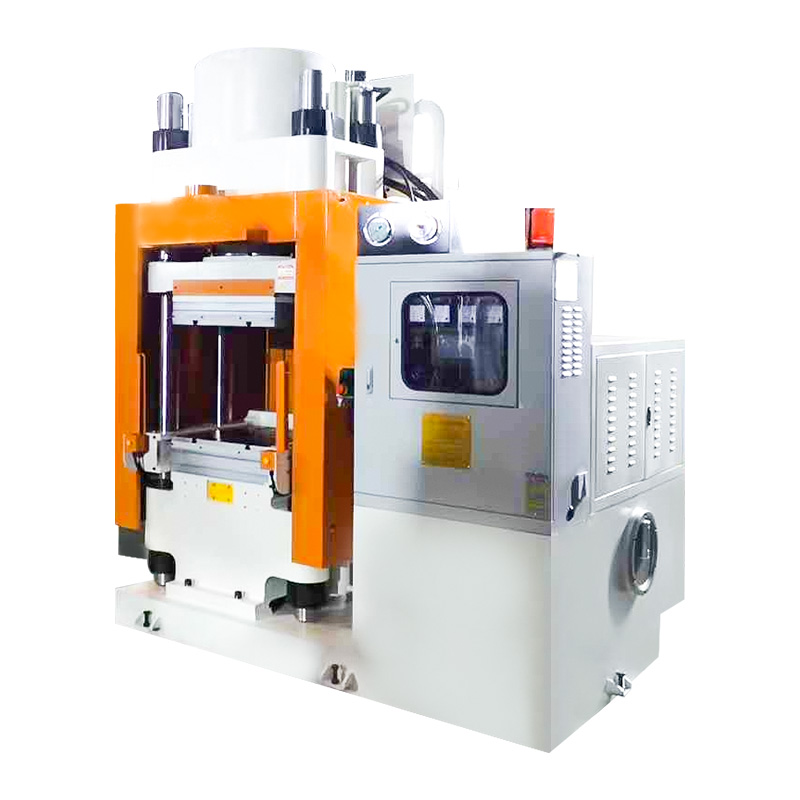 Cold Press Forming Machine for Brake Pad PreformsA cold pre-consolidation press that shapes loose friction compound into stable preforms, helping reduce porosity and cracks before hot-press curing.View Product →
Cold press forming machines are often used earlier in the process to shape the powder mixture without external heating. They improve handling strength and reduce the risk of cracks during subsequent operations. Pre-pressing forming machines serve a similar purpose by removing entrapped air and creating a more uniform density profile before the main press cycle.
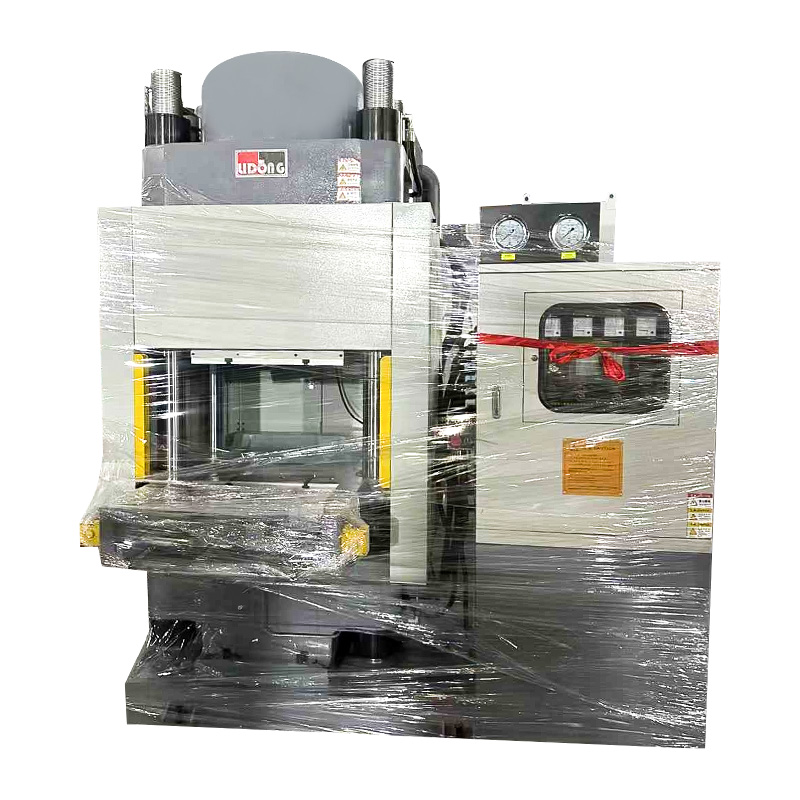
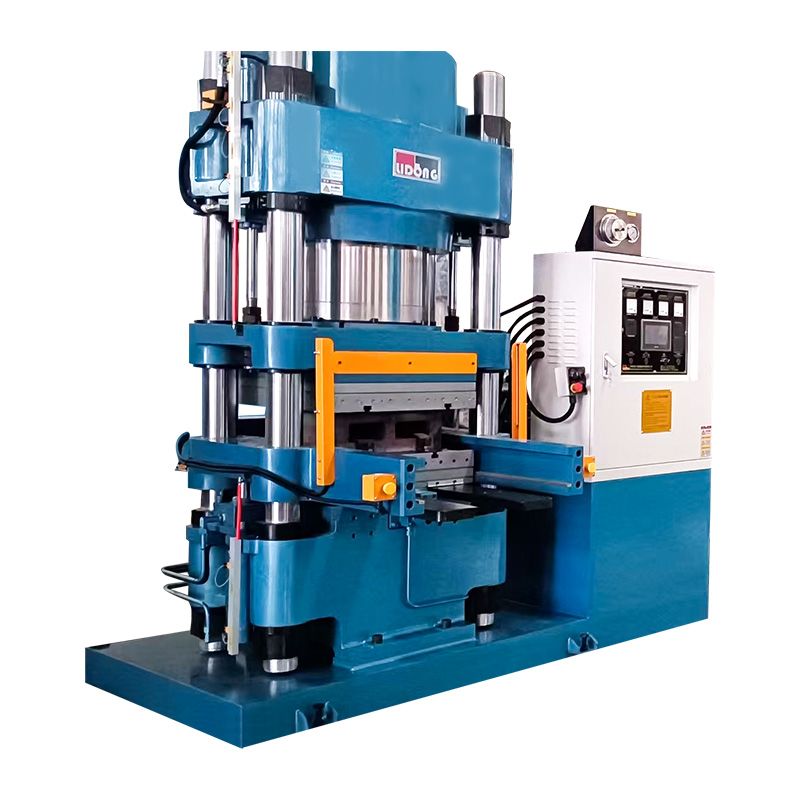 Pre-Pressing Forming Machine for Brake Pad ProductionA pre-pressing system that compacts loose friction material to improve density uniformity, remove air pockets, and prepare stable compacts for hot-press molding.View Product →
For manufacturers who need to compare tonnage, automation, and output across different press concepts, a detailed brake pad press machine buying guide can help frame the decision. And if you are exploring the broader equipment category, the range of brake pad press machines available for different vehicle classes and friction formulations shows how closely powder compaction and friction manufacturing are linked.
The key takeaway is that powder metallurgy press technology is not limited to traditional sintered metal parts. Any process that compacts a powder or granular mixture into a shaped compact can benefit from the same principles: accurate fill, controlled pressure, uniform density, and repeatable ejection.
Specifications That Matter When Selecting a Press
When you compare powder metallurgy press machines, the datasheet is only a starting point. The following specifications should be evaluated against your part drawing, production volume, and quality requirements.
Compaction Force
Measured in tons or kilonewtons, this determines the maximum pressure you can apply. Required force depends on part cross-section, powder compressibility, and target green density.
Stroke and Fill Depth
The stroke must accommodate the deepest part and the required powder fill. Adjustable fill depth is important for multi-level parts and for fine-tuning density.
Pressing Speed
Strokes per minute affect output. However, faster is not always better. High-speed pressing can trap air and cause cracks unless the powder and tooling are designed for it.
Control Precision
Look for closed-loop force or position control. The ability to store and repeat pressure profiles is essential for consistent density and part weight.
Tooling Compatibility
Standard die sets, quick-change systems, and adapter plates reduce setup time. Check whether the press can accept multi-platen or multi-level tooling if your parts require it.
Automation Readiness
Feeders, take-out robots, and conveyor interfaces influence labor cost and cycle consistency. A press that is difficult to automate may limit your long-term competitiveness.
It is also wise to request a trial compaction with your actual powder blend. Laboratory tests on surrogate powders can miss flow, segregation, and sticking issues that only appear with production material.
Applications of Powder Metallurgy Press Machines
Powder compaction serves industries where precision, material efficiency, and repeatability are valued. The following application areas represent the most common uses, though the technology continues to expand into new fields.
Automotive Components
Transmission gears, synchronizer rings, valve seats, and sensor bosses are often produced by powder metallurgy. The process reduces machining and allows complex internal features.
Friction and Braking
Brake pads, clutch plates, and sintered friction discs use powder pressing to achieve consistent friction performance. Metallic and ceramic formulations benefit from controlled density.
Bearings and Bushings
Self-lubricating bronze and iron bearings are compacted with controlled porosity so that oil can be retained. The press must maintain uniform density to ensure reliable lubrication.
Hard Metals and Cutting Tools
Tungsten carbide inserts and drills are pressed from carbide powders before sintering. High tonnage and precise tooling are essential for edge quality and dimensional control.
Electrical and Magnetic Parts
Soft magnetic composites and contact materials are compacted into near-final shapes. Density control directly affects magnetic permeability and electrical conductivity.
Medical and Dental Devices
Porous titanium and cobalt-chrome compacts are used in implants and instruments. Cleanroom-compatible presses and careful powder handling are often required.
How to Choose the Right Powder Metallurgy Press Machine
Choosing a press is a balance between technical capability, production economics, and long-term support. Use the following checklist to structure your evaluation and avoid common pitfalls.
Questions to Ask Your Team
- What is the largest part cross-section and deepest fill we will ever run?
- What green density and weight tolerance must we hold?
- How many part numbers will we change over per week?
- Do we need multi-level pressing or just single upper and lower punches?
- Will the press run one shift or three shifts per day?
- What automation level is realistic for our labor market and budget?
Questions to Ask the Press Supplier
- Can you provide a force-displacement curve for a part similar to ours?
- What is the repeatability of fill depth and pressing force?
- How is the hydraulic system cooled and filtered?
- What tooling standards does the press accept?
- What is the expected maintenance interval for seals, valves, and guides?
- What training and spare parts support are included?
Once you have answers, compare the total cost of ownership rather than purchase price alone. Energy consumption, tooling life, scrap rate, and downtime can easily outweigh a lower initial quote. A press that is slightly more expensive but delivers stable density and faster changeover may pay for itself within a year.
Maintenance, Safety, and Uptime Best Practices
Preventive Maintenance
Powder presses operate under high cyclic loads, so maintenance should be scheduled rather than reactive. Key tasks include:
- Checking hydraulic oil level, temperature, and contamination.
- Inspecting seals and hoses for leaks or hardening.
- Lubricating guideways and punch stems according to the manufacturer’s schedule.
- Verifying die clearances and punch alignment.
- Testing safety interlocks and emergency stops.
- Backing up control recipes and calibration data.
Safety Essentials
Compaction presses store significant energy. Operators and maintenance staff should follow strict safety rules:
- Never reach into the die area while the press is energized.
- Use lockout/tagout procedures before tooling changes or repairs.
- Keep light curtains, guards, and two-hand controls in proper working order.
- Wear appropriate PPE, including safety glasses and protective footwear.
- Train operators on emergency stop locations and safe ejection handling.
- Document and investigate every near miss or abnormal noise.
Uptime is not only about maintenance. It also depends on tooling management. A spare die set, standardized punch holders, and a clean tooling storage area can reduce changeover time and prevent damage from improper handling. When a press is easy to set up and reliable to run, operators are more likely to follow procedures and report issues early.
Frequently Asked Questions About Powder Metallurgy Press Machines
What is the difference between a powder metallurgy press and a hydraulic press?
A powder metallurgy press is a specialized hydraulic or mechanical press configured for powder filling, compaction, and ejection. A general hydraulic press may generate force, but it usually lacks the precision fill, die interface, and controlled ejection needed for repeatable powder compaction.
How much tonnage do I need for a powder metallurgy press machine?
Tonnage depends on the part’s projected area and the required compaction pressure. A common starting point is to multiply the part cross-sectional area by the target pressure, then add a safety margin. Trials with your actual powder are the best way to confirm the right tonnage.
Can a powder metallurgy press produce brake pads?
Yes. Many brake pad formulations are pressed from powder or granular mixtures. The process is similar to powder metallurgy: controlled fill, compaction, and ejection. Copper-based and other metallic friction materials are especially close to traditional powder metallurgy practice.
What is a green compact?
A green compact is the pressed but unsintered part. It has enough strength for handling and transfer but has not yet developed its final metallurgical bonds. Sintering follows compaction and gives the part its final mechanical properties.
How do I improve density uniformity in powder compaction?
Start with consistent powder flow and fill. Use double-action pressing, controlled die fill, or multi-level tooling where possible. Optimize dwell time and ejection speed, and verify that the die and punches are aligned and in good condition.
Is automation necessary for a powder metallurgy press?
Not always, but automation improves repeatability and reduces labor cost. For high-volume production, automatic feeding, part take-out, and inline weight checking are common. For low-volume or high-mix production, manual or semi-automatic operation may be more flexible.
What maintenance does a powder metallurgy press machine need?
Regular hydraulic oil checks, filter replacement, seal inspection, guideway lubrication, and punch alignment verification are essential. Safety interlocks and emergency stops should be tested frequently. Keeping a maintenance log helps identify recurring issues before they cause unplanned downtime.
How does powder metallurgy compare with machining or casting?
Powder metallurgy offers near-net shape production, high material utilization, and repeatable dimensional control. It is often more economical for complex or high-volume parts. However, it may not suit very large parts or applications requiring full density and wrought properties.