
 English
 عربى
 中文繁体

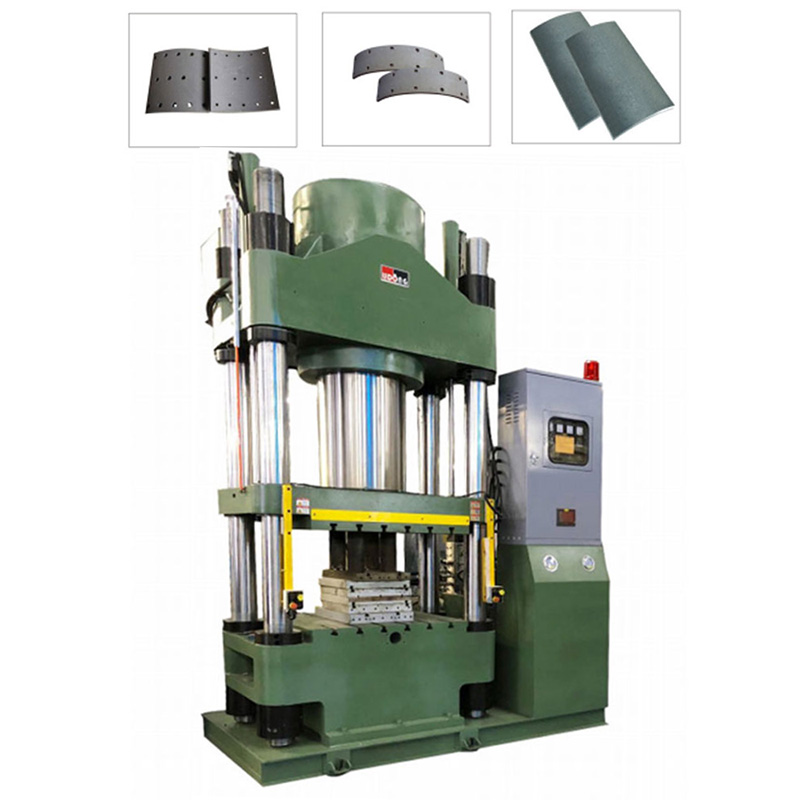
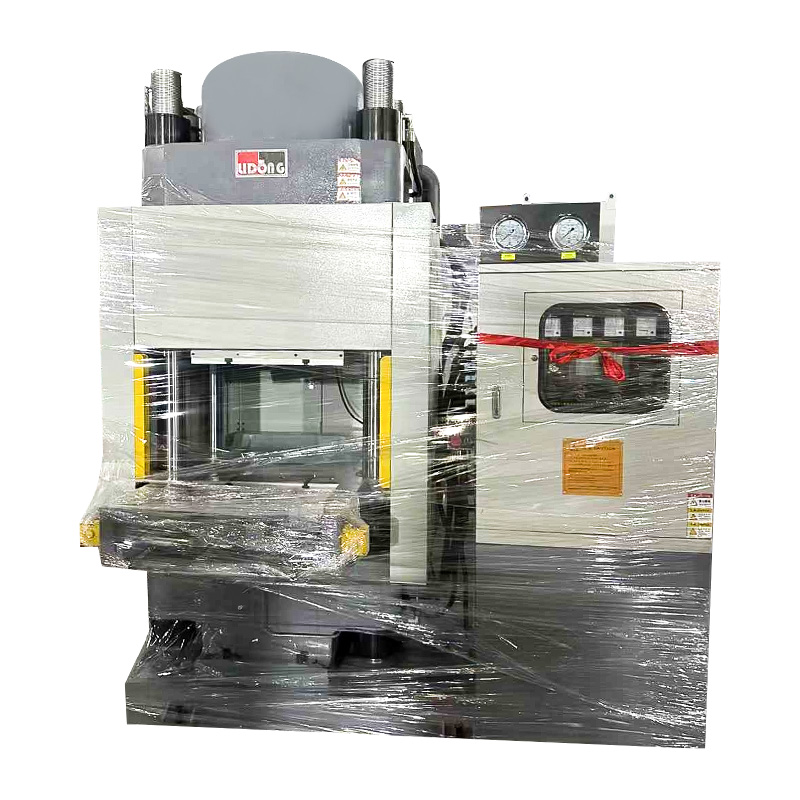
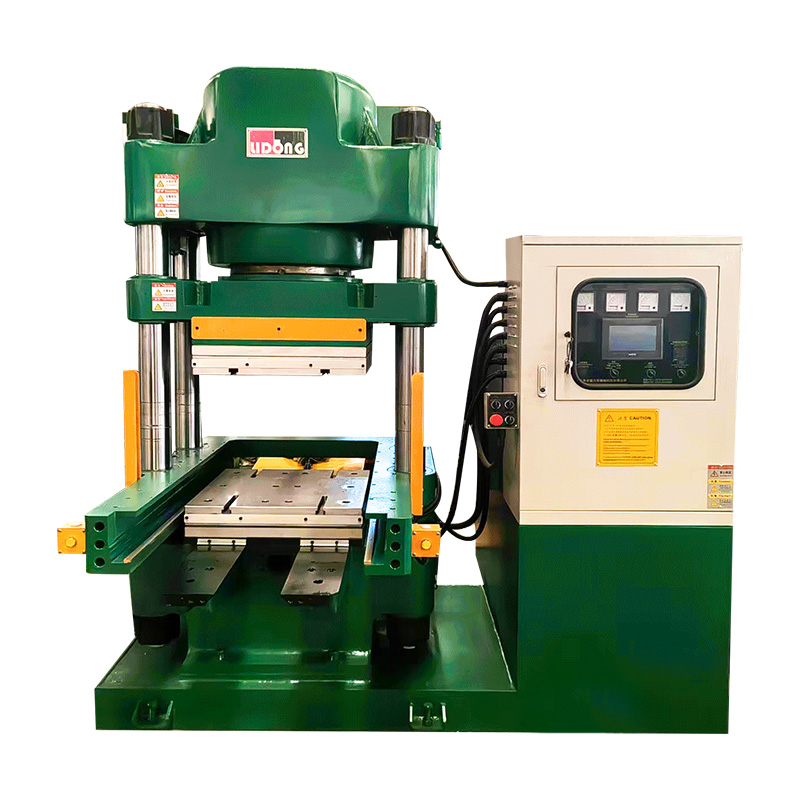
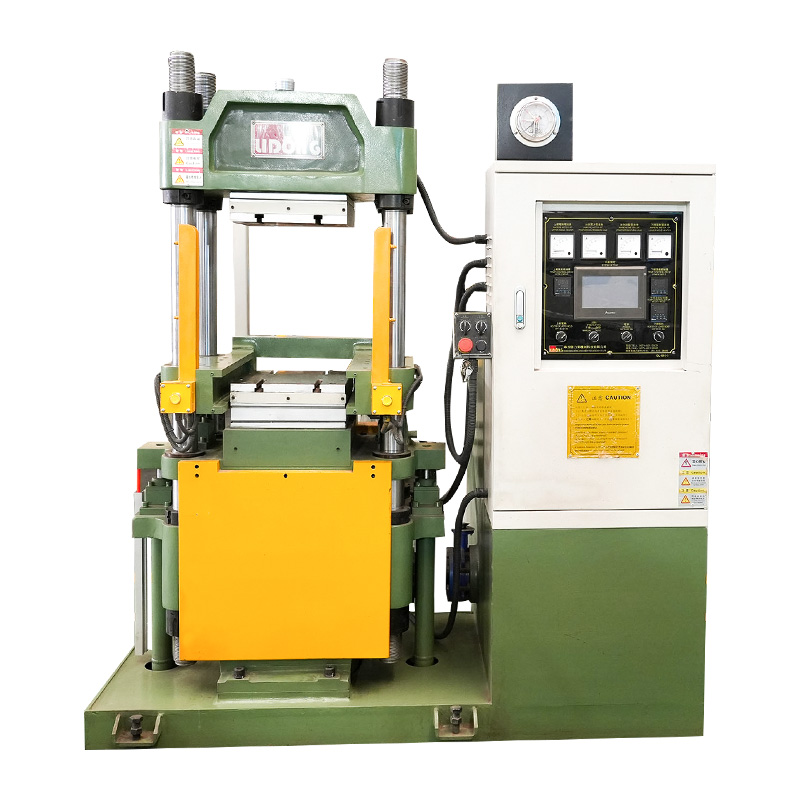
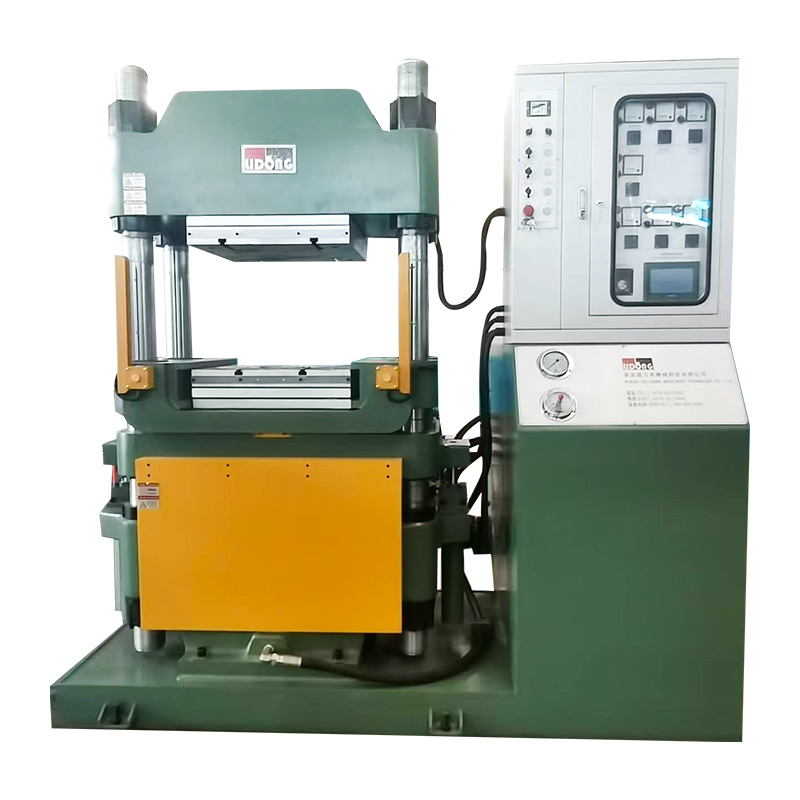
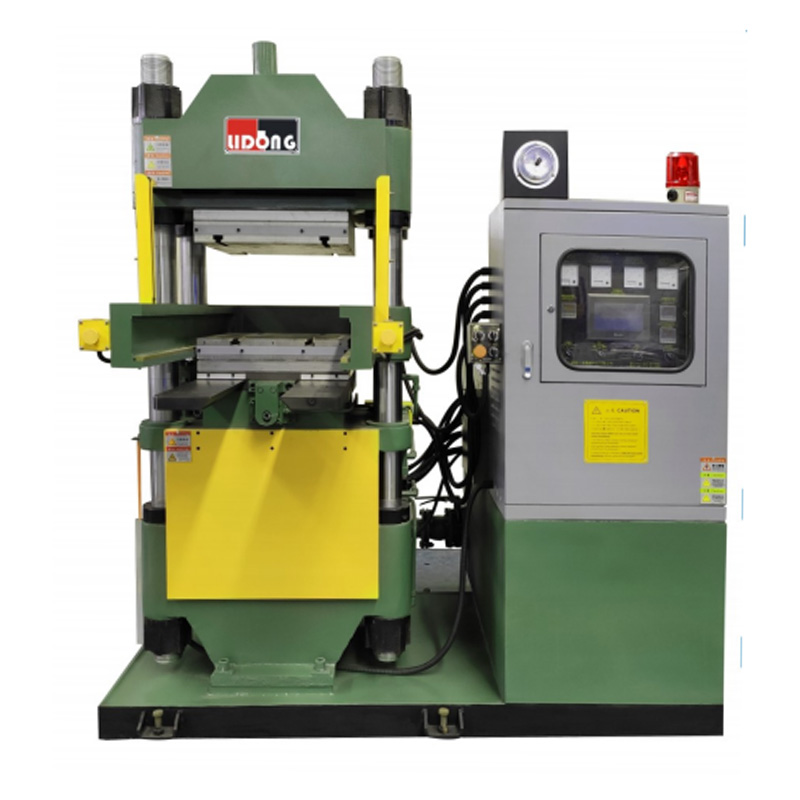
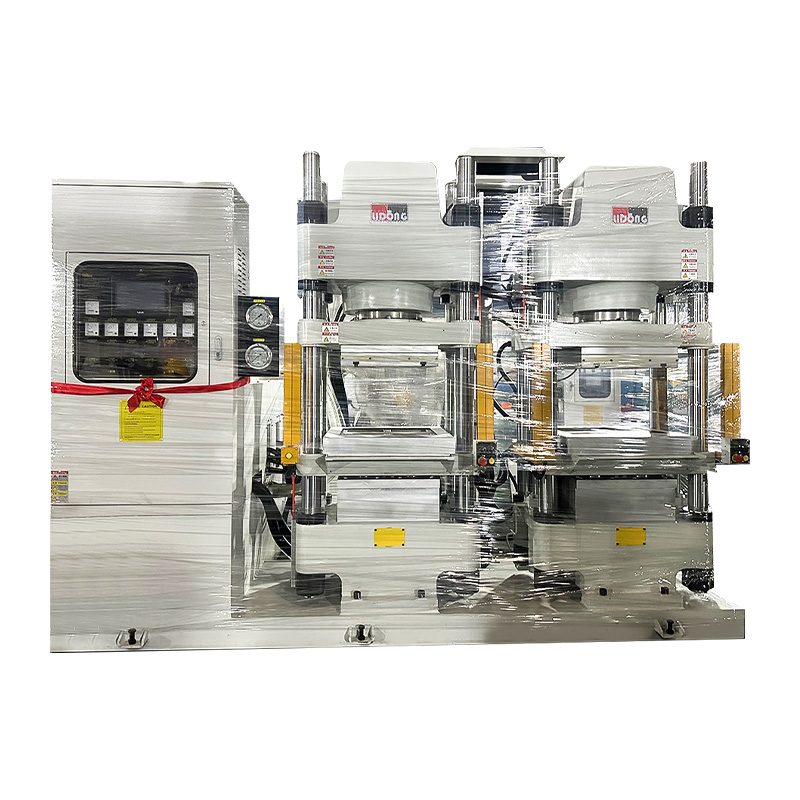
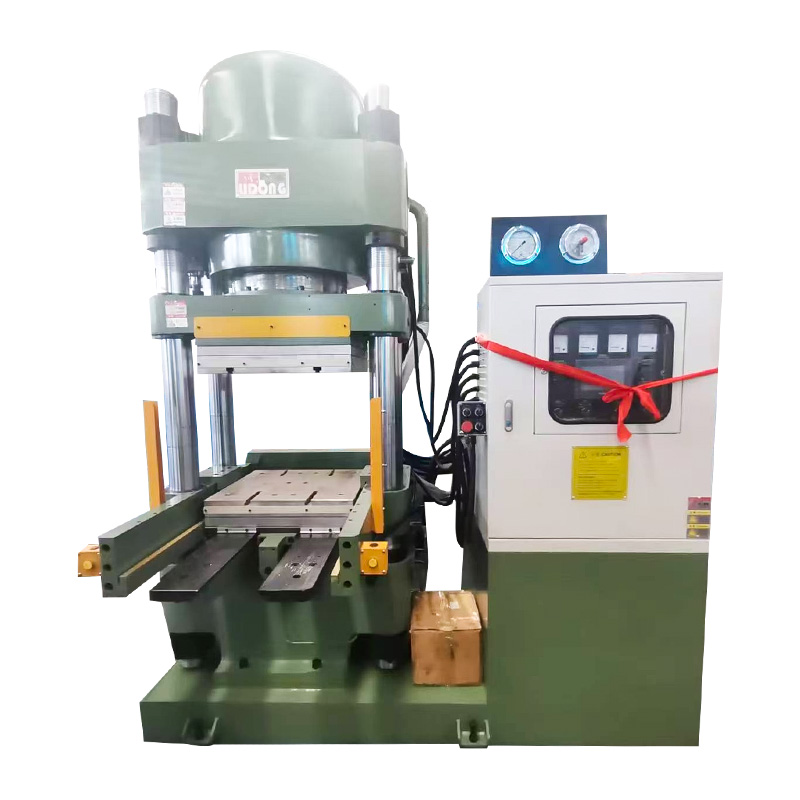
Technical Parameters
The table lists typical configurable values for isobaric brake pad presses. Final specifications depend on your pad size, cavity number and mold concept, and are confirmed in the technical agreement.
| Parameter | Typical Range | Relevance to Isobaric Pressing |
|---|---|---|
| Clamping force | About 150 - 1000 tons | Set by total pad area and pressure |
| Pressure equalization | Hydraulic circuit linking cavity cylinders, or compensating plate | Equal pressure in every cavity |
| Specific pressure on the pad | Often about 20 - 50 MPa, set by formulation | Controls density and strength |
| Platen size | About 500 x 500 mm to 1100 x 1100 mm | Fits multi-cavity isobaric molds |
| Platen temperature | Up to about 200 degrees C | Resin cure, usually around 150 to 180 degrees C |
| Temperature uniformity | About plus or minus 2 degrees C | Even cure across all cavities |
| Degassing steps | Programmable, adjustable opening and dwell | Releases gas without disturbing the pads |
| Pressure monitoring | Sensors on the main and equalizing circuits | Confirms equal pressure during the cycle |
| Mold handling | Slide-out table or cart with hydraulic connections | Quick change of isobaric molds |
| Control | PLC with touchscreen, recipe lock and data storage | Records for each batch |
How to read the table: for an isobaric press, the key points are how pressure is equalized, how it is monitored and how well the press and mold work together. A press that equalizes pressure in the mold only on paper gives no benefit, so ask for a description of the circuit and for test results.
As a simple example, six pads of about 100 square centimeters each at 40 MPa need roughly 245 tons in total, so a press of about 300 tons would give some margin. Isobaric molds are more complex than rigid ones, and the mold and press must be planned together. Please send your pad drawings, cavity number, plate details and formulation, and we will discuss the concept with you.
Practical advice. Decide the isobaric concept together with your mold maker. The press connections, oil volumes and cylinder layout must match the mold design.
Special Focus: Rigid Molds Compared with Isobaric Molds
The table compares the two approaches, so that you can judge whether an isobaric press fits your product.
| Point | Rigid Mold on a Standard Press | Isobaric Mold and Press |
|---|---|---|
| Pressure per cavity | Varies with fill and plate tolerance | Equal in all cavities |
| Pad density | Can vary between cavities | More consistent between cavities |
| Pad thickness | Set by the mold stops, more uniform | Can vary with fill unless stops or finishing are used |
| Mold complexity and cost | Simpler and lower cost | More parts, higher cost, more maintenance |
| Filling accuracy needed | High, to avoid flash or low density | Still high, since thickness follows fill |
| Best suited to | Many pad types, simple molds, high volume | High-value pads, tight density consistency, many cavities |
Points to consider:
- Equal pressure is not equal weight. If cavity fill weights differ, equal pressure gives equal density but different thickness. Accurate weighing of the friction mix remains important, and grinding brings pads to final thickness.
- Back plate tolerance. Plates of slightly different thickness are better absorbed by an isobaric mold, which helps bonding. This can be a real advantage with stamped or less precise plates.
- Sealing and maintenance. Hydraulic cylinders in the mold need seals that tolerate heat, and they need regular inspection. A leak in one cavity affects the equalizing system.
- Heat management. Hot molds with hydraulic elements need suitable seal materials and cooling or insulation. We discuss temperature limits with your mold maker.
- Not a cure for every problem. Blisters, cracks and poor bonding caused by wet material, poor degassing or a poorly prepared plate are not solved by equal pressure.
Formulation, plate preparation and testing belong to your technical team. The press and mold provide equal pressure and stable conditions, and your own tests decide whether the benefit is worth the added complexity. Our uniform density brake pad press page describes other ways to improve density consistency.
Honest advice. For simple pads with low value, a good standard press and a well-made rigid mold are often enough. We would rather recommend the simpler solution than sell a complex one that you do not need.
Automation and Control System
An isobaric press adds a hydraulic circuit to the mold, so the control system must manage pressure in the main circuit and in the equalizing circuit.
- Recipe memory and lock: temperature, pressure steps, degassing count, dwell, hold time and equalizing pressure are stored for each pad and mold, and changes need the right password level.
- Dual pressure monitoring: sensors on the main and equalizing circuits confirm that the pressure is equal and stable, with alarms if it drifts.
- Multi-step pressure control: initial compaction, degassing and final hold are set separately.
- Leak detection: a pressure drop in the equalizing circuit during the hold can warn of a seal problem in the mold.
- Zoned temperature control: separate sensors and outputs keep platens even and limit overshoot.
- Alarm and event log with cycle data: faults, setting changes, pressures, temperature and time are recorded and can be exported if you permit it.
Handling and automation: isobaric molds need quick-connect hydraulic couplings and clear procedures for connecting and venting. Slide-out tables, carts and loading frames shorten changeover. Weighing systems for friction mix are especially useful, since fill accuracy decides thickness. Automatic feeding can be added in stages.
Operator view. The touchscreen shows the active recipe, platen temperatures, main and equalizing pressures and cycle time remaining. An English manual and training material are provided, and remote support is available when your technician sets up a new mold.
Setup tip. After every mold change, vent air from the equalizing circuit and check the pressure reading on the first cycle. Air in the circuit makes pressure uneven and removes the benefit of the design.
Structure and Materials
An isobaric press combines a conventional hot press with additional hydraulic elements, and its structure must keep both parts reliable.
| Component | Design and Material | Purpose |
|---|---|---|
| Press frame | Heavy welded steel structure, stress relieved | Low deflection at rated tonnage |
| Platens | Alloy steel, ground flat, zoned heating | Even heat and flat contact with the mold |
| Main cylinder | Large bore, quality seals, position sensor | Uniform force and accurate closing |
| Equalizing circuit | Dedicated hydraulic circuit with filtration and sensors | Equal pressure in every cavity |
| Mold connections | Heat-resistant hoses and quick-connect couplings | Safe, leak-free connection to the mold |
| Insulation | Boards and shields on platens and guides | Lower heat loss and protection for seals |
| Guide system | Hardened, wear-resistant, adjustable | Keeps platens parallel |
| Hydraulic station | Separate unit, filtered and cooled | Stable pressure and clean oil |
Heat and hydraulics: hydraulic oil and seals in a hot mold face high temperature. We select hoses, seals and oil with suitable temperature ratings, route lines away from hot surfaces and use insulation where needed. We also recommend regular oil sampling, since degraded oil changes pressure behavior.
Flatness and stiffness: isobaric pressing does not remove the need for a rigid frame and parallel platens. We use heavy frames, ground platens and carefully placed cylinders, and we check parallelism and flatness at the factory.
Maintenance. Clean platens regularly with non-scratching tools, keep guides lubricated, check main and equalizing circuit seals and hoses, and change hydraulic oil and filters according to the manual. Inspect mold cylinders and connections on a schedule, and keep a log for audits.
Before shipment, each press is run under load, and temperature uniformity, pressure holding, equalizing circuit function and safety functions are checked.
Safety and Energy Efficiency
Isobaric molds add pressurized hydraulic lines to a hot press, so safety needs attention to both heat and stored hydraulic energy.
- Emergency stop at the operator position and at the loading side
- Light curtain or guard doors connected to the PLC
- Hydraulic overpressure protection on both the main and the equalizing circuits
- Pressure release before disconnecting mold hoses, with a clear procedure and interlock where possible
- Independent over-temperature protection on each heating zone
- Insulated surfaces and warning labels on hot parts and hoses
Handling advice: never disconnect mold hoses while the circuit is under pressure or the mold is hot. Use heat-resistant gloves and sleeves, inspect hoses for wear and keep walkways clear. Heating the resin releases vapors, and friction mix is dusty, so provide local exhaust above the press, dust collection at feeding and grinding areas and suitable respiratory protection according to local rules. Follow the safety data sheets of your materials.
Energy efficiency: good insulation and PID control keep heating costs low. A variable-speed hydraulic system uses power mainly while the press moves, and a stand-by temperature function saves energy during mold changes. More consistent pads can also mean less scrap and less rework, which saves raw material and the energy already spent on it.
Tell us your working hours and local power price, and we will compare options in the quotation.
Training and records. Keep a log of safety checks, hose inspections, venting checks and oil changes. A monthly test of the emergency stop, light curtain and pressure relief function keeps the press dependable.







