
 English
 عربى
 中文繁体

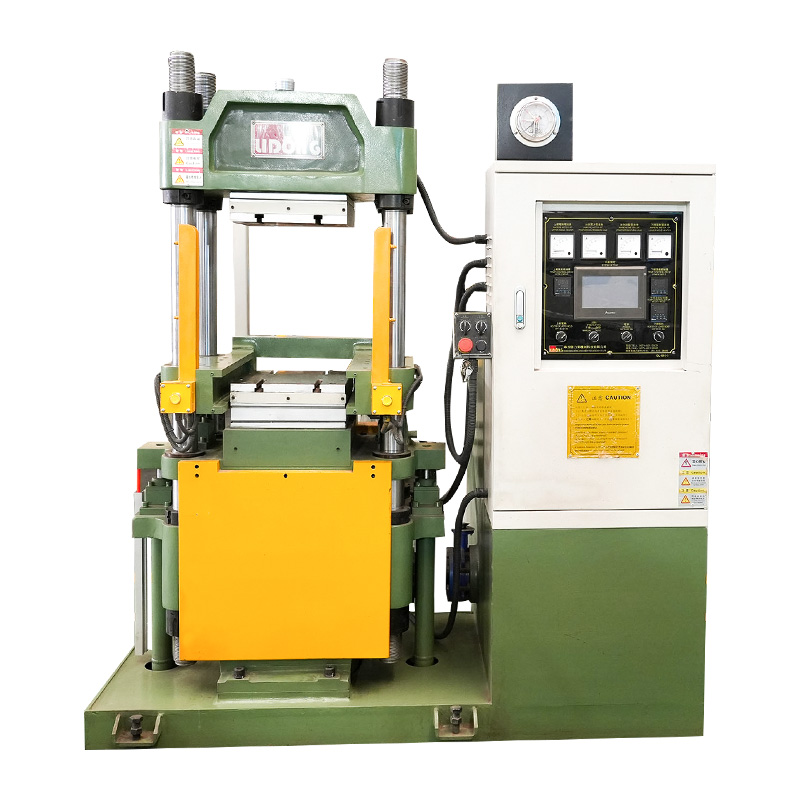
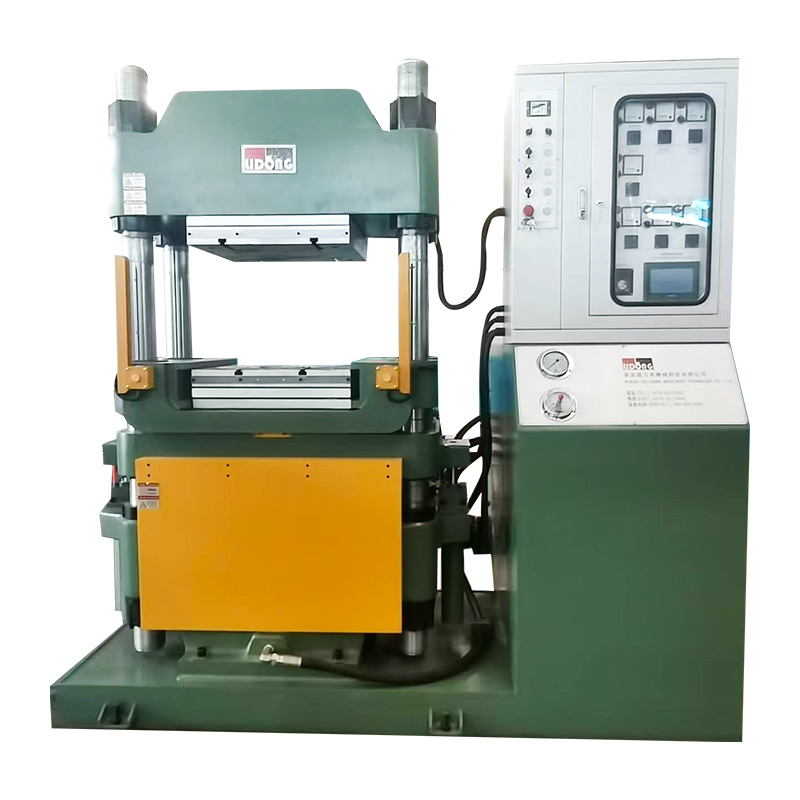
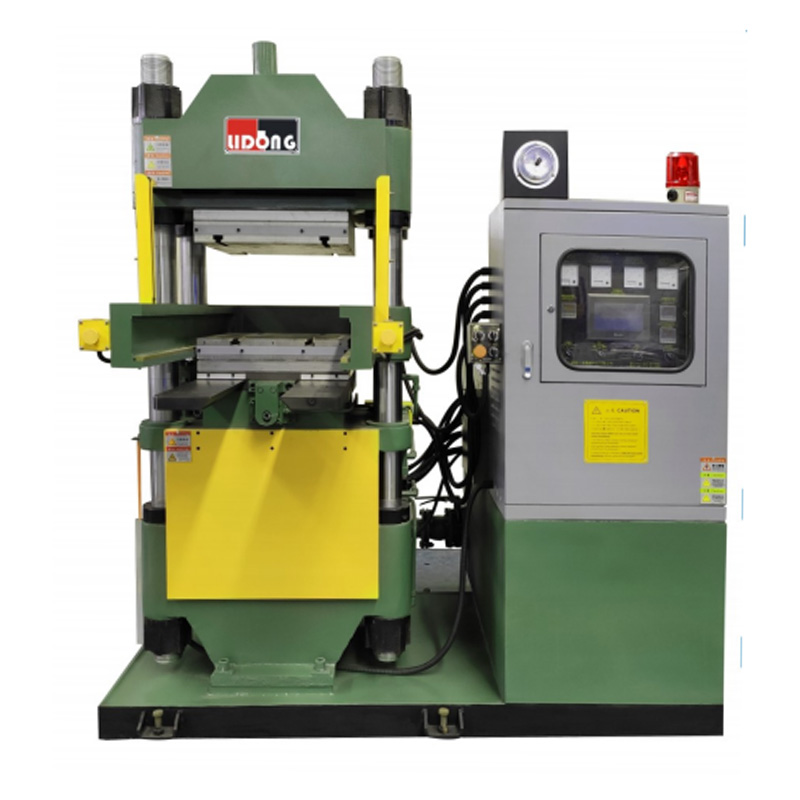
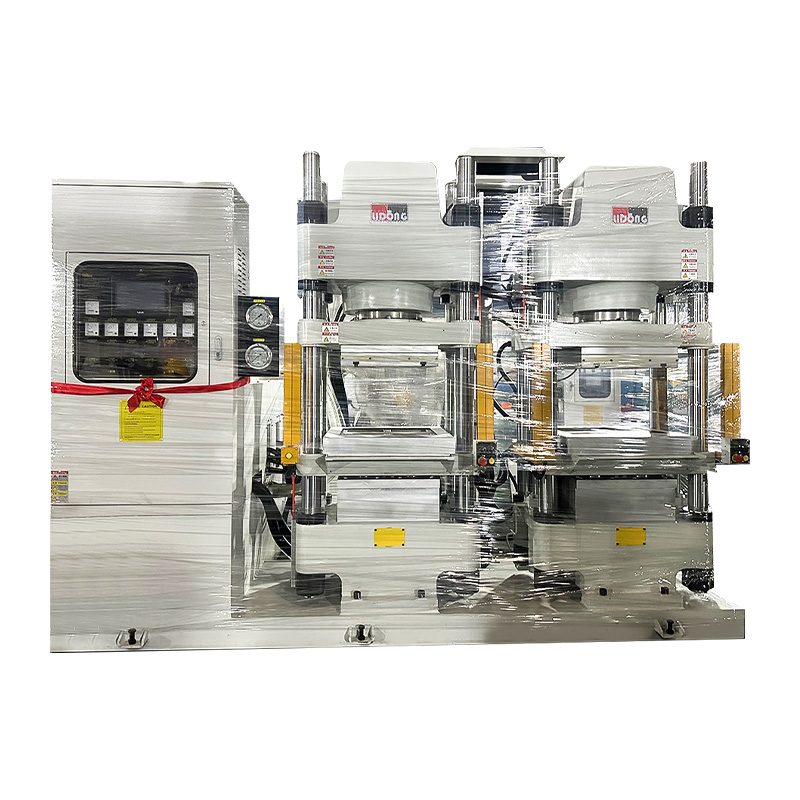
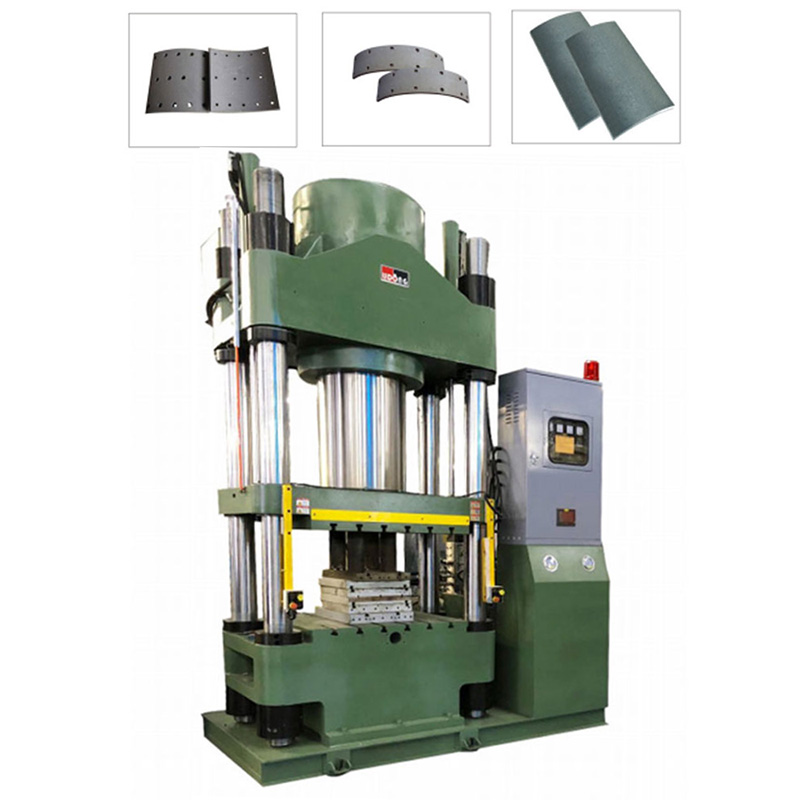
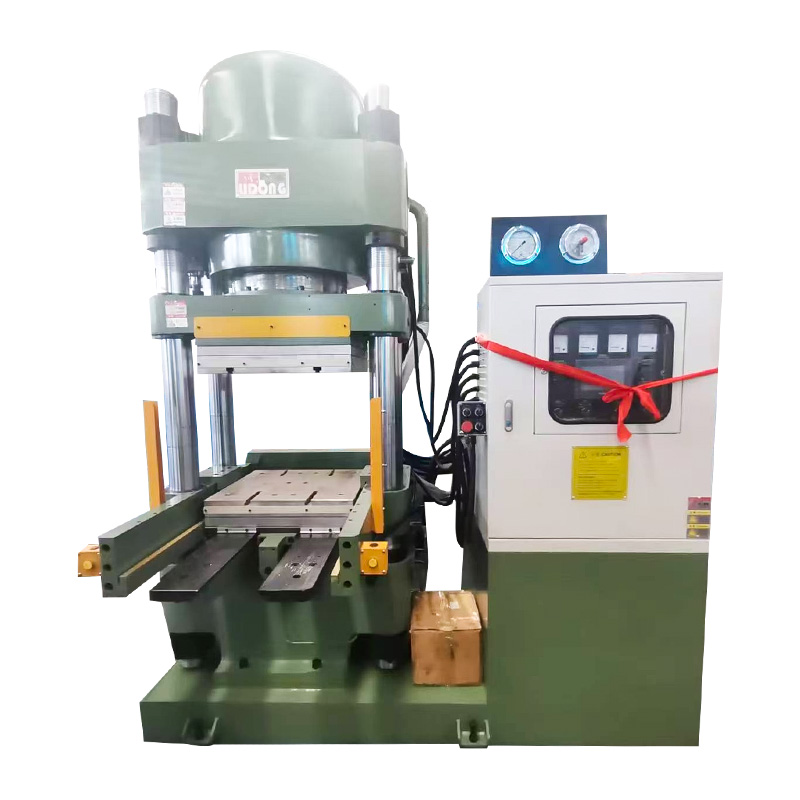
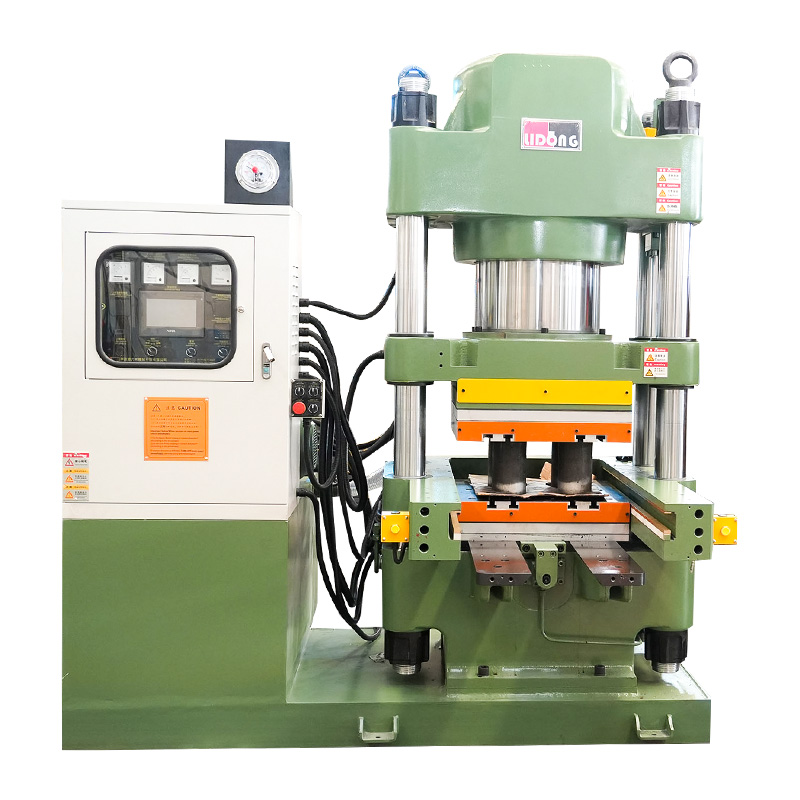
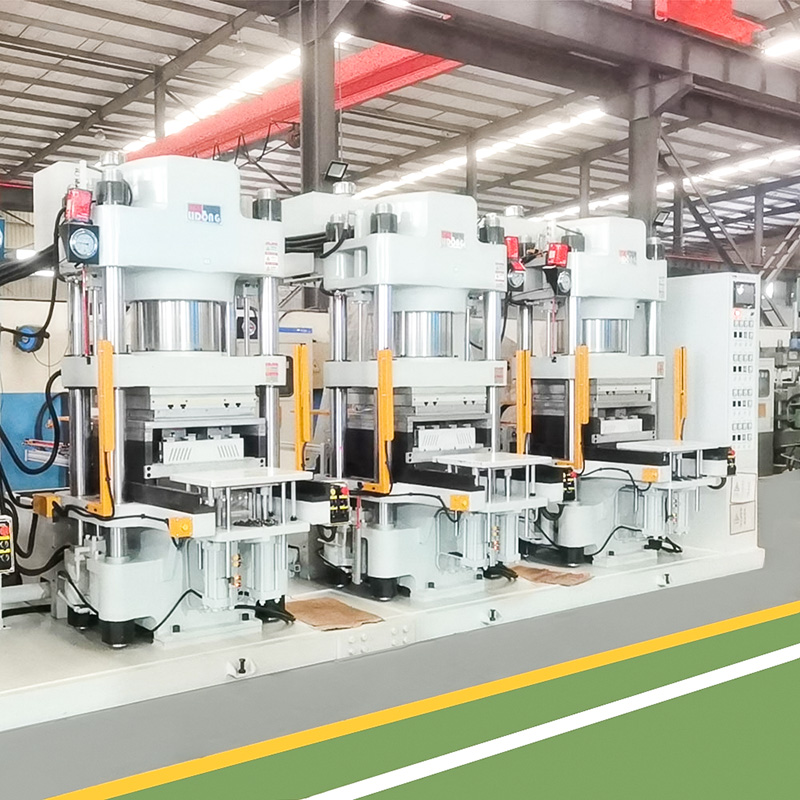
Technical Parameters
The table lists typical configurable features and values that influence density uniformity on a brake pad press. Final specifications depend on your pad size, mold layout and formulation, and are confirmed in the technical agreement.
| Parameter | Typical Range | Effect on Density Uniformity |
|---|---|---|
| Clamping force | About 100 - 1000 tons | Enough force for the full pressing area, with margin |
| Frame stiffness | Heavy, stress-relieved structure | Less deflection, more even pressure over the mold |
| Platen flatness and parallelism | Ground flat, checked under load at the factory | Even gap, even pressure across all cavities |
| Platen thickness | Thick alloy steel, matched to tonnage | Resists bending under load |
| Cylinder layout | Placed to spread force evenly | Reduces center-to-edge pressure difference |
| Temperature uniformity | About plus or minus 2 degrees C | Even cure rate across the pad |
| Pressure profile | Multi-step with degassing | Gas escape and steady consolidation |
| Stroke and pressure monitoring | Position and pressure sensors | Detects fill and process variation |
| Pressure equalization (option) | Hydraulic equalizing mold or compensating plate | Equal pressure per cavity |
| Control | PLC with touchscreen, recipe lock and data storage | Same settings and records every cycle |
How to read the table: the first four rows are mechanical. A stiff frame, thick flat platens and well-placed cylinders decide how evenly the mold is loaded. The next two rows are process control, and they decide how evenly the material consolidates and cures. The last rows are about seeing and recording what happens, which lets you find the cause of variation instead of guessing.
Please send your pad drawings, cavity number, formulation and the density or hardness scatter you see today, and we will discuss which features are likely to give the largest improvement.
Practical advice. Before buying new equipment, measure the density pattern of your present pads. If the lower or outer areas are consistently softer, the cause is usually pressure or heat. If the scatter is random, the cause is usually filling or the mix.
Special Focus: Where Density Variation Comes From and How to Reduce It
The table links common density problems to their causes and to remedies in the press and the process.
| Observation | Likely Cause | What Helps |
|---|---|---|
| Center denser than edges (or the reverse) | Platen or frame deflection, cylinder position | Stiffer frame, thicker platens, cylinder layout, parallelism check |
| Top denser than bottom | Wall friction and force loss through the mix | Lower pad height, lubricated cavity walls, double-action or floating mold |
| One cavity different from the others | Uneven fill or plate thickness, local temperature difference | Accurate weighing, plate control, temperature mapping, pressure-equalizing mold |
| Soft zones or voids | Trapped gas or moisture | Staged degassing, dry material, steady holds |
| Density varies between batches | Mix variation, moisture, press drift | Mix control, recipe lock, sensor calibration, cycle records |
| Pad cracks or delaminates | Density gradient and stress | Gentle pressure rise, even cure, correct plate preparation |
How to measure density variation:
- Weigh and measure. Weight and volume of each pad give an average density, which is the simplest first check.
- Immersion method. A water displacement test gives an accurate volume for density calculation on cut sample pieces.
- Hardness mapping. Hardness at several points across a pad shows relative density differences quickly.
- Cross-section sampling. Cutting a pad into layers and measuring each shows the gradient through the thickness.
- Non-destructive tests. Some manufacturers use ultrasonic or other scanning methods to find voids and zones of different density.
No press can give perfect uniformity if the mix and filling vary. For this reason, our related pages, including isobaric brake pad molding press and friction material preforming press, describe other ways to improve density and consistency. Together with a precision temperature control press, they cover most of what helps in practice.
Honest advice. Do not expect one purchase to solve every density problem. Improve the largest cause first, measure again and then move to the next.
Automation and Control System
Even density depends on every cycle being the same. The control system should hold settings steady, watch the process and record what happened.
- Recipe memory and lock: temperature, pressure steps, degassing count, dwell, hold time and stroke limits are stored for each pad and mold, and changes need the right password level.
- Multi-step pressure control: initial compaction, degassing and final hold are set separately, which gives the mix time to consolidate evenly and release gas.
- Closed-loop pressure control with make-up: pressure stays steady during the hold, even as the material consolidates.
- Position monitoring: the stroke at the end of the cycle reveals differences in fill and consolidation between cycles.
- Zoned temperature control: separate sensors and outputs keep platens even and limit overshoot, with alarms if a zone drifts.
- Alarm and event log with cycle data: pressure, stroke, temperature and time are recorded and can be exported if you permit it.
Using the data: plotting the final stroke or pressing pressure over many cycles shows trends that match density changes. A sudden shift often means a change in the mix or in the fill, and a slow drift often points to wear or a heating problem.
Handling and automation: accurate filling is part of density control. Weighing stations, automatic feeding and plate loading aids can be added in stages, and the layout is prepared in advance.
Operator view. The touchscreen shows the active recipe, platen temperatures, pressure curve and cycle time remaining. An English manual and training material are provided, and remote support is available when your technician reviews the data.
Structure and Materials
Density uniformity starts with mechanics. The structure of the press must keep the load even over the whole mold and keep it that way over years of use.
| Component | Design and Material | Purpose |
|---|---|---|
| Press frame | Heavy welded steel structure, stress relieved | Minimal deflection at rated tonnage |
| Platens | Thick alloy steel, ground flat, zoned heating | Flat contact, even heat |
| Cylinder arrangement | Position and number selected from platen size and tonnage | Even load distribution |
| Guide system | Large hardened guides, adjustable clearance | Keeps platens parallel under load |
| Heating and insulation | Zoned rods or oil channels, boards and shields | Even temperature and low heat loss |
| Sensors | Quality temperature, pressure and position sensors | Reliable data for control and records |
| Hydraulic station | Separate unit, filtered and cooled | Stable pressure and clean oil |
Why the frame and platens matter most: if the frame bends under load, the mold gap is wider in the center than at the edges, and the center is pressed less, or the reverse, depending on the design. We use heavy frames and thick platens, select the cylinder layout from the platen size and check parallelism and flatness under load at the factory. We can share the measurement results with you.
Heat distribution: density is also a result of cure. If one corner of the platen is cooler, resin cures later there and consolidates differently. Zoned heating, insulation and a temperature map under load help keep the platen even.
Maintenance. Clean platens regularly with non-scratching tools, since resin and dust slow heat transfer and create cold spots. Keep guides lubricated, check cylinder seals and sensors, and change hydraulic oil and filters according to the manual. Recheck parallelism after months of service, because guide wear slowly changes alignment.
Before shipment, each press is run under load, and temperature uniformity, pressure holding and safety functions are checked.
Safety and Energy Efficiency
Hot presses for friction material combine heavy molds, high pressure, hot surfaces and dusty mix. Good safety design and habits protect people while you work on quality.
- Emergency stop at the operator position and at the loading side
- Light curtain or guard doors connected to the PLC
- Hydraulic overpressure protection with a relief valve and pressure monitoring
- Independent over-temperature protection on each heating zone
- Mold carrier stops and locks that hold molds in position during loading
- Insulated surfaces and warning labels on hot parts
Handling advice: use carts, rails or a crane for molds, wear heat-resistant gloves and sleeves, and keep walkways clear. Heating the resin releases vapors, and friction mix is dusty, so provide local exhaust above the press, dust collection at feeding and grinding areas and suitable respiratory protection according to local rules. Follow the safety data sheets of your materials. When cutting pads for density tests, use dust extraction as well.
Energy efficiency: good insulation and PID control keep heating costs low, and zoned heating avoids wasting heat when smaller molds are used on a larger platen. A variable-speed hydraulic system uses power mainly while the press moves, and a stand-by temperature function saves energy during mold changes. Better density uniformity often means less scrap and fewer rejected pads, which saves raw material and the energy already spent on it.
Tell us your working hours and local power price, and we will compare options in the quotation.
Training and records. Keep a log of safety checks, parallelism checks, sensor calibration and oil changes. A monthly test of the emergency stop, light curtain and over-temperature cut-off keeps the press dependable.







