
 English
 عربى
 中文繁体

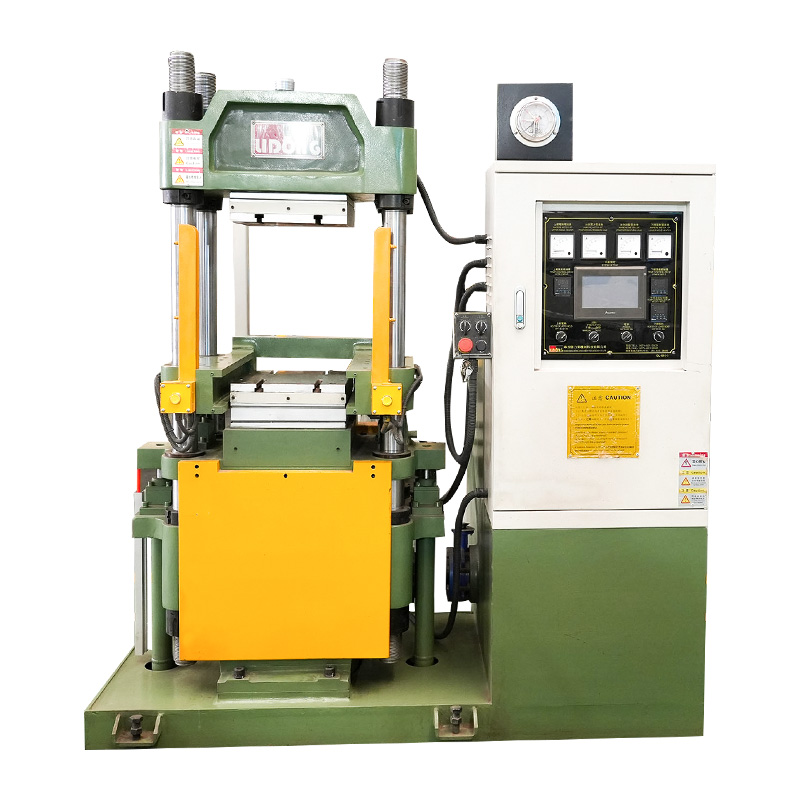
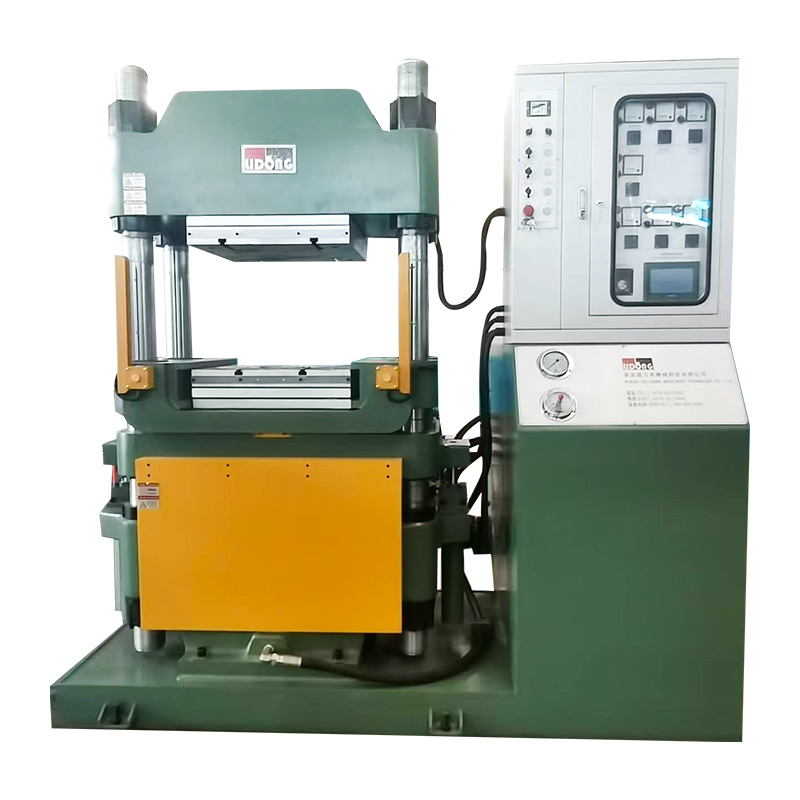
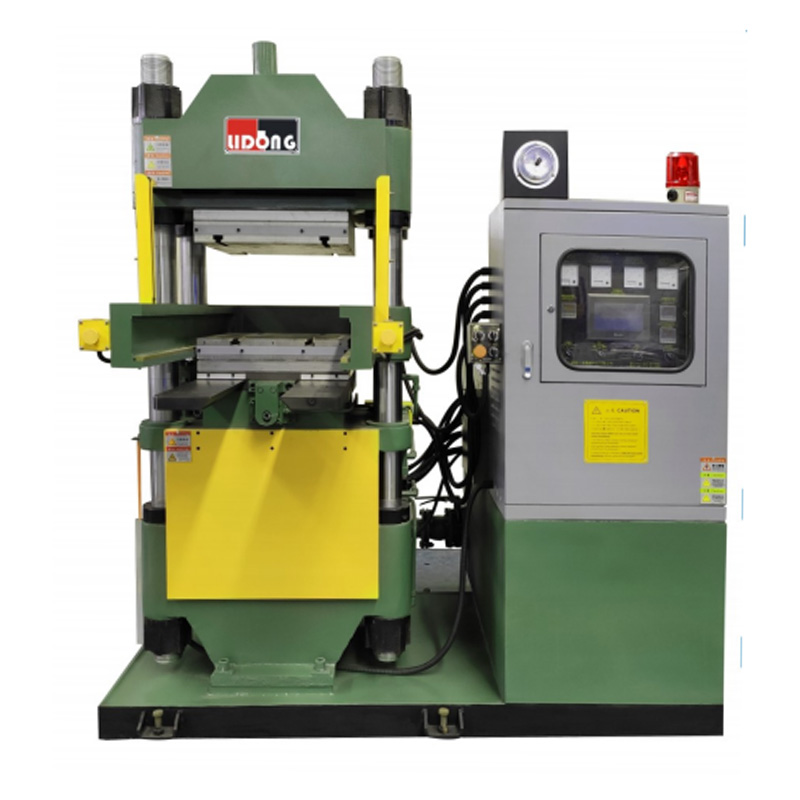
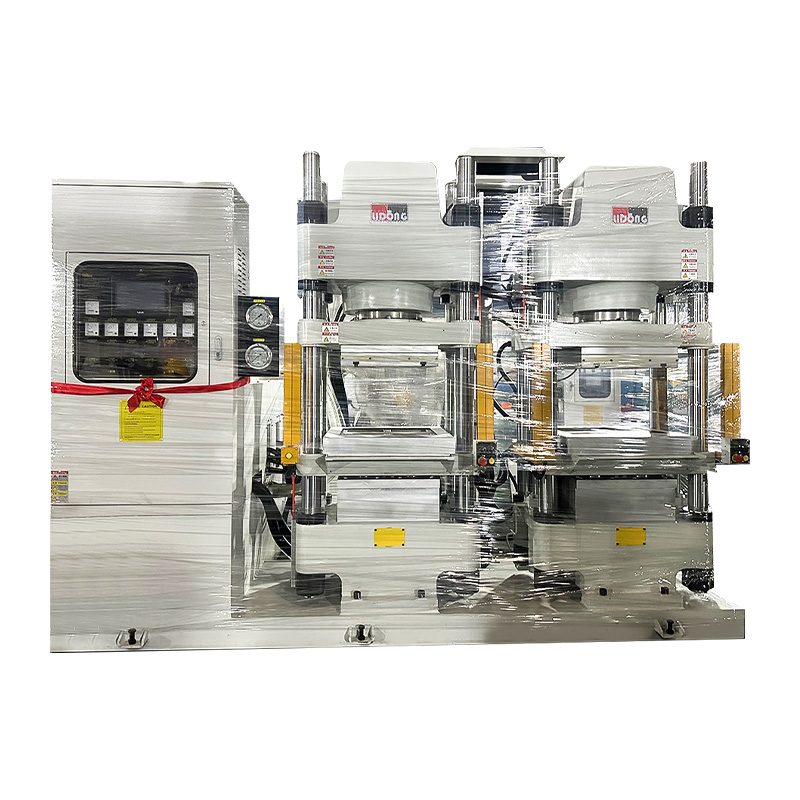
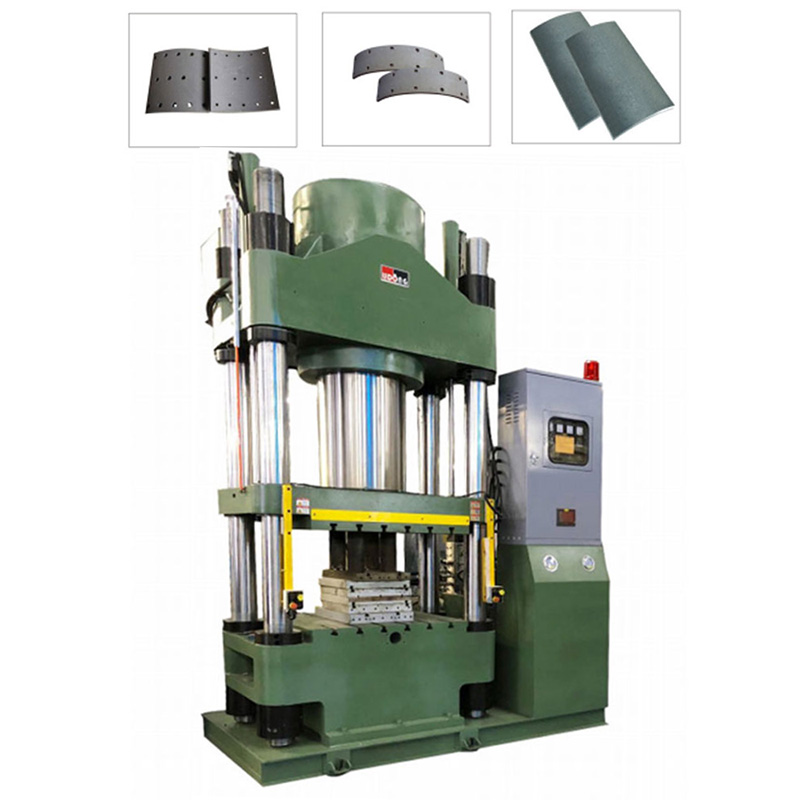
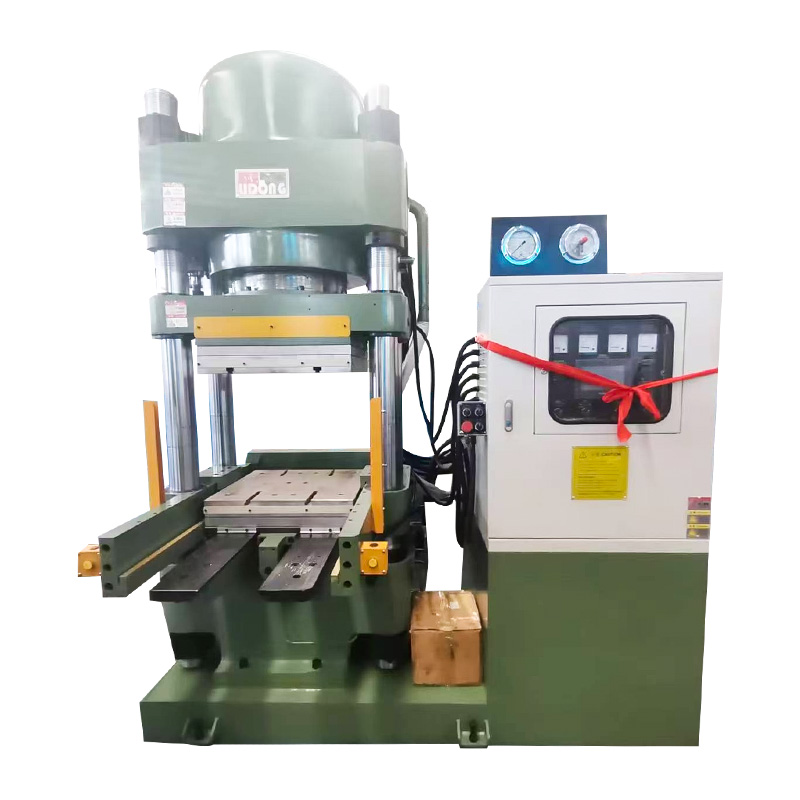
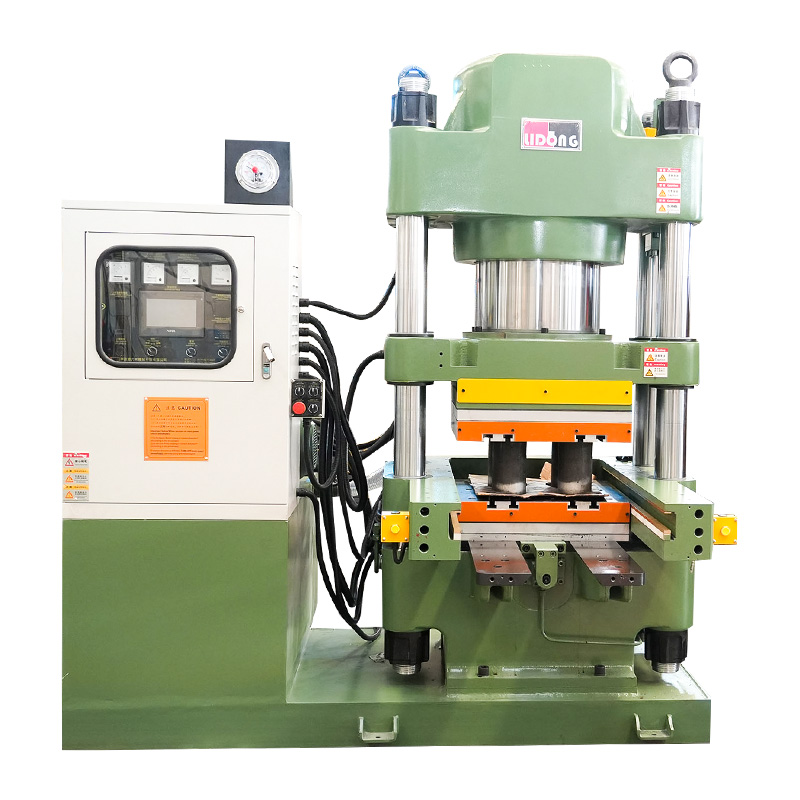
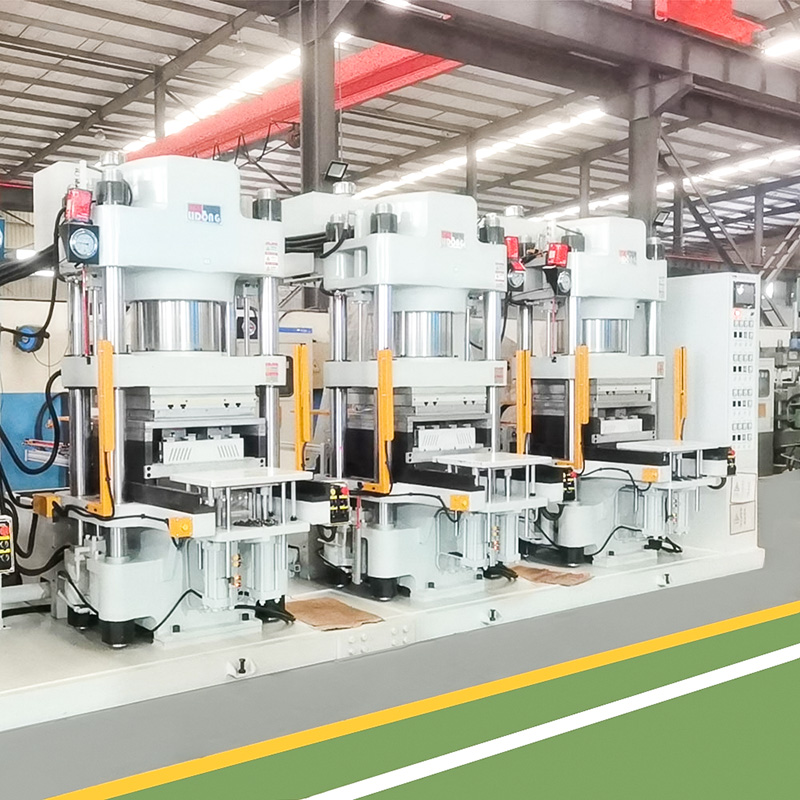
Technical Parameters
The table lists typical configurable values for presses used in semi-metallic pad production. Final specifications depend on your pad size, mold layout and formulation, and are confirmed in the technical agreement.
| Parameter | Typical Range | Relevance to Semi-Metallic Pads |
|---|---|---|
| Clamping force | About 150 - 1000 tons | Dense mixes need high pressure on the pad area |
| Specific pressure on the pad | Often about 30 - 50 MPa or more, set by formulation | Reaches target density in metal-rich mixes |
| Platen size | About 500 x 500 mm to 1100 x 1100 mm | Fits a range of pad sizes and multi-pad molds |
| Platen temperature | Up to about 200 degrees C | Resin cure, commonly around 150 to 180 degrees C |
| Temperature uniformity | About plus or minus 2 to 3 degrees C | Even cure in a heat-conducting mix |
| Degassing steps | Programmable, adjustable opening and dwell | Releases gas from dense, resin-rich zones |
| Pressure holding | Programmable with automatic make-up | Steady force during cure |
| Opening stroke | Adjustable, generous | Room for deeper fill and degassing |
| Mold handling | Slide-out table, cart or crane points | Dense pads mean heavy molds |
| Control | PLC with touchscreen, recipe lock and data storage | Records and repeatable cycles |
How to read the table: the pressure range and the degassing programming matter most. Semi-metallic mixes are dense, so air and gas escape slowly. If the pressure rises too fast, gas is trapped and shows up later as blisters or cracks. As a simple example, a truck pad with a friction area of about 150 square centimeters at 40 MPa needs roughly 60 tons per pad, so a mold with four pads suggests a press of about 250 tons or more with margin.
Metal content also changes heat flow. A semi-metallic pad conducts heat well, so it heats through faster than an organic pad of the same thickness, which can shorten the cure but also makes temperature differences across the mold more visible. Please send your pad drawings, cavity number, formulation and metal content and we will recommend a clamp size, platen size and recipe options.
Practical advice. Tell us the steel fiber content and type. It affects mold wear and the pressure needed, and it helps us suggest tooling materials and maintenance intervals.
Special Focus: Semi-Metallic Compared with NAO and Ceramic Pads
The table compares the main friction families from a press and process point of view.
| Point | Semi-Metallic | NAO (Organic) | Ceramic |
|---|---|---|---|
| Main ingredients | Steel fibers, iron powder, graphite, resin | Aramid, glass, mineral fibers, rubber, resin | Ceramic fibers, non-ferrous metals, resin |
| Mix density and abrasiveness | High and abrasive | Lower and softer | Medium |
| Molding pressure | Higher | Moderate | Moderate |
| Heat conduction | High | Low | Medium |
| Mold wear | Faster, needs hard tooling | Slower | Moderate |
| Typical strengths | Heat handling, durability, fade resistance | Quiet, gentle on the disc | Low dust, low noise, stable friction |
| Typical drawbacks | More noise, more disc wear, rust risk, dark dust | Lower heat capacity | Higher cost |
Points that decide results:
- Degassing. Dense mixes need slow, staged degassing and steady holds to avoid blisters.
- Density gradient. Metal-rich mixes transmit pressure unevenly, so a stiff frame and parallel platens are important. Our uniform density brake pad press page describes how to measure and reduce variation.
- Mold wear and rust. Steel fibers wear cavity walls and punches. Hard tooling, regular inspection and a dry workshop reduce wear and rust, and plates should be kept clean and dry.
- Back plate bonding. Heavy semi-metallic pads load the bond strongly, so plate preparation and adhesive curing must be reliable. Our steel back plate bonding press page covers bonding in more detail.
- Noise treatment. Semi-metallic pads usually need chamfers, slots, shims and careful surface finishing to control noise. These are separate steps.
Formulation and testing belong to your technical team. The press provides stable, repeatable pressure and heat so that your formulation can perform as designed.
Honest advice. If your pads are mostly organic and you are adding a semi-metallic line, check the press range first. A press that was fine for NAO pads may not give enough pressure or stiffness for dense metal-rich pads.
Automation and Control System
Dense metal-rich mixes need careful pressure and gas control, so the control system should shape the cycle and repeat it exactly.
- Recipe memory and lock: temperature, pressure steps, degassing count, opening distance, dwell, hold time and stroke limits are stored for each pad and mold, and changes need the right password level.
- Multi-step pressure control: a gentle initial compaction, several degassing steps and a high final pressure with hold are set separately.
- Programmable degassing: opening distance and dwell are adjustable, with a safe maximum to protect the mold.
- Zoned temperature control: separate sensors and outputs keep platens even and limit overshoot, with alarms if a zone drifts.
- Position monitoring: the final stroke reveals differences in fill and consolidation between cycles.
- Alarm and event log with cycle data: pressure, stroke, temperature and time are recorded and can be exported if you permit it.
Handling and automation: dense pads and plates make molds heavy. Slide-out tables, rail carts or a crane with proper lifting points make loading safer, and weighing stations, preforms and automatic feeding can be added in stages. Our friction material preforming press page describes preforming for dense mixes.
Operator view. The touchscreen shows the active recipe, platen temperatures, pressure curve and cycle time remaining. An English manual and training material are provided, and remote support is available when your technician sets up a new mold.
Tuning tip. If you see blisters, add one degassing step or slow the first pressure stage before raising cure time. Change one parameter at a time and record the result with the recipe name.
Structure and Materials
Semi-metallic pad production loads the press heavily and wears tooling, so structure and wear protection are the main design points.
| Component | Design and Material | Purpose |
|---|---|---|
| Press frame | Heavy welded steel structure, stress relieved | Low deflection at high pressure |
| Platens | Thick alloy steel, ground flat, zoned heating | Flat contact, even heat in a heat-conducting mix |
| Main cylinder | Large bore, quality seals, position sensor | Uniform force and accurate closing |
| Guide system | Large hardened guides, adjustable | Keeps platens parallel |
| Heating and insulation | Zoned rods or oil channels, boards and shields | Even temperature and low heat loss |
| Mold carrier | Rail cart or slide-out table rated for the mold weight | Safe handling of heavy molds |
| Covers and wipers | Protection for rods, guides and sensors | Keeps steel dust and fibers out |
| Hydraulic station | Separate unit, filtered and cooled | Stable pressure and clean oil |
Dust and fibers: steel fibers and metal powders are abrasive and conductive. Covers and wipers protect guides and sensors, and sealed cable entries keep conductive dust away from electronics. Clean with suitable vacuum equipment, not compressed air.
Tooling: molds for semi-metallic pads wear faster than molds for organic pads. Hardened cavity inserts, wear plates and surface coatings help, and the press should provide accurate closing so that edges are not damaged. Please discuss tooling materials with your mold maker.
Maintenance. Clean platens regularly with non-scratching tools, keep guides lubricated, check cylinder seals and sensors, and change hydraulic oil and filters according to the manual. Inspect molds and mold carriers on a schedule, and recheck parallelism after months of service.
Before shipment, each press is run under load, and temperature uniformity, parallelism, pressure holding and safety functions are checked.
Safety and Energy Efficiency
Heavy molds, high pressure, hot surfaces and metal-rich dust make safety planning essential in semi-metallic pad production.
- Emergency stop at the operator position and at the loading side
- Light curtain or guard doors connected to the PLC
- Hydraulic overpressure protection with a relief valve and pressure monitoring
- Independent over-temperature protection on each heating zone
- Mold carrier stops and locks that hold molds in position during loading
- Insulated surfaces and warning labels on hot parts
Handling advice: never lift heavy molds by hand. Use a crane or rated cart with proper lifting points, wear heat-resistant gloves and sleeves, and keep walkways clear. Heating the resin releases vapors, and semi-metallic mix and machining dust contain fine metal particles that are harmful to breathe, so provide local exhaust above the press, dust collection at feeding and grinding areas and suitable respiratory protection according to local rules. Fine metal dust can be combustible when dispersed in air, so control ignition sources and ground equipment where needed, and follow the safety data sheets of your materials.
Energy efficiency: good insulation and PID control keep heating costs low. A variable-speed hydraulic system uses power mainly while the press moves, which matters because holds are long. A stand-by temperature function saves energy during mold changes, and fewer rejected pads save raw material, including expensive steel fiber, and the energy already spent on it.
Tell us your working hours and local power price, and we will compare options in the quotation.
Training and records. Keep a log of safety checks, carrier inspections and oil changes. A monthly test of the emergency stop, light curtain and over-temperature cut-off keeps the press dependable.







