
 English
 عربى
 中文繁体

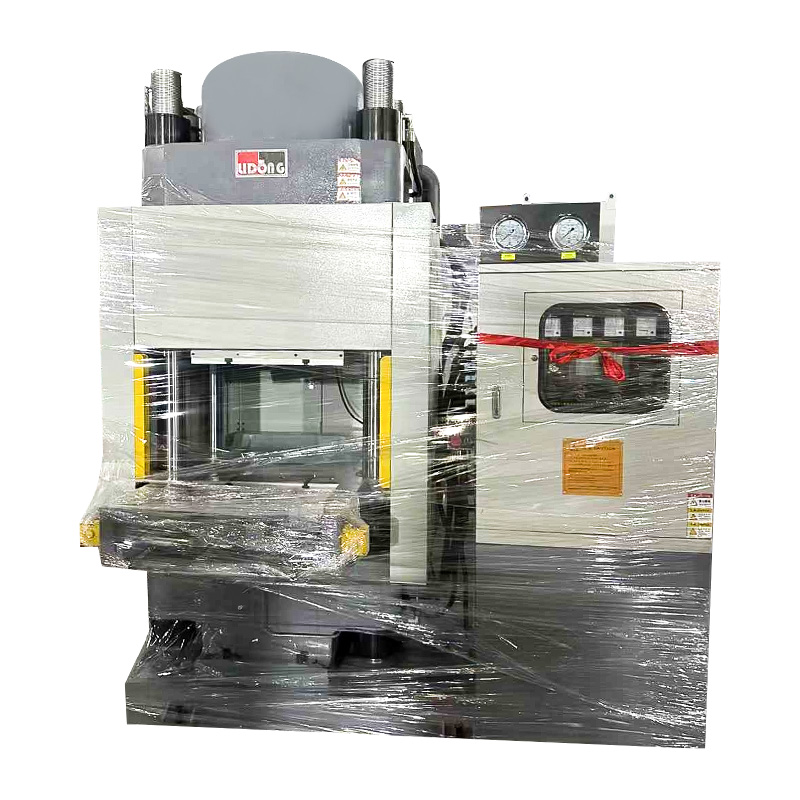
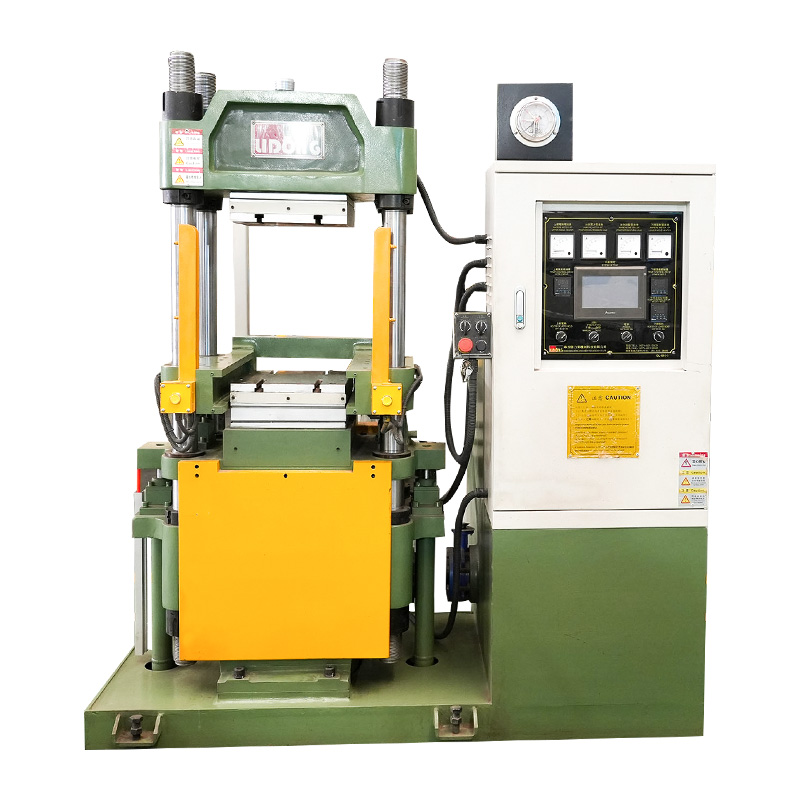
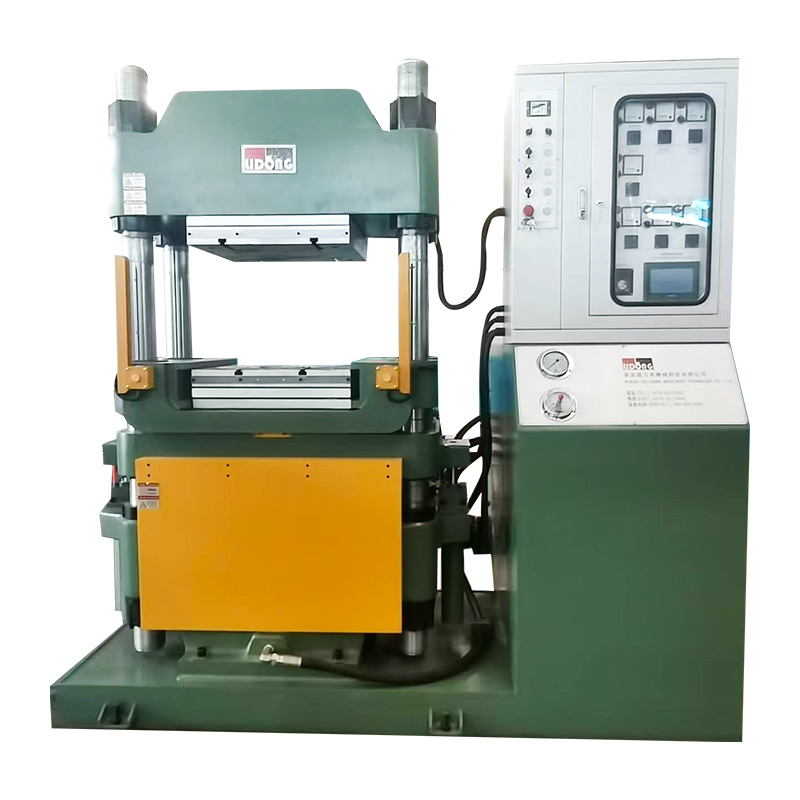
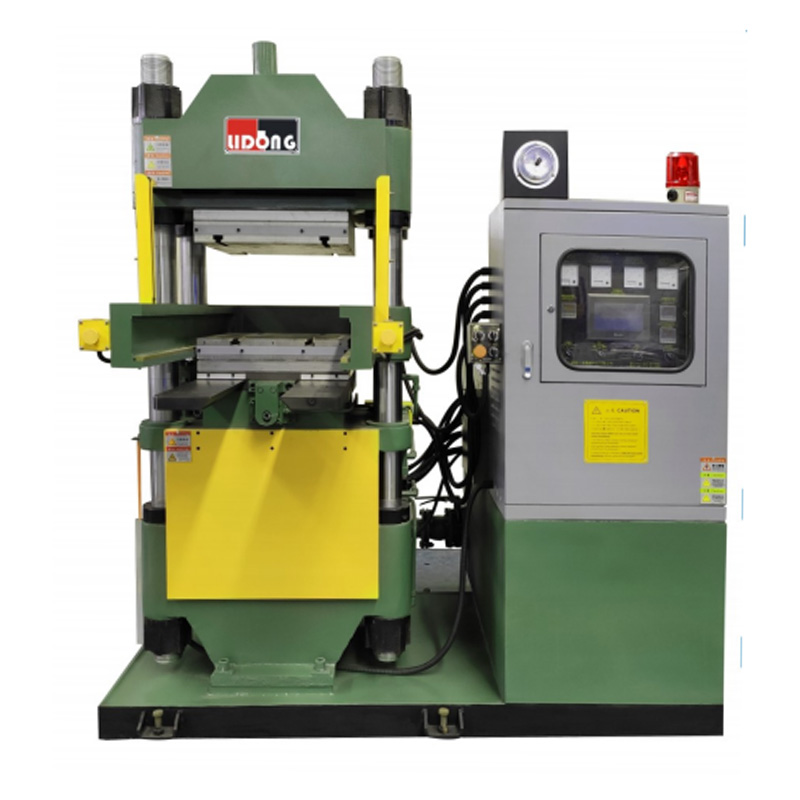
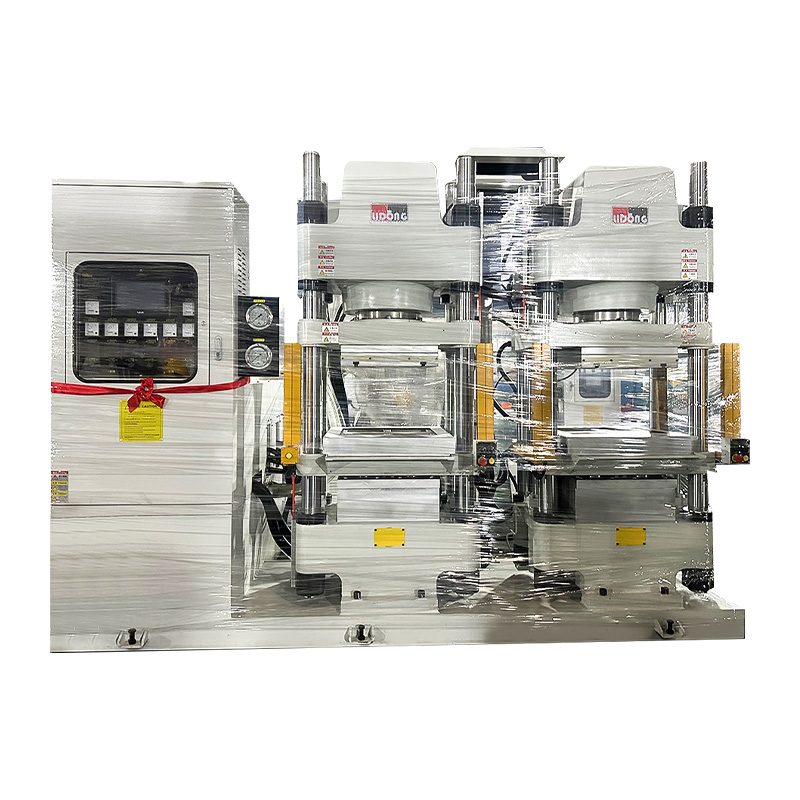
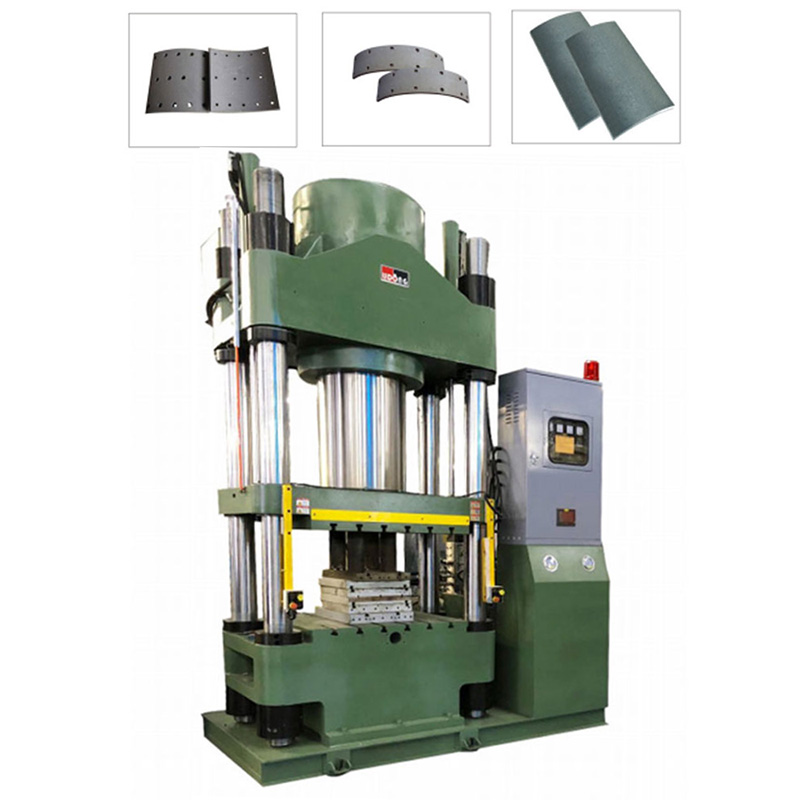
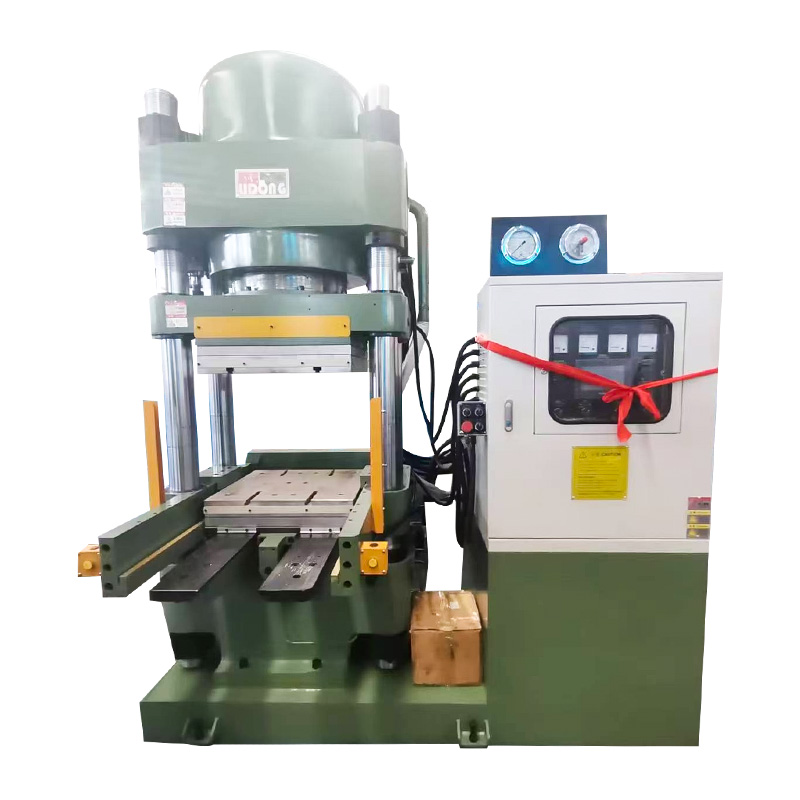
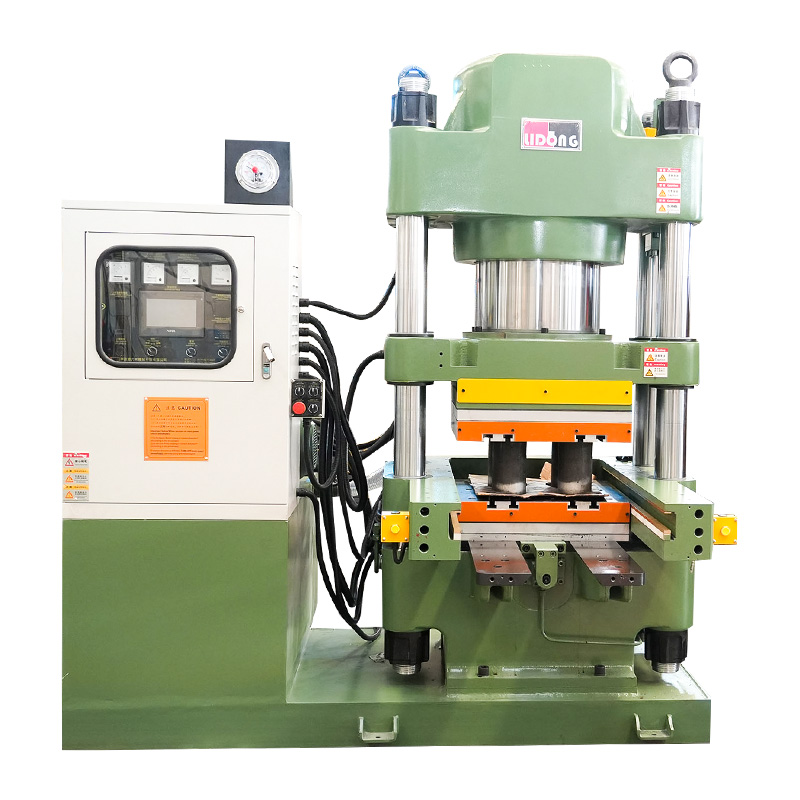
Technical Parameters
The table lists typical configurable values for high-tonnage brake pad presses. Final specifications depend on your products, molds and building conditions, and are confirmed in the technical agreement.
| Parameter | Typical Range | Relevance to High-Tonnage Use |
|---|---|---|
| Clamping force | About 500 - 3000 tons, larger on request | Set by total pressing area and pressure |
| Platen size | About 800 x 800 mm to 1800 x 1800 mm | Fits large molds and wide layouts |
| Frame type | Welded or forged frame, or column design | Stiffness and size limits |
| Cylinder arrangement | One large or several cylinders | Even load over the platen |
| Platen temperature | Up to about 200 degrees C | Resin cure, commonly around 150 to 180 degrees C |
| Temperature uniformity | About plus or minus 3 degrees C on large platens | Even cure over a big mass |
| Hydraulic power | Pumps and motors sized to the stroke and cycle | Closing speed and pressure build time |
| Opening stroke | Generous | Heavy molds and degassing |
| Mold handling | Rail cart or crane with rated lifting points | Safe handling of very heavy molds |
| Control | PLC with touchscreen, recipe lock and data storage | Records and repeatable cycles |
How to read the table: at high tonnage, the numbers that matter are frame stiffness, platen thickness and cylinder arrangement, because they decide whether pressure stays even across the mold. Hydraulic power matters for speed, since moving a heavy platen and building pressure takes time.
Please send your product areas, molding pressure, cavity number and mold dimensions, and we will calculate the required force and a suitable margin. We usually suggest a margin of about ten to twenty percent above the calculated force, so that the press is not working at its limit in every cycle.
Practical advice. Consider your growth. If you may add larger molds within a few years, tell us now. Adding force later is difficult and costly, while planning for it from the start is simple.
Special Focus: How Much Tonnage Do You Really Need?
The table gives illustrative examples of how pad type, area and pressure combine into required tonnage. Real values depend on your formulation and mold.
| Example Product | Pressing Area per Piece | Molding Pressure | Force per Piece | Example Mold Layout and Total |
|---|---|---|---|---|
| Passenger car pad | About 60 sq. cm | About 40 MPa | About 25 tons | 8 pieces, roughly 200 tons |
| Truck pad | About 150 sq. cm | About 40 MPa | About 60 tons | 4 pieces, roughly 250 tons |
| Coach pad | About 120 sq. cm | About 40 MPa | About 50 tons | 4 pieces, roughly 200 tons |
| Railway composite block | About 250 sq. cm | About 30 MPa | About 75 tons | 4 pieces, roughly 300 tons |
| Mining pad | About 600 sq. cm | About 40 MPa | About 250 tons | 2 pieces, roughly 500 tons |
| Sintered friction segment | About 40 sq. cm | About 400 MPa | About 160 tons | Single or few pieces; powder presses are covered separately |
Points that decide the right size:
- Use projected area. Count the area of all cavities that the force acts on, plus any area of runners or sealing surfaces that carry pressure.
- Use the right pressure. Take it from your formulation development, not from a general figure. Moving from 30 to 40 MPa raises the force by one third.
- Add margin. Ten to twenty percent keeps the press away from its limit and allows for process changes.
- Do not oversize. A press far larger than the need costs more to buy, heat and move, and it may control low pressures less accurately.
- Compare options. Two smaller presses can give redundancy and flexibility, while one large press can take bigger molds. Think about maintenance and downtime too.
Higher tonnage also means larger platens, heavier molds and a larger foundation, which should be planned together. Our mining truck brake pad press and railway brake block hot press pages describe two typical high-tonnage uses in more detail, and our multi-cavity brake pad mold press page explains how cavity number drives total force.
Honest advice. If your calculation lands between two standard sizes, tell us the real pressure range you use. A small change in pressure target often makes the smaller press enough.
Automation and Control System
Large presses carry large energy and large molds, so the control system should be careful with speed, pressure and safety.
- Recipe memory and lock: temperature, pressure steps, degassing count, opening distance, dwell, hold time and stroke limits are stored for each product and mold.
- Staged speed control: fast approach, slow closing near the mold faces and soft pressure build protect heavy molds and plates.
- Multi-step pressure control: initial compaction, degassing and final hold are set separately.
- Pressure build supervision: the control watches how quickly pressure builds and alarms if it is too slow, which can point to a leak or pump problem.
- Zoned temperature control: multiple sensors and outputs keep large platens even, with alarms for any zone that drifts.
- Alarm and event log with cycle data: pressure, stroke, temperature and time are recorded and can be exported if you permit it.
Handling and automation: heavy molds need rail carts, slide-out tables or a crane with proper lifting points and locks. Loading frames, weighing systems and automatic feeding can be added in stages, and the layout is prepared in advance.
Operator view. The touchscreen shows the active recipe, platen temperatures, pressure curve, stroke and cycle time remaining. Passwords protect settings. An English manual and training material are provided, and remote support is available when your technician sets up a new mold.
Warm-up routine. A large press holds a lot of heat and takes time to reach an even temperature. A scheduled warm-up at the start of each shift, with a soak time before the first cycle, gives more consistent first pads.
Structure and Materials
A high-tonnage press is a heavy structure. Its design focuses on stiffness, even load transfer and reliable hydraulics.
| Component | Design and Material | Purpose |
|---|---|---|
| Press frame | Very heavy welded or forged structure, stress relieved | Minimum deflection at rated tonnage |
| Platens | Extra-thick alloy steel, ground flat, zoned heating | Flat contact and even heat over a large area |
| Cylinders | Large bore, quality seals, position sensors | Uniform force and accurate stroke |
| Guide system | Large hardened guides, adjustable | Keeps heavy platens parallel |
| Heating and insulation | Zoned rods or oil channels, boards and shields | Even temperature, lower heat loss |
| Mold carrier | Rail cart or heavy slide-out table with locks | Safe handling of heavy molds |
| Hydraulic station | Large separate unit, filtered and cooled | Stable pressure and clean oil |
| Foundation interface | Base plates and anchor points | Stable support and alignment |
Frame stiffness and platen thickness: deflection grows quickly with span and load, so a high-tonnage frame must be much stiffer than a small one. We select frame and platen thickness from the tonnage and size, choose the cylinder layout to spread the load evenly and check flatness and parallelism under load at the factory.
Foundation and floor: a press of this size needs a properly designed foundation. We provide load, layout and anchor drawings in advance, and uneven floors or weak foundations can twist the frame over time.
Transport and assembly: large frames and platens are heavy and wide. We design them for shipping, with sections that can be moved and assembled on site, and we confirm shipping dimensions early.
Maintenance. Clean platens regularly with non-scratching tools, keep guides lubricated, check cylinder seals, and change hydraulic oil and filters according to the manual. Inspect mold carriers, locks and lifting points on a fixed schedule.
Before shipment, each press is run under load, and temperature uniformity, parallelism, pressure holding and safety functions are checked.
Safety and Energy Efficiency
Very high forces and heavy molds raise the stakes. Safety planning is part of the project from the first drawing.
- Emergency stops at the operator position, at the loading side and at the rear of the press
- Light curtain or guard doors connected to the PLC, so the press cannot move while anyone is in the working area
- Hydraulic overpressure protection with relief valves and pressure monitoring on each circuit
- Safe handling of stored energy with controlled pressure release before any maintenance
- Mold carrier stops and locks that hold heavy molds in position
- Insulated surfaces and warning labels on hot parts
Handling advice: never move heavy molds by hand. Use a rated crane or rail cart with proper lifting points, mark exclusion zones during mold changes and follow a written lifting plan. Wear heat-resistant gloves and sleeves, and keep walkways clear. Heating the resin releases vapors, and friction mix is dusty, so provide local exhaust above the press, dust collection at feeding and grinding areas and suitable respiratory protection according to local rules. Lock out and release pressure before any maintenance on hydraulic parts.
Energy efficiency: a large press stores a lot of heat and uses large motors. Good insulation, zoned PID control and a warm-up routine reduce heat loss, and a servo or variable-speed hydraulic system uses power mainly while the press moves. Because pressure holding takes little power in a good system, the long dwell stage does not cost much energy. A stand-by temperature function saves energy during mold changes, and low scrap saves raw material and the energy already spent on it.
Tell us your working hours and local power price, and we will compare options in the quotation.
Training and records. Keep a log of safety checks, lifting inspections and oil changes. A monthly test of the emergency stops, light curtain and over-temperature cut-offs keeps the press dependable.







