 English
 عربى
عربى
 中文繁体
中文繁体

Content
- 1 The Short Answer: What to Look for in a Liquid Silicone Injection Machine in 2026
- 2 What Is a Liquid Silicone Injection Machine and Why It's Not the Same as a Standard Injection Molder
- 3 The Five Core Specifications That Define Every LSR Machine Purchase
- 4 Machine Types: Hydraulic vs. Electric vs. Servo-Hydraulic
- 5 LSR Dosing Systems: The Component Most Buyers Underestimate
- 6 Industry Applications: Where LSR Injection Machines Are Used
- 7 Top LSR Injection Machine Brands in 2026: A Realistic Comparison
- 8 Total Cost of Ownership: Beyond the Machine Price Tag
- 9 Automation Integration: What LSR Machine Buyers Are Asking for in 2026
- 10 Common Mistakes Buyers Make When Purchasing LSR Injection Machines
- 11 Final Buyer's Checklist: Before You Sign the Purchase Order
The Short Answer: What to Look for in a Liquid Silicone Injection Machine in 2026
If you need a fast answer: the right liquid silicone injection machine for most manufacturers in 2026 is a fully electric or servo-hydraulic closed-loop system with a dedicated LSR dosing unit, cold runner mold compatibility, and a clamping force matched to your part size. Brands like ENGEL, Arburg, and Sodick lead the market for precision applications, while Chinese manufacturers such as Haijiang and LS Mtron offer competitive pricing for mid-volume production. The sections below explain every factor — from clamping force and shot volume to automation integration and total cost of ownership — so you can make a fully informed purchasing decision.
What Is a Liquid Silicone Injection Machine and Why It's Not the Same as a Standard Injection Molder
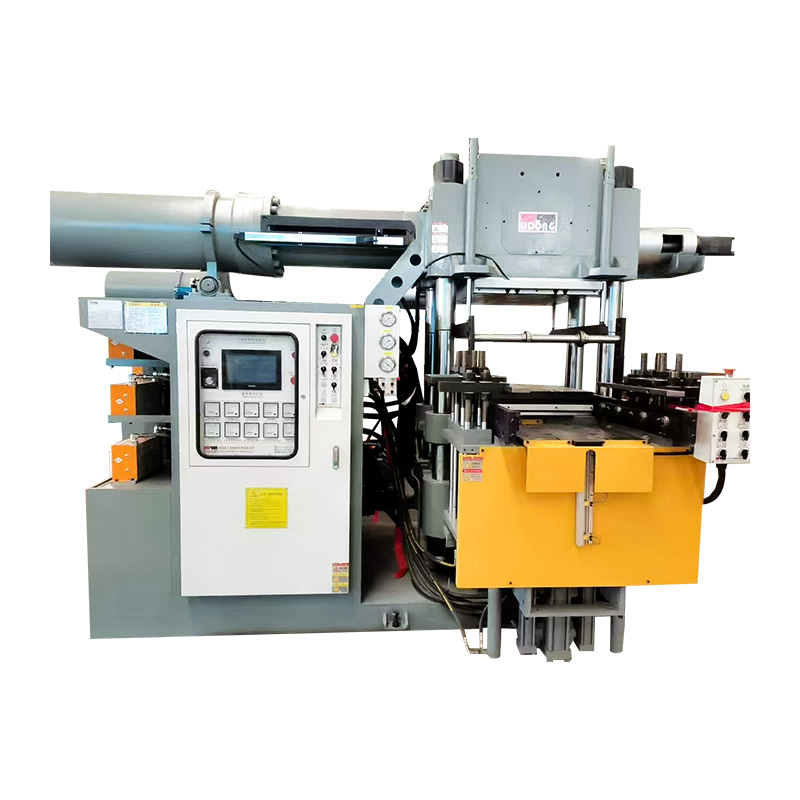
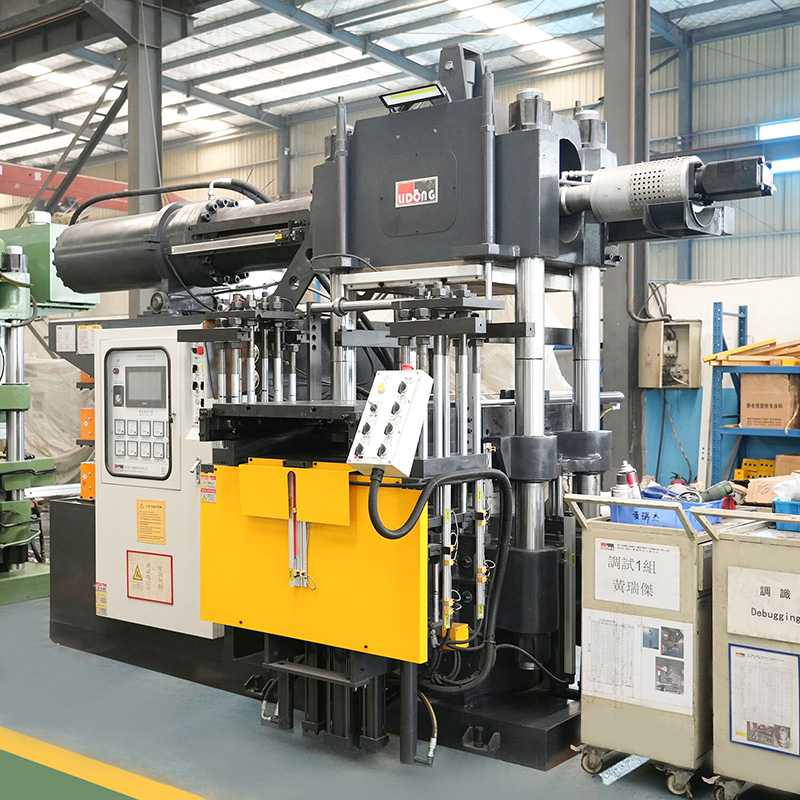
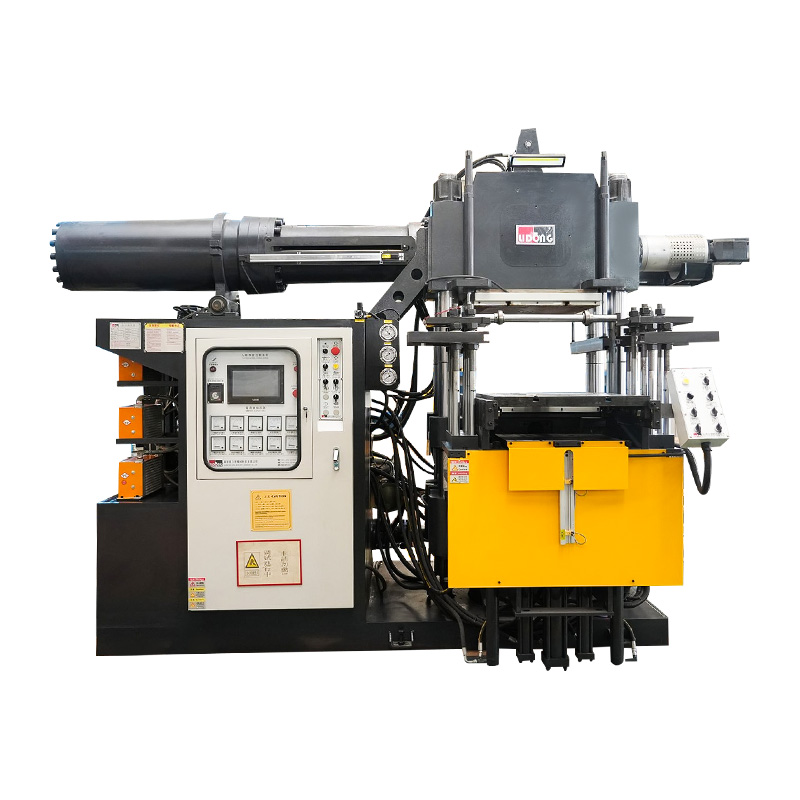
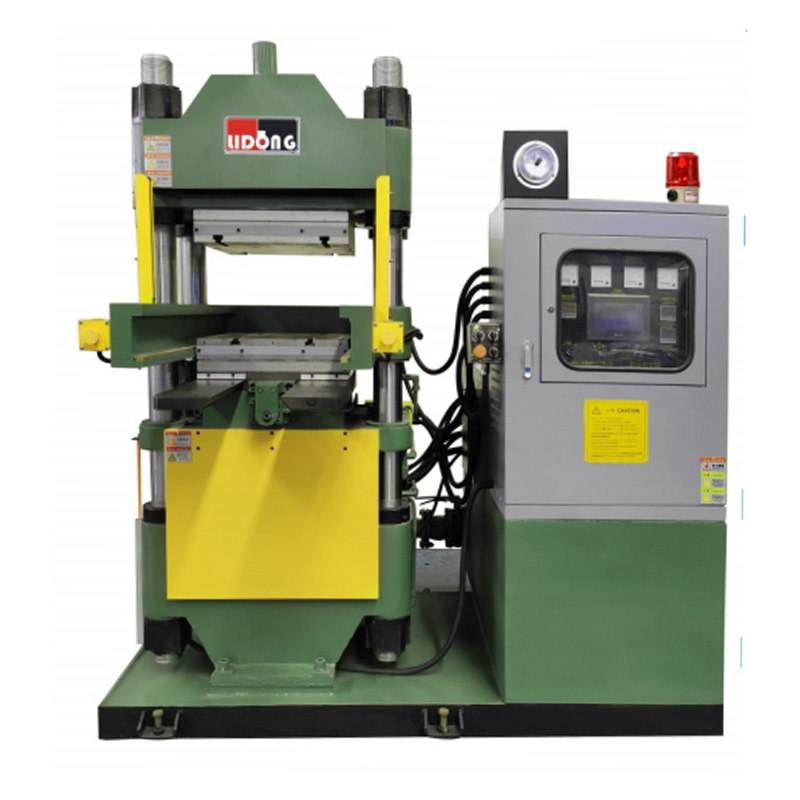
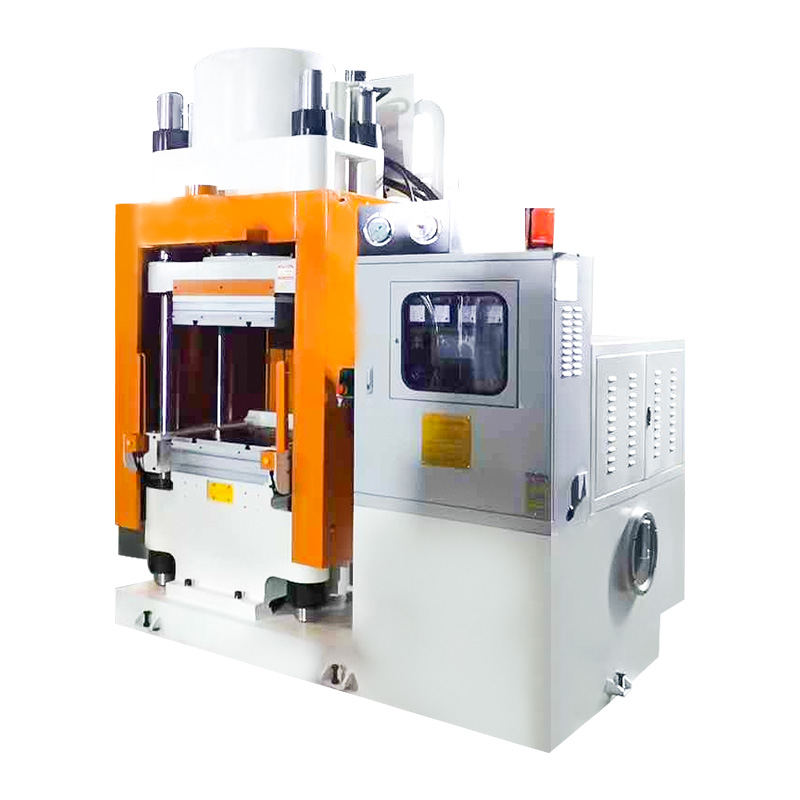
A liquid silicone injection machine — also called an LSR injection molding machine — is purpose-built to process liquid silicone rubber (LSR), a two-component platinum-cured elastomer. Unlike thermoplastic injection molding, LSR processing is a thermoset process: the material starts liquid and cures under heat, which reverses the conventional logic of the injection barrel and mold.
Key differences from standard injection molding machines:
- The barrel is cooled (not heated) to prevent premature curing during injection
- The mold is heated to 150–220°C to trigger vulcanization
- LSR machines require a dedicated 2-component dosing and mixing unit (pumping components A and B in a 1:1 ratio)
- Extremely low viscosity material (3,000–300,000 mPas) demands ultra-tight mold tolerances to prevent flash
- Cold runner systems are preferred to eliminate waste and reduce cycle contamination
Attempting to run LSR on a standard thermoplastic machine — even with modifications — typically results in poor part quality, excessive flash, and contamination. A dedicated LSR injection machine is not optional for production-grade work.
The Five Core Specifications That Define Every LSR Machine Purchase
Before comparing brands or requesting quotes, you need to define your requirements across five critical dimensions. Getting these wrong upfront leads to costly retrofits or machine replacement within 2–3 years.
1. Clamping Force
Clamping force (measured in tons or kN) must exceed the injection pressure spread across the projected part area. A common rule of thumb is 2–4 tons per square inch of projected part area. For example, a part with a 10 in² projected area typically requires 20–40 tons of clamping force. LSR machines range from 5 tons (micro-molding) to 500+ tons (large automotive or industrial parts).
2. Shot Volume and Dosing Precision
LSR dosing systems must deliver shot-to-shot repeatability within ±0.5% or better for medical and food-contact applications. Look for machines with servo-driven dosing pumps and real-time feedback on component ratio. Under-dosing by even 2% can cause incomplete curing and part rejection.
3. Injection Speed and Pressure Control
LSR's low viscosity means it fills molds quickly — but too fast causes air entrapment and burning. Programmable multi-stage injection speed profiles (typically 5–10 stages) are essential for complex geometries. Injection pressures for LSR typically range from 500 to 2,500 bar, significantly lower than most thermoplastics.
4. Mold Temperature Control
Cure time — and therefore cycle time — is directly governed by mold temperature. Most LSR formulations cure in 10–60 seconds at 180–200°C. A machine with precise, zone-controlled mold heating (±1°C uniformity across the mold surface) can shave 15–25% off cycle times compared to unregulated systems.
5. Vacuum System
For medical, optical, or micro-parts, mold cavity evacuation (vacuum assistance) is non-negotiable. A vacuum system removes air from the cavity before injection, eliminating voids and surface defects. Not all entry-level LSR machines include this as standard — confirm before purchasing.
Machine Types: Hydraulic vs. Electric vs. Servo-Hydraulic
The drive system of an LSR injection machine significantly affects precision, energy consumption, and long-term operating costs. Here's how the three main types compare:
| Drive Type | Precision | Energy Use | Maintenance | Best For | Typical Price Premium |
|---|---|---|---|---|---|
| Hydraulic | Moderate | High | Oil changes, seals | High-tonnage, budget entry | Baseline |
| Fully Electric | Highest | 50–70% less than hydraulic | Minimal, no hydraulic fluid | Medical, micro-parts, cleanroom | +20–40% |
| Servo-Hydraulic | High | 30–50% less than hydraulic | Low-medium | General industrial, mid-volume | +10–20% |
For medical device manufacturing or cleanroom environments, fully electric machines are the standard — they produce no hydraulic fluid contamination risk and deliver the highest shot-to-shot repeatability. For general industrial production, servo-hydraulic machines offer the best balance of cost and performance.
LSR Dosing Systems: The Component Most Buyers Underestimate
The dosing and mixing unit is arguably the most critical subsystem in any liquid silicone injection machine — and the one most often overlooked during purchasing. A poor dosing system undermines even the most precise injection unit.
How LSR Dosing Works
LSR consists of two components — Part A (base polymer) and Part B (crosslinker/catalyst) — stored in separate drums or cartridges. The dosing unit pumps both components in a precise 1:1 ratio by volume, passes them through a static mixer, and delivers the blended material into the cooled injection barrel. Colorants or additives can be metered in as a third stream.
What to Look for in a Dosing System
- Ratio monitoring — Real-time feedback confirming A:B ratio within tolerance on every shot
- Drum changeover without purge — Systems that allow drum replacement without introducing air or stopping production save significant downtime
- Compatibility with your LSR supplier's packaging — 20L pails, 200L drums, and 1,000L totes require different pump configurations
- Integrated colorant metering — If you run multi-color parts, a built-in pigment dosing port eliminates a separate mixing step
- Temperature-controlled feed lines — Critical in environments above 25°C where premature curing in the feed lines becomes a risk
Leading standalone dosing system suppliers include Elmet, 2KM, and Fluid Automation Systems (FAS). Many machine OEMs — including ENGEL and Arburg — offer integrated dosing systems validated for their machines, which simplifies commissioning but adds to upfront cost.
Industry Applications: Where LSR Injection Machines Are Used
Liquid silicone rubber's combination of biocompatibility, thermal stability (−60°C to +250°C), chemical resistance, and optical clarity makes it the material of choice across a wide range of demanding industries.
| Industry | Typical Parts | Key Requirements | Typical Clamping Force |
|---|---|---|---|
| Medical Devices | Seals, valves, catheter tips, implants | ISO 13485, cleanroom, biocompatibility | 5–100 tons |
| Automotive | Spark plug boots, gaskets, sensor seals | High temp resistance, IATF 16949 | 50–300 tons |
| Consumer Electronics | Earbuds, wearable seals, keypads | Cosmetic surface quality, tight tolerances | 20–150 tons |
| Food & Beverage | Bakeware, bottle nipples, sealing rings | FDA compliance, odor/taste neutrality | 30–200 tons |
| Optics & LED | Lenses, light guides, encapsulants | Optical clarity, no voids, vacuum molding | 10–80 tons |
Top LSR Injection Machine Brands in 2026: A Realistic Comparison
The global LSR machine market is led by European and Japanese manufacturers for high-precision applications, with Chinese manufacturers gaining significant ground in the mid-range segment. Here's an honest breakdown:
Premium Tier (Europe / Japan)
- ENGEL (Austria) — Industry benchmark for medical LSR; e-mac and e-victory series fully electric machines with integrated Elmet dosing. Expect to pay $150,000–$600,000+ depending on tonnage.
- Arburg (Germany) — Allrounder series with LSR packages; excellent process documentation for regulated industries. Strong global service network.
- Sodick (Japan) — Nano-precision electric machines for micro-LSR parts; used heavily in electronics and optics. Ultra-low flash performance.
- Sumitomo Demag (Japan/Germany) — IntElect series; strong in energy efficiency and repeatability for automotive LSR.
Mid-Range Tier (Asia)
- Haitian International (China) — Jupiter and Mars series with LSR configurations; 30–50% lower cost than European equivalents at comparable tonnages. Limited validation documentation for medical use.
- LS Mtron (South Korea) — Strong servo-hydraulic machines; good regional support across Southeast Asia.
- Haijiang Machinery (China) — Popular for consumer goods and general industrial LSR; increasingly competitive on dosing system integration.
The key differentiator is not machine performance alone — it's after-sales support and validation documentation. For FDA-regulated or CE-marked products, European machines with full IQ/OQ/PQ documentation packages justify their premium. For general industrial or consumer applications, Asian manufacturers deliver strong ROI.
Total Cost of Ownership: Beyond the Machine Price Tag
The purchase price of an LSR injection machine is typically only 40–60% of the 10-year total cost of ownership (TCO). Before committing to a machine, model the full cost picture:
- Energy consumption — A fully electric 100-ton machine consumes approximately 8–12 kWh per hour vs. 18–25 kWh for an equivalent hydraulic unit. At $0.12/kWh running 2 shifts, this saves $10,000–$20,000 annually.
- Mold costs — LSR molds require tighter tolerances (±0.005 mm flash gap) and typically cost 2–3× more than equivalent thermoplastic molds, ranging from $20,000 to $150,000+
- Maintenance and consumables — Static mixers must be replaced regularly (cost: $5–$50 each depending on size and material); hydraulic machines require oil changes every 2,000–4,000 operating hours
- Scrap rate impact — A 1% improvement in scrap rate on a 10-million-part/year production line at $0.50/part saves $50,000 annually — more than enough to justify a higher-precision machine
- Service contract and spare parts availability — Machines from manufacturers with regional service centers reduce average downtime from 48+ hours to under 8 hours per incident
Automation Integration: What LSR Machine Buyers Are Asking for in 2026
Labor costs and quality consistency demands are pushing LSR molders toward full automation. More than 60% of new LSR machine installations in Europe and North America in 2025 included integrated automation, according to industry reports from the plastics processing sector.
Common Automation Add-Ons for LSR Lines
- Sprue picker / part removal robots — 6-axis robots or Cartesian systems for deflashing and part extraction; essential for cold runner systems producing flashless parts
- Vision inspection systems — Inline cameras checking part geometry, surface defects, and dimensional compliance at 100% inspection rates
- Insert placement automation — For 2-shot or insert-molded LSR parts (e.g., over-molded medical connectors), robotic insert placement eliminates manual loading errors
- MES / Industry 4.0 connectivity — OPC-UA protocol integration allows real-time process data collection, SPC monitoring, and traceability — required for ISO 13485 and IATF 16949 compliance
When specifying your machine, confirm that the control system supports OPC-UA or at minimum Euromap 77 data interface standards — these ensure compatibility with third-party automation and MES systems without costly custom integration work.
Common Mistakes Buyers Make When Purchasing LSR Injection Machines
After reviewing hundreds of machine procurement decisions, these are the most frequent — and costly — errors:
- Undersizing clamping force — Buyers size to current parts without accounting for future mold cavitation. A mold upgrade from 4 to 8 cavities can double required clamping force.
- Ignoring the dosing system — Purchasing a premium machine body with a budget third-party dosing unit creates a precision mismatch that wastes the machine's capability.
- Not specifying vacuum assistance upfront — Retrofitting a vacuum system post-purchase typically costs $15,000–$40,000 and requires mold modifications.
- Assuming any LSR will run the same — Different LSR formulations (e.g., Dow Silastic vs. Wacker Elastosil) have different viscosities and cure profiles requiring machine parameter adjustments and sometimes mechanical changes.
- Skipping factory acceptance testing (FAT) — Always run production parts at the machine builder's facility before shipment. Discovering a mold or process issue after installation multiplies resolution costs by 5–10×.
Final Buyer's Checklist: Before You Sign the Purchase Order
Use this checklist to validate your LSR injection machine specification before committing to a purchase:
- Clamping force — Calculated based on part projected area × 2–4 tons/in², with headroom for future cavitation
- Drive system — Electric for medical/cleanroom; servo-hydraulic for general industrial; hydraulic only for very large tonnage or tight budgets
- Dosing system — Validated ratio accuracy ±0.5%; compatible with your LSR supplier's drum/pail packaging
- Mold temperature control — Zone-controlled to ±1°C; confirm compatibility with your mold's heating circuit layout
- Vacuum assistance — Specified and included if producing optical, medical, or micro-parts
- Control system data interface — OPC-UA or Euromap 77 confirmed for MES/automation compatibility
- After-sales support — Regional service center location and average response time confirmed in writing
- Validation documentation — IQ/OQ/PQ package availability confirmed if required for regulated applications
- Factory Acceptance Test (FAT) — Scheduled with production LSR material and your mold before shipment
- Total cost of ownership modeled — 10-year TCO calculated including energy, maintenance, molds, and scrap rates
A liquid silicone injection machine is a long-term capital investment — most machines operate for 15–20 years with proper maintenance. Taking the time to specify correctly upfront, validate thoroughly before acceptance, and model total operating costs will deliver measurably better production economics and part quality throughout the machine's entire service life.