English
 عربى
 中文繁体
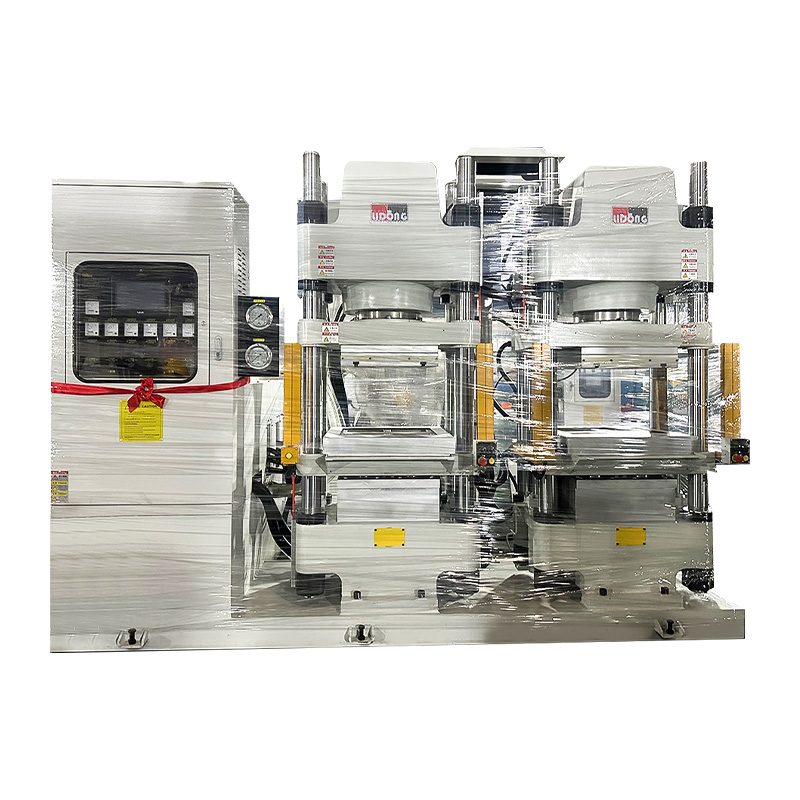
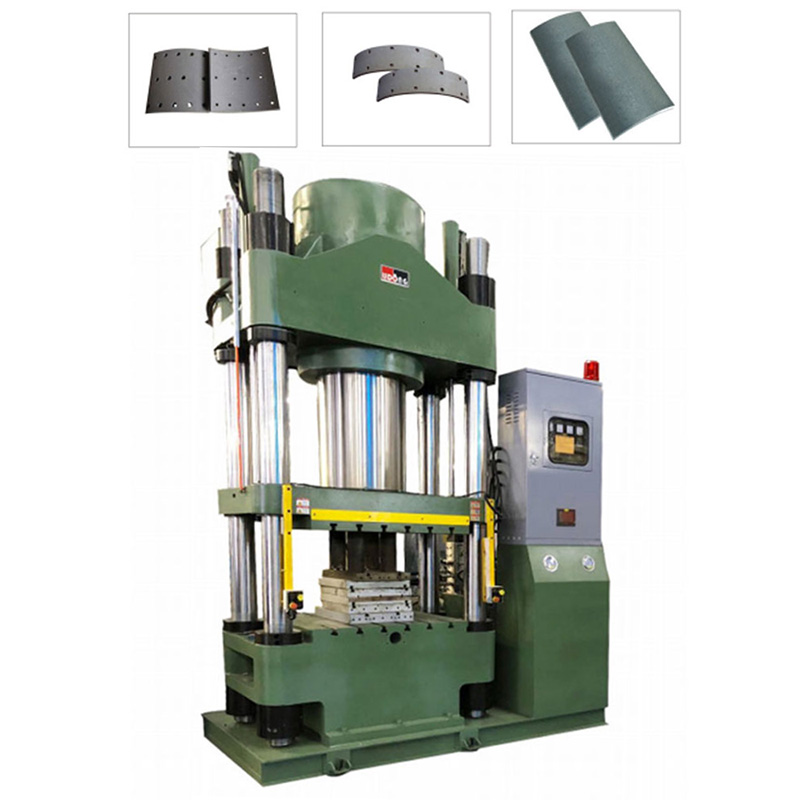
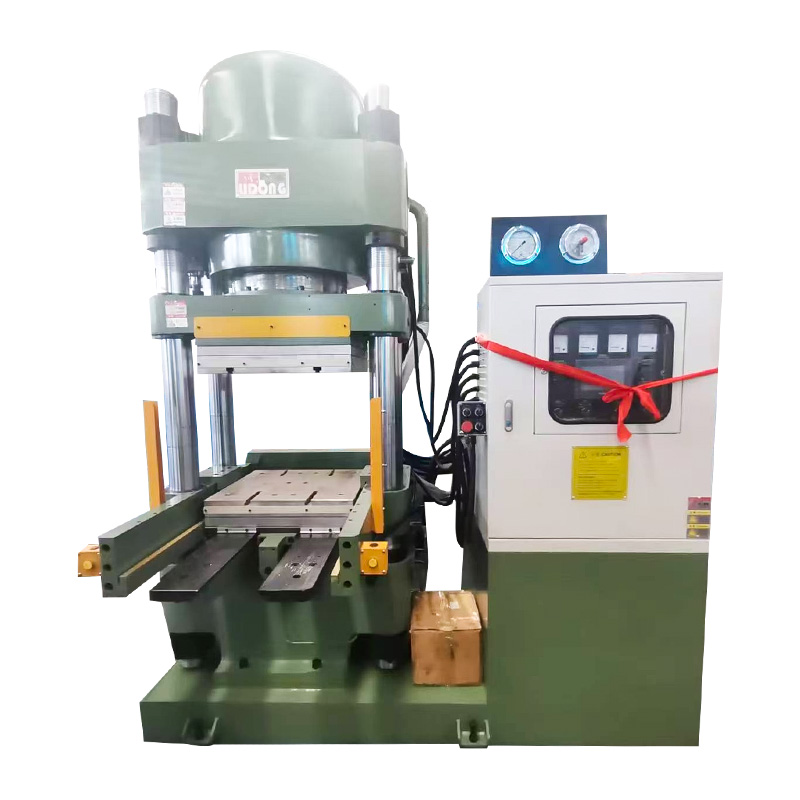
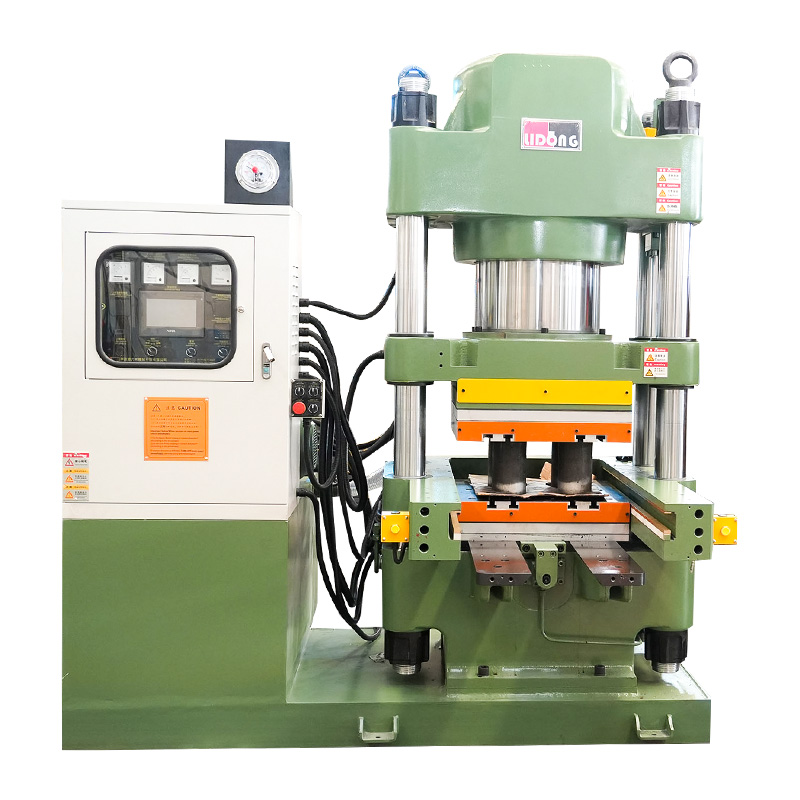
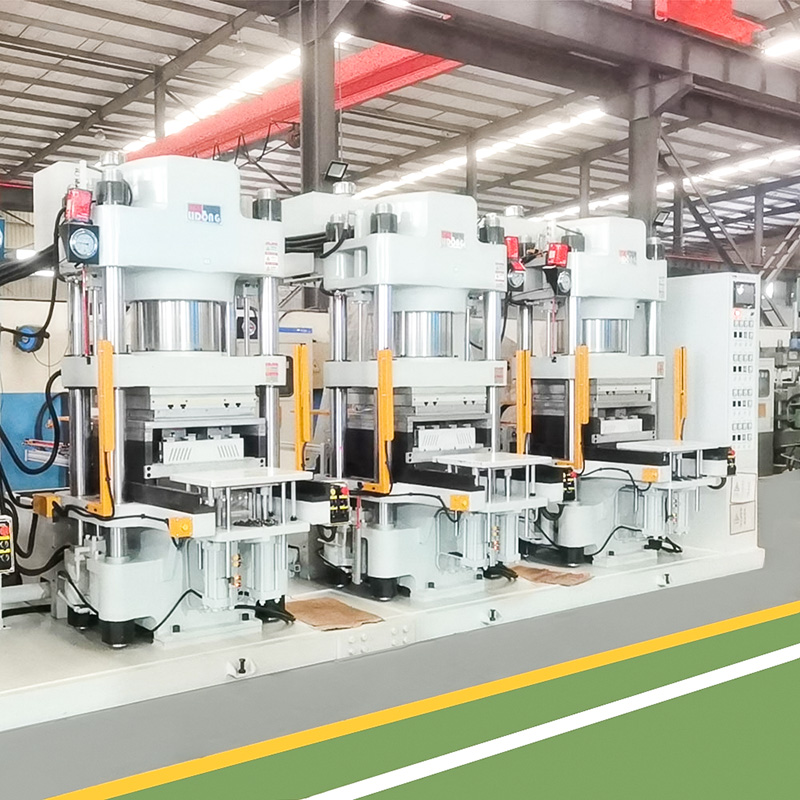
Technical Parameters
The table lists typical configurable features and values that influence delamination risk on a brake pad press. Final specifications depend on your pad design, mold layout and formulation, and are confirmed in the technical agreement.
| Parameter | Typical Range | Relevance to Delamination |
|---|---|---|
| Clamping force | About 100 - 1000 tons | Enough force to keep the mold closed and consolidate the pad |
| Pressure rise control | Adjustable ramp and staged compaction | Lets air escape, avoids sealing gas in |
| Degassing steps | Programmable number, opening distance and dwell | Releases gas before the surface seals |
| Pressure release control | Staged or slow release, adjustable speed | Prevents uneven spring-back and layer splitting |
| Pressure holding | Programmable with automatic make-up | Keeps layers in contact during cure |
| Temperature uniformity | About plus or minus 2 degrees C | Even cure, no under-cured zones |
| Platen flatness and parallelism | Ground flat, checked under load | Even pressure, smaller density gradient |
| Demold control | Controlled opening speed, optional ejection aids | Avoids tearing at demold |
| Stroke monitoring | Position sensing | Flags fill or consolidation changes |
| Control | PLC with touchscreen, recipe lock and data storage | Repeatable cycles and records for diagnosis |
How to read the table: the features that matter most for delamination are pressure rise, degassing and pressure release, because they control how gas leaves and how stress is relieved. Tonnage alone does not prevent delamination. A very strong press with a harsh pressure profile can create more delamination than a smaller press with a good profile.
A short example: if a pad delaminates at the demold stage but looks fine while hot, the pressure release is often too fast. If it shows blisters or internal cracks near the surface, gas release is often the cause. Please send your pad drawings, layer structure, formulation, and photos of the defect, and we will discuss the likely causes and options with you.
Practical advice. Record when and where the defect appears, such as right after pressing, after post-cure or after machining. The timing is one of the best clues to the cause.
Special Focus: Finding the Cause of Delamination
The table links typical delamination patterns to likely causes and to what helps.
| Pattern | Likely Cause | What Helps |
|---|---|---|
| Blisters and layered cracks near the surface | Trapped gas or moisture | Dry mix, staged degassing, slower first compaction |
| Splits right at demold | Pressure released too fast, uneven spring-back | Staged or slow pressure release, controlled opening |
| Separation between friction layer and underlayer | Weak interface, contamination, wrong fill sequence, differences in cure | Layer fill procedure, interface time, compatible resins, even cure |
| Separation from the steel plate | Plate contamination, aged adhesive, low cure | Plate preparation, fresh adhesive, full temperature and dwell |
| Cracks parallel to the surface after post-cure | Residual stress and gas during oven heating | Gentler post-cure ramp, full cure in the press, dry storage |
| Delamination only in some cavities | Local temperature or pressure difference, fill variation | Temperature map, stiff frame, weighing, mold check |
Steps to diagnose:
- Look at the timing. Before demold, at demold, after cooling, after post-cure, after machining or in testing. Each points to different causes.
- Cut and inspect. A section through the pad shows where the layers separate and whether voids are present.
- Check the material. Moisture, resin age and mix variation are common causes. Dry and test a sample if needed.
- Compare cycle records. Compare pressure, temperature and stroke curves of good and bad batches. Differences often show the cause.
- Change one thing at a time. Adjust one parameter, such as the number of degassing steps or the release speed, and test a small batch.
Plate preparation, adhesive, formulation and post-cure belong to your technical team. The press provides controlled pressure, heat and release, and records that help you find the cause. Our uniform density brake pad press page and steel back plate bonding press page describe related topics.
Honest advice. Some delamination has nothing to do with the press, for example a contaminated plate or wet mix. We recommend a short audit of materials and handling in parallel with any equipment change.
Automation and Control System
Preventing delamination means shaping pressure and release carefully and repeating them exactly. The control system should offer enough adjustment and the records to prove what happened.
- Recipe memory and lock: temperature, pressure ramp, degassing count, opening distance, dwell, hold time, release steps and stroke limits are stored for each pad and mold, and changes need the right password level.
- Soft pressure ramp: proportional or servo valves give a smooth rise, which lets air escape.
- Programmable degassing: number of steps, opening distance and dwell are adjustable, with a safe maximum to protect the mold.
- Staged pressure release: pressure is lowered in steps or at a set speed before the mold opens, which relieves stress gradually.
- Zoned temperature control: separate sensors and outputs keep platens even and limit overshoot, with alarms if a zone drifts.
- Alarm and event log with cycle data: pressure, stroke, temperature and time are recorded and can be exported if you permit it.
Using the data: overlay the pressure and stroke curves of good and delaminated batches. A difference in the degassing stroke, in the final stroke or in the release curve often points directly to the cause.
Handling and automation: weighing stations, preforms, plate loading aids and a controlled layer-filling procedure reduce fill variation and interface problems. Automatic feeding can be added in stages.
Operator view. The touchscreen shows the active recipe, platen temperatures, pressure curve and cycle time remaining. An English manual and training material are provided, and remote support is available when your technician sets up a new mold.
Operator note. Show the pressing stage, the live pressure value and the cure time remaining on the screen, so the operator can see where the cycle stands. A short on-screen checklist at the start of each batch, covering recipe, mold number and material batch, makes records much more complete.
Structure and Materials
A press that helps prevent delamination must apply pressure evenly and release it smoothly, which depends on both mechanics and hydraulics.
| Component | Design and Material | Purpose |
|---|---|---|
| Press frame | Heavy welded steel structure, stress relieved | Low deflection, even pressure |
| Platens | Thick alloy steel, ground flat, zoned heating | Flat contact and even heat |
| Main cylinder | Quality seals, position sensor | Smooth force and accurate stroke |
| Hydraulic valves | Servo or proportional, filtered oil | Smooth ramps and controlled release |
| Guide system | Hardened, wear-resistant, adjustable | Keeps platens parallel |
| Heating and insulation | Zoned rods or oil channels, boards and shields | Even temperature, low heat loss |
| Mold carrier | Slide-out table or cart | Quick and safe mold changes |
| Hydraulic station | Separate unit, filtered and cooled | Stable pressure and clean oil |
Why release control needs good hydraulics: a smooth pressure release is as much a hydraulic task as a software one. Quality valves, clean oil and well-sized lines let the press lower pressure gradually. A harsh valve causes a pressure drop and shock, which can split a pad.
Why stiffness matters: a flexible frame and thin platens leave density gradients, and density gradients create internal stress that makes delamination more likely. We use heavy frames and thick platens, and we check flatness and parallelism under load at the factory.
Maintenance. Clean platens regularly with non-scratching tools, since residue slows heat transfer and creates cold spots. Keep guides lubricated, check cylinder seals, valves and sensors, and change hydraulic oil and filters according to the manual. Recheck parallelism and temperature uniformity after months of service.
Before shipment, each press is run under load, and temperature uniformity, parallelism, pressure and release curves and safety functions are checked.
Safety and Energy Efficiency
Investigating and adjusting delamination often means cutting pads and trying new settings, so safety applies to the press and to the laboratory work.
- Emergency stop at the operator position and at the loading side
- Light curtain or guard doors connected to the PLC
- Hydraulic overpressure protection with a relief valve and pressure monitoring
- Independent over-temperature protection on each heating zone
- Mold carrier stops and locks that hold molds in position during loading
- Insulated surfaces and warning labels on hot parts
Handling advice: use carts, rails or a crane for molds, wear heat-resistant gloves and sleeves, and keep walkways clear. Heating the resin releases vapors, and friction mix and cutting dust are harmful to breathe, so provide local exhaust above the press, dust extraction at feeding, cutting and grinding areas and suitable respiratory protection according to local rules. Follow the safety data sheets of your materials. Defective pads that delaminate under test can release fragments, so use guards and eye protection on test equipment.
Energy efficiency: good insulation and PID control keep heating costs low. A variable-speed hydraulic system uses power mainly while the press moves, which matters because holds are long. A stand-by temperature function saves energy during mold changes. The largest saving from solving delamination is usually in scrap and rework, which saves raw material and the energy already spent on it.
Tell us your working hours and local power price, and we will compare options in the quotation.
Training and records. Keep a log of safety checks, test results and oil changes. A monthly test of the emergency stop, light curtain and over-temperature cut-off keeps the press dependable.