
 English
 عربى
 中文繁体

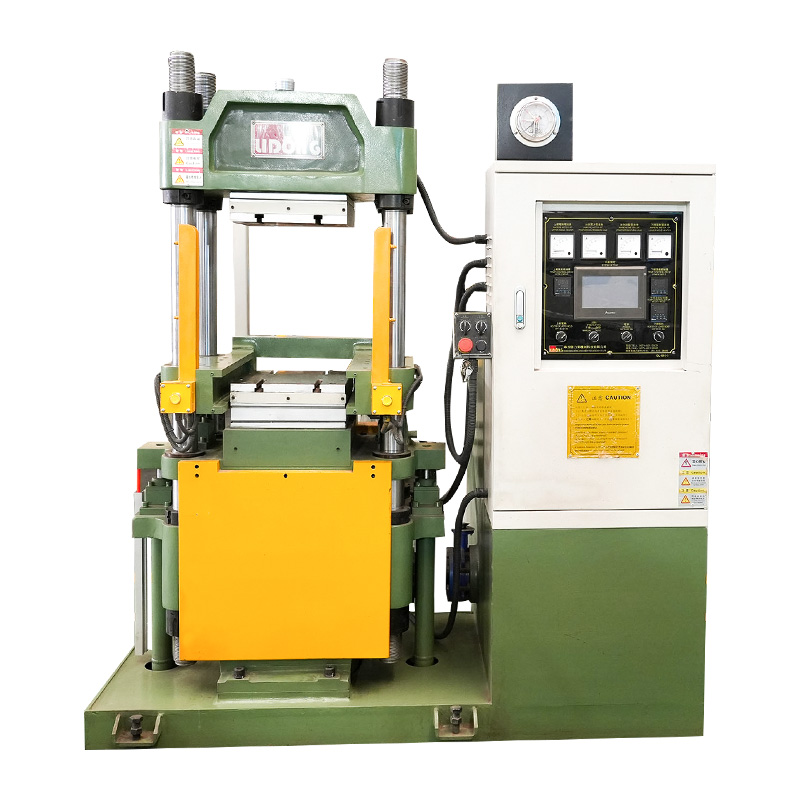
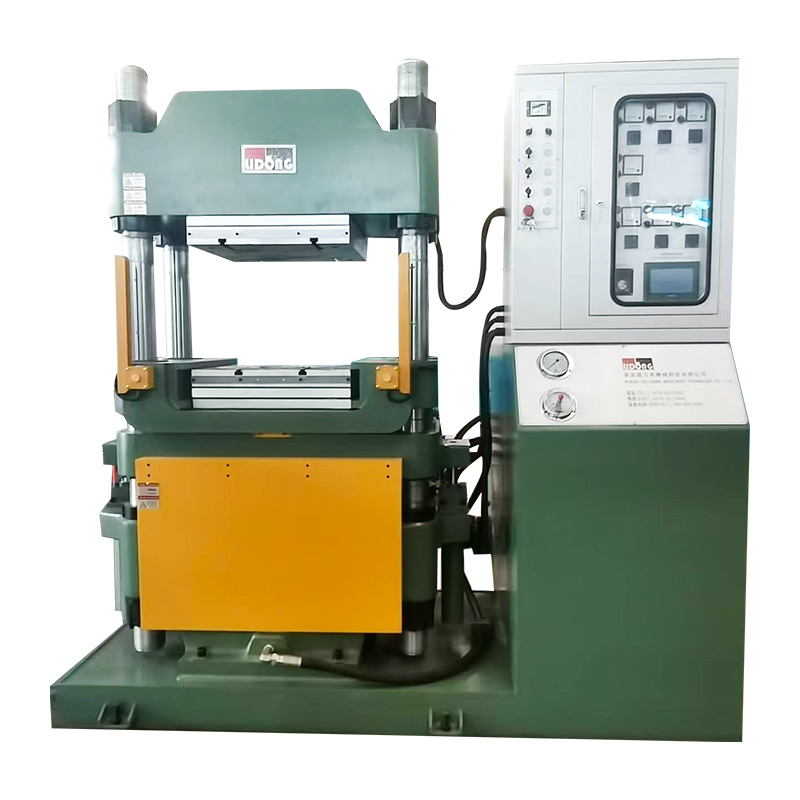
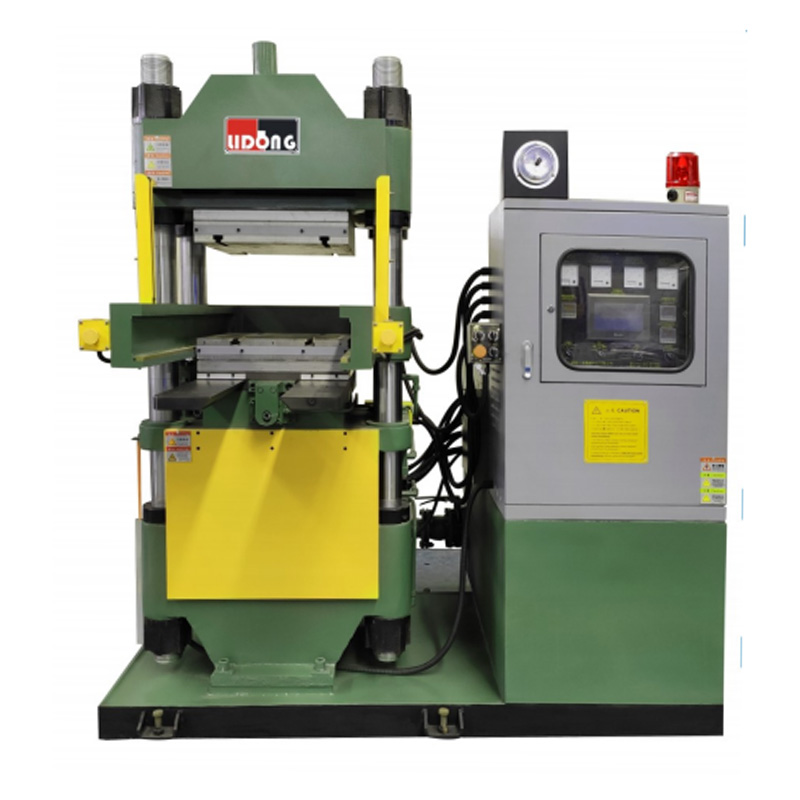
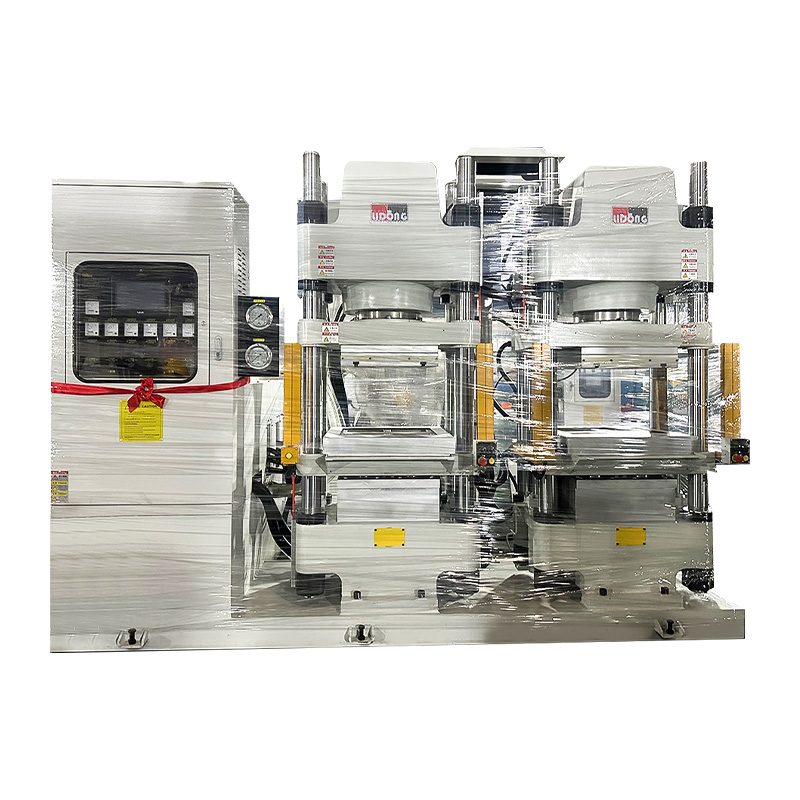
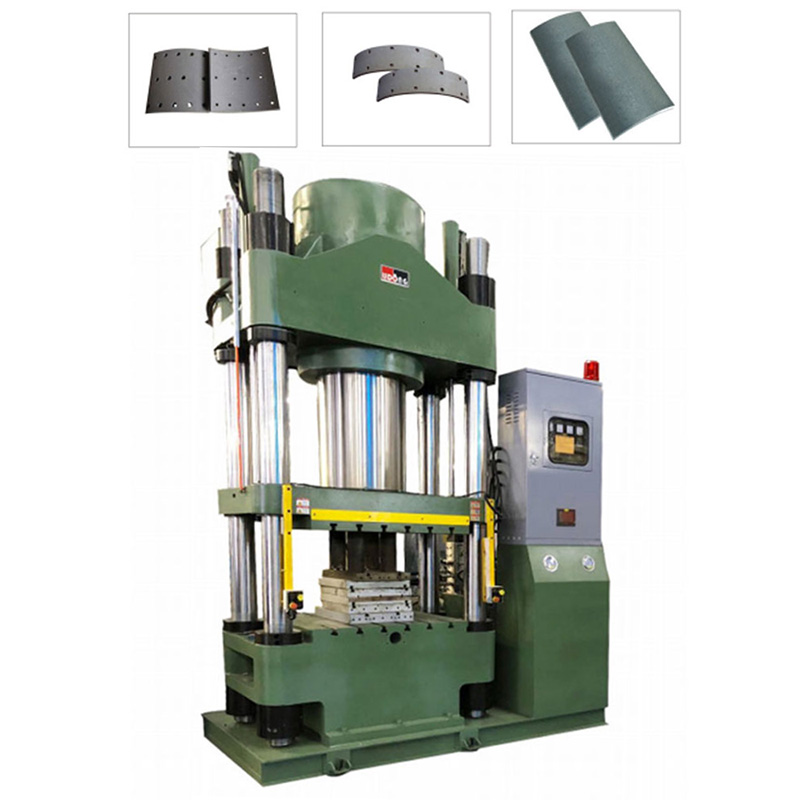
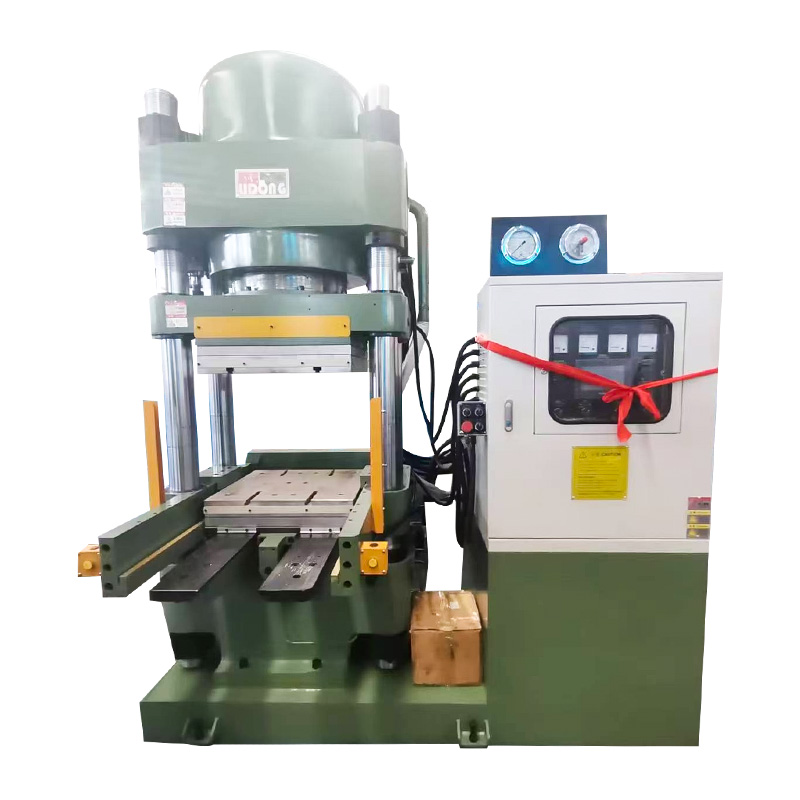
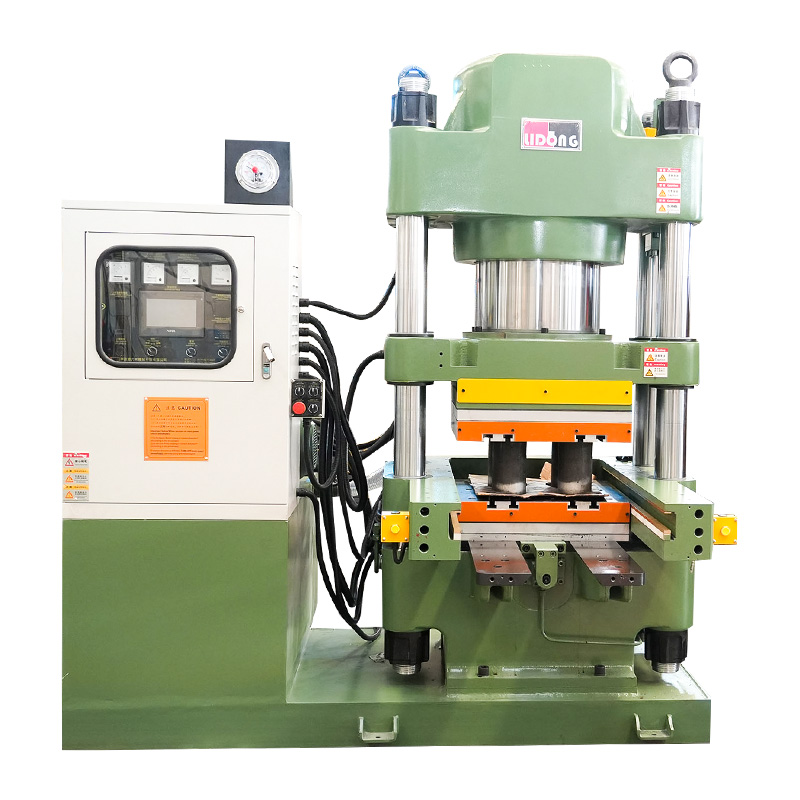
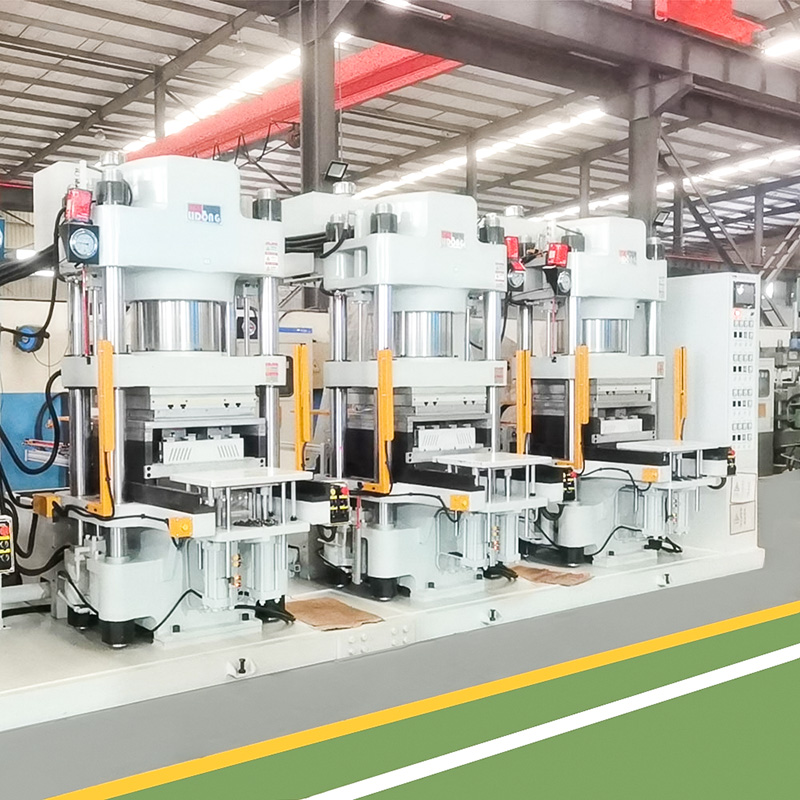
Technical Parameters
The table lists typical configurable values for hot presses used in truck brake pad production. Final specifications depend on your pad size, mold layout and formulation, and are confirmed in the technical agreement.
| Parameter | Typical Range | Relevance to Truck Pads |
|---|---|---|
| Clamping force | About 250 - 1000 tons | Large pad area and several pads per mold |
| Specific pressure on the pad | Often about 20 - 50 MPa, set by formulation | Controls density and strength of thick layers |
| Platen size | About 600 x 600 mm to 1200 x 1200 mm | Fits large pads and multi-pad molds |
| Opening stroke | Larger than for passenger car presses | Room for heavy molds and deeper degassing |
| Platen temperature | Up to about 200 degrees C | Resin cure, usually around 150 to 180 degrees C |
| Temperature uniformity | About plus or minus 2 to 3 degrees C | Even cure through thick friction layers |
| Degassing steps | Programmable, several steps with adjustable opening | Releases more gas from thick material |
| Pressure holding | Programmable with automatic make-up | Steady pressure during long holds |
| Mold handling | Slide-out table, mold cart, crane points | Heavy molds need safe handling |
| Control | PLC with touchscreen and recipe memory | Pressure, temperature and time curves per pad |
How to read the table: for truck pads, clamping force, platen size and frame stiffness deserve the most attention. As an example, a heavy truck pad with a friction area of around 150 square centimeters needs roughly 60 tons per pad at 40 MPa, so a mold with four pads needs a press in the range of about 250 tons or more with margin.
The second key point is opening stroke and mold weight. Heavy molds need space for slide-out tables, and degassing needs enough opening to let gas escape from thick material. Please send your pad drawing, mold dimensions and weight, cavity number and formulation, and we will recommend a clamp size and layout.
Practical advice. Check the mold weight and the crane capacity of your workshop before you choose, because the best press is of little use if the molds cannot be changed safely.
Special Focus: How Truck Pads Differ from Passenger Car Pads
The table compares the main points that change when a press is selected for truck pads.
| Point | Passenger Car Pads | Truck Pads |
|---|---|---|
| Pad size and weight | Smaller, lighter | Larger, thicker, much heavier |
| Clamping force | Lower, many cavities | Higher, fewer but larger pads |
| Friction layer thickness | Thinner | Thicker, holds more gas and moisture |
| Degassing | Few steps | More careful steps and longer dwell |
| Mold handling | Light carts or manual | Heavy, needs crane or strong cart |
| Cycle time | Shorter | Longer, more heat to penetrate |
| Duty on the vehicle | Lighter loads | High loads, long downhill braking, heat fade risk |
Points that decide results:
- Even pressure over a large area. A stiff frame, thick platens and a well-placed main cylinder reduce the density difference between the center and the ends of the pad.
- Degassing. A thick friction layer needs well-timed degassing. Too little leaves internal voids or blisters, and a rough pressure rise can crack the surface.
- Bonding. Heavy trucks load the bond hard, so back plates must be clean, treated and coated correctly, and the shear strength of finished pads should be tested regularly.
- Thermal stability. Larger platens heat unevenly if insulation and zoning are weak, so temperature mapping under load is worthwhile.
- Post-cure and finishing. Thick pads usually need longer post-cure, and grinding removes more material. These are separate steps with separate equipment.
Drum brake linings for trucks are different products with curved shapes and different tooling, and our drum brake friction block page covers that case. The formulation and testing of heavy-duty pads belong to your technical team, and the press provides the stable molding condition on which they rely.
Honest advice. Do not simply scale up a passenger car recipe for a larger pad. Thick pads need adjusted pressure and degassing, and a trial series on the real mold saves a lot of scrap.
Automation and Control System
Truck pads are heavy and expensive to scrap, so the control system should reduce operator error and keep each cycle identical.
- Recipe memory: temperature, pressure steps, degassing count, opening distance, dwell time, hold time and stroke limits are stored for each pad and mold.
- Multi-step pressure control: a soft initial compaction, degassing and final hold can be set separately, which protects thick layers.
- Programmable degassing: opening distance and dwell are adjustable, with a safe maximum to protect the mold.
- Zoned temperature control: separate sensors and outputs keep large platens even and reduce overshoot.
- Slow-speed mold closing: controlled approach protects heavy molds and back plates.
- Alarms and records: faults are shown clearly, and cycle data such as temperature, pressure and time can be stored and exported.
Handling and automation: heavy molds need slide-out tables, rail carts or a crane with proper lifting points on the mold. For higher volumes, loading frames and automatic material feeding systems can be added, and the layout is prepared in advance.
Operator view. The touchscreen shows the active recipe, platen temperatures, pressure curve and cycle time remaining. Passwords protect settings. An English manual and training material are provided, and remote support is available.
Tuning tip. Change one parameter at a time, such as the number of degassing steps, and record the effect on density and appearance. Small, documented steps are the safest way to optimize a thick pad.
Changeover tip. Name each recipe after the pad model code and the mold number, so any operator can recall the right settings quickly. Keep a printed sheet of proven pressure and degassing settings near the press, so that new staff start from tested values, and lock the recipes by password to prevent accidental changes between shifts.
Structure and Materials
A truck pad press carries high loads and large molds, so its frame, platens and cylinders must be built heavier than a passenger car press.
| Component | Design and Material | Purpose |
|---|---|---|
| Press frame | Heavy welded steel structure, stress relieved | Very low deflection at high tonnage |
| Platens | Thick alloy steel, ground flat, zoned heating | Even heat and flat contact over a large area |
| Heating | Electric rods or thermal oil channels, PID control | Stable temperature on a large mass |
| Insulation | Boards and shields on platens and guides | Lower heat loss and protection for seals |
| Guide system | Large hardened guides, adjustable | Keeps heavy platens aligned |
| Main cylinder | Large bore, quality seals, stroke control | Uniform force and accurate thickness |
| Mold carrier | Slide-out table or rail cart rated for the mold weight | Safe loading of heavy molds |
| Hydraulic station | Separate unit, filtered and cooled | Stable pressure and clean oil |
Foundation and floor: a heavy press needs a suitable foundation, and we provide a load and layout drawing in advance. Uneven floors can twist the frame over time, so floor level and anchoring are part of the installation plan.
Why thick platens help: a thick, well-supported platen resists bending under load, which keeps the mold gap even over a large pad. We select the platen thickness and cylinder position from the tonnage and platen size, and we check flatness and parallelism at the factory.
Maintenance. Clean platens regularly with non-scratching tools, keep guides lubricated, check cylinder seals, and change hydraulic oil and filters according to the manual. Inspect mold carriers and lifting points on a schedule, since they carry the heaviest loads.
Before shipment, each press is run under load, and temperature uniformity, pressure holding and safety functions are checked.
Safety and Energy Efficiency
Heavy molds, high forces and hot surfaces make safety planning especially important in truck pad production.
- Emergency stop at the operator position and at the loading side
- Light curtain or guard doors connected to the PLC
- Hydraulic overpressure protection with a relief valve and pressure monitoring
- Independent over-temperature protection on each heating zone
- Mold carrier stops and locks so heavy molds cannot move unexpectedly
- Insulated surfaces and warning labels on hot parts
Handling advice: never lift heavy molds by hand. Use a crane or a rated cart with proper lifting points, wear heat-resistant gloves and sleeves, and keep walkways clear. Heating the resin releases vapors, and friction mix is dusty, so provide local exhaust above the press and dust collection at the feeding area. Follow your local rules for respiratory protection and the safety data sheets of your materials.
Energy efficiency: a large press holds a lot of heat, so good insulation and PID control make a clear difference. A variable-speed hydraulic system uses power mainly while the press moves, which matters since holding stages are long. A stand-by temperature function saves energy during breaks, and low scrap saves both raw material and the energy already spent on it.
Tell us your working hours and local power price, and we will compare heating and hydraulic options in the quotation.
Training and records. Keep a log of safety checks, carrier inspections and oil changes. A monthly test of the emergency stop, light curtain and over-temperature cut-off keeps the press dependable. We provide an English checklist that you can adapt to your own procedures.







