English
 عربى
 中文繁体
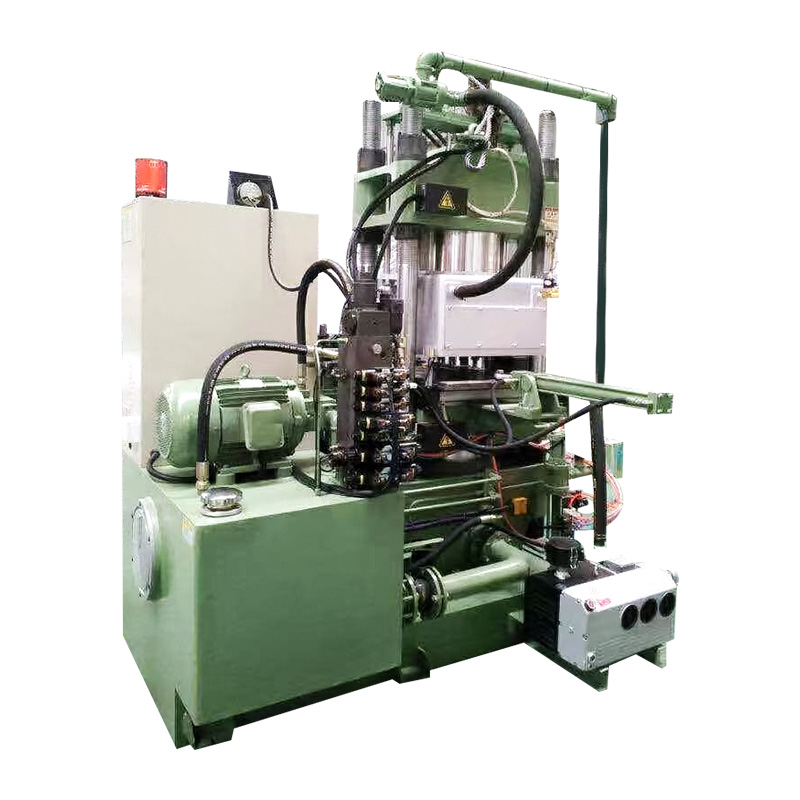
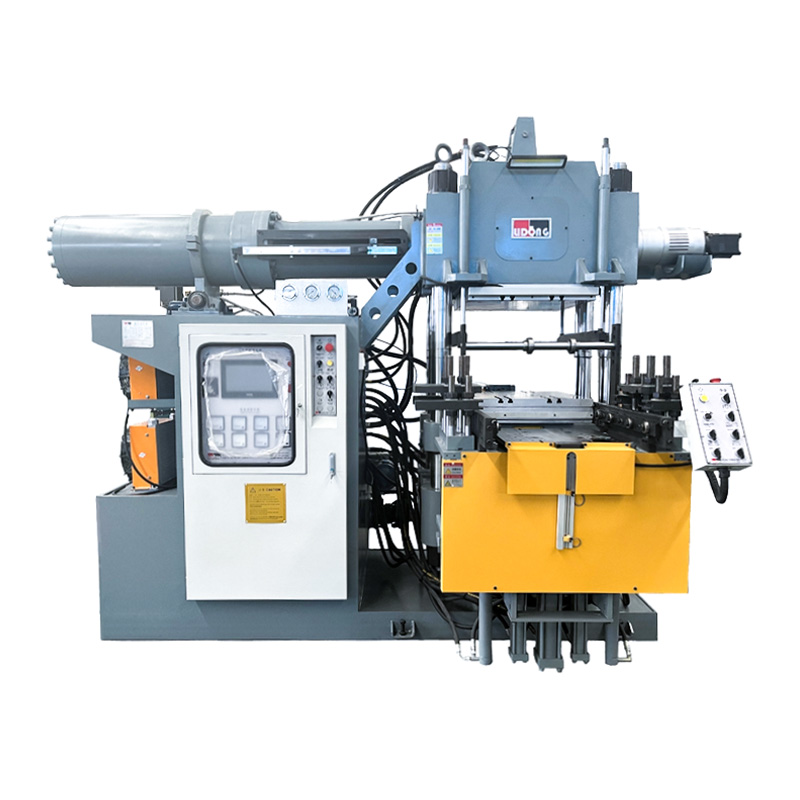
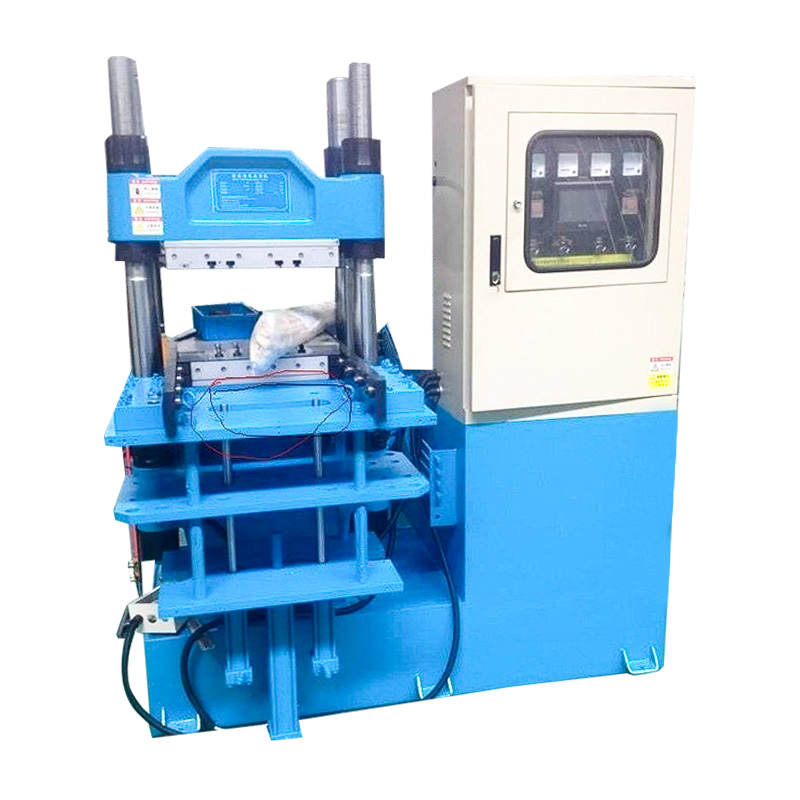
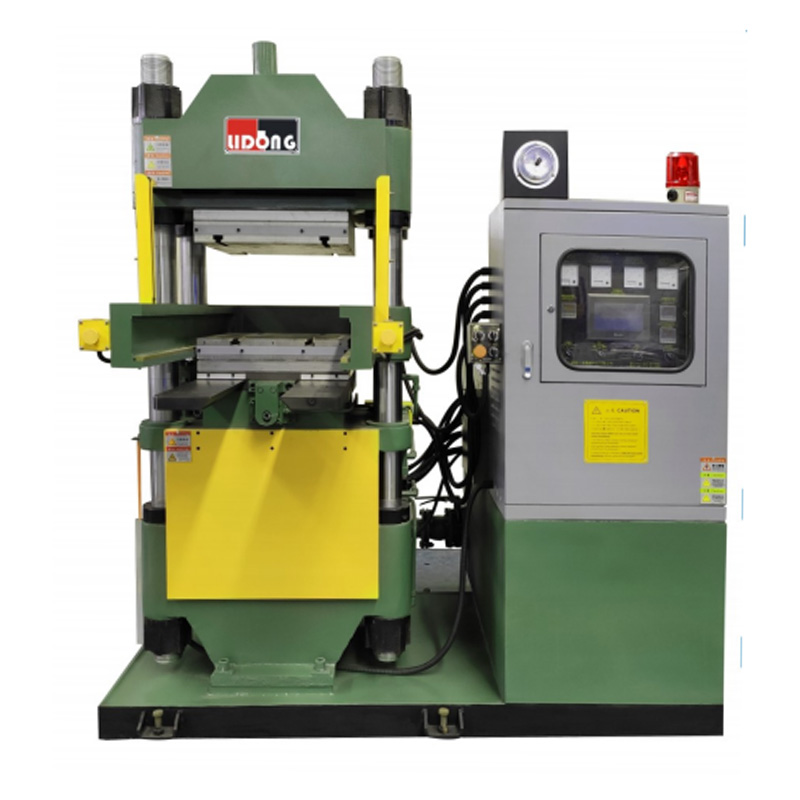
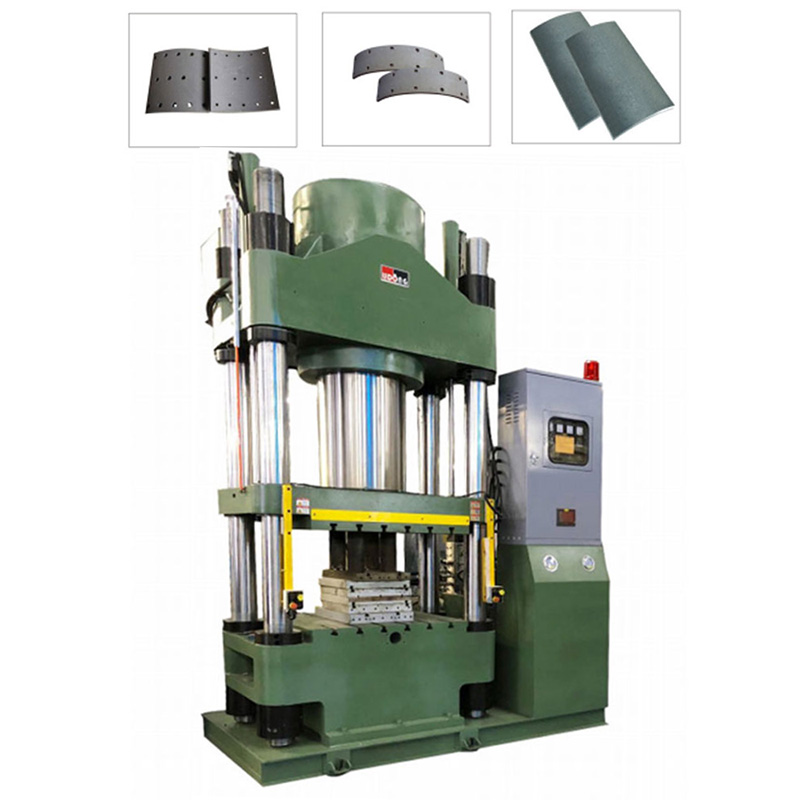
Technical Parameters
The table shows typical configurable values for a press used in rubber-to-metal bonding. Final specifications are confirmed after we learn about your metal parts, adhesive and compound.
| Parameter | Typical Range | Importance for Bonding |
|---|---|---|
| Clamping force | 100 - 800 tons | Holds mold closed and sets cavity pressure on the bond line |
| Platen temperature | Up to 200 degrees C standard | Cure temperature must match the adhesive and compound |
| Temperature uniformity | About plus or minus 2 degrees C | Uneven heat causes uneven bond strength |
| Pressure control | Programmable with automatic make-up | Stable pressure helps wetting of the adhesive |
| Closing speed | Adjustable, with slow approach | Avoids wiping adhesive off the insert |
| Breathing steps | Programmable | Releases gas that can weaken the bond |
| Vacuum assistance | Optional | Reduces air at the interface |
| Control | PLC with touchscreen and recipes | Repeatable cycles and traceable settings |
| Data recording | Optional | Records temperature, time and pressure |
Important for bonding: temperature accuracy is more important than maximum temperature. Many adhesives work well in a narrow cure window, and a cold spot of just a few degrees can produce a weaker bond in some cavities. Please ask suppliers for platen temperature test data, not only for the specification.
Tell us the adhesive brand, the compound and the metal type, and we will advise on suitable temperature range and pressure steps.
Questions to ask any supplier: Do you have platen temperature test data across the whole surface? How fast does the temperature recover after loading a cold mold? Can the closing speed be set very slowly near the end of the stroke? Can the press record cure data for each cycle? Clear answers to these four questions tell you more about bonding capability than tonnage alone, and we are happy to answer them with real measurements from our factory tests.
Special Focus: Why Bonds Fail and What the Press Can Do
Most bond failures are caused by something other than the press. However, the press can make a good process better, or a marginal one worse. This table helps to separate the causes:
| Failure Sign | Likely Cause | What to Check |
|---|---|---|
| Rubber peels cleanly from metal | Poor surface preparation or contamination | Degreasing, blasting, storage time of coated parts |
| Adhesive looks burnt or dry | Too high temperature or long pre-heat | Platen temperature, insert pre-heat time |
| Bond weak in some cavities only | Uneven platen temperature | Temperature mapping of the platens |
| Bubbles at the interface | Trapped air or gas | Breathing steps, vacuum, compound moisture |
| Adhesive washed away at the edge | Fast rubber flow on closing | Slower closing, preform shape, gate design |
Where the machine matters:
- Even temperature across all cavities, since the adhesive reacts within a limited temperature range
- Gentle mold closing so that rubber flow does not wipe the adhesive away
- Accurate pressure and timing to give the bond a consistent cure
- Fast and repeatable loading because coated inserts should not wait long on a hot mold
We will always be honest if the issue lies in the process rather than in the press.
A simple diagnostic habit. When a bond fails, look at the broken surface. If the metal is bare and clean, think about surface preparation and adhesive coverage. If a thin layer of rubber remains on the metal, the bond itself was strong and the weak point is the rubber. If the adhesive layers separate, look at the primer, the cover coat and the cure conditions. Taking photos of failed parts and sending them to us helps our engineers give practical suggestions.
Automation and Control System
Bonding quality depends on repeating the same steps in the same order. That is exactly what a good control system provides.
- Slow approach and soft closing: reduces rubber flow across the adhesive and keeps inserts in place.
- Staged pressure: a low first stage lets the rubber fill the cavity, then full pressure completes the bond.
- Recipe library: each part number has a saved temperature, time and breathing sequence.
- Multi-zone temperature control: reduces cold spots on large platens.
- Data logging option: records each cycle's temperature, time and pressure for traceability.
- Alarm limits: the PLC can flag a cycle when temperature falls below a set limit during cure.
Automation can also help the bond directly. A mold shuttle or loading table reduces the time that coated inserts stay on a hot mold before the press closes, which protects the adhesive. For high-volume programs, insert feeding fixtures and robot loading can improve consistency, though they are best planned from the beginning.
We recommend starting with a PLC press with recipes and adding automation after the process is stable.
Operator view. The touchscreen shows the recipe, the temperature of each zone, the closing stage and the cure time remaining. Settings that affect the bond, such as temperature and closing speed, can be locked by password. Alarm messages are clear and recorded, so supervisors can review problem cycles. An English manual and training material are supplied, and our engineers can help set the first bonding recipes by video call.
Why soft closing matters. Rubber that rushes across a coated insert can wipe the adhesive away at the edges. A slow, controlled approach in the last part of the stroke protects the adhesive film, and it is one of the simplest ways a press can help bond quality.
Structure and Materials
A bonding press carries the same loads as any heavy curing press, with extra demands on thermal stability, since small temperature changes affect bond strength.
| Component | Design and Material | Why It Matters for Bonding |
|---|---|---|
| Platens | Thick alloy steel with carefully planned heating layout | Very even surface temperature |
| Insulation | Boards on platen back and sides | Stable temperature, less drift |
| Frame | Welded steel, stress relieved | Keeps platens parallel under load |
| Guides | Wear-resistant guide surfaces | Smooth, accurate closing |
| Sensors | Thermocouples close to the platen surface | Fast reaction and accurate control |
| Hydraulic system | Quality valves, optional proportional control | Smooth pressure ramps and stable holding |
Details that help the bond: sensor position is critical, because a sensor buried deep in the platen reads a smoother, slower temperature than the real surface. We place sensors near the working surface and recommend a periodic check with an independent surface thermometer.
The hydraulic unit and the electrical cabinet are located away from the hot platens, which protects control accuracy and extends component life.
Each press is checked for flatness, parallelism and temperature uniformity before delivery, and we can share the test record.
Keeping temperature accurate. Over time, sensors can drift and heating rods can age. We recommend checking platen surface temperature with an independent thermometer every few months and replacing sensors that show deviation. Keeping platens clean and free of rubber residue also keeps heat transfer uniform. These simple steps protect the very thing that bonded products depend on, which is a stable and even cure temperature across every cavity.
Platen cleanliness. Rubber residue and release agent build-up on platens slow heat transfer and create local cold spots. A regular cleaning routine, using suitable tools that do not scratch the surface, keeps heat transfer even and the bond consistent between batches.
Safety and Energy Efficiency
Bonding work involves chemicals, hot molds and metal inserts, so safety covers both the machine and the working method.
- Emergency stop at operator and loading positions
- Light curtain or guard doors connected to the PLC
- Hydraulic overpressure protection with relief valve
- Independent over-temperature protection for each heating zone
- Insulated hot surfaces and warning labels
- Lockout and safety support for maintenance
Workplace notes: adhesives and primers often contain solvents. Provide good ventilation near the loading area, keep adhesives away from hot surfaces, and follow the adhesive supplier's safety data sheet. Clean, glove-handled inserts also give better bonding, so good housekeeping helps both safety and quality.
Energy: bonded parts often need long cures, so the press holds temperature for many minutes. Insulation, PID control and a variable-speed hydraulic system help reduce the power used. Less scrap from failed bonds also means less energy wasted, since a scrapped bonded part carries the cost of rubber, metal, adhesive and a full cure cycle.
Training and records. Keep a simple log of safety checks, sensor calibration and oil changes. A short monthly review that includes a test of the emergency stop, the light curtain and the over-temperature cut-off keeps the press dependable. We can provide a one-page English checklist that you can adapt, and use it when training new operators, especially those who handle adhesives and coated inserts for the first time.
Fume control. Adhesives and primers release solvent vapors, and curing can release additional fumes. A local exhaust hood above the press keeps the air cleaner. We can leave mounting points on the frame, and we advise following the adhesive supplier's guidance.