 English
 عربى
عربى
 中文繁体
中文繁体

Content
- 1 What Exactly Is a Rubber Vulcanizing Machine?
- 2 Why Is Attention Shifting Back to Rubber Vulcanizing Machines Now?
- 2.1 A Quiet Piece of Equipment Returning to the Spotlight
- 2.2 Demand for Rubber Products Is Rising Across Multiple Sectors at Once
- 2.3 Aging Equipment Is Creating Problems That Can No Longer Be Deferred
- 2.4 EU Carbon Border Adjustment Is Changing the Calculus for Asian Exporters
- 2.5 Labor Cost Trends Are Narrowing the Window for Low-Automation Approaches
- 2.6 The Core Tension That Cannot Be Deferred Indefinitely
- 3 How Do Modern Vulcanizing Machines Work?
- 4 Common Pitfalls in Procurement and Operation of Rubber Vulcanizing Machines
- 4.1 Why These Mistakes Keep Repeating
- 4.2 Pitfall One: Evaluating a Press by Tonnage Alone While Ignoring Platen Temperature Uniformity
- 4.3 Pitfall Two: Overlooking Mold-to-Machine Compatibility and the Edge Undercure Problem
- 4.4 Pitfall Three: Energy Retrofit Projects That Replace the Motor but Leave the Hydraulic System Unchanged
- 4.5 Pitfall Four: Running Production Without a Documented Vulcanization Process Archive
- 4.6 Pitfall Five: Signing Procurement Contracts Without Defined Temperature Control Acceptance Criteria
- 5 References / Sources
What Exactly Is a Rubber Vulcanizing Machine?
The Confusion Behind the Name
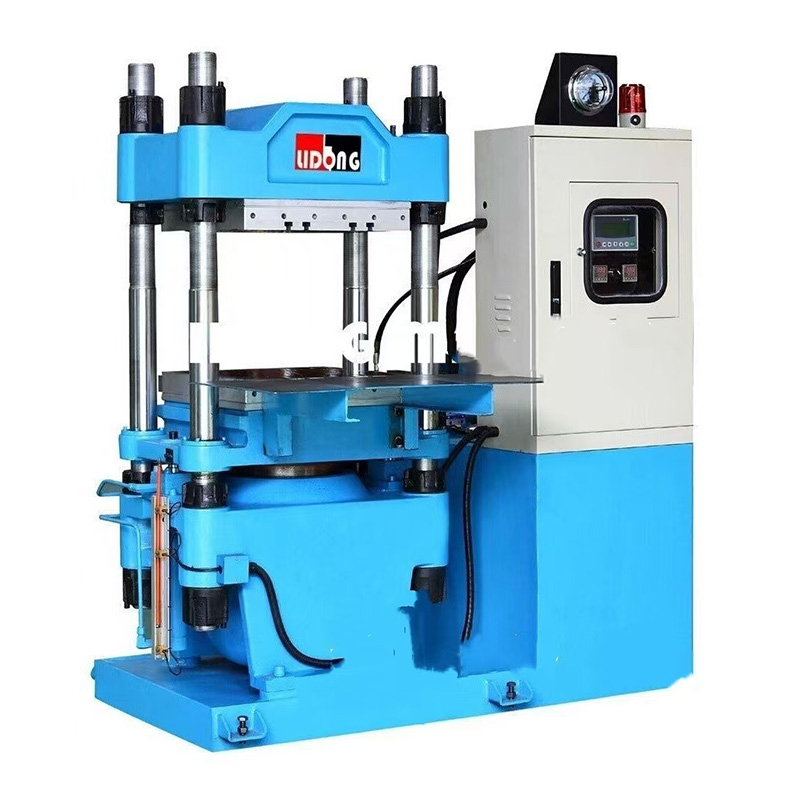
Walk into any rubber products factory and you will likely hear the term "vulcanizing machine" used loosely. Some workers apply it to any heated press on the floor. This confusion is understandable, because the category is genuinely diverse. At the same time, every machine within it shares one defining purpose: driving the chemical reaction known as vulcanization, which converts raw rubber from a soft, sticky material into a durable, elastic, and structurally stable product. A vulcanizing machine is the device that applies the precise combination of heat, pressure, and time needed to complete this reaction consistently. It is not a generic press, and it is not a simple heating unit. It is process equipment built specifically to manage the conditions under which crosslinking occurs.
Vulcanizing Machine vs. Ordinary Press
A standard hydraulic press applies force to shape or deform a workpiece. Temperature, if used at all, is secondary. A vulcanizing machine, by contrast, is designed around the thermal and chemical requirements of the curing process. Its platens are equipped with controlled heating systems capable of maintaining uniform temperature within tight tolerances. The machine also includes timing and pressure controls coordinated to ensure the rubber reaches and holds the target cure temperature for the correct duration. Undercure leaves the rubber too soft; overcure degrades the polymer chains. Neither outcome is acceptable, which is why a vulcanizing machine is engineered as a process tool rather than simply a force-application device.
| Feature | Vulcanizing Machine | Standard Press |
| Primary function | Control rubber curing reaction | Shape or deform material |
| Temperature control | Precise and sustained | Optional or absent |
| Cure timer | Integrated, process-critical | Not required |
| Platen design | Internally heated | Standard steel |
Three Common Types and Their Differences
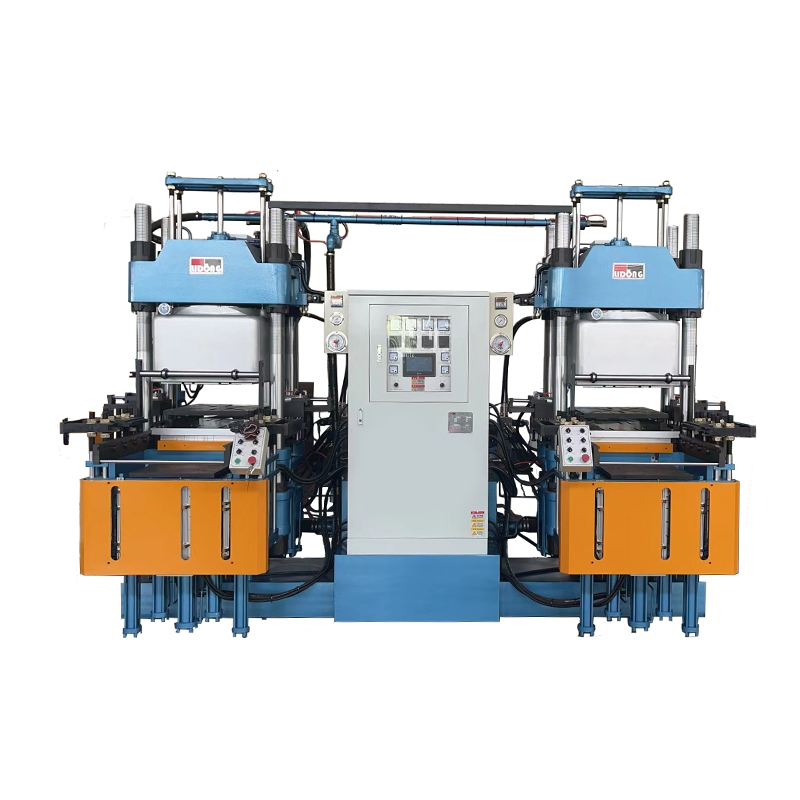
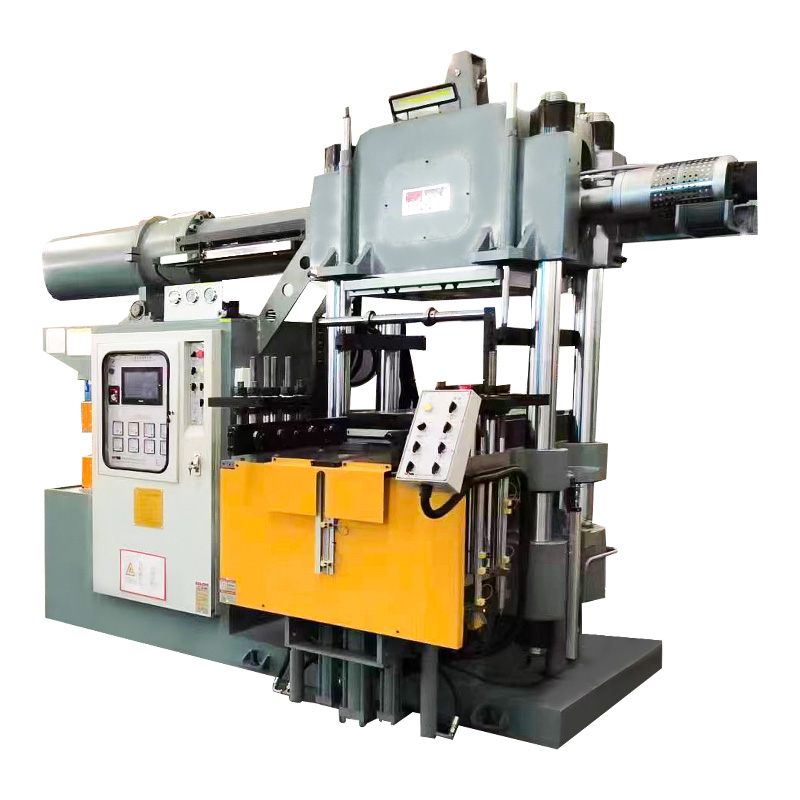
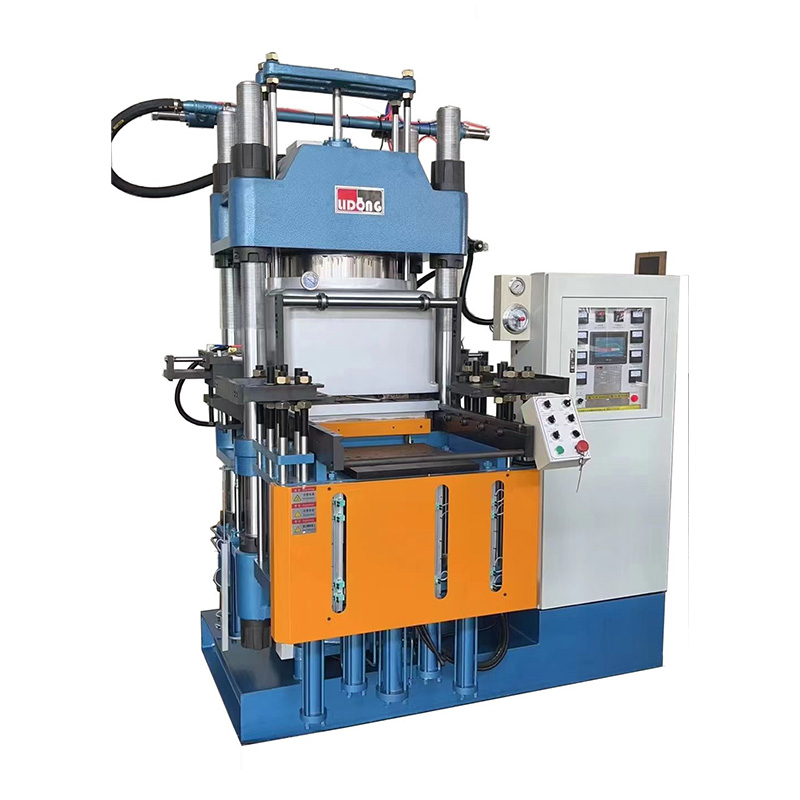
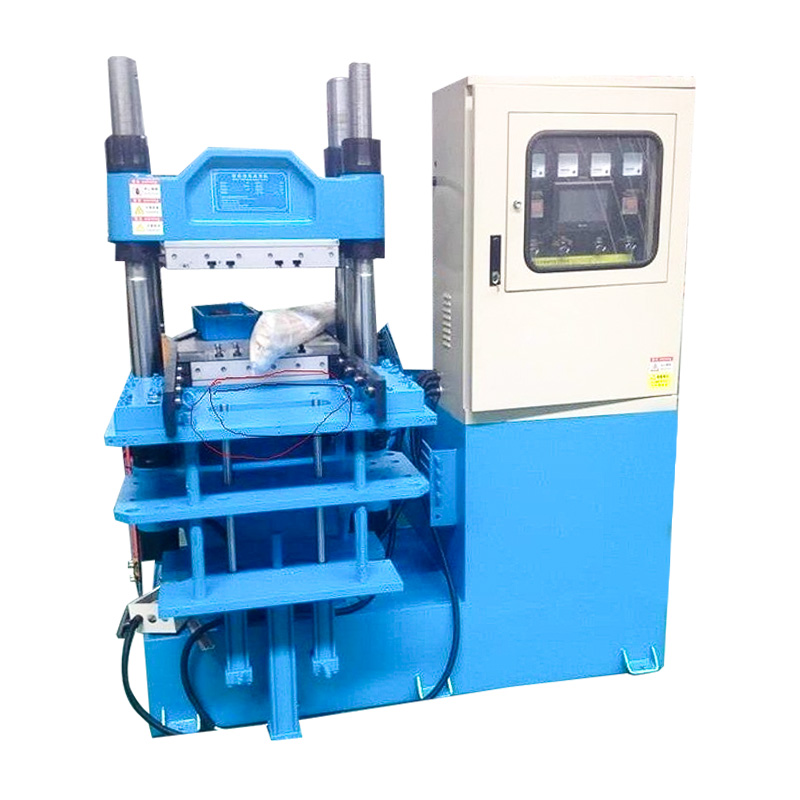
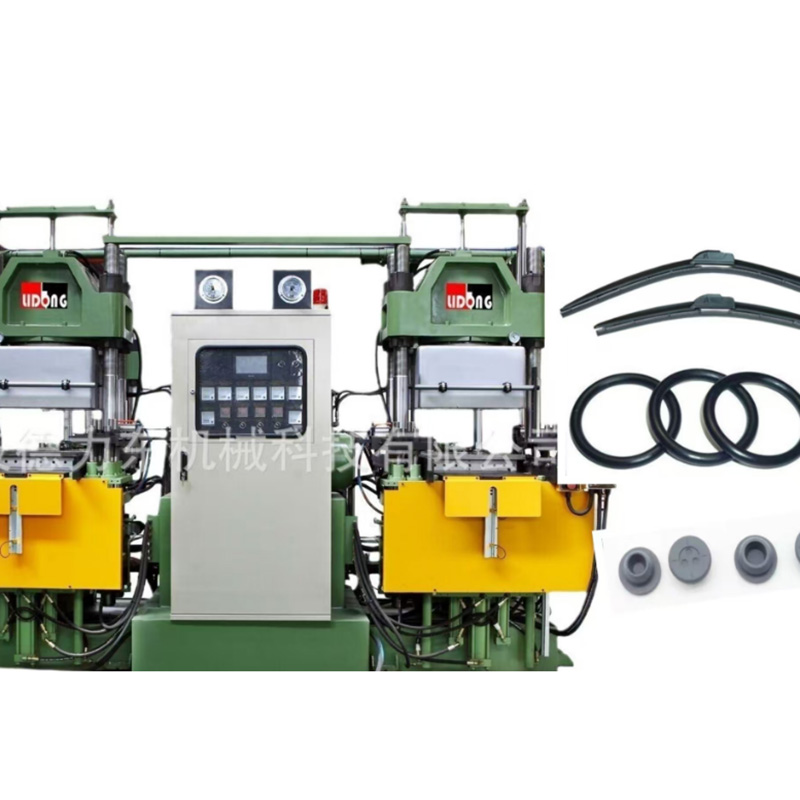
Flat plate vulcanizing machines are the most widely used type in general rubber manufacturing. They consist of heated platens that compress a loaded mold, applying heat and pressure simultaneously to cure the rubber into the mold geometry. They are suited to seals, gaskets, anti-vibration mounts, and sheet rubber across a broad range of sizes. Injection vulcanizing machines feed rubber compound from a heated barrel into a closed mold under pressure. Because the mold is already closed at injection, flash is reduced and cycle times can be shorter. They are suited to precision components such as automotive seals and medical-grade parts. Drum vulcanizing machines operate on a continuous principle, pressing rubber against a large heated rotating drum via a belt. They handle flat or strip-format products like conveyor belting and rubber sheeting, but are not suited to discrete three-dimensional molded parts.
| Type | Principle | Typical Products | Mode |
| Flat plate | Heated platens compress mold | Seals, gaskets, sheet rubber | Batch |
| Injection | Rubber injected into closed mold | Precision automotive, medical parts | Semi-automatic |
| Drum / rotary | Belt presses rubber against heated drum | Conveyor belting, rubber sheet | Continuous |
Its Core Identity: A Device That Controls a Chemical Reaction
Regardless of mechanical form, every rubber vulcanizing machine exists to create the conditions under which sulfur bridges or peroxide-initiated crosslinks form between polymer chains. Raw rubber consists of long chains that are not chemically bonded to one another, which is why it remains soft and deformable. Vulcanization ties these chains together at intervals, building a three-dimensional network that controls the hardness, tensile strength, and elasticity of the finished product. The machine delivers heat energy at the right rate, holds it for the right duration, and applies pressure to eliminate voids and ensure good mold contact. In one sentence: a rubber vulcanizing machine is a thermal-mechanical system whose true function is to control a crosslinking reaction, and that is what sets it apart from every other type of industrial press.
Why Is Attention Shifting Back to Rubber Vulcanizing Machines Now?
A Quiet Piece of Equipment Returning to the Spotlight
Rubber vulcanizing machines have been a fixture of industrial production for well over a century. For most of that time, they attracted little attention outside the factories where they operated. Engineers maintained them, operators ran them, and procurement teams replaced them on long replacement cycles when they finally wore out. The broader manufacturing conversation moved on to newer, more visible technologies. Yet over the past few years, something has changed. Equipment buyers, factory managers, and industrial policy makers in multiple regions have started giving vulcanizing machines a level of scrutiny they have not received in decades. The reasons behind this renewed attention are not accidental. They reflect a set of converging pressures across demand, infrastructure, regulation, and labor that are reshaping the economics of rubber processing in ways that make the vulcanizing machine a focal point once again.
Demand for Rubber Products Is Rising Across Multiple Sectors at Once
The global rubber products market is expanding, and the expansion is not concentrated in a single segment. New energy vehicles are one of the strongest drivers. Each battery electric vehicle contains a larger number of rubber sealing components than a comparable internal combustion vehicle, because battery packs, cooling systems, and high-voltage cable assemblies all require seals and grommets that meet tighter performance standards than traditional automotive rubber parts. As electric vehicle production scales up across China, Europe, South Korea, and increasingly Southeast Asia, the demand for molded rubber sealing components is rising in step. Tire demand is also growing, driven not only by vehicle production volumes but by the increasing weight of electric vehicles, which accelerates tire wear and shortens replacement intervals compared to conventional vehicles.
Medical rubber components represent a third growth area. The pandemic period demonstrated how dependent healthcare supply chains are on reliable production of rubber gloves, syringe components, tubing, and other molded parts. That awareness has not faded. Healthcare systems in many countries are actively working to reduce dependence on single-source suppliers, which is creating new manufacturing investment in regions that previously had limited rubber goods production capacity. Industrial and infrastructure rubber, including conveyor belting, vibration isolation mounts, and pipe sealing systems, is also seeing increased demand as governments in Asia, the Middle East, and parts of Africa invest in logistics and energy infrastructure. What makes this demand picture unusual is that these sectors are all expanding at roughly the same time, pushing factories to ramp up capacity faster than their current equipment base can comfortably support.
Aging Equipment Is Creating Problems That Can No Longer Be Deferred
Much of the vulcanizing equipment currently in operation across Asia and parts of Eastern Europe was installed during the manufacturing expansion cycles of the 1990s and 2000s. This equipment has been maintained and extended in service well beyond its original intended lifespan, and the costs of doing so are becoming harder to absorb. Older hydraulic systems develop pressure inconsistencies that result in variable cure quality and higher scrap rates. Heating systems designed for steam or older electrical configurations consume more energy per unit of output than current equipment designs. Temperature uniformity across platen surfaces degrades over time as heating elements age unevenly, introducing variation in cure conditions that shows up as dimensional scatter in finished parts.
The practical consequence is that factories running aged vulcanizing presses carry hidden costs in energy, scrap, and rework that accumulate across thousands of production cycles. When order volumes were lower and quality requirements less demanding, these costs were manageable. As customers in the automotive and medical sectors tighten incoming inspection standards and as energy prices remain elevated, the economic case for continuing to operate equipment past its productive life is weakening. Many factory operators who deferred capital investment through the uncertainty of the pandemic period are now finding that further deferral is not a viable strategy.
| Equipment Age | Energy Consumption | Scrap Rate Tendency | Temperature Uniformity |
| Under 5 years | Baseline | Low | Within tight tolerance |
| 5 to 12 years | Moderately above baseline | Low to moderate | Generally acceptable |
| 12 to 20 years | Noticeably higher | Moderate | Degrading at platen edges |
| Over 20 years | Substantially higher | Elevated | Unreliable without frequent recalibration |
EU Carbon Border Adjustment Is Changing the Calculus for Asian Exporters
The European Union's Carbon Border Adjustment Mechanism, commonly referred to as CBAM, introduces a carbon cost on certain categories of goods imported into the EU based on the emissions intensity of their production. While the initial scope covers steel, cement, aluminum, fertilizers, electricity, and hydrogen, the broader policy direction is toward expanded coverage over time. More immediately, the existence of CBAM has prompted major European customers in the automotive and industrial supply chain to begin asking their Asian suppliers for documentation of energy consumption and carbon footprint across their production processes. This is not yet a formal requirement for rubber products in most cases, but procurement teams at Tier 1 automotive suppliers are already including energy intensity questions in supplier audits.
For rubber product manufacturers in China, Vietnam, Thailand, and Malaysia who export to European customers, this creates a specific pressure around the vulcanizing process. Vulcanization is an energy-intensive step. Old equipment running at poor thermal efficiency generates more carbon per kilogram of cured rubber than modern equipment. Factories that cannot demonstrate a credible path toward lower energy intensity in their curing operations are beginning to find that European customers factor this into sourcing decisions, even before any formal carbon cost is applied to rubber imports. The equipment upgrade question is therefore no longer purely a production economics question. It is becoming a market access question.
Labor Cost Trends Are Narrowing the Window for Low-Automation Approaches
Rubber vulcanizing has historically been a labor-intensive process in the loading, unloading, and handling steps that surround the curing cycle. In markets where labor costs were low, factories could justify running large numbers of manually operated presses with operators assigned per machine. That model is under pressure. Wage levels in coastal China have risen steadily over the past decade. Vietnam and other lower-cost alternatives are seeing their own wage trajectories move upward as manufacturing investment concentrates there. Meanwhile, younger workers in many of these markets are less willing to take on the physically demanding and thermally uncomfortable work of operating vulcanizing presses in traditional configurations.
The result is a labor availability and cost problem that intersects directly with the equipment question. Factories that want to maintain or grow output without proportionally increasing headcount are looking at vulcanizing machine configurations that support automation of loading and unloading, integrated robotic handling, or multi-daylight press designs that allow a single operator to manage more curing capacity simultaneously. These configurations require newer equipment with the control architecture to support automation integration, reinforcing the upgrade decision from a direction entirely separate from energy and quality pressures.
| Pressure Source | Direct Effect on Factories | Equipment-Level Implication |
| Rising rubber product demand | Capacity shortfall on existing lines | Need for higher-throughput equipment |
| Aging press infrastructure | Higher scrap, energy waste, unplanned downtime | Replacement or major overhaul required |
| EU CBAM and carbon scrutiny | Customer pressure on energy intensity data | Shift toward energy-efficient cure systems |
| Rising labor costs | Increased cost per cycle on manual lines | Demand for automation-compatible designs |
The Core Tension That Cannot Be Deferred Indefinitely
What makes the current moment particularly acute is that these four pressures are not arriving sequentially. They are arriving together. Demand is rising at the same time that existing equipment is reaching the end of its useful life, at the same time that regulatory and customer expectations around carbon intensity are tightening, and at the same time that the labor model that made older equipment economically workable is becoming less sustainable. Each pressure on its own would be manageable within normal capital planning cycles. In combination, they are forcing decisions that many factory owners have been postponing. The question is no longer whether to upgrade vulcanizing equipment, but how quickly it can be done, what configuration suits a given product mix and export market, and how the investment can be structured when financing costs are not favorable. These are the questions now driving sustained attention to rubber vulcanizing machines, and the underlying conditions producing them are not expected to ease in the near term.
How Do Modern Vulcanizing Machines Work?
From Mechanical Press to Process Control System
A rubber vulcanizing machine at first glance looks like a straightforward piece of industrial equipment: two platens, a hydraulic cylinder, and a heating system. But the way a modern machine manages the curing process has little in common with the manually timed, operator-adjusted equipment of earlier generations. Contemporary vulcanizing machines are built around the idea that temperature, pressure, and time must be controlled as an integrated system, not as three separate variables monitored by different people at different intervals. The shift from mechanical timing to programmable logic control, from manual temperature checks to closed-loop thermal regulation, and from paper cure records to digital process traceability has changed what a vulcanizing machine actually does in a production environment. Understanding the working principles of modern equipment requires looking at each of these systems in turn and seeing how they connect.
Heat Source Selection: Electric, Steam, and Thermal Oil
The heat source is the starting point of any vulcanizing machine's thermal system, and the choice of heat source has practical consequences that extend well beyond energy cost. Electric resistance heating, steam heating, and thermal oil heating each have different response characteristics, infrastructure requirements, and suitability profiles for different product types.
Electric resistance heating uses cartridge heaters or cast-in heating elements embedded directly in the platens. The primary advantage is precise local control: each heating zone can be regulated independently, which makes it easier to maintain temperature uniformity across the platen surface. Electric systems respond relatively quickly to setpoint changes and require no boiler infrastructure, making them practical for smaller operations or facilities where steam is not already available. The drawback is that electricity as a heat source can be more costly per unit of thermal energy than steam in regions where industrial electricity prices are high. Electric heating is well suited to compression molding of small to medium precision parts, including automotive seals, medical components, and technical rubber goods where dimensional consistency is a priority.
Steam heating circulates pressurized steam through internal channels machined into the platens. Steam has a high heat transfer capacity and can raise platen temperatures quickly when the boiler system is already at operating pressure. It is the traditional heat source for large-format presses and tire curing equipment, where the platen mass is substantial and the thermal demand is high. The limitation of steam is that temperature is tied to pressure: achieving higher cure temperatures requires higher steam pressure, which has implications for boiler specification and pressure vessel safety compliance. Steam systems also introduce condensate management considerations. For high-volume tire and conveyor belt production where large platen areas and fast cycle throughput are the priorities, steam remains a practical and cost-effective choice.
Thermal oil heating circulates a heat transfer fluid heated by a central unit through channels in the platens, similar in configuration to steam but operating at atmospheric or low pressure regardless of temperature. This allows thermal oil systems to reach higher temperatures than steam without the high-pressure infrastructure. Temperature uniformity across large platen areas is generally good because the fluid flow can be balanced across the circuit. Thermal oil is commonly used in processes requiring cure temperatures above 200 degrees Celsius, in large flat plate presses for industrial rubber sheeting, and in situations where the safety implications of high-pressure steam make a lower-pressure alternative preferable.
| Heat Source | Temperature Range | Response Speed | Typical Application | Key Consideration |
| Electric resistance | Up to 250°C | Moderate to fast | Precision molded parts, medical, seals | Zone-level control; higher energy cost in some regions |
| Steam | Up to 180°C (typical) | Fast when boiler is hot | Tires, large-format compression molding | Temperature tied to pressure; condensate management |
| Thermal oil | Up to 300°C+ | Moderate | High-temperature curing, large sheet presses | Low operating pressure; fluid degradation over time |
PLC Control and Closed-Loop Temperature Regulation
The programmable logic controller is the operational core of a modern vulcanizing machine. It executes the cure program, manages the sequence of press movements, monitors sensor inputs, and triggers alarms or process holds when measured values fall outside defined limits. What the PLC enables that older relay-logic and manual systems could not is closed-loop regulation: the machine continuously compares the actual measured temperature at multiple points on the platen against the target temperature in the active cure program and adjusts the heating output in real time to minimize the difference.
Achieving temperature uniformity within plus or minus one degree Celsius across the platen surface requires more than simply having a capable heating system. It requires a control architecture that divides the platen into multiple independently regulated thermal zones, each with its own thermocouple or resistance temperature detector providing feedback to the PLC. The number of zones depends on platen size and the temperature uniformity specification required by the product being cured. A small press for medical components might use four zones; a large multi-daylight tire press might use substantially more. The PLC applies proportional-integral-derivative control algorithms to each zone, continuously correcting for thermal lag, heat loss at platen edges, and the heat sink effect of cold mold tooling loaded at the start of a cycle.
The cure program itself is stored in the PLC as a recipe, specifying target temperature, closing pressure, cure time, and any intermediate steps such as pressure relief during mold breathing. Modern systems allow multiple recipes to be stored and recalled by product code, which reduces setup time and eliminates the transcription errors that occurred when operators set parameters manually. Some systems include cure index calculations based on the Arrhenius relationship between temperature and reaction rate, allowing the machine to compensate for slight temperature variations during the cure by adjusting cure time, rather than simply running a fixed time regardless of actual thermal conditions.
Calculating Clamping Force: Why Bigger Is Not Always the Right Answer
Clamping force, also called closing force or mold locking force, is the hydraulic force the press applies to keep the mold closed against the internal pressure generated by the rubber compound as it heats, flows, and begins to cure. Selecting the appropriate clamping force for a given mold and compound combination is a more calculated process than simply choosing the largest available press capacity.
The required clamping force is a function of the projected area of the mold cavity, the maximum internal pressure the compound generates during cure, and a safety factor to account for compound viscosity variation and mold geometry. The projected area is the area of the mold cavity as seen from the direction of press travel. Multiply this by the cure pressure, add the safety factor, and the result is the minimum clamping force the press must be able to sustain throughout the cure cycle. Using a press with far more clamping capacity than required wastes energy and can deform mold components or distort thin mold parting surfaces, leading to flash problems and tooling wear. Using too little clamping force allows the mold to breathe excessively, resulting in parts with dimensional variation, surface defects, or internal voids.
The practical implication is that press selection should follow mold design rather than precede it. A factory that standardizes on a single large press for all products will find that it is not well matched to small precision molds, where the high clamping force concentrates load on a small tooling footprint. Purpose-matching press capacity to the actual clamping requirement of the mold family it will run reduces tooling wear, improves part consistency, and lowers hydraulic energy consumption per cycle.
| Mold Projected Area | Typical Cure Pressure | Estimated Minimum Clamping Force | Consequence of Oversizing |
| Small (under 200 cm²) | 10 to 15 MPa | 200 to 300 kN | Tooling distortion, excess energy use |
| Medium (200 to 800 cm²) | 10 to 15 MPa | 300 to 1,200 kN | Mismatched hydraulic sizing |
| Large (over 800 cm²) | 8 to 12 MPa | 1,200 kN and above | Generally better matched to large-press capacity |
IoT Sensors, Cure Curve Monitoring, and MES Integration
One of the more consequential developments in vulcanizing machine technology over the past several years is the integration of IoT-connected sensors that capture real-time data from within the curing process and feed it into manufacturing execution systems. This represents a shift from treating the vulcanizing machine as a standalone process unit to treating it as a data-generating node within a connected production infrastructure.
The cure curve, which plots the development of rubber stiffness or torque over time at cure temperature, has long been measured in laboratory rheometers to characterize compound behavior before production. Modern production machines are now equipped with sensors that capture the equivalent data during actual curing cycles: platen surface temperature at multiple points, hydraulic pressure over time, mold cavity temperature where cavity-mounted sensors are installed, and cycle timing with millisecond resolution. This data, aggregated across every cure cycle, builds a detailed picture of process stability that no manual inspection program can replicate.
When this sensor data is connected to a manufacturing execution system, the factory gains the ability to link cure cycle parameters to specific production batches and finished part serial numbers. If a quality issue is identified downstream, the MES record can be queried to determine whether the affected parts were cured within specification or whether a temperature deviation or pressure anomaly occurred during their production. This traceability capability is increasingly required by automotive and medical customers who conduct process audits and expect documented evidence that each production lot was processed within validated parameters.
Beyond traceability, continuous cure data collection enables statistical process control on the vulcanizing step. Trends in platen temperature drift, cycle time creep, or pressure profile changes can be identified before they produce out-of-specification parts, allowing maintenance intervention to be scheduled based on actual process data rather than fixed calendar intervals. Predictive maintenance based on cure process data is a practical application that reduces unplanned downtime and extends the productive service life of press equipment by addressing issues at an early stage rather than after they have caused production disruptions.
| Data Type Captured | Sensor Used | Process Value | MES Application |
| Platen surface temperature | Thermocouple / RTD array | Confirms cure temperature compliance | Batch traceability record |
| Hydraulic closing pressure | Pressure transducer | Validates clamping force per cycle | Process deviation alerting |
| Mold cavity temperature | Embedded cavity sensor | Measures actual rubber cure temperature | Cure index calculation and adjustment |
| Cycle time | PLC timestamp | Monitors production rate and timer compliance | OEE calculation and shift reporting |
| Press open/close position | Linear encoder | Detects tooling wear or mold seating issues | Predictive maintenance scheduling |
Common Pitfalls in Procurement and Operation of Rubber Vulcanizing Machines
Why These Mistakes Keep Repeating
Buying and operating a rubber vulcanizing machine looks straightforward from the outside. The equipment category is mature, suppliers are numerous, and the basic working principle has not changed in decades. Yet factories continue to encounter the same operational and procurement problems, often at considerable cost, because the decisions that matter most are not always the ones that receive the most attention during the purchasing process. Tonnage, price, and delivery lead time tend to dominate procurement conversations, while the technical details that determine whether a machine will actually perform well in production get deferred or skipped entirely. The result is equipment that meets the specification on paper but causes problems in daily use, or machines that perform adequately for several years before revealing gaps that trace directly back to the original procurement decision. The five problems described below are not theoretical. They are patterns that recur across factories of different sizes and product types, and each one is preventable with the right approach at the right stage of the process.
Pitfall One: Evaluating a Press by Tonnage Alone While Ignoring Platen Temperature Uniformity
Clamping force, expressed in tons or kilonewtons, is the most visible number on any vulcanizing press specification sheet. It is easy to compare across suppliers, easy to reference in a procurement meeting, and easy to use as a shorthand for machine capability. The problem is that clamping force tells you almost nothing about whether the machine will cure rubber consistently. The variable that determines cure consistency across the mold area is platen temperature uniformity, and this number is frequently absent from supplier quotations unless the buyer specifically requests it.
Temperature uniformity refers to the maximum temperature difference between any two points on the heated platen surface when the machine is at operating setpoint under steady-state conditions. A machine with poor uniformity may show the correct temperature at the center thermocouple while running ten or fifteen degrees cooler at the platen edges. Because the vulcanization reaction rate is strongly dependent on temperature, areas of the mold that run cooler will produce undercured rubber with lower crosslink density than areas at the correct temperature. In a seal or gasket application, this translates to parts that pass visual inspection but fail under compression set or chemical exposure testing. In a tire application, it can contribute to structural inconsistency across the tread width.
The practical requirement at procurement is to request a documented platen temperature uniformity specification from every supplier under evaluation, and to include a uniformity verification test as part of the machine acceptance procedure before final payment is released. A reasonable uniformity target for precision rubber goods is plus or minus two degrees Celsius across the platen surface. Accepting a machine without this data documented leaves no basis for a warranty claim if cure quality problems emerge after installation.
| Temperature Variation Across Platen | Effect on Cure Quality | Typical Consequence in Production |
| Within ±1°C | Uniform crosslink density | Consistent part properties across mold area |
| ±2 to ±4°C | Slight variation in cure state | Edge parts may show marginal property differences |
| ±5 to ±8°C | Meaningful cure rate difference | Edge undercure, increased scrap on critical applications |
| Over ±10°C | Severe cure nonuniformity | Systematic defects, high rework rate, tooling stress |
Pitfall Two: Overlooking Mold-to-Machine Compatibility and the Edge Undercure Problem
A vulcanizing press and a mold are separate pieces of capital equipment, often sourced from different suppliers at different times. This separation encourages a mindset where press selection and mold design are treated as independent decisions. In practice, they are not. The mold must sit within the heated platen area with enough margin that the entire cavity footprint receives full thermal input. When a mold is oversized relative to the effective heating zone of the press, or when the mold is positioned incorrectly on the platen, the cavities closest to the platen edge receive less heat than those at the center. The rubber in these peripheral cavities takes longer to reach cure temperature, and if the cure time is set to match the center cavities, the edge cavities will be undercured at the end of the cycle.
Edge undercure is a particularly difficult problem to detect through routine inspection because the parts produced in edge cavities may look identical to correctly cured parts. The difference shows up in mechanical testing, in compression set measurements, or in field failures after the parts reach the customer. By that point, the root cause is often not obvious, and factories frequently spend significant time investigating compound formulation or mixing quality before identifying the mold placement and press thermal mapping as the actual source of the problem.
Avoiding this requires two things during the procurement and tooling qualification stages. First, the thermal map of the press platen should be measured and documented before any mold is placed on it, so that the effective uniform heating zone is known. Second, mold design should ensure that all cavities fall within that zone with adequate margin, and any new mold introduced to an existing press should be validated with a cure uniformity check across all cavity positions before entering full production.
Pitfall Three: Energy Retrofit Projects That Replace the Motor but Leave the Hydraulic System Unchanged
As energy costs rise and factories come under pressure to reduce consumption, vulcanizing presses are a natural target for retrofit investment. The most visible and straightforward intervention is replacing the fixed-speed motor driving the hydraulic pump with a variable-frequency drive or a servo-hydraulic unit. This change can produce real reductions in electrical consumption during idle and low-demand portions of the cycle, because the motor no longer runs at full speed when the press is holding pressure rather than moving. The problem arises when the retrofit stops at the motor and leaves the hydraulic system itself unchanged.
Older hydraulic systems on vulcanizing presses typically use fixed-displacement pumps, relief valves set to maximum system pressure, and circuits that were designed when energy cost was not a primary consideration. These systems generate heat through throttling losses and pressure relief bypass even when a variable-speed motor is driving the pump, because the circuit is not designed to match flow and pressure to actual demand at each stage of the cycle. A variable-frequency drive on a fixed-displacement pump circuit reduces peak consumption but does not address the underlying inefficiency of the hydraulic design. A more complete retrofit replaces or reconfigures the hydraulic circuit to use load-sensing control or servo-valve proportional control, reducing both flow losses and heat generation across the full cycle. The additional investment in the hydraulic system changes is generally recovered through energy savings within a shorter period than the motor change alone, but it requires hydraulic engineering expertise and a more detailed project scope than simply swapping a drive unit.
| Retrofit Scope | Typical Energy Saving | Implementation Complexity | Payback Period Estimate |
| VFD on existing fixed-displacement pump only | 15 to 25 percent | Low | Moderate to long |
| VFD plus servo-hydraulic pump replacement | 30 to 45 percent | Medium | Shorter than motor-only |
| Full hydraulic circuit redesign with load-sensing | 40 to 55 percent | High | Shortest for high-cycle presses |
Pitfall Four: Running Production Without a Documented Vulcanization Process Archive
In many rubber factories, the knowledge of how to run a particular product on a particular press exists primarily in the heads of experienced operators. Cure time, temperature setpoint, pressure sequence, mold breathing intervals, and the small adjustments made for different ambient conditions or different raw material lots are passed from senior operators to newer employees through informal instruction and observation. This approach functions adequately as long as the experienced operators remain in their roles and the production mix stays stable. When an experienced operator leaves, when a new product is introduced, or when a quality problem requires investigation, the absence of documented process parameters creates serious difficulties.
A vulcanization process archive is not a complex document. At its core, it is a controlled record for each product and mold combination that specifies the validated cure parameters, the acceptable ranges for each parameter, the press or presses on which the process has been validated, and the record of any process changes made over time with the reason for each change. When this information is documented and maintained, a new operator can be trained to a defined standard rather than absorbing an approximation of what an experienced colleague does. When a quality issue arises, the process record provides the starting point for investigation. When a press is replaced or a mold is transferred to a different machine, the process archive makes it possible to revalidate the setup in a structured way rather than starting from scratch.
The cost of not having this documentation is not always visible immediately. It accumulates in longer setup times, in the difficulty of training replacement operators, in the inability to reconstruct the process conditions under which a defective batch was produced, and in the dependence on individuals whose departure represents an unquantified operational risk.
Pitfall Five: Signing Procurement Contracts Without Defined Temperature Control Acceptance Criteria
Equipment procurement contracts for vulcanizing machines frequently specify delivery date, warranty period, payment terms, and general equipment configuration, but leave the performance acceptance criteria vague or unstated. Temperature control accuracy is the most common omission. A contract that specifies a press with a temperature control system but does not define what temperature accuracy and uniformity must be demonstrated during acceptance testing provides no contractual basis for rejecting or requesting remediation of a machine that fails to meet the buyer's actual process requirements.
The consequence becomes apparent when the installed machine is found to have temperature variation or control response that is inadequate for the products being cured. The supplier's position is that the machine performs to its standard specification, which was never quantified in the contract. The buyer's position is that the machine does not work for their process. Without a documented acceptance standard against which the machine can be measured, the dispute has no objective resolution point. Reaching a satisfactory outcome requires renegotiation, and the factory may operate substandard equipment for months while the commercial discussion continues.
The preventive measure is straightforward: define the acceptance criteria in the contract before signing. This means specifying the required platen temperature uniformity in degrees Celsius at operating setpoint, the required temperature control accuracy relative to setpoint, the method by which these parameters will be measured during acceptance testing, and the remediation obligation if the machine fails to meet the specified values on first test. Including these terms adds a small amount of complexity to the procurement process and may require a more detailed technical conversation with the supplier. That conversation is considerably less costly than the alternative.
| Contract Clause | What to Specify | Risk If Left Undefined |
| Temperature uniformity | Maximum platen variation in °C at setpoint | No basis to reject non-uniform machines |
| Control accuracy | Allowable deviation from setpoint during steady state | Supplier defines "acceptable" unilaterally |
| Acceptance test method | Number of measurement points, instrument type, duration | Disputed test results, no agreed methodology |
| Remediation obligation | Timeline and scope of corrective action if spec not met | No enforceable path to resolution after delivery |
| Re-test provision | Right to re-test after remediation before final payment | Payment released before performance confirmed |
References / Sources
Morton, Maurice — "Rubber Technology" (3rd Edition), Springer
Mark, James E., Erman, Burak, and Roland, C. Michael — "The Science and Technology of Rubber" (4th Edition), Academic Press
Blow, C. M., and Hepburn, C. — "Rubber Technology and Manufacture" (2nd Edition), Butterworth-Heinemann
Harper, Charles A. — "Handbook of Plastics Technologies", McGraw-Hill
European Commission — "Carbon Border Adjustment Mechanism (CBAM): Regulation (EU) 2023/956"
International Institute of Synthetic Rubber Producers (IISRP) — "Synthetic Rubber Production and Demand Statistics"
International Rubber Study Group (IRSG) — "World Rubber Industry Outlook"
Freakley, P. K. — "Rubber Processing and Production Organization", Plenum Press
White, James L., and Kim, Chan K. — "Thermoplastic and Rubber Compounds: Technology and Physical Chemistry", Hanser
Gent, Alan N. — "Engineering with Rubber: How to Design Rubber Components" (3rd Edition), Hanser
ISO 3417 — "Rubber — Measurement of Vulcanization Characteristics with the Oscillating Disc Curemeter"
ASTM D2084 — "Standard Test Method for Rubber Property — Vulcanization Using Oscillating Disk Cure Meter"
ISO 23529 — "Rubber — General Procedures for Preparing and Conditioning Test Pieces for Physical Test Methods"
IEC 61131-3 — "Programmable Controllers — Part 3: Programming Languages" (PLC control architecture reference)
McKinsey Global Institute — "The Future of Mobility and Its Implications for the Rubber Supply Chain"
Grand View Research — "Rubber Processing Equipment Market Size, Share and Trends Analysis Report"
MarketsandMarkets — "Automotive Seals and Gaskets Market — Global Forecast to 2030"
International Energy Agency (IEA) — "Industrial Energy Efficiency and Variable Frequency Drives"