
 English
 عربى
 中文繁体

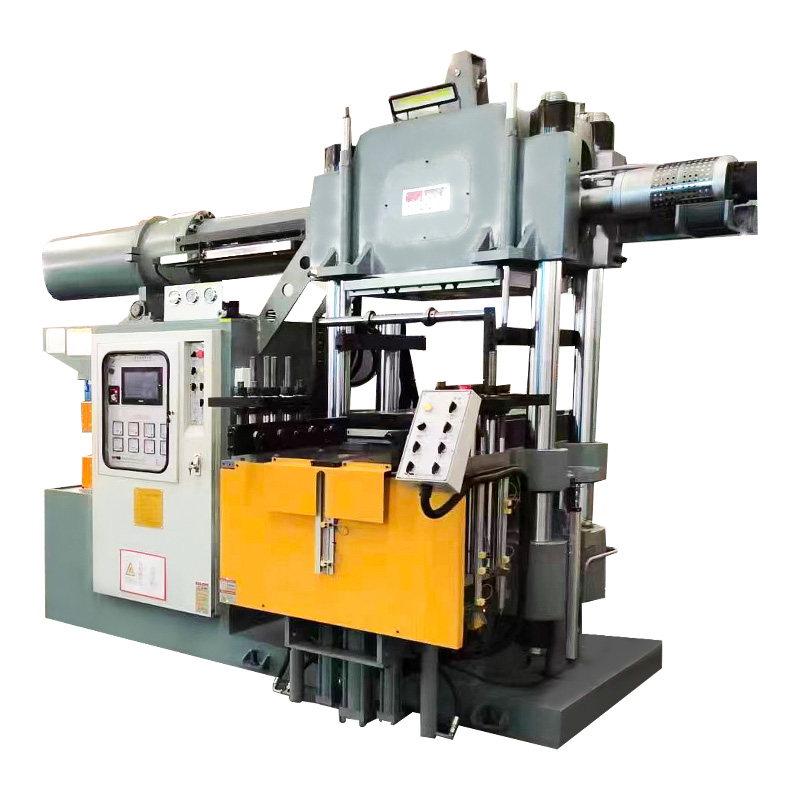
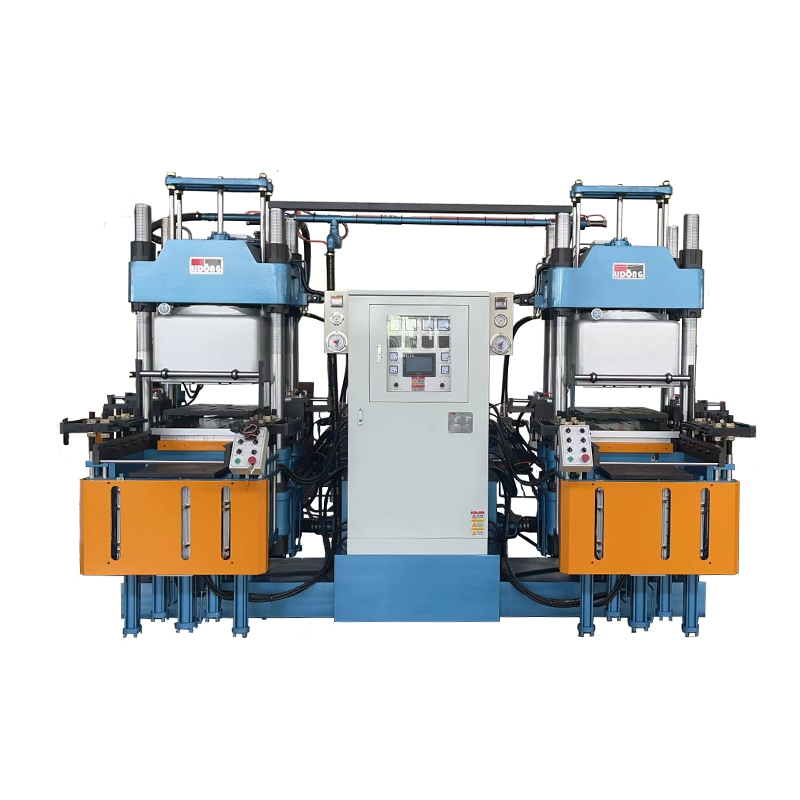
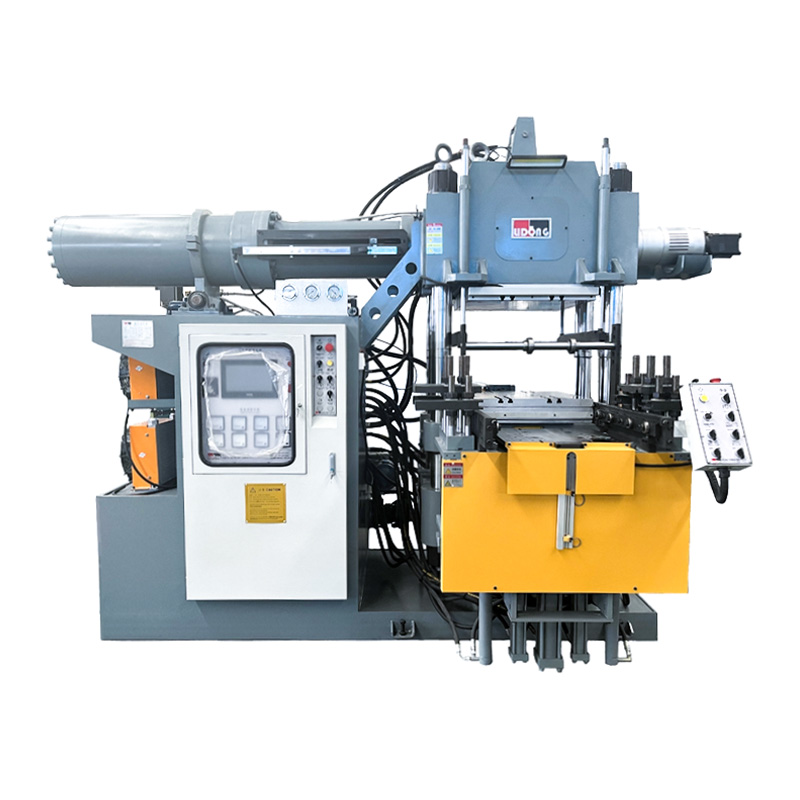
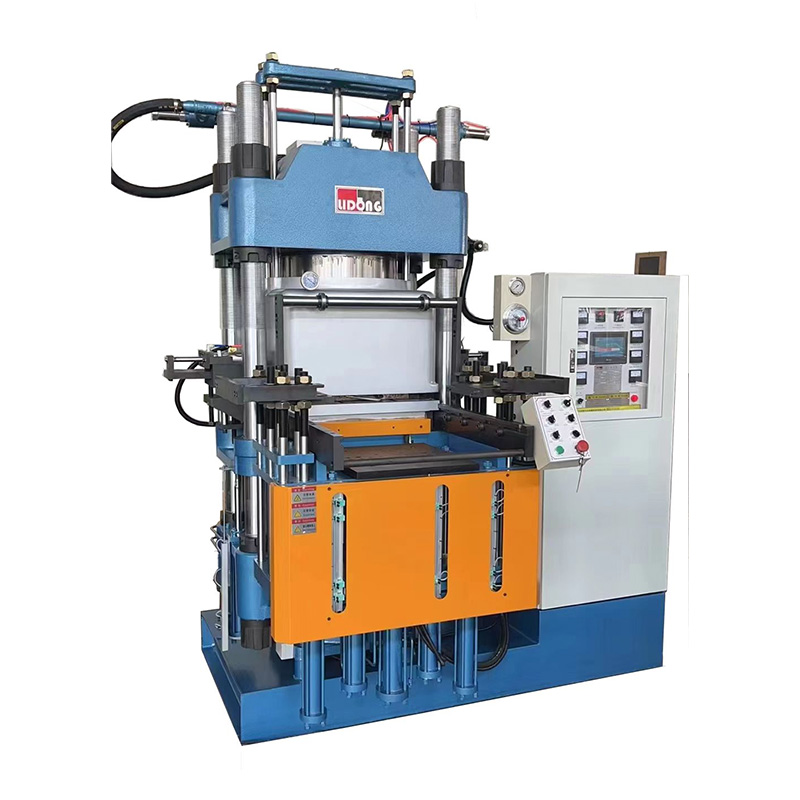
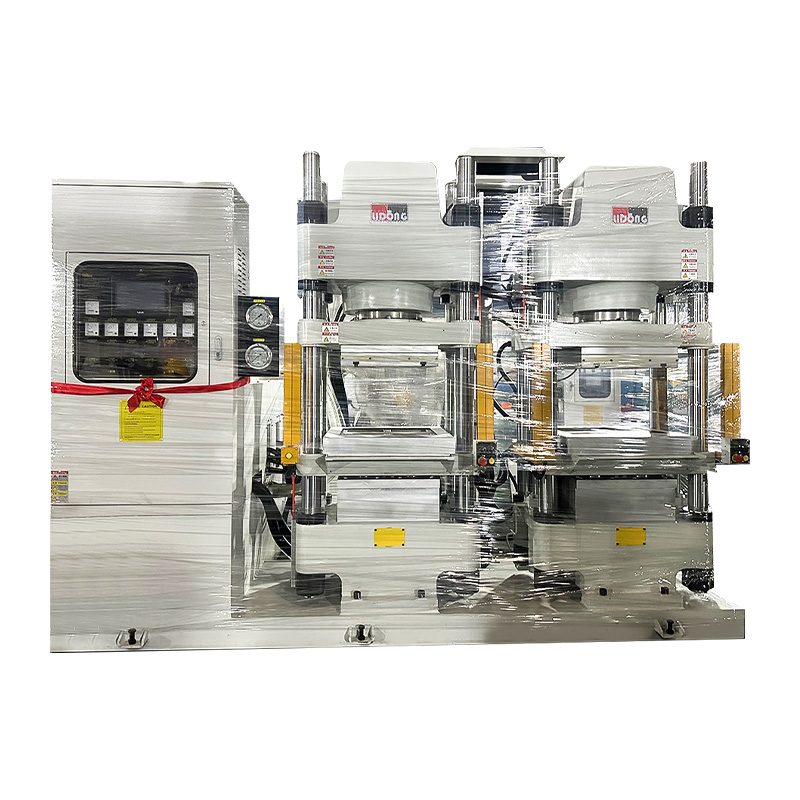
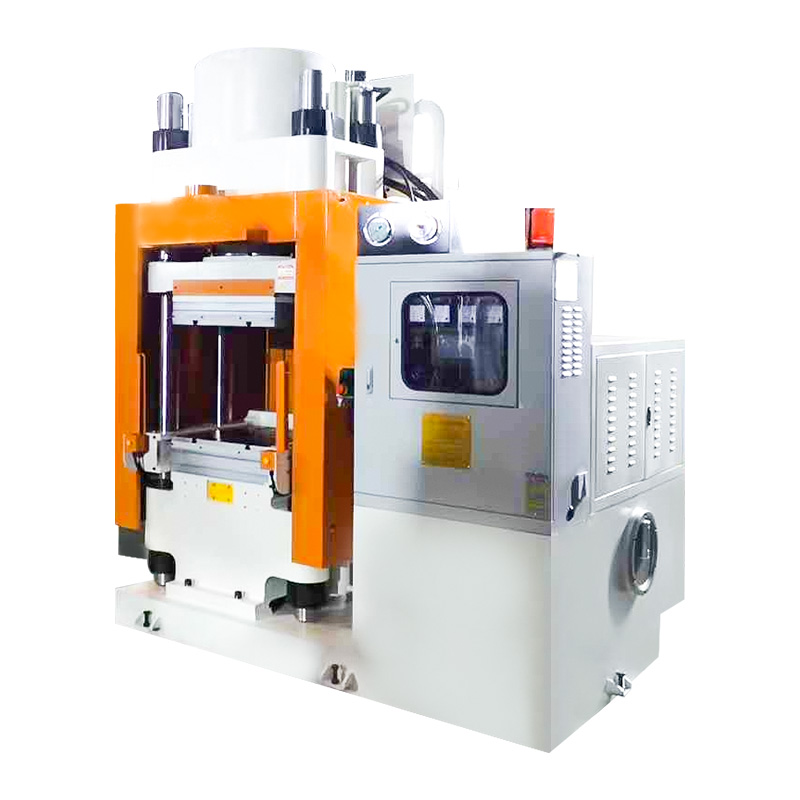
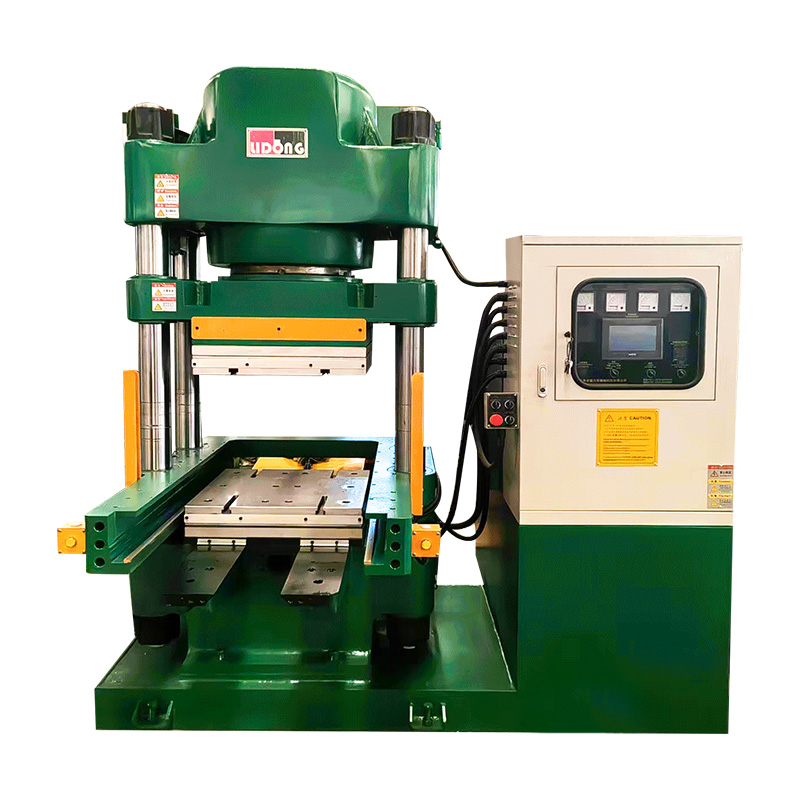
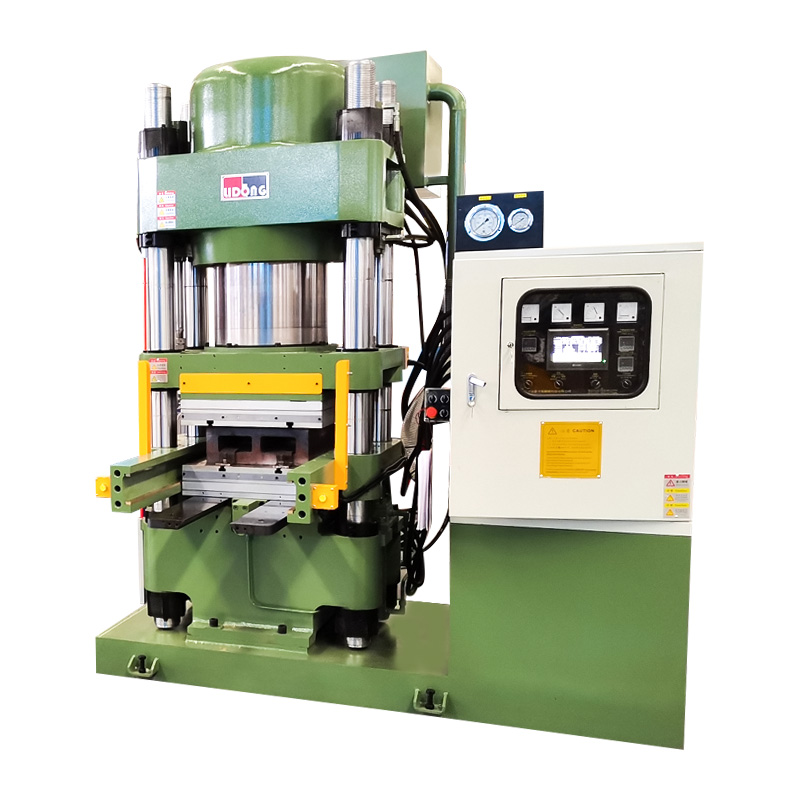
Technical Parameters
Bubble-free curing depends on how well several parameters work together. The following are typical configurable values, and the final figures are confirmed in the quotation for your specific product.
| Parameter | Typical Range | Effect on Bubbles |
|---|---|---|
| Clamping force | 100 - 800 tons | Keeps the mold sealed while gas pressure builds |
| Platen temperature | Up to 200 degrees C standard | Too fast a surface cure can trap gas inside |
| Temperature uniformity | About plus or minus 2 degrees C | Uneven heat gives uneven cure and local voids |
| Vacuum assistance | Optional, about -0.095 MPa and below | Removes air before the rubber flows |
| Breathing (bumping) steps | Programmable count and interval | Lets gas escape on non-vacuum models |
| Pressure holding | Automatic make-up | Prevents mold lift during gas release |
| Pressure ramp | Adjustable speed | Slow build-up gives air time to move out |
| Control system | PLC with touchscreen and recipes | Repeatable cycles between operators |
Practical tip: if your parts are thin and flat, programmable breathing may be enough. If they are thick, have deep cavities or use silicone, vacuum assistance gives a much more reliable result. We usually recommend that customers test their own compound before choosing. Send a sample of the compound and a mold drawing, and our engineers will suggest a suitable configuration and a starting cure recipe.
How to Select the Right Size
Selection normally follows four steps:
- Calculate the projected area of all cavities and multiply by the cavity pressure of your compound to find the required clamping force.
- Add a safety margin of about 15 to 25 percent, so the press does not run at its limit every cycle.
- Check platen size and daylight against the mold, including the space needed for loading and inserts.
- Review output: if one layer is not enough, a multi-layer press raises output without more floor space.
Our engineers can complete this calculation for you from a drawing.
Key Considerations for Preventing Bubbles
A machine is only part of the answer. In our experience, the best results come when the buyer looks at the whole process. These are the points that matter most:
- Compound condition. Rubber that has absorbed moisture will foam when heated. Store compound in a dry place and, where needed, pre-warm it before molding.
- Preform shape and weight. A preform that traps air when the mold closes will cause voids. Shape it so that air can leave ahead of the rubber flow.
- Mold venting. Vent grooves, flash channels and parting-line condition affect how easily gas leaves. A worn mold can cause bubbles that no press can fix.
- Cure schedule. A schedule that is too hot at the start can skin the surface before the gas escapes. A staged temperature or pressure profile is often better.
- Pressure timing. Applying full pressure too fast can close vents before air has left.
Comparison for decision-making:
| Method | Cost | Reliability | Best For |
|---|---|---|---|
| Manual bumping on a standard press | Low | Depends on the operator | Simple, thin parts |
| Programmable breathing | Low to medium | Good | Medium parts, stable compounds |
| Vacuum-assisted curing | Medium to high | Very good | Thick, silicone and high-value parts |
We will tell you honestly if a simpler configuration will meet your needs.
Common Buying Mistakes
After many projects, we see the same mistakes repeated:
- Choosing by tonnage alone. Two presses with the same tonnage can behave very differently if platen flatness and temperature control differ.
- Ignoring mold maintenance. A worn mold wastes the benefit of a good press.
- Buying too large. Oversized equipment costs more to run and heat.
- Skipping spare parts. Wear items such as the platen temperature sensors, hydraulic oil and mold vent grooves are cheap to stock and expensive to wait for.
Avoiding these four points saves more money than most negotiations on price.
Automation and Control System
Bubble defects often appear because two operators run the same press in two different ways. A good control system removes that variation. Delidong bubble-free curing machines use a PLC and touchscreen to store the complete cure cycle.
- Step-by-step cycle: close speed, low-pressure stage, breathing or vacuum stage, full pressure, hold time and open speed are each adjustable.
- Breathing counter: set the number of breaths, lift height and pause time to suit the compound.
- Recipe library: save one recipe for each mold, so a changeover does not depend on memory.
- Temperature control: separate zones with PID control reduce overshoot after loading a cold mold.
- Alarm history: temperature, pressure and vacuum faults are shown on screen and recorded.
- Optional data export: useful for customers who audit process records.
If you run many molds or several shifts, we recommend adding automatic mold transfer or a lift-and-load device. This keeps loading time short and consistent, so temperature loss is smaller and the first cavity of each cycle cures like the last. The press, loader and PLC are programmed as one system so the operator only presses start. Tell us your output target and our engineers will suggest the right level of automation, from a simple manual press to a semi-automatic line.
Operator Experience and Training
Even a well-designed system must be easy to run on the shop floor. The touchscreen uses clear step names and plain parameter fields, so a new operator can load a stored recipe, check the cure status and handle common alarms after a short training session. We provide an English manual and, when needed, a short video guide for daily operation. Supervisors can lock critical parameters with a password, so that settings which affect how air and gas leave the compound before the rubber sets are not changed by accident. Remote support is available if your engineer wants a second opinion on a recipe.
Structure and Materials
Gas escapes best when the mold stays uniformly closed. If the press frame flexes or the platens are not flat, pressure is uneven and bubbles appear on one side of the mold. Structure is therefore a quality issue, not only a durability issue.
| Component | Design Feature | Benefit for Bubble Control |
|---|---|---|
| Frame | Thick welded steel plates, heat treated to relieve stress | Even pressure over the whole mold area |
| Platens | Precision-ground alloy steel, drilled heating channels | Flat surfaces and uniform temperature |
| Guide system | Wear-resistant guide columns or bars | Stable parallelism during closing |
| Cylinder and seals | Honed cylinder, quality seal set | Smooth pressure without jerks |
| Insulation | Boards between platen and frame | Stable temperature, lower energy cost |
| Hydraulic valves | Proportional or servo control optional | Fine control of pressure ramp |
A stable parallelism between platens is particularly important. We check it before delivery and recommend that customers verify it again from time to time, since worn guides can slowly cause uneven closing.
For corrosive compounds or humid workshops, surface treatment and protective painting can be adapted. Tell us about your working environment and we will select materials accordingly.
Maintenance-Friendly Design
A machine that is easy to maintain keeps its accuracy longer. We place service points, such as filters, valves and sensors, where a technician can reach them without removing large parts. Guide surfaces and seals are designed as replaceable items, and the manual lists a suggested inspection routine: daily visual checks, weekly lubrication and cleaning, and a deeper check every few months. Pay special attention to the platen temperature sensors, hydraulic oil and mold vent grooves, because these items influence how air and gas leave the compound before the rubber sets more than any other part of the machine.
Safety and Energy Efficiency
Curing presses operate with hot surfaces and high force, so safety design is a basic requirement. Our bubble-free curing machines include the following:
- Emergency stop and two-hand or guarded operation for mold loading
- Safety door or light curtain tied into the PLC
- Hydraulic pressure relief and pressure monitoring
- Independent over-temperature protection on every heating zone
- Mechanical safety supports for maintenance work under the moving platen, available on request
- Hot-surface warnings and insulated covers
Energy savings are also part of the design. Precise PID control avoids heating beyond what is needed. Insulation boards reduce heat loss to the frame and the workshop. Where the application allows, a servo or variable-speed hydraulic pump reduces power use during holding stages, which are often the longest part of the cycle.
Less scrap also saves energy in practice. Every bubble-free part means one fewer part to re-mold, so lower reject rates are one of the most real energy and material savings you can get from this type of machine.
Daily Safety Habits
Good equipment still needs good habits. We suggest the following routine for every shift:
- Check emergency stop and guard function before starting production
- Wear heat-resistant gloves and avoid reaching between platens
- Never bypass interlocks, even for a quick adjustment
- Report oil leaks or unusual noise immediately
- Lock out power before maintenance work
We include warning labels and a safety section in the English manual.
Ask for a safety walk-through. During commissioning, our engineer or your own technician should test every emergency stop, guard and interlock together, and record the result. For bubble-free curing, also confirm the alarm behavior for temperature and pressure faults, because these are the situations where a quick and predictable stop matters most. A short written checklist from this test is useful for your internal safety file and for new staff training.







